NOAA Predicts a Warmer, Wetter Winter for Much of the U.S.
The National Oceanic and Atmospheric Administration (NOAA) has released its 2019 Winter Outlook, announcing that most Americans should expect a winter marked by warmer-than-average temperatures and, in some regions, increased precipitation. Based on both global climate patterns and recent atmospheric trends, NOAA’s forecast signals notable deviations from typical U.S. winter weather, with implications for recreation, travel, agriculture, and daily life.
Key Takeaways from the NOAA 2019 Winter Forecast
- Above-average temperatures expected for roughly three quarters of the United States, especially the Western, Southern, and Eastern regions.
- Increased precipitation likely for the South and East Coast, driven in part by El Niño dynamics.
- El Niño’s influence could moderate some weather extremes, but day-to-day variability and local cold snaps are still likely to occur.
- Drought improvement possible in parts of the East and South, while drought conditions may persist or worsen in areas such as Texas, the Southwest, and California.
- Despite warmer averages, winter storms and snowfall remain possible throughout the U.S..
What Drives Winter Weather Patterns?
NOAA’s seasonal outlook integrates an analysis of multiple global climate drivers, the most significant being El Niño. El Niño refers to a recurring climate pattern involving the warming of surface waters in the central and eastern tropical Pacific Ocean, which in turn affects atmospheric circulation and weather conditions worldwide. For winter 2019, El Niño was forecast to develop with a 70 to 75 percent likelihood, although it was predicted to be relatively weak compared to historic events. This creates some uncertainty, but the consensus remains that its influence will be visible in both temperature and precipitation patterns across the country.
Regional Impact: Temperatures Across America
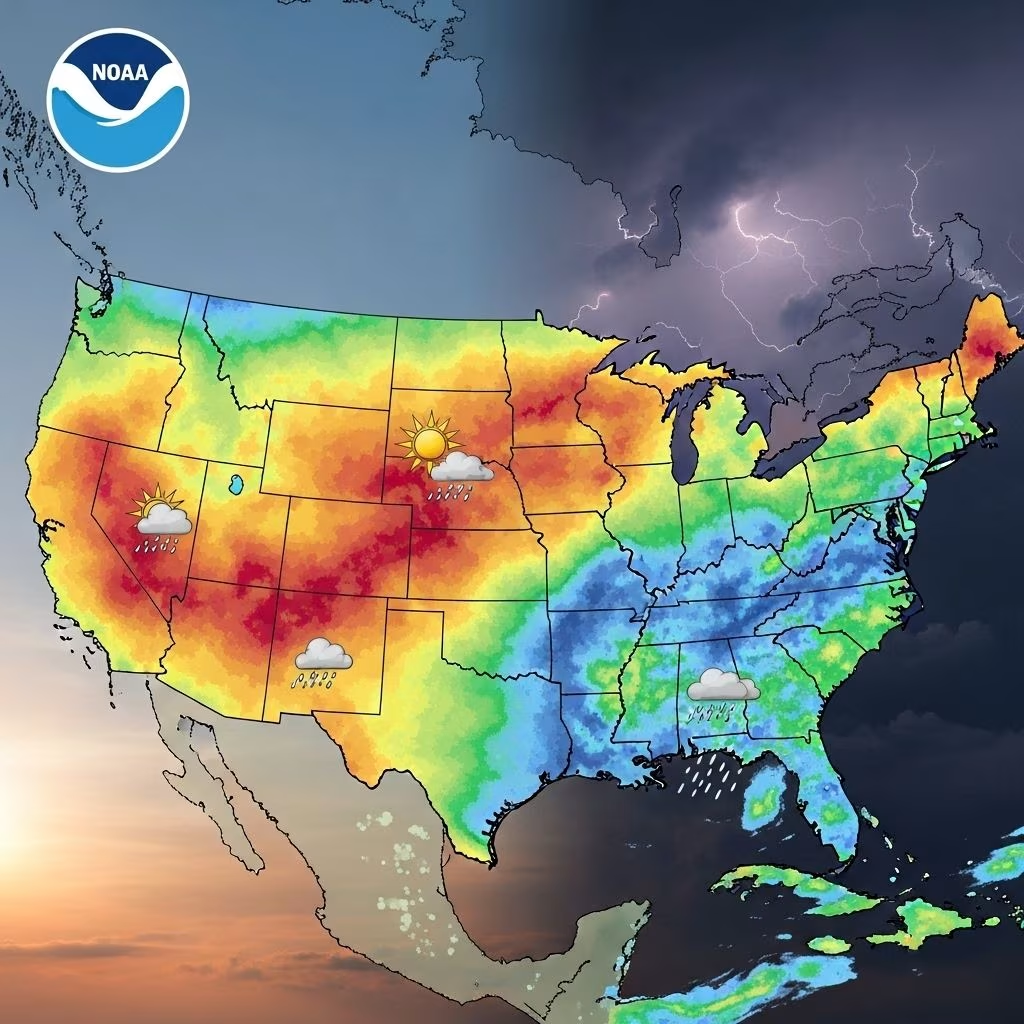
The cornerstone of NOAA’s winter outlook is the prediction of warmer-than-average temperatures for approximately 75% of the U.S. – particularly the West Coast, South, and East Coast. The agency’s Climate Prediction Center paints a picture of higher holiday season temperatures that may affect outdoor winter traditions like sledding and snowball fights in numerous states.
- Western, Southern, and Eastern U.S.: Most of these regions face a significantly greater likelihood of experiencing above-normal temperatures; no substantial areas are forecasted to be colder than average.
- Alaska and Hawaii: Residents here are also likely to encounter unusually warm conditions this winter.
- Equal Chances (EC) Zones: Parts of the Midwest and Northern states are labeled ‘EC’, meaning there is no marked tilt in the probabilities toward warmer, colder, or near-normal outcomes.
Note: Despite the warm forecast, NOAA stresses that cold spells and snowy weather will still occur locally, owing to short-term and regional atmospheric variations.
The Precipitation Outlook: Wetter South, Drier West
This winter, precipitation across the United States is expected to reflect El Niño’s classic signature, with certain areas poised for wetter conditions and others anticipating below-average rainfall or snow.
- Wetter-than-average: The South, much of the Northern Plains, the Upper Mississippi and Ohio Valleys, and parts of the mid-Atlantic and Northeast are forecast for increased precipitation, which may include rain, ice, or snow.
- Drier-than-average: Areas such as the western Gulf States and much of California are likely to experience reduced precipitation.
- Hawaii and Alaska: Both states are expected to receive more rainfall than they typically do in winter months.
The precipitation outlook comes with slightly lower confidence than temperature forecasts, due to the complexity of El Niño’s effects and the impact of other climate phenomena like the Arctic Oscillation and North Atlantic Oscillation.
Winter Drought Conditions
A very warm and dry September in 2019 significantly worsened drought conditions across the Southeast, Southwest, and Texas. Although NOAA predicts some improvement over the next few months, particularly in the East and South, persistent and developing droughts are expected to remain a concern for parts of central California, Texas, and the desert Southwest.
Understanding El Niño and Its Effects
El Niño is a recurring climate phenomenon, historically connected with North American winters marked by:
- Warmer, drier Northern U.S.: Temperatures above average, less snowfall in regions typically used to heavy winter precipitation.
- Wetter, stormier South: Increased precipitation, spanning rain, ice, and sometimes above-normal snow in the southern states.
Contrary to more intense El Niño events of the past, the 2019 system was forecast to be relatively mild, meaning its effects would be present—but perhaps not dramatically so. This generates uncertainty in pinpointing the exact intensity or timing of predicted conditions. Other climate oscillations, like the Arctic Oscillation (AO), can further introduce variability, meaning regional forecasts can differ week-to-week.
How Accurate Was the 2019 Winter Outlook?
NOAA’s prediction for the 2019-2020 winter performed notably well for both temperature and precipitation. The temperature forecast scored its highest skill rating in over a decade, especially in areas where forecasters confidently favored warmer averages. Though precipitation outlooks are intrinsically less precise, the 2019-2020 season also outperformed many previous years in forecast accuracy.
Day-to-Day Variability: What Should Residents Expect?
NOAA’s seasonal outlooks track probabilities rather than specific daily conditions. This means while general trends point to a warmer, wetter winter for certain regions, residents should still prepare for classic winter weather events:
- Cold snaps – brief periods of frigid temperatures may punctuate otherwise mild stretches.
- Snowstorms – significant storms remain possible even in regions predicted for warmer averages.
- Rapid weather shifts – oscillations like AO and NAO can quickly change local conditions.
Day-to-day weather remains unpredictable outside general patterns. For safety and preparedness, residents are urged to stay updated with local National Weather Service bulletins and advisories throughout the season.
Winter Weather Impacts: What Does This Mean for You?
NOAA’s forecast touches on many aspects of American life:
- Outdoor Recreation: In many states, warmer temperatures could mean fewer opportunities for ice skating, sledding, and snowball fights.
- Travel: Shifting precipitation patterns increase the likelihood of rain and icy roads in southern states, while reduced snowfall could alter travel expectations in the North.
- Agriculture: Farmers and ranchers may need to plan for water management and growing conditions, especially in drought-prone areas.
- Energy Demand: Milder temperatures can reduce home heating needs but sporadic cold spells still necessitate winterization.
Frequently Asked Questions (FAQs)
Q: Will this winter be snow-free for most of the U.S.?
A: No, although NOAA expects warmer temperatures overall, cold waves and winter storms can occur anywhere in the country. Snow is still likely in many regions, depending on both seasonal averages and short-term weather events.
Q: How does El Niño impact U.S. winter weather?
A: El Niño tends to push warm, dry air into northern states and increase precipitation in the South. For winter 2019, a mild El Niño was forecast, making its effects noticeable but less pronounced than in recent years.
Q: What does ‘equal chances’ mean in NOAA’s outlook?
A: Areas marked with ‘EC’ have no statistically significant tilt toward above, below, or near-normal temperature/precipitation, suggesting unpredictable or average conditions.
Q: Will drought improve or worsen in the U.S. this winter?
A: Improvement is possible for the East, South, and Alaska, while drought conditions may persist or worsen in Texas, parts of the Southwest, and California due to insufficient expected precipitation.
Q: Should I prepare for winter storms despite warmer averages?
A: Yes. While average temperatures may be higher, winter storms, rapid cold snaps, and heavy precipitation can still occur, especially due to atmospheric variability.
NOAA’s Winter Forecast: Temperature & Precipitation Table
| Region | Temperature Outlook | Precipitation Outlook | Drought Forecast |
|---|---|---|---|
| West Coast | Warmer than average | Drier than average | Possible persistence, esp. California |
| South | Warmer than average | Wetter than average | Improvement in East/South, persistence in Southwest |
| East Coast | Warmer than average | Wetter than average | Improvement/likely improvement |
| Midwest/Northern Plains | Equal chances (EC) | Wetter than average | No significant change indicated |
| Alaska & Hawaii | Warmer than average | Wetter than average | Improvement expected |
| Texas & Southwest | Warmer than average | Drier than average | Persistence/worsening expected |
Practical Tips for a Warmer, Wetter 2019 Winter
- Monitor local weather predictions and advisories for updates and warnings.
- Prepare for variable conditions, including possible rapid cold snaps even in regions forecasted as warm.
- If in drought areas, practice water conservation, and plan for extended dry periods.
- Travelers should anticipate wetter conditions in the South and potential ice or snow in unexpected areas.
Summary of NOAA’s Winter Forecast for 2019
The 2019 Winter Outlook from NOAA indicates a season largely defined by warmer-than-usual temperatures across most of the U.S., due in significant part to the developing El Niño climate pattern. Wetter than normal conditions are expected in the South and East Coast, while drought-prone areas in the Western half of the country may see little relief. Short-term cold snaps and winter storms remain possible, highlighting the continued unpredictability of U.S. winter weather despite broader seasonal trends.
References
- https://www.climate.gov/news-features/videos/noaas-2019-20-winter-outlook-temperature-precipitation-and-drought
- https://www.weather.gov/ffc/WinterOutlook20182019
- https://www.countryliving.com/life/travel/a24067469/winter-weather-forecast-2019-noaa/
- https://www.climate.gov/news-features/blogs/enso/grading-2019-2020-winter-outlook
- https://sciencecouncil.noaa.gov/wp-content/uploads/2022/08/Edit2019-NOAA-Science-Report-03132020.pdf
- https://www.youtube.com/watch?v=pqhlgovftLY
- https://arctic.noaa.gov/report-card/report-card-2019/
- https://www.climate.gov/news-features/videos/noaas-mike-halpert-explains-2018-19-us-winter-outlook