Fashion’s Hidden Human Cost: The Uyghur Genocide and Supply Chains
The comfortable cotton T-shirt or trendy dress you slip on may be silently marked by pain. Beneath the attractive façade of fast fashion and global luxury lies a disturbing truth: many globally recognized fashion brands are implicated in forced labor practices tied to the Chinese government’s oppression of Uyghur Muslims in the Xinjiang Uyghur Autonomous Region, also known by activists as East Turkestan.
The Genocide You’re Buying Into
While shoppers chase discounts and seasonal trends, millions of Uyghur Muslims have been systematically targeted by the Chinese state. Over a million have been forced into “reeducation” camps, subject to indoctrination, torture, and labor schemes. China’s goal: erasing cultural identity, enforcing loyalty, and using their labor for economic gain—including cotton picking and textile manufacturing.
- Xinjiang produces over 20% of the world’s cotton.
- Forced labor reaches far beyond textiles, affecting electronics, automotive, and other consumer goods.
- Each product from this region risks being tainted by suffering and exploitation.
The widespread use of Xinjiang cotton makes it highly likely that clothing from global brands—from affordable basics to designer labels—carries this dark origin.
The Global Fashion Industry’s Ties to Forced Uyghur Labor
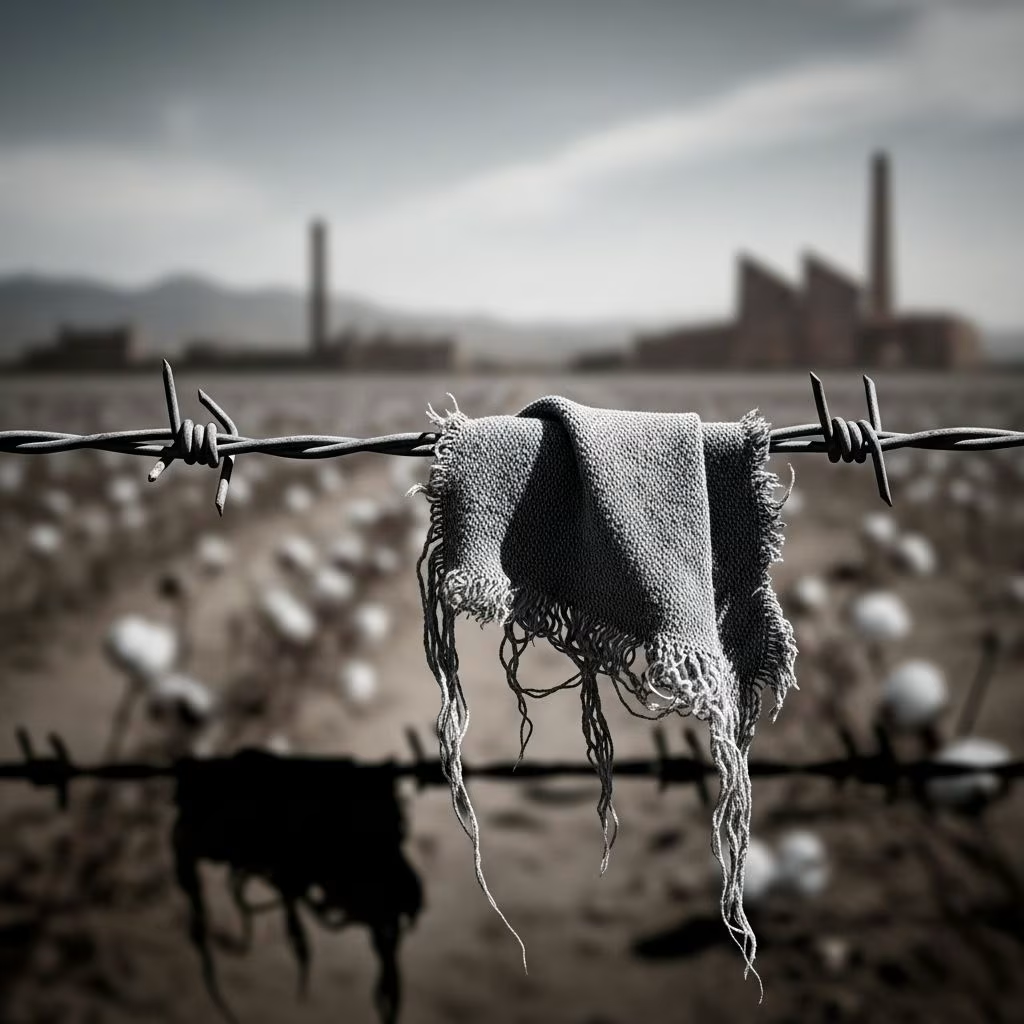
Cotton is the backbone of the fashion industry. According to state media and independent investigations, manual labor is essential for harvesting premium Xinjiang cotton. Where machinery fails, Uyghur hands are forced to fill the gap—under duress and for minimal compensation.
- Xinjiang produces 85% of China’s cotton alone.
- International brands—from fast fashion giants like Shein, Temu and H&M, to athletic icons like Nike and luxury houses—risk entanglement with Xinjiang through their supply chains.
The system is designed for global commerce, so tracing the precise origin of cotton (and other materials) is challenging. It’s estimated that as many as 100,000 Uyghur and other ethnic minorities work as forced laborers following detention in camps.
Brand Responses and Chinese State Backlash
- H&M publicly disavowed Xinjiang cotton and cut ties with regional suppliers, citing allegations of forced labor and discrimination. The backlash was swift: Chinese government accounts condemned H&M, calling for boycotts and disloyalty accusations.
- Similarly, Nike, Uniqlo, and GAP faced online and administrative harassment when distancing themselves from Xinjiang. Chinese authorities escalated their campaigns against brands taking a stand.
- Shein claims it avoids Xinjiang suppliers and opposes forced labor, yet independent lab tests and price structures suggest garments may still use Xinjiang cotton. The economic benefits for global retailers—including cost savings from forced labor—are clear, but so are the human rights consequences.
Legal Efforts and Industry Loopholes
Governments—especially the United States—have begun taking action. In December 2021, the Uyghur Forced Labor Prevention Act (UFLPA) was signed, banning goods from Xinjiang. Products made in the region are to be “presumed” associated with forced labor, demanding companies provide proof for their imports.
- Although the UFLPA targets Chinese imports, loopholes abound. Fast fashion companies exploit the de minimis loophole, enabling massive shipments to enter the US untaxed and uninspected.
- Despite new regulations, Americans still buy billions of dollars’ worth of goods from Chinese fast fashion empires annually.
- Enforcement must improve, say policy experts, to truly disrupt slavery-driven supply chains.
| Brand | Public Response | Criticism/Consequences |
|---|---|---|
| H&M | Stopped sourcing Xinjiang cotton, condemned forced labor | Chinese boycott, reputational attacks, government harassment |
| Nike | Announced no Xinjiang cotton use | Chinese propaganda, loss of market access, online defamation |
| Uniqlo | Distanced from Xinjiang sourcing | Administrative obstacles in China |
| Shein | Denies Xinjiang supply, claims zero tolerance | Investigative reports signal ongoing ties, legal scrutiny |
| Temu | App-based fast fashion import | Accused of exploiting legal loopholes, faces US investigation |
How the Supply Chain Works—And Why Cotton Matters
The journey from cotton field to storefront is complex and opaque. Key steps:
- Harvest: Fields in Xinjiang are picked partly by machine, but premium cotton is picked by forced human labor.
- Ginning and spinning: Cotton is processed into yarn and textiles, often intermingling material from various regions.
- Manufacturing: Garments are sewn together or finished in factories across China and Southeast Asia—frequently with no transparent indication of raw material origins.
- Export: Finished products are dispatched to global markets, including the US and Europe, where labeling rarely specifies cotton origin.
Low prices are frequently made possible by forced labor, helping brands undercut competitors and rapidly expand. In 2020, over half a million ethnic Uyghurs were sent to pick cotton through coercive government programs.
Why Is This So Difficult to Fix?
- Supply Chain Complexity: Vast networks, sub-contractors, and multi-country processing make origin tracking difficult.
- Economic Incentives: Brands benefit from cheap materials and labor, keeping costs and retail prices low.
- Political Pressure: Companies caught between Western consumer ethics and Chinese state retaliation risk financial and reputational damage.
Government and Consumer Actions: What Can Be Done?
The US and other governments have tried to address these abuses through legislation:
- Uyghur Forced Labor Prevention Act (UFLPA): Presumes forced labor for all Xinjiang goods; brands must prove otherwise.
- Customs enforcement: Seizure and investigation of shipments suspected of forced labor connections.
However, loopholes and lack of robust enforcement mean that many products still bypass oversight, especially via online platforms shipping direct to consumers.
Consumer Choices Matter. Public pressure has led some brands to reconsider ethical sourcing, but consumer awareness and activism must continue. Ethical certification, transparency in supply chains, and support for organizations investigating forced labor are steps shoppers can pursue.
How to Shop Responsibly
- Choose brands with clear human rights policies and supply chain transparency.
- Look for third-party certifications and avoid garments labeled as “Made in Xinjiang.”
- Participate in campaigns urging brands and lawmakers to close loopholes and enforce labor laws.
- Support independent apparel firms using locally sourced, ethical materials.
Frequently Asked Questions (FAQs)
Q: Why is Xinjiang cotton so widely used?
Xinjiang produces a massive share of the world’s cotton (over 20%) and the majority of China’s cotton (85%). Its high quality and abundance make it attractive for manufacturers aiming to keep costs low.
Q: Are all clothing brands involved in Uyghur forced labor?
No, some brands have policies against sourcing from Xinjiang, but supply chain opacity means many are at risk of indirect involvement. Fast fashion is especially vulnerable due to emphasis on low cost and speed.
Q: Has legislation solved the problem?
No. Laws such as the UFLPA are important steps, but enforcement gaps and import loopholes allow massive quantities of tainted goods to enter Western markets each year.
Q: Why do Chinese authorities react so strongly when brands refuse Xinjiang cotton?
The Chinese government sees refusal to use Xinjiang cotton as an attack on national pride and economic interests. Social media campaigns and government statements call out companies, urge boycotts, and threaten market access for dissent.
Q: What can individual consumers do?
Demand transparency from brands, educate themselves about supply chain dynamics, and support legislation and campaigns that fight forced labor. Each purchasing decision helps shape industry practice and pressure government action.
Conclusion: Toward Ethical Fashion
The fashion supply chain’s connection to the Uyghur genocide highlights how everyday purchasing choices tangle with global human rights. As long as cotton and materials sourced through forced labor remain prevalent, consumers, brands, and governments share responsibility for exploitation and suffering. Recognizing the hidden cost of clothing is the first step toward meaningful change in the industry.
References
- https://uyghurstudy.org/the-high-cost-of-black-friday-global-brands-complicity-in-uyghur-forced-labor/
- https://americafirstpolicy.com/issues/genocide-decoupling-breaking-the-slave-labor-supply-chains-that-enable-fast-fashion
- https://www.humanrightsresearch.org/post/ipo-on-blood-how-china-fashion-giant-gains-from-forced-labour-in-xinjiang
- https://globalaffairs.org/commentary-and-analysis/blogs/how-shein-and-temu-get-around-us-labor-laws-ban-products-made-forced-labor
- https://www.walkfree.org/global-slavery-index/country-studies/china/