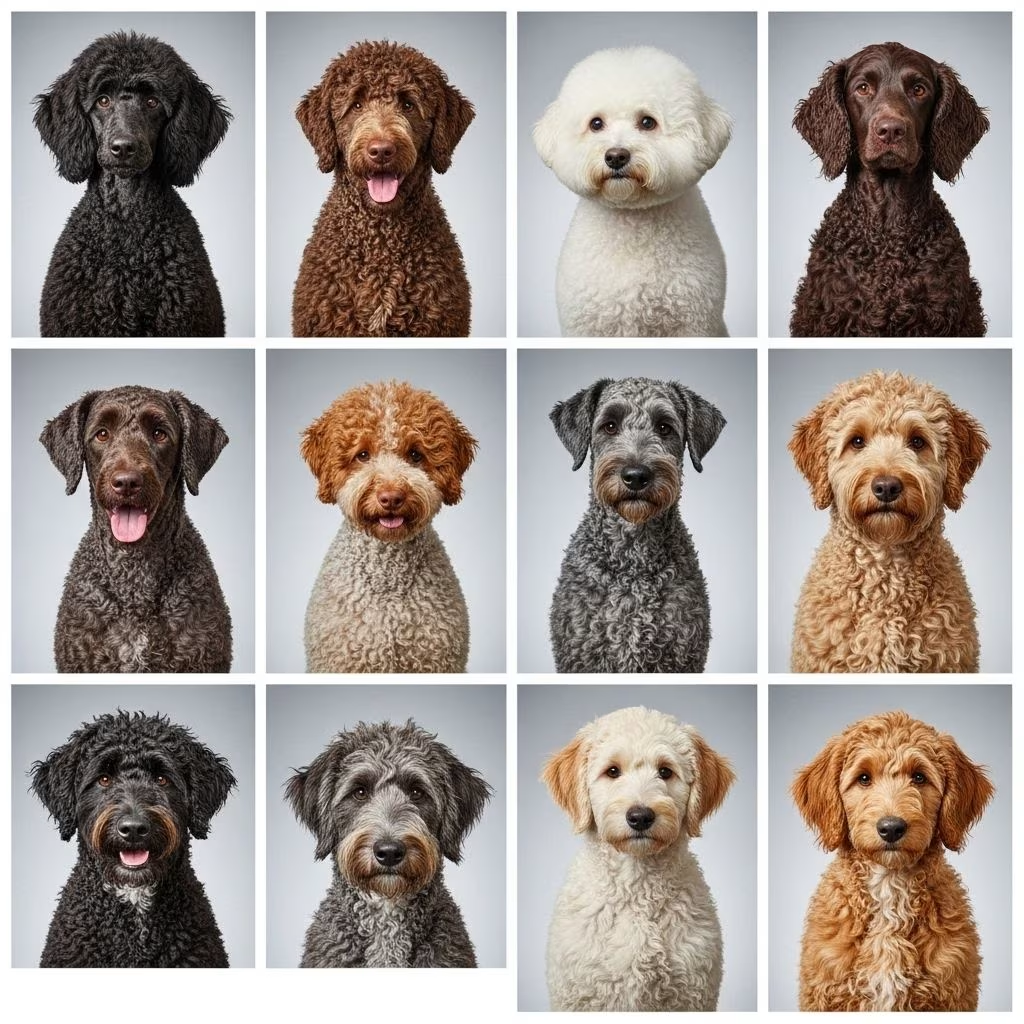
Doodle dogs—playful, charming, and undeniably cute—have become one of the most sought-after crossbreeds for families and dog lovers everywhere. From Goldendoodles to Aussiedoodles, these poodle mixes boast a wide variety of appearances, personalities, and talents. But what exactly is a doodle dog, and are they right for you? In this comprehensive guide, we’ll sort fact from fiction and help you decide if a doodle is the perfect fit for your home.
What Is a Doodle Dog?
Simply put, a doodle dog is a mix between a poodle and another breed. Breeders typically pair a poodle (Standard, Miniature, or Toy) with other popular breeds to combine the best traits of both dogs. The primary motivation is often to create a pet that sheds less and might be more hypoallergenic than its non-poodle parent, though the reality is more nuanced.
The trend started in the 1980s when the Royal Guide Dog Association of Australia sought to develop a guide dog suitable for individuals with dog allergies. The first Labradoodle, a cross between a Labrador Retriever and a Standard Poodle, was born, and the concept quickly captured public imagination. However, even among the first Labradoodles, some puppies triggered allergies while others did not.
Are Doodles a Recognized Dog Breed?
Despite their popularity, doodle dogs are not recognized as an official breed by major kennel clubs such as the American Kennel Club (AKC). Because they’re crossbreeds, and not true purebreds, there is a wide variety in their appearance, temperament, and coat type—even within a single litter.
The Most Popular Types of Doodle Dogs
Poodles can be crossed with many different breeds, resulting in a dizzying array of doodle dogs, each with their own unique traits. Here are some of the most well-known and beloved doodle varieties:
- Labradoodle (Labrador Retriever + Poodle): Friendly, active, and versatile.
- Goldendoodle (Golden Retriever + Poodle): Gentle, social, and highly trainable.
- Cockapoo (Cocker Spaniel + Poodle): Cheerful, outgoing, and affectionate; one of the earliest poodle mixes.
- Maltipoo (Maltese + Poodle): Small, loving, and lively—a great lapdog.
- Cavapoo (Cavalier King Charles Spaniel + Poodle): Sweet, adaptable, and intelligent.
- Aussiedoodle (Australian Shepherd + Poodle): Energetic, clever, and full of personality.
- Bernedoodle (Bernese Mountain Dog + Poodle): Loyal, affectionate, and robust; known for their striking looks.
- Sheepadoodle (Old English Sheepdog + Poodle): Playful, smart, and gentle with families.
- Yorkiepoo (Yorkshire Terrier + Poodle): Compact, spunky, and often hypoallergenic.
- Schnoodle (Schnauzer + Poodle): Active, alert, and makes an excellent watchdog.
- Boxerdoodle (Boxer + Poodle): Intelligent, lively, and loyal.
The list continues to grow as more breeders experiment with new poodle mixes to suit various lifestyles and preferences.
Visual Guide: Popular Doodle Breeds
| Breed Name | Parent Breeds | Size (Typically) | Personality |
|---|---|---|---|
| Labradoodle | Labrador Retriever + Poodle | Medium to Large | Social, athletic, loyal |
| Goldendoodle | Golden Retriever + Poodle | Medium to Large | Gentle, playful, loving |
| Cockapoo | Cocker Spaniel + Poodle | Small to Medium | Easygoing, happy, adaptable |
| Maltipoo | Maltese + Poodle | Toy to Small | Affectionate, alert, friendly |
| Cavapoo | Cavalier King Charles Spaniel + Poodle | Small | Sociable, even-tempered, smart |
| Aussiedoodle | Australian Shepherd + Poodle | Medium | Energetic, playful, intelligent |
| Bernedoodle | Bernese Mountain Dog + Poodle | Large | Patient, goofy, devoted |
Dispelling Doodle Dog Myths
Doodle dogs are often surrounded by myths and misconceptions, particularly regarding shedding, allergies, and temperament. Here is what every potential doodle owner should be aware of:
- Myth: Doodles are always hypoallergenic.
Fact: While poodle coats tend to shed less, and so may produce fewer allergens, the inheritance of these traits is unpredictable. Even within a single litter, some pups may shed or trigger allergies. - Myth: All doodles are non-shedding.
Fact: Most doodle mixes shed less than the non-poodle parent, but few are truly no-shed dogs. All dogs shed to some extent. - Myth: Doodles have the same temperament as poodles.
Fact: Doodle temperament is a mix of both parent breeds, and each dog’s personality is unique. Some may be more like poodles, others more like their other parent. - Myth: Doodles are always easy to train.
Fact: Poodles are intelligent and trainable, but crossing breeds introduces variability. Some doodles can be independent or stubborn, needing more patience and consistency in training. - Myth: Doodles need minimal grooming.
Fact: Most doodles have high-maintenance coats that require regular grooming to avoid matting and tangling.
Doodle Dog Temperament and Personality
The temperament of a doodle largely depends on the genetic influence of both parent breeds, as well as upbringing and early socialization. In general, most doodles are:
- Intelligent and willing to learn, especially in breeds where both parents are known for their smarts.
- Affectionate and loyal, forming strong bonds with their families.
- Energetic; many require good daily exercise to remain happy and healthy.
- Friendly with people and other dogs, but early socialization is important to instill good behavior.
However, because of their intelligence and energy, some doodles may develop separation anxiety or destructive behaviors if left alone for long periods. Providing adequate mental and physical stimulation is crucial.
Are Doodles Good Family Dogs?
Doodles are often sought after as family companions thanks to their perceived low allergen coats, loving nature, and playful demeanor. However, they aren’t a perfect fit for every household. Consider the following before bringing a doodle home:
- Exercise Needs: Most doodles require at least 30 to 60 minutes of activity each day. Without sufficient exercise, they may become bored or destructive.
- Training: Early and consistent training is crucial—doodle dogs thrive on positive reinforcement and mental challenges.
- Companionship: These crossbreeds do best in homes where they won’t be left alone for long stretches.
- Grooming: Plan for regular brushing and professional grooming to keep their coats healthy and tangle-free.
- Shedding and Allergies: No guarantee your doodle will be allergy-friendly or non-shedding; always spend time with a dog before committing if allergies are a concern in your household.
Maintaining and Caring for Your Doodle
- Coat Care: Brush your doodle 3–4 times a week, and plan for professional grooming every 6–8 weeks.
- Diet: Feed a balanced, age-appropriate diet recommended by your vet.
- Exercise: Daily walks, playtime, and puzzle toys are excellent ways to burn off excess energy.
- Veterinary Care: Regular checkups are vital for early detection of any health issues.
- Training: Socialize your puppy early and use positive reinforcement methods for lasting good behavior.
Should You Adopt a Doodle?
Adopting a doodle can be a fulfilling decision, but it requires thoughtful research and an honest self-assessment. Consider adopting from rescue organizations that specialize in poodle mixes, or work with a reputable breeder who health tests their dogs and provides transparent answers to your questions.
- Ask about parental health and temperament testing.
- Meet the puppy’s parents if possible, to understand the likely adult size and personality.
- If you have allergies, spend time with the individual dog before bringing them home; there are no guarantees based on breed alone.
- Remember: each doodle is unique, and the mix of traits may vary widely even among siblings.
Frequently Asked Questions (FAQs)
- Are doodle dogs really hypoallergenic?
- Doodle dogs can be less likely to trigger allergies due to their poodle lineage, but there is no guarantee. Allergen production varies between dogs—even within the same litter.
- How much do doodle dogs shed?
- Some doodle mixes shed less than others, but almost all shed at least a little. Regular grooming can help control shedding and keep coats manageable.
- Which size of doodle is best for apartments?
- Miniature or toy-sized doodles, such as the Maltipoo or Cavapoo, can do well in smaller spaces as long as they receive enough daily exercise and attention.
- Are doodles easy to train?
- Many doodles are smart and eager to please, especially when trained positively from a young age. The specific training ease can depend on both parent breeds and the individual dog.
- Do doodles need a lot of exercise?
- Yes. Most doodle breeds require at least 30 to 60 minutes of exercise a day to stay healthy, happy, and well-behaved.
Key Takeaways Before Bringing Home a Doodle
- Doodles are not a one-size-fits-all solution for allergies or shedding concerns.
- Their physical and personality traits vary widely, even among puppies from the same litter.
- Preparation for their exercise and grooming needs is crucial for a happy, healthy doodle.
- Do your homework: research breeds, breeders, and rescues to find a dog that truly fits your family’s lifestyle.
Sources and Further Reading
- Consult with veterinarians and reputable breed organizations for the most up-to-date advice on doodle care and health.
- Visit rescue groups specializing in poodle mixes, such as the Doodle Trust or Poodle Rescue organizations, if you’re considering adoption.
With thoughtful planning, realistic expectations, and a commitment to responsible pet ownership, a doodle can become a legendary member of your family—one who brings joy, laughter, and unconditional love for years to come.
References
- https://www.bil-jac.com/the-dog-blog/posts/the-doodle-factor-what-you-need-to-know-about-doodle-dogs/
- https://www.countryliving.com/life/kids-pets/a45700895/doodle-dogs-guide/
- https://www.womansday.com/life/pet-care/g61958061/doodle-dog-breeds/
- https://www.countryliving.com/uk/wildlife/dog-breeds/a43173308/cockapoo-dog/