


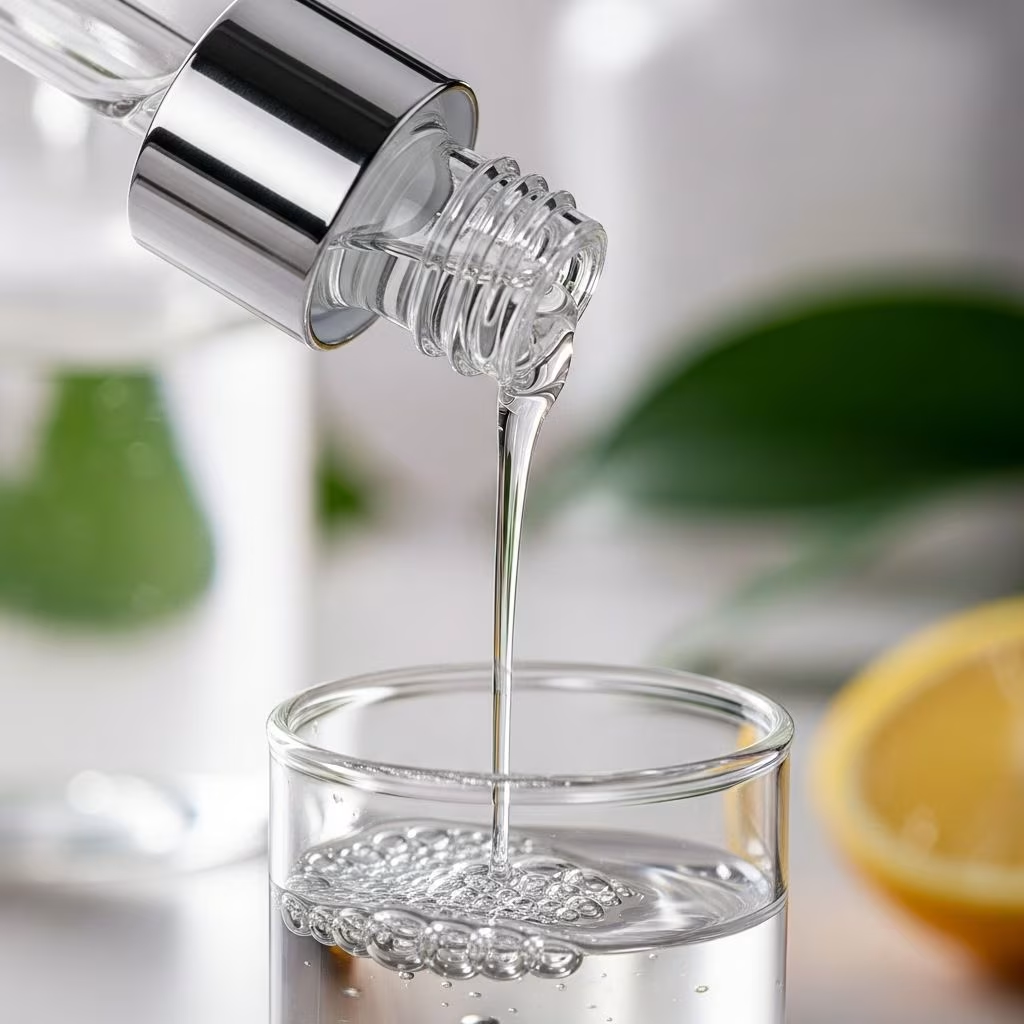
Decyl glucoside has become a foundational ingredient in modern personal care and home cleaning products thanks to its exceptional mildness, safety profile, and plant-based origins. Increasing demand for gentle, eco-friendly surfactants in skincare, haircare, and household applications has propelled this versatile compound into the spotlight. This article provides an in-depth exploration of what decyl glucoside is, where it comes from, its key benefits, typical uses, sensory characteristics including its taste, and essential safety and environmental information.
Overview: What Is Decyl Glucoside?
Decyl glucoside is a non-ionic surfactant that has gained significant popularity in personal care and cleaning products due to its excellent mildness, foaming capacity, and skin-friendly profile. Chemically, it falls into the family of alkyl polyglucosides (APGs), ingredients synthesized from renewable plant-based raw materials such as corn starch and coconut or palm-derived fatty alcohols. This combination of safety, efficacy, and renewability makes it especially valuable for brands and consumers seeking gentle and sustainable options.
Origin and Chemistry
Decyl glucoside is produced by combining two renewable plant-derived components:
- Glucose – obtained from corn starch or other plant sugars.
- Decanol (decyl alcohol) – derived from fatty alcohols found in coconut or palm oils.
The reaction joins the sugar molecule (glucose) with the fatty alcohol (decanol) to create a molecule with a hydrophilic (water-loving) head and a lipophilic (oil-loving) tail. This structure enables decyl glucoside to act as an effective surfactant, effortlessly mixing water and oils and lifting dirt or impurities for easy rinsing. Its chemical formula is C16H32O6, and its CAS number is 54549-25-6.
Key features:
- Non-ionic: Neutral charge, meaning it is very gentle and does not produce static or interact with charged molecules.
- Biodegradable: Completely breaks down into natural components.
- Plant-derived: Renewable feedstock reduces environmental impact.
How Decyl Glucoside Works as a Surfactant
Surfactants lower the surface tension of water, enabling the mixing of oily and watery substances (emulsification) and helping to lift dirt, oils, and residues from surfaces and skin. Decyl glucoside’s gentle, non-ionic structure makes it less irritating than many traditional surfactants. Its main functional roles include:
- Cleansing: Bonds to dirt and oil, allowing them to be rinsed away.
- Foaming: Produces a rich, stable foam, creating a luxurious sensory experience.
- Emulsifying: Mixes oil and water, stabilizing formulations.
- Conditioning: Enhances skin and hair feel, reduces irritation potential in blends.
Because it is not easily disrupted by minerals or high pH, decyl glucoside remains stable and effective across many formulation types and often serves as a co-surfactant to boost foam quality, mildness, and overall product performance.
Key Benefits of Decyl Glucoside
Decyl glucoside offers a range of advantages, both for formulators and end-users:
- Mildness: Extremely gentle, non-irritating to skin, eyes, and scalp—ideal even for sensitive skin and baby care.
- Hypoallergenic: Low risk of allergic reaction compared to harsher cleaning agents.
- Safe for Daily Use: Can be used frequently without over-drying, making skin smoother and more hydrated.
- Biodegradable & Eco-Friendly: Fully plant-derived and breaks down rapidly, minimizing environmental footprint.
- Compatible with Other Surfactants: Blends well with ionic and non-ionic agents, enhancing foam quality and gentleness in finished products.
- Preserves Natural Oils: Effectively cleans while maintaining the skin or scalp’s natural protective oils, making it excellent for dry or curly hair.
- Non-toxic: Safe to use for most skin types and in a variety of personal care products.
Common Uses in Personal Care and Beyond
Decyl glucoside is remarkably versatile, featuring in a wide spectrum of products:
- Facial cleansers and liquid body washes
- Baby shampoos and sensitive skin formulations
- Hand soaps and foaming cleansers
- Shampoos and conditioners
- Makeup removers
- Bubble baths and bath oils/salts
- Moisturizers and serums that require gentle cleansing action
- Pet care shampoos
- Household cleaners (dishwashing liquid, fruit and vegetable wash)
Its widespread use is attributed to not only its cleansing ability, but also its sensory attributes (rich, creamy lather), and environmental advantages.
Product Applications: Skincare, Haircare, and Cleaning
| Application Area | Decyl Glucoside Role | Primary Benefits | Typical Product Types |
|---|---|---|---|
| Skin Care | Mild cleanser, foaming agent | Gentle cleansing, hydration, non-irritating, suitable for sensitive skin | Facial cleansers, hand wash, body wash, baby wipes, bubble bath |
| Hair Care | Gentle surfactant, foam booster | Cleanses without removing natural oils, prevents scalp irritation | Shampoos, baby shampoo, conditioners, beard wash |
| Household Cleaning | Non-toxic surfactant, emulsifier | Effectively removes dirt/grease, safe for contact with skin, biodegradable | Dishwashing liquid, fruit/vegetable wash, surface cleaners |
In haircare, in particular, decyl glucoside is prized for its ability to remove buildup and excess oil without compromising color or the hair’s lipid barrier, making it an outstanding option for dry, curly, or sensitive scalps.
Taste and Sensory Characteristics
While decyl glucoside is not used as a food ingredient or flavoring, its sensory profile is occasionally relevant in rinse-off personal care and fruit/vegetable washing contexts. Key points regarding its taste and mouthfeel:
- Taste Experience: Decyl glucoside is described as having a neutral to slightly soapy taste. It is not intended for consumption and is not a sweetener.
- Aftertaste: Any soapy flavor is mild and typically rinses away completely with water, leaving little to no residual taste.
- Odor: Generally odorless or very faintly sweet due to its carbohydrate content; does not impart noticeable fragrance to finished products.
- Mouthfeel: Slippery and foamy; not meant for direct contact or ingestion. In fruit or vegetable washing, thorough rinsing removes any residue and associated taste.
In summary, although safe in trace residue (such as from a fruit wash), decyl glucoside is not intended or approved for culinary use and offers no flavor benefit.
Safety, Toxicity, and Allergenicity
Decyl glucoside is considered extremely safe and non-toxic for the vast majority of users:
- Endorsed by the Cosmetic Ingredient Review (CIR) Expert Panel for use at typical concentrations in cosmetics and personal care.
- Low-irritation profile, suitable for use on infants, sensitive skin, and in products such as baby shampoos.
- Does not contain common allergens or sensitizers. Allergy or irritation is possible but extremely rare; patch testing is advised for those with ultra-sensitive skin.
- Free from sulfates, parabens, phthalates, and synthetic fragrances by default.
Regulatory agencies and toxicology assessments indicate that, when formulated correctly, decyl glucoside does not penetrate deeply into skin or pose a systemic toxicity risk. It is also free of contaminants like ethylene oxide, which are sometimes present in conventional surfactants.
Environmental Impact and Biodegradability
A major attraction of decyl glucoside is its benign environmental footprint:
- Derived from 100% renewable vegetable sources (corn, coconut, palm).
- Biodegradable in both aerobic and anaerobic conditions, leading to minimal accumulation in the environment.
- Low aquatic toxicity compared with traditional synthetic surfactants.
- Production and use are considered sustainable and aligned with eco-conscious product standards.
Its safe use in natural and organic formulations makes it an ideal choice for environmentally responsible brands and consumers.
Formulation Notes: Compatibility and Synergy
Decyl glucoside is prized by formulators for its flexibility:
- Acts as primary surfactant or co-surfactant, enhancing foam and mildness in blends.
- Stable across wide pH range and compatible with other surfactant types (anionic, amphoteric, and non-ionic).
- Supports natural and “free-from” claims in clean beauty and wellness products.
- Helps stabilize emulsions and can thicken aqueous systems.
For best results, manufacturers combine decyl glucoside with other glucosides (e.g., lauryl or coco glucoside) or mild anionic surfactants (e.g., sodium cocoyl isethionate) to balance foam texture and viscosity in finished products.
Frequently Asked Questions (FAQs)
Q: Is decyl glucoside safe for people with sensitive skin or allergies?
A: Yes, decyl glucoside is very mild and non-irritating, making it ideal for sensitive skin, including babies and those with eczema or allergies. Always perform a patch test before first use on extremely sensitive skin.
Q: Is decyl glucoside environmentally friendly?
A: Absolutely. It is derived from renewable plant sources and is fully biodegradable with low aquatic toxicity, making it an excellent eco-conscious choice.
Q: Can decyl glucoside be ingested or used in food?
A: No. Decyl glucoside is for external use only. While it may be safe in trace amounts if residues remain after rinsing fruit or vegetables, it is not a food ingredient and should not be purposefully consumed.
Q: How does decyl glucoside differ from other surfactants like SLS (sodium lauryl sulfate)?
A: It is far milder, less likely to irritate or dry out skin, has a simpler, plant-based origin, and is more environmentally friendly compared to the aggressiveness of SLS.
Q: Is decyl glucoside the same as coco glucoside?
A: While both are alkyl polyglucosides derived from coconut or other plant oils and sugars, they differ in the length of their fatty alcohol chain. Coco glucoside tends to generate milder foam; decyl glucoside creates a richer lather and is slightly better at emulsifying oils.
References
- SpecialChem. Decyl Glucoside – Cosmetic Ingredient (INCI).
- BeMinimalist Blog. What is Decyl Glucoside? Uses and Benefits for Skin.
- Therapy Clean Blog. Decyl Glucoside.
References
- https://www.specialchem.com/cosmetics/inci-ingredients/decyl-glucoside
- https://beminimalist.co/blogs/skin-care/is-decyl-glucoside-in-skincare-products-a-friend-or-foe
- https://therapyclean.com/blogs/ingredients-1/decyl-glucoside
- https://en.wikipedia.org/wiki/Decyl_glucoside
- https://branchbasics.com/blogs/cleaning/decyl-glucoside
- https://tucokids.com/blogs/ingredients/decyl-glucoside-uses-benefits-side-effects-the-unbottle-co
- https://www.ulprospector.com/en/na/PersonalCare/Detail/100296/1003443/Decyl-Glucoside
- https://pubchem.ncbi.nlm.nih.gov/compound/Decyl-Glucoside
- https://learncanyon.com/ingredients/decyl-glucoside/


