


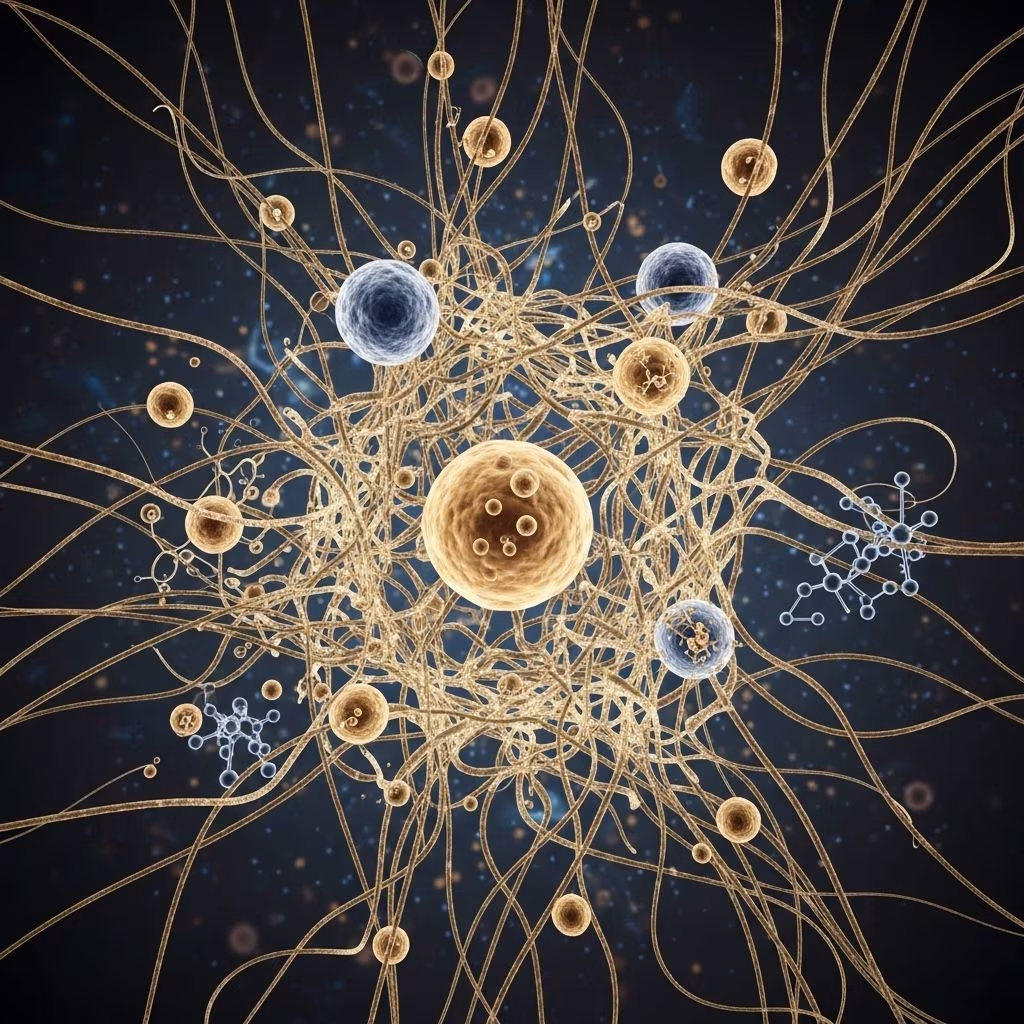
Fibrin plays a central role in human health, acting as the essential component in blood clotting, wound healing, and innovative medical applications. Understanding fibrin—from its molecular structure to its modern uses and even its taste—reveals how this remarkable protein underpins both natural and engineered processes in medicine and biology.
What Is Fibrin?
Fibrin—also known as Factor Ia—is a fibrous, insoluble protein vital to blood clotting (coagulation) and tissue repair. It arises when the soluble plasma protein fibrinogen, produced in the liver, encounters the enzyme thrombin. Thrombin converts fibrinogen into fibrin, transforming a soluble molecule into a network of protein fibers that stabilize a wound and prevent further blood loss. Fibrin’s formation is central to the body’s response to blood vessel injury, making it integral to hemostasis and healing processes.
Structure and Formation of Fibrin
The structure of fibrin is a marvel of biological engineering. Fibrinogen, which circulates in human blood plasma at approximately 1.5–3.5 g/L, consists of complex polypeptide chains arranged in a rod-like shape with globular regions at each end and a central nodule. This molecule contains sites that are only exposed when thrombin cleaves specific peptide bonds, allowing the molecules to align and polymerize.
Here’s an overview of fibrin’s formation:
- Activation: When blood vessel damage occurs, circulating thrombin enzymes cleave fibrinogen, creating monomeric fibrin.
- Self-Assembly: These monomers align in a half-staggered fashion, forming double-stranded protofibrils that further aggregate into thick fibers.
- Cross-Linking: Factor XIII (fibrin-stabilizing factor) strengthens the network by cross-linking the fibers, resulting in a durable, resilient clot.
Under a microscope, fibrin appears as long, strong, elastic threads, forming a mesh that halts blood flow at wound sites.
Molecular and Structural Characteristics
- Protein Type: Fibrous, non-globular protein
- Primary Structure: Single alpha helices and beta-sheets arranged in a network
- Polymerization: Lateral aggregation forms a three-dimensional meshwork
- Glycosylation: Fibrin from animals is often glycosylated, which influences function and biocompatibility
Physiological Role of Fibrin
Fibrin orchestrates several critical biological roles in the body:
- Hemostasis: Rapid fibrin formation prevents excessive bleeding by sealing damaged vessels.
- Wound Healing: Its mesh not only plugs the wound but also acts as a scaffold that supports cell migration and tissue regeneration.
- Blood Clot Retraction: Fibrin enables clots to contract spontaneously, aiding in fluid removal from the clot and compact wound closure.
- Stopping Blood Flow: The elastic properties allow the clot to stretch under pressure without breaking, making it resilient during bodily movement.
Fibrin Pathway Simplified
| Step | Description |
|---|---|
| 1. Vessel Injury | Blood plasma leaks out; platelets rush to the site |
| 2. Platelet Plug Formation | Platelets adhere, forming a loose plug |
| 3. Thrombin Activation | Prothrombin is converted to active thrombin enzyme |
| 4. Fibrin Generation | Thrombin converts fibrinogen into sticky, insoluble fibrin threads |
| 5. Clot Stabilization | Fibrin forms a mesh, Factor XIII cross-links and solidifies the clot |
| 6. Wound Repair | Fibrin supports tissue growth, leading to long-term healing |
Biological Benefits of Fibrin
The biological importance of fibrin extends far beyond clot formation. Some of the core advantages include:
- Protection Against Hemorrhage: By sealing wounds, fibrin prevents life-threatening blood loss after injury or surgery.
- Facilitation of Healing: The fibrin matrix attracts immune and tissue cells, promoting the healing process and providing a temporary extracellular framework for new cell growth.
- Defense Against Infection: The physical barrier created by the fibrin mesh can help reduce the risk of pathogen invasion at wound sites.
- Role in Inflammation Regulation: Fibrin degradation products can act as signals, modulating inflammation and helping to resolve it as healing progresses.
- Support for Neovascularization: Fibrin structures enable blood vessel formation within healing tissue, vital for reestablishing blood supply.
Medical Uses and Applications
Beyond its intrinsic role in wound healing, fibrin is increasingly utilized in a range of medical settings owing to its naturopathic compatibility and effectiveness as a biomaterial:
- Hemostatic Agents: Fibrin sealants (or fibrin glues) are used during surgeries to rapidly stop bleeding by forming an artificial clot over wounds or surgical incisions.
- Tissue Engineering and Regeneration: Medically engineered fibrin scaffolds encourage growth of skin cells, nerves, cartilage, and even cardiac tissue, making them popular in reconstructive surgery and regenerative medicine.
- Drug Delivery: Fibrin networks can be loaded with growth factors, antibiotics, or stem cells, allowing controlled release into healing tissues.
- Wound Dressings: Fibrin-based bandages and films help speed healing by mimicking the body’s natural repair processes.
- Treatment of Chronic Ulcers: Fibrin sprays or gels may assist with healing of persistent skin ulcers and burns by creating an optimal environment for cell migration and tissue formation.
Fibrin vs. Other Biomaterials in Medicine
| Property | Fibrin | Collagen | Synthetic Polymers |
|---|---|---|---|
| Origin | Natural (human/animal blood) | Natural (connective tissue) | Artificially synthesized |
| Biocompatibility | Excellent | Excellent | Good to variable |
| Degradability | Biodegradable | Biodegradable | Can be tailored |
| Use Cases | Clotting, scaffolds, sealants | Skin grafts, scaffolds | Drug delivery, device coatings |
Fibrin in Biomaterials and Tissue Engineering
Fibrin’s properties—strong, elastic, biocompatible, and biodegradable—make it a superb choice for biomaterials in tissue engineering.
- Scaffold for Tissue Growth: It naturally supports cell proliferation and differentiation, essential for engineering new tissues.
- Wound Healing Devices: Fibrin gels and glues can deliver growth factors, acting as smart bandages that foster rapid regeneration.
- Personalized Therapies: Fibrin matrices can be crafted from a patient’s own blood, minimizing risk of immune rejection and infection.
- Repair of Complex Tissues: Skin, cartilage, blood vessels, and nerve tissues have all been regenerated in the lab or clinical settings using fibrin-based systems.
Health Consequences of Fibrin Disorders
Disruptions in fibrin formation or breakdown can have significant impacts:
- Excessive Fibrin Generation (Thrombosis): Overproduction can cause dangerous blood clots (thrombus), blocking blood vessels and risking stroke or heart attack.
- Insufficient Fibrin (Hemorrhage): Failure to produce enough or proper fibrin impairs clotting, leading to uncontrolled bleeding. This is found in genetic deficiencies (e.g., afibrinogenaemia, hypofibrinogenaemia, dysfibrinogenaemia).
- Premature Fibrin Breakdown: Rapid dissolution of clots before healing can increase bleeding risk.
- Liver Disease and Fibrinogen Levels: Since the liver makes fibrinogen, its diseases can impair the entire process of fibrin generation.
- Hereditary Disorders: Abnormal genes can cause a lack of fibrinogen, defective fibrin formation, or failure to produce stabilizing factors like Factor XIII, increasing bleeding complications.
What Does Fibrin Taste Like?
Fibrin, per se, is not intended for culinary experience or human consumption, as its physiological role is strictly functional within the body. However, since it is a protein derived from blood, any taste sensations would likely mirror those associated with blood products or gelatinous animal proteins:
- Neutral to Mildly Metallic: Fibrin, mainly comprising protein without much fat or sugar, is expected to be bland or neutral, perhaps with a faintly metallic or iron-like undertone due to its association with blood matrices.
- Gelatinous Texture: Clotted fibrin (such as in cooked blood sausage or certain traditional dishes) may have a texture similar to fine, springy gelatin.
- Not Used for Flavor: Fibrin is not used to impart flavor or taste in culinary settings; its extraction from blood is generally reserved for medical and research, not food science.
In summary, fibrin has no distinctive taste profile and is not consumed as a foodstuff. Its value lies in its biomechanical and medical functions, not as a sensory or culinary experience.
Frequently Asked Questions (FAQs)
Q: What happens if the body can’t make enough fibrin?
A: A deficiency in fibrin production causes clotting problems that make it hard to stop bleeding after injury or surgery. Severe deficiencies can result in hemophilia-like symptoms that are potentially life-threatening during trauma or medical procedures.
Q: How is fibrin measured in clinical diagnostics?
A: Medical professionals assess fibrin activity using tests for fibrin degradation products (FDPs), D-dimer, and fibrinogen concentration in cases of abnormal bleeding, suspected thrombosis, or clotting disorders.
Q: Can excessive fibrin formation be harmful?
A: Yes—excessive clot formation, or thrombosis, can block blood vessels, causing serious conditions such as deep vein thrombosis, pulmonary embolism, stroke, or heart attack.
Q: Is fibrin used outside of hospitals or medical settings?
A: Fibrin, as a purified protein, is not typically used outside medical, research, or industrial settings due to safety and regulatory concerns. Its extraction requires strict clinical or laboratory protocols.
Q: Are fibrin-based medical products safe?
A: When produced under proper sterilized, controlled conditions from screened human or animal plasma, fibrin-based biomaterials and sealants used in medicine are considered safe and effective for their purposes.
For further information on blood proteins, wound healing, and biomaterials, consult authoritative medical texts or resources provided by healthcare providers and biochemistry specialists.
References
- https://pmc.ncbi.nlm.nih.gov/articles/PMC5536100/
- https://en.wikipedia.org/wiki/Fibrin
- https://www.britannica.com/science/fibrin
- https://my.clevelandclinic.org/health/body/fibrin
- https://www.cancer.gov/publications/dictionaries/cancer-terms/def/fibrin
- https://pdb101.rcsb.org/motm/83
- https://www.cancer.gov/publications/dictionaries/cancer-terms/def/fibrinogen
- https://www.merriam-webster.com/dictionary/fibrin
- https://haematologica.org/article/view/9514


