


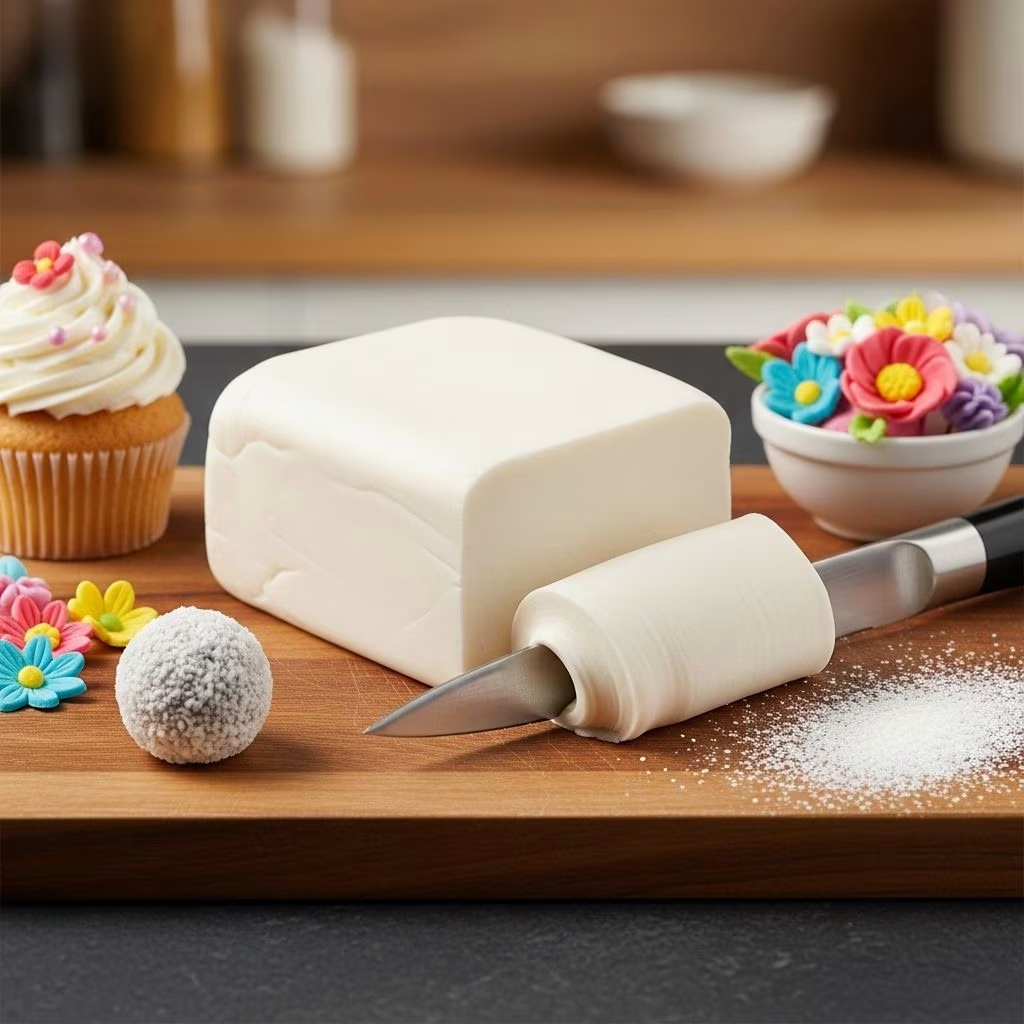
Fondant sugar is a cornerstone of the confectionery and baking worlds, recognized for its smooth, pliable texture and versatility in numerous applications. Famous for its flawless finish on cakes and pastries, fondant is as much about science as it is about culinary artistry. This comprehensive guide explores everything you need to know about fondant sugar: its makeup, history, various forms, benefits, culinary uses, taste profile, and much more.
Introduction to Fondant Sugar
Fondant sugar refers to a specific preparation of sugar—sometimes simply called “fondant”—commonly used in the culinary world for its ability to create smooth, glossy finishes on cakes, pastries, and candies. Technically speaking, fondant is a partially crystalline confectionery product comprising small sugar (sucrose) crystals suspended in a saturated syrup . Its unique texture and applicability have made it an essential ingredient in cake decorating, fudge making, and the creation of filled chocolates.
History and Origins of Fondant
Fondant’s history traces back to 19th-century France, though some sources suggest connections to Ottoman Turkey as well . The word “fondant” itself derives from the French verb “fondre”, meaning “to melt”—reflecting fondant’s signature property of melting in the mouth . By the 20th century, fondant was firmly established as a preferred icing and decorating medium for elegant cakes and confections.
What Is Fondant Sugar Made Of?
At its core, fondant sugar is a mixture of sugar (sucrose) and water, often with added glucose syrup (or corn syrup) to control crystallization and texture . Additional ingredients might include:
- Invert sugar – helps maintain a soft consistency
- Gelatin and glycerine – used as softeners or stabilizers, especially in rolled fondant
- Colorings and flavors – such as vanilla, lemon, or chocolate
- Milk, cream, or butter – sometimes included for added richness in special recipes
Traditional compositions usually maintain a high proportion of sucrose (about 60%) and 20% glucose syrup, with the remainder being water and optional additives .
Types and Varieties of Fondant
Fondant comes in several distinct forms, each with its ideal usage:
- Poured Fondant: A creamy, pourable icing used for glazing pastries and confectionery centres, such as petit fours or the inside of Cadbury Creme Eggs .
- Rolled Fondant: A dough-like, pliable fondant popular for cake covering and sculpted cake decorations .
- Powdered Fondant: Also known as fondant sugar or icing sugar, used to create fondant when mixed with water and syrup .
- Chocolate, Marshmallow, and Other Flavored Fondants: Enhanced variants for taste and application diversity.
Common Fondant Applications Table
| Type of Fondant | Texture | Primary Use | Key Features |
|---|---|---|---|
| Poured Fondant | Creamy, pourable | Glaze for pastries, chocolates | Glossy finish, thin layer |
| Rolled Fondant | Soft, dough-like | Cake covering, decorations | Pliable; easy to mold/sculpt |
| Powdered Fondant | Pulverized powder | Bases, fillings, icings | Quick to reconstitute |
| Flavored Fondant | Varies | Candies, fillings, specialty cakes | Distinctive flavors/colors |
How Is Fondant Sugar Made?
The production of fondant sugar follows a precise process designed to achieve an ultra-smooth, fine texture:
- Cooking: Sugar, water, and corn syrup are heated until the mixture reaches the soft-ball stage (around 112–116°C/234–241°F) .
- Cooling: The hot syrup is allowed to cool without agitation to prevent premature crystallization.
- Beating/Agitation: The cooled syrup is beaten or kneaded, encouraging the formation of tiny sucrose crystals for a smooth, creamy texture .
- Finishing: At this stage, colors, flavors, and stabilizers might be incorporated. The product can be used immediately for coating or allowed to rest and then sculpted or rolled.
This crystallization process distinguishes fondant from other icings by creating a texture where the sugar crystals are too small to detect on the tongue .
Benefits of Using Fondant Sugar
Fondant offers several advantages, making it a preferred choice for both home bakers and professionals:
- Impeccably Smooth Finish: Provides a flawless, satiny surface prized in cake decorating .
- Flexibility and Versatility: Easily molded, colored, and flavored to create intricate decorative elements .
- Preservation: Acts as a barrier to moisture, helping keep cakes and pastries fresh for longer periods .
- Machinability: Its supple consistency makes it easy to manipulate without cracking or tearing, even on complex cake shapes .
- Customizability: Accepts a wide range of colorings and flavorings for artistic freedom.
- Microbial Stability: High solubility of glucose syrup in the recipe inhibits microbial growth below 75% solid content, offering safety and longer shelf life .
Culinary and Decorative Uses of Fondant Sugar
Fondant sugar is incredibly versatile. Its uses span:
- Cake Covering: The most iconic use, creating a smooth, elegant finish on wedding and celebration cakes.
- Pastry Glazes: Poured over petit fours, éclairs, or fruit tarts for a professional sheen and gentle sweetness .
- Candies and Confectionery Fillings: Forms the creamy centers of chocolates, cordials, and fondant fancies .
- Decorative Elements: Rolled fondant can be sculpted into flowers, ribbons, figures, and intricate cake toppers.
- Seed Crystallization in candies like fudge, graining agents, and creams .
- Frostings and Icings: Used as a base for other icings, such as marzipan coatings or frosting embellishments .
Taste and Texture of Fondant Sugar
Fondant sugar is characterized by:
- Smooth and Velvety Texture: Sugar crystals are microscopic, resulting in a creamy consistency that melts away on the tongue .
- Sweet, Mild Flavor: The taste is primarily sweet with subtle hints of vanilla or other added flavorings. Fondant typically has less complexity than buttercream or ganache, allowing the flavors of the cake or pastry beneath to shine through.
- Plastic, Workable Consistency: Especially in rolled forms, fondant remains firm enough for shaping, yet soft enough to cut and eat easily .
- Fat Content: Classic fondant is virtually fat-free, though some flavored or enriched versions may contain butter or cream .
Because of its sugar base, fondant is undoubtedly sweet, but typically less rich than frostings made with significant amounts of butter or cream.
Nutritional Information
| Component | Per 100g |
|---|---|
| Carbohydrates | 80g |
| Water | 12g |
| Fat | 5.71g |
| Calories | 371 kcal |
Fondant is a high-sugar, high-calorie product and should be enjoyed in moderation. Its almost negligible fat content (for classic plain fondant) can vary with recipe adaptations .
Storage and Shelf Life
Fondant sugar is best stored in an airtight container at room temperature. Properly wrapped and kept away from humidity, it can last several months. Rolled fondant tends to dry out if left exposed; pouring fondant may crystallize if not kept sealed and refrigerated. Adding a bit of glycerine or shortening can help maintain its pliability over time.
Fondant vs. Other Icings and Sugars
| Feature | Fondant | Buttercream | Royal Icing |
|---|---|---|---|
| Main Ingredients | Sugar, water, glucose/corn syrup | Butter, sugar, milk | Powdered sugar, egg whites |
| Texture | Smooth, pliable, glossy/pourable | Creamy, fluffy | Brittle, hardens on drying |
| Application | Cake/pastry cover, candy, sculptures | Cake filling, piping, simple decor | Icing cookies, fine piping |
| Taste | Mild, sweet, neutral | Sweet, buttery, rich | Sugary, slightly crisp |
| Finish | Satiny, flawless | Smooth, soft | Shiny, hard |
Tips for Working with Fondant
- Keep Fondant Covered: Always keep unused fondant tightly wrapped in plastic to prevent drying.
- Prevent Sticking: Use cornstarch or confectioner’s sugar when rolling out to prevent sticking to surfaces.
- Knead until Smooth: Kneading fondant before use ensures optimal smoothness and pliability for covering cakes or molding shapes.
- Avoid Humidity: Fondant can quickly become sticky or melt in humid environments, so work in a cool, dry space when possible.
- Flavor It: If desired, add extracts (vanilla, almond, lemon) to enhance fondant’s taste.
Frequently Asked Questions (FAQs)
Q: Is fondant sugar the same as icing sugar?
A: No, fondant sugar refers to the sugar preparation specifically made for fondant’s smooth, pliable consistency. Icing sugar, or powdered sugar, is finely ground sugar, used as a component in fondant and other icings, but not interchangeable for sculpted fondant’s purposes .
Q: Can fondant be flavored naturally?
A: Yes, fondant can easily be flavored with extracts, citrus zest, or other natural flavorings during preparation or kneading, allowing for a range of taste experiences beyond classic plain fondant.
Q: Why use fondant instead of buttercream?
A: Fondant provides a smoother, more professional finish and can be sculpted into elaborate decorations, whereas buttercream is better for rich flavor and soft, creamy finishes. Many bakers use both: fondant for the exterior, buttercream as the cake’s inner layer .
Q: Is fondant suitable for people with dietary restrictions?
A: Traditional fondant is usually dairy-free, but always check ingredient labels since some recipes add milk, cream, or gelatin. Commercial fondant often contains glycerine, which can be plant or animal-sourced.
Q: Can fondant be made at home?
A: Yes. Homemade fondant allows customization in sweetness, consistency, and flavor. The basic process involves cooking sugar, water, corn syrup to the soft-ball stage, cooling, then beating until creamy. Rolled fondant additionally uses gelatin and glycerin for workability.
Conclusion
Fondant sugar is much more than just an icing—it is a foundational element of modern baking and sugar artistry, offering exceptional versatility, aesthetic beauty, and adaptable taste. Whether you are a home baker or a professional cake artist, understanding fondant’s properties, benefits, and potential uses can dramatically elevate your baking creations, adding polished, professional finishes and creative flair to any dessert.
References
- https://pmc.ncbi.nlm.nih.gov/articles/PMC6706510/
- https://bakerpedia.com/ingredients/fondant/
- https://www.britannica.com/topic/fondant
- https://en.wikipedia.org/wiki/Fondant
- https://pmca.com/Forms/assets/firstpage/2021_01.pdf
- https://ecampusontario.pressbooks.pub/ingredients/chapter/forms-of-sugar-used-in-the-bakeshop/
- https://patents.google.com/patent/US2129859A/en
- http://www.thegoodscentscompany.com/data/rw1651381.html
- https://garri.overcastcdn.com/documents/50500100541.pdf


