


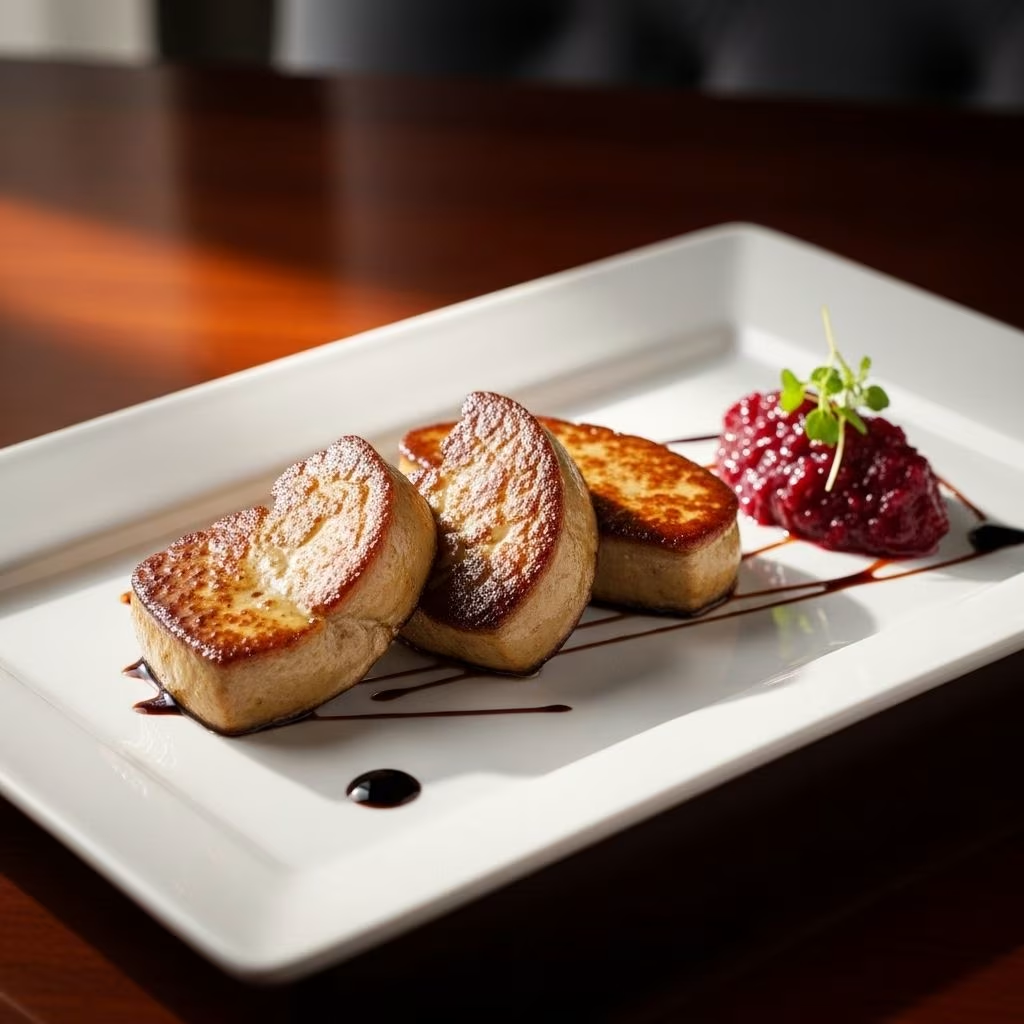
Foie gras, a celebrated centerpiece of French gastronomy, conjures up images of opulent feasts and fine dining. Yet, few foods are as shrouded in history, culinary prestige, controversy, and distinct flavor as foie gras. This article offers an in-depth look at what foie gras is, its historical roots, health and nutritional profile, culinary uses, taste experience, and ongoing debates. Whether you’re a food enthusiast or simply curious about world cuisine, this guide unveils the unique story and nuances behind one of the world’s most luxurious delicacies.
What Is Foie Gras?
Foie gras is a rich, buttery, and delicate-tasting food product made from the enlarged liver of a duck or goose, which is specially fattened through a process traditionally known as gavage (force-feeding). The term “foie gras” itself is French for “fatty liver” and it is considered a symbol of luxury and refinement in the culinary world.
- Primary Ingredients: Duck or goose liver
- Texture: Silky, creamy, and smooth, often melting in the mouth
- Applications: Served as a pâté, mousse, terrine, or simply seared
- Key Feature: Foie gras is celebrated for its unique flavor profile that balances sweetness and richness
The Rich History of Foie Gras
The allure of foie gras dates back more than 4,500 years. Its journey traverses ancient civilizations and evolving culinary traditions, culminating in its prominent place in modern gastronomy.
Ancient Beginnings
- Ancient Egypt: The earliest known references to foie gras date to Ancient Egypt around 2500 BCE. Egyptians observed migratory geese gorging on food before long flights—which naturally enlarged their livers—and replicated this by feeding domesticated geese figs, reflected in bas-reliefs of fattened birds.
- Spread to Greece and Rome: The practice spread to Greece, where geese and ducks were fattened on water-soaked wheat, and was later adopted by the Romans, who innovated by feeding geese figs and coined the term iecur ficatum (fig-stuffed liver).
The French Connection
- Culinary Emblem: The tradition of foie gras was refined and flourished in France. By the Middle Ages, it was a delicacy for nobility, owing to its labor-intensive and expensive production.
- Modern Evolution: In the 18th century and beyond, foie gras production advanced with the invention of gavage (force-feeding) by Jean-Joseph Clause, leading Southwestern France (especially regions like Alsace and Périgord) to become the global center for foie gras.
- Global Recognition: Today, foie gras retains its significance not only in French cuisine but in fine dining across the world. Its production and serving are often accompanied by festivals and cultural celebrations, particularly in regions with strong goose or duck farming traditions.
The following table summarizes the key historical phases:
| Era | Region | Development |
|---|---|---|
| Ancient Times | Egypt, Greece, Rome | Discovery of natural fattening, adoption of force-feeding |
| Middle Ages | France, Jewish communities | Cultural embedding, refinement of methods |
| Modern Era | Europe, North America, Asia | Industrial production, legal regulation, global spread |
Nutritional Profile and Potential Benefits
Though foie gras is best known for its flavor and texture, it also has a unique nutritional profile shaped by its rich fat content. Here, we outline the major nutrients as well as any associated health considerations.
- Calories: Foie gras is an energy-dense food, typically providing about 450-500 kcal/100g, mainly from fats.
- Fats: High in monounsaturated and polyunsaturated fatty acids, particularly Oleic acid, similar to that found in olive oil. This type of fat is associated with cardiovascular health benefits when consumed in moderation.
- Cholesterol: Contains a significant amount of cholesterol, which can be a concern for some individuals.
- Vitamins: Foie gras is a source of vitamins A, B12, and other B vitamins, which are essential for vision, cellular energy, and nervous system function.
- Minerals: Good source of iron, copper, and phosphorus.
Potential Benefits
- Rich in Healthy Fats: The high content of monounsaturated fat may contribute to reduced LDL cholesterol and support heart health, provided portion sizes are moderate.
- Nutrient Density: Provides a dense source of vitamins and minerals often lacking in typical diets.
- Satiety and Satisfaction: Its richness can promote feelings of fullness with small portions, making it a suitable option for special occasions rather than daily consumption.
Note: Given the high fat and cholesterol, foie gras should be enjoyed as an occasional indulgence rather than a staple for most individuals, particularly if at risk for cardiovascular disease.
How Foie Gras Is Made
The production of foie gras centers around a process where ducks or geese are intentionally fattened to enlarge their livers. This is a tightly regulated tradition, especially in France, to ensure consistent quality and adherence to cultural standards.
The Gavage Process
- Species Used: The two most common birds are the Moulard duck and the Toulouse or Landes goose.
- Diet: Traditionally, a corn-based, high-calorie diet is administered for 2–3 weeks. In some regions, wheat or figs are included.
- Feeding Method: Birds are fed multiple times daily with the aid of a feeding tube, which allows rapid fat accumulation in the liver.
French law, in particular, stipulates precise conditions for animal welfare, feed composition, and the duration of force-feeding. The result is a liver that swells up to 10 times its natural size, taking on a tender, rich texture prized by chefs and gourmets alike.
Culinary Uses of Foie Gras
Foie gras is a remarkably versatile ingredient that occupies a prestigious role on restaurant and festive menus worldwide. Here are its most popular culinary forms and applications:
- Terrine: Foie gras is seasoned, cooked in a mold, and served cold, typically spread on toasted bread or brioche.
- Pâté: Whipped and blended with seasonings and sometimes truffles, then set into a smooth, spreadable form.
- Mousse: Light and airy texture, often enjoyed as an appetizer or canape.
- Seared (Escalopes): Thick slices are pan-seared and served hot, sometimes atop steak or with complementary fruits.
- Accompaniment: Foie gras pairs exceptionally with fruit compotes, fig or apricot jams, and is sometimes used as a luxurious stuffing for poultry or game birds.
- Innovative Uses: Modern chefs employ foie gras in sushi, burgers, creative desserts, or even ice cream—testament to its adaptability and continued evolution.
The Unique Taste and Experience
Foie gras offers a taste and mouthfeel distinct from other liver-based products. Its luxurious quality has earned it a reputation as a “once-in-a-lifetime” flavor encounter. Here are the sensory hallmarks:
- Texture: Unparalleled silkiness and creaminess, with a “melt-in-your-mouth” sensation.
- Flavor: Subtly sweet, buttery, and rich without the metallic or bitter edge sometimes found in standard liver preparations.
- Aftertaste: Lingering, delicate, and umami-packed, often complemented by nutty, earthy, or even fruity undertones, depending on preparation and pairing.
Part of the appeal is that foie gras does not taste overwhelmingly like liver but instead offers a mild, sophisticated richness that balances sweet and savory notes in a signature way. The uniqueness also depends on the species, feed, and terroir.
Controversies, Ethics, and Legal Status
While foie gras enjoys much culinary acclaim, its production is not without controversy. The forced fattening process, primarily gavage, has raised concerns among animal welfare advocates, leading to legislative restrictions in some jurisdictions.
- Ethical Concerns: The issue centers on whether force-feeding is humane, with some countries and cities banning production or sale of foie gras. France, however, legally enshrines foie gras as part of its protected cultural heritage.
- Alternatives: Some modern farms and innovators have explored “natural” foie gras production—using bird migration behaviors or enriching natural diets to achieve similar results without force-feeding.
- Legal Status: Production and sale of foie gras are banned in several countries and U.S. states, while other regions, notably France, Spain, and Hungary, maintain traditional practices under strict regulation.
How to Serve and Pair Foie Gras
Proper serving of foie gras enhances the gastronomic experience, highlighting its nuanced flavors and texture. Here are the fundamentals:
- Serving Temperature: Cold preparations (terrine, pâté, mousse) should be served slightly chilled, while seared foie gras must be enjoyed hot and freshly cooked.
- Bread Pairings: Classic accompaniments include toasted brioche, country bread, or pain d’épices (spiced bread).
- Condiments: Traditional partners are fig jam, onion marmalade, sweet or tangy fruit preserves, and even a sprinkle of sea salt or cracked pepper.
- Beverage Pairings: Sweet wines such as Sauternes, Tokaji, or late-harvest Rieslings are classic choices. Dry sparkling wines and light reds also complement the rich mouthfeel.
For a special experience, foie gras may be served as an amuse-bouche, atop a salad, or as part of a “surf and turf” main course with filet mignon or scallops.
Frequently Asked Questions (FAQs)
Q: Is foie gras only made from duck or goose?
A: Yes, authentic foie gras uses the liver of specially fattened ducks (most often Moulard) or geese (such as Toulouse or Landes).
Q: Does foie gras taste like regular liver?
A: No. While it is a liver product, foie gras is far milder, richer, and creamier, lacking the assertive metallic or bitter flavors typical of standard chopped liver or pâté.
Q: What makes foie gras so expensive?
A: The cost reflects the labor-intensive farming process, adherence to tradition, limited supply, and luxury culinary standing. Only select birds and regions produce foie gras to strict standards.
Q: Is foie gras healthy to eat?
A: When eaten occasionally and in small quantities, it can be part of a balanced diet thanks to its rich monounsaturated fats and vitamin content, but high fat and cholesterol levels mean it should be an indulgence rather than a staple.
Q: Why is foie gras controversial?
A: The process of force-feeding birds to enlarge their livers is considered inhumane by some animal welfare organizations, prompting bans and debates in various countries.
Q: Can foie gras be made without force-feeding?
A: While traditional French foie gras relies on gavage, some producers experiment with natural feeding and free-range methods—results may vary, and purists note differences in texture and flavor.
Conclusion
Foie gras is more than a gourmet food—it is a product of centuries-old tradition, taste evolution, and cultural identity. Revered for its buttery taste and delicate mouthfeel, it represents the heights of fine dining and culinary artistry. While its production methods have sparked controversy, the ongoing dialogue has inspired both tradition and innovation in responsible farming and gastronomy. For those lucky enough to sample true foie gras, the experience remains distinctive and memorable: a celebration of culinary history on the palate.
References
- https://www.shoplongino.hk/food-insights/foie-gras-history
- https://nojamobile.com/the-history-of-foie-gras/
- https://eurofoiegras.com/en/the-foie-gras/
- https://www.britannica.com/topic/foie-gras
- https://en.wikipedia.org/wiki/Foie_gras
- https://www.dartagnan.com/foie-gras-history.html
- https://www.caviarpassion.com/en/content/72-histoire-du-foie-gras.html
- https://curiousrambler.com/the-curious-history-of-foie-gras/
- https://www.atlasobscura.com/articles/ancient-foie-gras-debate


