


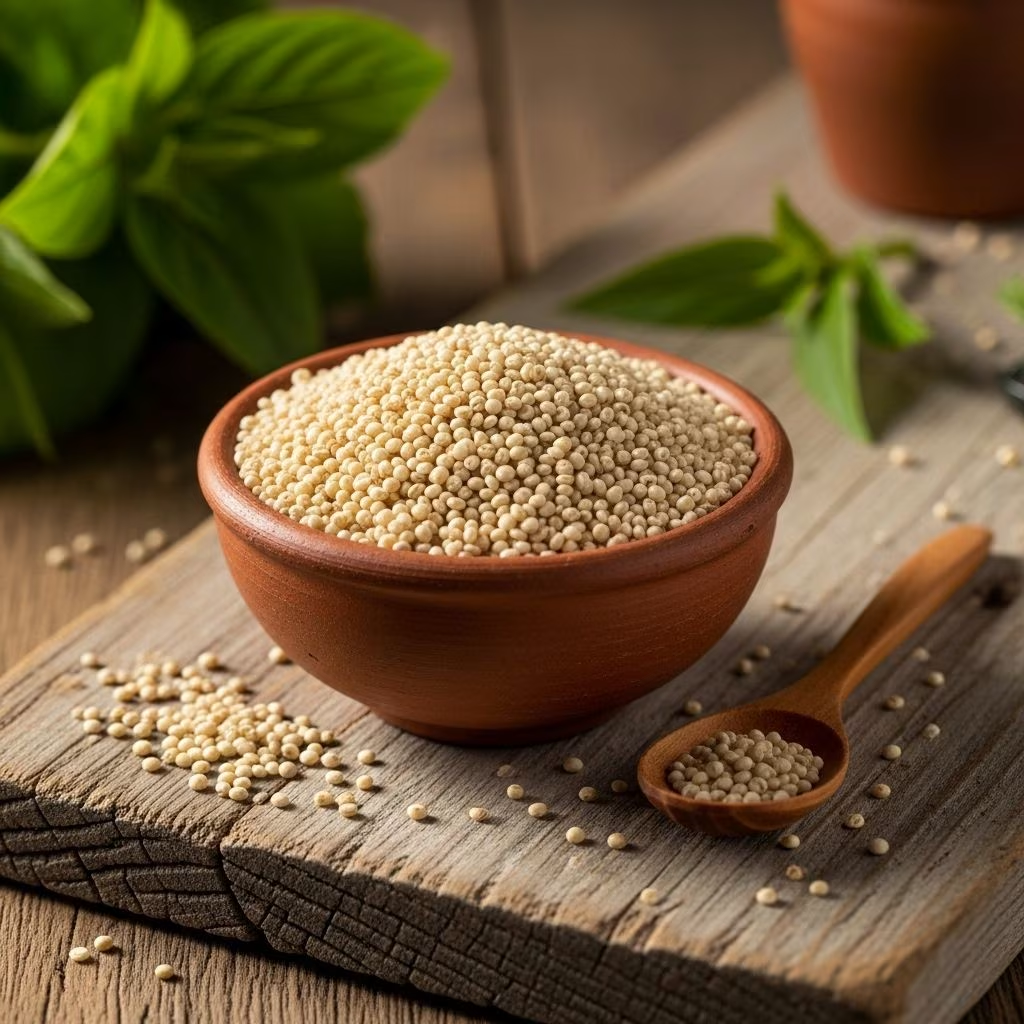
Fonio: Africa’s Oldest Supergrain – Benefits, Uses, and Taste Explored
Fonio, a tiny ancient grain native to West Africa, is celebrated for its resilience, cultural significance, and nutritional richness. Long a staple in African communities, it’s now gaining international recognition as a gluten-free alternative with profound health benefits and culinary versatility. This guide navigates fonio’s history, its proven health attributes, uses across the kitchen, and precisely what makes its flavor distinct.
What Is Fonio?
Fonio is a type of ancient grain belonging to the millet family, scientifically known as Digitaria exilis (white fonio) and Digitaria iburua (black fonio). It grows as tiny edible seeds on grass-like plants, traditionally farmed across dry savannas of West Africa for thousands of years. Its resilience to poor soil, drought, and lack of need for fertilization make it an exceptionally dependable crop. Fonio matures at a remarkable speed, typically within six to eight weeks, faster than quinoa or amaranth.
Other names for fonio include acha, hungry rice, findi, fundi, or iburu, reflecting the diverse languages and cultures that have cherished this grain for centuries.
History and Cultural Significance
Fonio’s cultivation dates back over 5,000–7,000 years, earning it the distinction of being possibly the oldest African cereal. Historically, fonio has been integral to food security in rural African communities, such as the Dogon people of Mali, who call fonio the “seed of the universe,” attributing mythical and spiritual value to the plant. The annual fonio harvest underpins local rituals, festivities, and communal traditions, symbolizing resilience, prosperity, and continuity.
Today, the world’s fonio production is centered in Guinea, with Nigeria, Mali, and Senegal also contributing significant output. While its global market is still emerging, the grain is increasingly sought in Europe and North America for its superfood appeal.
Nutritional Profile and Benefits
Fonio is celebrated for being a nutritional powerhouse, packing more nutrients in its tiny seeds than many refined grains and offering a strong balance of macros and micronutrients. Its ultra-small size belies its substantial nutrition. Here is an overview of its core nutritional attributes:
| Grain (1/4 cup dry) | Calories | Fat (g) | Carbs (g) | Fiber (g) | Protein (g) | Iron (mg) | Gluten-Free |
|---|---|---|---|---|---|---|---|
| Fonio | 160 | 0 | 37 | 1 | 3 | 1.12 | Yes |
| Quinoa | 160 | 3 | 31 | 3 | 6 | 1.8 | Yes |
| Couscous | 163 | 0 | 33 | 2 | 6 | 0.47 | No |
| Cream of Wheat | 157 | 1 | 32 | 2 | 4 | 12.13 | No |
| White Rice | 171 | 0 | 38 | 1 | 3 | 0.74 | Yes |
| Brown Rice | 190 | 2 | 39 | 2 | 4 | 0.72 | Yes |
Data compiled from multiple sources for comparison.
- Gluten-Free: Ideal for those with celiac disease or gluten intolerance.
- Rich in Essential Minerals: Iron, magnesium, zinc, and phosphorus.
- High in B Vitamins: Especially thiamine (B1), supporting energy metabolism.
- Low in Fat: Fonio is naturally fat-free, making it suitable for low-fat diets.
- Good Source of Protein: While not as high as quinoa, fonio offers about 3g per serving and more amino acids than many grains, especially methionine and cysteine.
- Low Glycemic Index: Fonio is slow to impact blood sugar, supporting balanced energy.
- Contains Dietary Fiber: Aids digestion, though less than some other grains.
Health Benefits of Fonio
Fonio’s nutritional profile translates into a series of proven health benefits:
- Supports Healthy Digestion: Its dietary fiber content helps regulate bowel movements and supports gut health.
- Packed with Amino Acids: Fonio provides higher levels of essential amino acids — notably methionine and cysteine — vital for protein synthesis, hormone production, and metabolic balance. For plant-based diets, this is a remarkable advantage.
- Helps Prevent Anemia: With significant iron content, fonio supports red blood cell health, particularly important in populations prone to iron deficiency.
- Gluten-Free Nutrition: As a grain free from gluten, fonio is safe for celiac disease and wheat sensitivities.
- Energy and Vitality: The B vitamins found in fonio help sustain energy metabolism and reduce fatigue.
- Weight Management: Low calorie and fat content make fonio a useful base for weight-conscious diets.
- Antioxidant-Loaded: Contains plant compounds like flavonoids, defending cells against oxidative stress.
Sustainability and Environmental Impact
Fonio’s environmental profile is one of its greatest assets:
- Thrives in Poor Soil: Requires minimal nutrients and tolerates depleted land.
- Drought Resistance: Grows with little rainfall, ensuring food security in arid regions.
- Minimal Inputs Required: Needs little to no fertilizers, pesticides, or irrigation.
- Fast Growth Cycle: Reaches maturity in just 6–8 weeks, restoring harvest continuity.
- Resilient to Pests: Not usually susceptible to grain pests, making storage easier.
- Low Environmental Impact: Less impact compared to water- or fertilizer-intensive grains.
As global attention shifts to sustainability, fonio stands out as a climate-smart crop with the potential to bolster biodiversity and nourish communities under pressure from unpredictable weather and loss of fertile soil.
Culinary Uses of Fonio
Fonio’s tiny size and neutral character make it vastly adaptable in global cuisine. Traditionally, it’s a staple in porridges, pilaf-style dishes, and snacks in West African cooking. Increasingly, chefs and home cooks are experimenting with fonio worldwide.
- Porridge: Fonio’s classic use is as a creamy breakfast porridge, simply boiled with water or milk and flavored with honey, nuts, or fruit.
- Side Dishes: Steamed or boiled fonio serves as a light, fluffy alternative to rice, quinoa, or couscous.
- Salads: Chilled and tossed with vegetables, herbs, and dressings, fonio makes a gluten-free, nutrient-rich salad base.
- Baking: Fonio flour is increasingly available for use in gluten-free baked goods, pancakes, and crackers.
- Soups and Stews: Its fine texture helps thicken and add body to hearty soups and vegetable stews.
- Snacks: Fonio can be formed into cakes, fritters, or energy bars for creative snacks.
- Beverages: In West Africa, fonio grains are sometimes fermented for traditional brewing, reflecting its versatility.
Fonio cooks extremely quickly—usually less than ten minutes—and holds its shape well, making it suitable for both sweet and savory applications.
Taste and Preparation
Fonio’s flavor and texture are central reasons for its growing popularity.
- Mild, Nutty Flavor: Fonio is described as mild, nutty, and earthy, reminiscent of cousin but with more depth.
- Delicate Texture: Cooked fonio is light, fluffy, and finer than other grains—visually akin to grains of sand.
- Quick Cooking: Boils and softens in less than 10 minutes, absorbing flavors well.
- Versatile Palate: Because of its neutral taste, fonio complements both bold and subtle flavors, taking on spices, herbs, citrus, or sweet toppings effortlessly.
Basic Cooking Instructions:
- Rinse 1 cup of fonio to remove excess starch.
- In a pot, add rinsed fonio with 2 cups water (or broth).
- Bring to a boil, cover, and simmer for 5–7 minutes until water is absorbed.
- Fluff with a fork and serve hot or cold.
Fonio’s fine texture means it can clump easily, so stirring gently during cooking is advisable. For a richer, nuttier flavor, toasting the grains briefly before boiling is common in traditional recipes.
Fonio vs Other Grains: Comparison Table
| Attribute | Fonio | Quinoa | Couscous | Basmati Rice | Brown Rice |
|---|---|---|---|---|---|
| Gluten-Free | Yes | Yes | No | Yes | Yes |
| Protein per 1/4 cup (g) | 3 | 6 | 6 | 3 | 4 |
| Cooking Time (min) | 5–7 | 15 | 5 | 15–20 | 25–30 |
| Taste | Mild, nutty, earthy | Earthy, grassy | Neutral | Fragrant, mild | Nutty, chewy |
| Environmental Impact | Low | Medium | High | Medium–High | Medium |
Fonio exceeds many grains in environmental sustainability, cooks the fastest, and brings subtle nutty notes to the table, all while providing a gluten-free alternative for those in need.
Frequently Asked Questions (FAQs)
Q: Is fonio safe for gluten-free or celiac diets?
A: Yes. Fonio is naturally gluten-free, making it an excellent replacement for wheat, barley, or rye for those with gluten sensitivities.
Q: How do you cook fonio?
A: Fonio cooks rapidly. Rinse, then simmer 1 part fonio with 2 parts liquid for 5–7 minutes. Fluff before serving.
Q: What does fonio taste like?
A: Fonio’s taste is mild, nutty, and earthy—similar to a whole-grain couscous or a delicate brown rice.
Q: Is fonio suitable for vegan and plant-based diets?
A: Absolutely. It provides more essential amino acids (especially methionine and cysteine) than most grains, filling key nutrient gaps in vegan diets.
Q: Where can you buy fonio?
A: Fonio is now available in specialty health food stores, online retailers, and some larger supermarkets, often sold as whole grains or flour.
Q: Can fonio help with weight loss?
A: Fonio’s low calorie and fat profile, quick satiety, and moderate protein make it supportive in weight management plans.
Q: Is fonio considered a superfood?
A: Yes, due to its excellent nutrient density, sustainability, and broad culinary uses, fonio is increasingly marketed and respected as a superfood.
Summary
From its roots in West African history to its global emergence as a superfood, fonio stands out for its sustainability, nutritional value, and culinary flexibility. With a mild, nutty taste and rapid cooking time, it is a natural addition to healthy, diverse meals—meeting modern needs for gluten-free, plant-forward, and climate-smart ingredients. Exploring fonio offers both an homage to ancient foodways and an invitation to innovate in today’s kitchen.
References
- https://www.henryford.com/Blog/2024/01/Fonio-Grain
- https://foodrevolution.org/blog/what-is-fonio/
- https://www.beveragedaily.com/Article/2024/05/29/What-is-fonio-The-grain-set-to-become-the-superstar-of-sustainable-brewing/
- https://kerenreiser.com/fonio/
- https://www.forksoverknives.com/how-tos/fonio-ancient-grain-healthy-cooking-tips/
- https://www.terraingredients.com/news/introducing-fonio-the-most-important-ancient-grain-you-havent-heard-of-yet/
- https://thinklandscape.globallandscapesforum.org/49170/from-west-africa-here-comes-the-next-miracle-grain-fonio/
- https://www.feedipedia.org/node/228
- https://lexiconoffood.com/agrobiodiversity/stories/fonio/


