


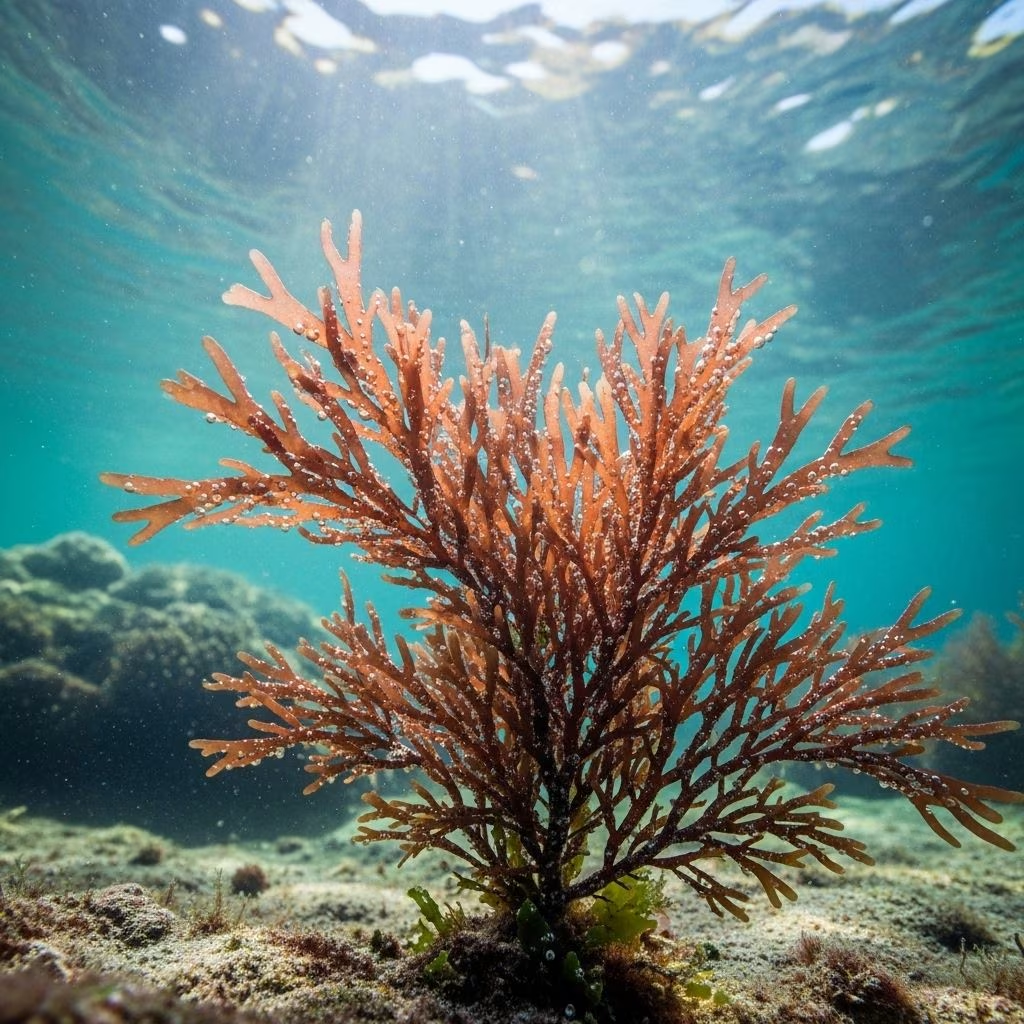
Gracilaria is a genus of red seaweed prized around the world for its unique nutritional advantages, commercial versatility, and distinctive flavor profile. With over 150 recognized species, Gracilaria thrives in warm, shallow marine waters and stands out as a leading source of agar—a key gelling agent in the food and biotechnology industries. In this comprehensive article, we’ll examine what Gracilaria is, its taxonomy and natural habitat, key nutritional and bioactive benefits, major uses from food to agriculture and industry, as well as its culinary applications and taste profile. We’ll also address questions of safety, environmental sustainability, and frequently asked questions, supporting your understanding of this fascinating marine resource.
Introduction to Gracilaria
Gracilaria is a large genus of red seaweed (Rhodophyta) known for its soft branching structure and its wide use in food products and industrial applications. Esteemed for rapid growth, adaptability, and high yield, Gracilaria is cultivated commercially throughout Asia, Latin America, and beyond, particularly as a primary source of agar—an essential gelling agent in culinary, microbiological, and pharmaceutical processes.
Taxonomy and Natural Habitat
Botanical Classification
| Kingdom | Plantae |
|---|---|
| Phylum | Rhodophyta |
| Class | Florideophyceae |
| Order | Gracilariales |
| Family | Gracilariaceae |
| Genus | Gracilaria |
Distribution and Environmental Tolerance
- Over 150 species recognized world-wide, making it one of the largest genera of red seaweeds.
- Found primarily in warm, shallow coastal waters, particularly estuaries, lagoons, and bays.
- Optimal growth temperature: 24°C to 30°C, but survives from 10°C to 35°C.
- Grows in salinity ranging from 10–40 ppt, thriving best at 25–33 ppt.
- Commonly attaches to rocky substrates or floats freely in the water column and is particularly prominent in nutrient-rich, eutrophic areas.
- Rapid growth and reproduction allow Gracilaria populations to quickly dominate suitable habitats.
Key Morphological Features
Gracilaria species are visually striking for their bushy, branching stems and varied colors, which can range from vivid red to brownish or even green, depending on species and environmental conditions.
- Structure: Bushy, entangled, cylindrical or blade-shaped branches.
- Color: Typically red (hence classification as ‘red algae’), but may appear yellow, orange, or brown depending on water clarity and light.
- Size: Thalli (main body) can reach up to 30–60 cm in ideal environmental conditions.
- Attachment: Holdfast discoid, can be solitary or aggregated forming expanded basal discs.
- Texture: Flexible, gelatinous, and sometimes cartilaginous due to the presence of polysaccharides.
- Reproduction: Capable of both sexual (spores) and asexual (vegetative) propagation, often via fragmentation, which makes them prolific in disturbed marine environments.
Nutritional Profile and Health Benefits
Nutritional Composition
Gracilaria is valued not only for its industrial uses but also for its excellent nutritional qualities. The nutrient composition varies by species and cultivation conditions, but generally includes:
- High-quality polysaccharides (notably agar and other sulfated galactans).
- Dietary fiber, supporting digestive health.
- Minerals such as iodine, calcium, magnesium, iron, potassium, and phosphorus.
- Essential trace elements, including zinc, copper, selenium, and manganese.
- Vitamins, particularly vitamin C, some B-vitamins, and vitamin A precursors (beta-carotene, phycoerythrin).
- Antioxidants and polyphenols, providing further health benefits.
- Low in calories and fat, making it suitable for health-conscious dietary regimens.
Key Health Benefits
- Digestive health: The high content of soluble fiber (agar and other polysaccharides) helps promote gut motility and supports the microbiome.
- Antioxidant protection: Polyphenols and phycobiliproteins combat oxidative stress.
- Immune support: Sulfated polysaccharides from Gracilaria have shown immunostimulatory properties in laboratory studies.
- Anti-inflammatory effects: Extracts have demonstrated reductions in inflammation markers in preliminary research.
- Prebiotic properties: Some of the carbohydrates resist digestion by humans but are metabolized by beneficial gut bacteria.
- Mineral supplementation: Provides essential minerals—especially iodine, supporting thyroid function.
- Cholesterol management: Soluble fiber and certain polysaccharides can help regulate cholesterol absorption.
- Potential anticancer and antiviral properties: Early studies suggest extracts may suppress certain cancer cell lines and inhibit viral replication, though more research is required.
Commercial and Industrial Uses
Gracilaria’s robust cell walls are rich in polysaccharides, especially agar, a substance with transformative commercial value across industries. Its versatility is reflected in its historic and modern applications.
Major Applications
- Agar Production: Gracilaria is a major global source of agar, used in food (desserts, gels, stabilizers), microbiology (culture media), pharmaceuticals (capsules), and biotechnology (tissue scaffolds).
- Food Industry: Used as a thickening and gelling agent in Asian cuisine, confectionery, dairy products, and plant-based alternatives.
- Animal Feed: Supplements aquaculture feeds (e.g., shrimp, abalone farming) for added nutrition and health benefits.
- Fertilizer and Soil Conditioner: Dried Gracilaria meal enriches soil with organic matter and micronutrients, supporting sustainable agriculture.
- Cosmetics: Incorporated into skin creams, lotions, and haircare products for its mineral content and moisturizing effects.
- Biofuel Research: The carbohydrate-rich biomass is being studied as a renewable feedstock for bioethanol and biogas production.
Economic and Aquaculture Value
- Widely cultivated in regions like China, Indonesia, Vietnam, and the Philippines.
- Ideal for integrated aquaculture systems thanks to high productivity, tolerance of variable conditions, and ability to sequester excess nutrients from adjacent fish or shellfish farms.
Culinary Uses and Taste
Main Culinary Regional Uses
- Southeast Asia: Fresh Gracilaria is used in salads (notably in the Philippines, Malaysia, and Indonesia), soups, and desserts.
- East Asia: Incorporated in Japanese and Chinese dishes as a garnish, vegetable, or to make jelly desserts.
- Global: Increasing presence in healthy, plant-based and vegan recipes worldwide.
Preparation Methods
- Fresh: Washed and soaked to remove excess salt, then added to salads or cold noodle dishes for crisp texture.
- Cooked: Brief steaming, boiling, or stir-frying; can also be mixed with eggs, meat, or other vegetables.
- Dried or Powdered: Used as a thickener, supplement, or decorative topping.
Taste and Texture Profile
Gracilaria has a distinctive culinary profile, prized for both taste and mouthfeel:
- Texture: Offers a crunchy, gel-like, and slightly slippery feel; some compare it to a firmer version of jelly noodles.
- Flavor: Mild, subtly sweet, and slightly briny (marine-like), without the strong fishiness of some other seaweeds. Subtle umami character enhances foods but rarely overpowers them.
- Color: Depending on variety, dishes may showcase various hues: green, brown, or even pinkish-red.
Because of its pleasant and mild marine taste as well as its ability to add both color and nutrition, Gracilaria appeals to a rising population of health-focused home cooks and professional chefs alike.
Sustainability and Environmental Impact
- Sustainable aquaculture: Fast-growing and able to utilize nutrients from runoff, Gracilaria cultivation can help mitigate coastal eutrophication—thus protecting sensitive marine habitats.
- Carbon sequestration: As with other seaweeds, Gracilaria removes significant CO2 from seawater, supporting climate goals.
- Low land and freshwater demand: Grown in marine environments, it places minimal pressure on terrestrial or freshwater resources.
- Biodiversity considerations: While aquaculture is largely beneficial, unchecked introduction of non-native Gracilaria species in new habitats may risk displacement of local marine flora.
Potential Precautions and Safety
- Heavy Metals and Contaminants: As with all seaweed, there is some potential for uptake of heavy metals or pollutants from the surrounding water. Sourcing from clean waters and reputable suppliers is advised.
- High Iodine Content: Individuals with thyroid disorders or on low-iodine diets should monitor consumption.
- Allergic Reactions: Rare, but possible in sensitive individuals.
- Overconsumption: Excessive intake can lead to digestive upset due to its fiber content.
Frequently Asked Questions (FAQs)
Q: Is Gracilaria the same as other edible seaweeds like Nori or Wakame?
No, Gracilaria is a different genus from Nori (Porphyra/Pyropia) and Wakame (Undaria). It is characterized by a firmer, crunchier texture and milder taste, and is most notable as the source of agar.
Q: Can Gracilaria be eaten raw?
Yes, fresh Gracilaria can be eaten raw when properly washed and soaked. It is often featured in fresh salads in Southeast Asian cuisines.
Q: Is there a vegan use for Gracilaria?
Absolutely. Both the whole seaweed and its agar derivative are widely used in plant-based recipes, desserts, and as a thickener in vegan cooking.
Q: Does Gracilaria have any medicinal uses?
Preliminary research highlights its potential in supporting immune function, gut health, and metabolic health thanks to its unique polysaccharides and antioxidants, but more clinical studies are needed for direct therapeutic recommendations.
Q: What is the difference between wild and farmed Gracilaria?
Farmed Gracilaria is produced in controlled environments and chosen for desired traits (e.g., agar yield, biomass), while wild-harvested types vary more in morphology and nutritional quality. Farmed Gracilaria is generally preferred for industrial and food use due to consistency and sustainability.
References
- Seaweed Aquaculture: Gracilaria. Marine Aquaculture Extension.
- Gracilaria salicornia | CABI Compendium.
- FAO: Characteristics of Gracilaria.
- A Comprehensive, Analytical Narrative Review of Polysaccharides … PMC.
References
- https://marine-aquaculture.extension.org/seaweed-aquaculture-gracilaria/
- https://www.cabidigitallibrary.org/doi/full/10.1079/cabicompendium.107771
- https://www.fao.org/4/ab730e/ab730e01.htm
- https://pmc.ncbi.nlm.nih.gov/articles/PMC11901860/
- https://pmc.ncbi.nlm.nih.gov/articles/PMC5893238/
- https://humicfactory.com/gracilaria-spp
- https://www.fao.org/fishery/en/culturedspecies/gracilaria_spp/en


