


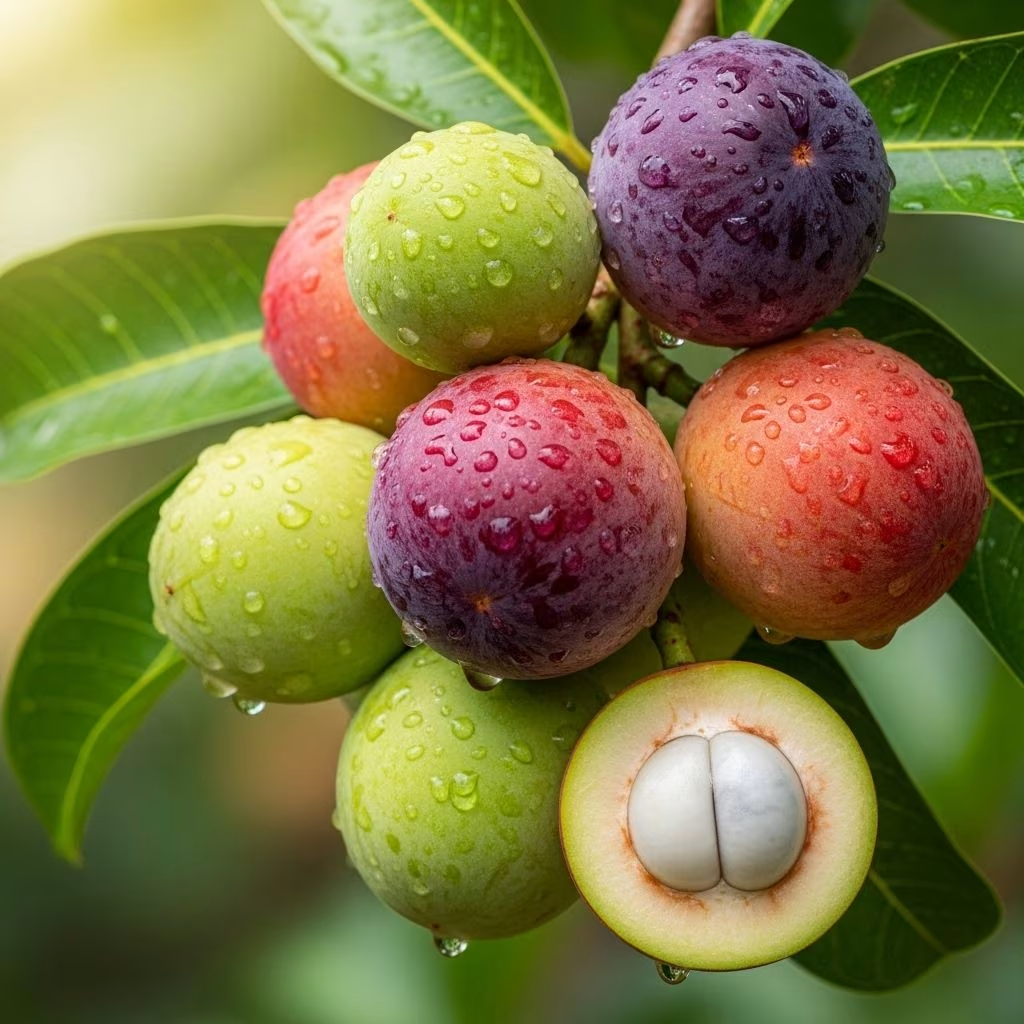
Icaco, widely known as cocoplum, is a lesser-known yet fascinating tropical fruit with an array of nutritional, culinary, and ecological contributions. Whether you are a plant enthusiast, a health seeker, or a culinary adventurer, delving into the world of icaco unveils the hidden gems of coastal flora. This article explores its appearance, origin, medicinal and nutritional benefits, culinary versatility, ecological significance, and much more.
- Introduction: The Icaco (Cocoplum) at a Glance
- Botanical Description and Distribution
- Historical and Cultural Significance
- Nutritional Profile of Icaco
- Health Benefits of Icaco Fruit
- Culinary Uses: From Fresh Fruit to Gourmet Treats
- Taste and Sensory Profile
- Growing, Harvesting, and Conservation
- Ecological Importance and Ornamental Value
- Icaco in Traditional Medicine
- Frequently Asked Questions (FAQs)
Introduction: The Icaco (Cocoplum) at a Glance
The icaco (Chrysobalanus icaco), also called cocoplum, paradise plum, or abajeru, is a small tropical tree or shrub that flourishes in coastal regions of the Americas, especially along the Atlantic and Caribbean coasts. Revered in local culinary and medicinal traditions, this resilient and adaptable plant offers a unique fruit that varies in color, size, and flavor depending on environmental conditions.
Botanical Description and Distribution
Chrysobalanus icaco is a low shrub or small tree, typically ranging from 1 to 6 meters in height, with evergreen, leathery leaves that are oval, round, or sometimes nearly circular. The leaves are usually glossy green, sometimes tinged with red, and tend to grow on the same side of the stems, creating a characteristic upward appearance.
- Flowers: Small, inconspicuous, greenish-white, arranged in clusters at the leaf base, blooming mostly from winter to spring.
- Fruits: The edible fruit is a drupe (stone fruit), which may be white, pinkish, yellow, or dark purple, with a white, cottony or spongy pulp. The fruit can be round (up to 5 cm diameter) or oval (up to 2.5 cm long) depending on proximity to the sea.
- Seed: The single seed is encased within a hard brown or ridged stone, with an edible white kernel inside.
- Bark and Trunk: Multi-branched, with bark that is brown, reddish-brown, or gray, often marked by white speckles.
Cocoplum thrives in sandy soils typical of beaches, swamps, and coastal dunes, but can also be found inland on hammocks and in tropical forests. It is highly tolerant of salt, flooding, and drought, which has contributed to its widespread distribution across the Caribbean, Central and South America, and southern Florida.
Historical and Cultural Significance
While icaco was not historically a dietary staple, it played an important auxiliary role in regional cuisines and commerce, especially in coastal communities. In some parts of Colombia, local women harvested and marketed icaco fruit, crafting it into traditional desserts such as dolce de icaco—a preserved, crystallized delicacy made by boiling the fruit with sugar and cinnamon. The fruit’s presence also richly colored place names and cultural memory, with terms like “Los Icacale” resonating in local geography.
In colonial history, the introduction of cocoplum to new territories has been traced to Dutch trade and migration patterns. Various Caribbean cultures refer to icaco as “fat pork,” a nod to its succulence and local prominence.
Nutritional Profile of Icaco
While specific nutrient breakdowns for icaco are less documented than for more common fruits, anecdotal and traditional sources suggest it is moderate in calories and contains a range of vitamins, minerals, and antioxidants:
- Carbohydrates: The pulp contains natural sugars, providing a gentle energy boost and making the fruit suitable for snacks and preserves.
- Fiber: The cottony or spongy flesh offers dietary fiber, beneficial for digestive health.
- Vitamins & Minerals: Icaco is believed to provide small amounts of vitamin C, B vitamins, calcium, magnesium, and potassium, supporting general wellness. However, detailed scientific analysis is limited.
- Plant Compounds: The fruit and seed likely contain phytonutrients (flavonoids, tannins, etc.) that contribute to their antioxidant potential.
Additionally, the edible kernel within the seed is oil-rich, providing healthy fats when consumed raw or roasted.
Health Benefits of Icaco Fruit
- Digestive Support: Traditionally, both fruit and leaves have been used in folk medicine for dyspepsia, dysentery, and diarrhea, possibly due to their fiber and mild astringent content.
- Antioxidant and Anti-inflammatory Effects: Like many tropical fruits, icaco may confer antioxidant protection, helping combat oxidative stress at the cellular level.
- Potential Skin Health: In some regions, topical preparations from leaves or fruit are applied for various skin conditions.
- Nutritive Value: As a natural, low-calorie snack rich in fiber and micronutrients, icaco supports a balanced diet.
- Cholesterol Regulation (Seed oil): The oil pressed from icaco seeds is consumed locally and is suggested (anecdotally) to benefit lipid balance, similar to other nut/seed oils.
It is important to note that while traditional knowledge supports these uses, modern scientific studies remain limited, and claims regarding specific health effects should be regarded as indicative, not definitive.
Culinary Uses: From Fresh Fruit to Gourmet Treats
| Culinary Use | Description | Notes |
|---|---|---|
| Fresh Consumption | Ripe fruit is eaten raw, often plucked directly from trees. Flavor varies greatly with location and color; purple/red fruits are sweeter. | Best enjoyed when fully ripe; insipid if underripe or too far inland. |
| Jams and Preserves | Pulp is stewed with sugar—sometimes with cinnamon or spices—to produce icaco jams, jellies, or ‘dolce de icaco’ (crystallized fruit dessert). | Popular in Colombian, Caribbean, and Central American cultures. |
| Seed Kernel | The inner white kernel is edible raw, roasted, or pressed for oil. | The hard stone must be cracked to access the kernel. |
| Dried Fruit | Mature fruits may be stewed in sugar and dried, used similar to prunes. | Traditional preservation for storage and transport. |
| Flavoring and Sweets | Slices or purees are incorporated into pastries, ice cream, and candies in some regions. | Offers a subtle fruity or slightly floral note. |
Traditional Recipe Highlight: Dolce de Icaco
The dolce de icaco is a revered dessert where whole icacos are boiled, infused with sugar and a hint of cinnamon, and cooked until they reach a caramelized, slightly crystallized state with a reddish hue. This treat is especially popular during festive seasons and family gatherings.
Taste and Sensory Profile
- Texture: The fruit’s pulp is spongy or cottony and juicy when ripe.
- Flavor: Taste varies widely:
- Coastal or sea-grown icacos: Remarkably sweet, mild, and subtly floral.
- Inland varieties: More neutral, sometimes almost tasteless or faintly acidic.
- Color difference: Purple or red-skinned fruits are generally considered to have a finer, sweeter taste than white ones.
- Aroma: Light and fresh; not strongly pronounced.
- Seed Kernel: Mild, nutty reminiscent of almonds when roasted.
Because of this variability, cocoplum is sometimes overlooked by those expecting intense flavor, but for many, its gentle sweetness and delicate texture are highly appealing, particularly in preserves and sweets.
Growing, Harvesting, and Conservation
- Propagation: Icaco is propagated by seeds or woody stem cuttings; germination is straightforward in suitable climates.
- Growing Conditions: It thrives in full sun to moderate shade, tolerating a broad spectrum from acidic to alkaline (pH 6.6–8.4) soils, and both drought and salt exposure.
- Harvest Season: Fruit ripens primarily from May to August, though sporadic fruiting can occur throughout the year, especially in warm regions.
- Sustainability Concerns: Habitat loss due to development of coastal resorts and land conversion threatens wild populations of icaco in some regions, such as San Andrés and Providencia.
Best Practices for Harvesting
- Harvest only fully ripe fruits; immature fruits remain green and do not ripen after picking.
- Avoid overharvesting in the wild to support conservation.
Ecological Importance and Ornamental Value
- Wildlife Habitat: Cocoplum’s dense foliage provides shelter and nesting sites for birds and small mammals, while its fruit is a valuable food source for wildlife.
- Pollinators: Flowers attract bees and other insects, supporting local pollinator populations.
- Erosion Control: The extensive root system stabilizes sand dunes and coastal soils, mitigating erosion.
- Ornamental Uses: Due to its luxuriant, evergreen foliage and attractive fruit, cocoplum is widely planted as an ornamental hedge in tropical and subtropical gardens, especially in Florida and urban landscapes.
- Resilience: Its high salt and wind tolerance make it ideal for landscaping in challenging coastal environments.
Icaco in Traditional Medicine
Traditional cultures across the Americas have employed various parts of the icaco plant for medicinal purposes, chiefly:
- Digestive Aid: Decoctions made from the fruit or leaves are administered for mild digestive disturbances, including stomach upset and diarrhea.
- Topical Healing: Leaves or fruit preparations, sometimes as a poultice, are used for minor skin ailments and inflammations.
- Oil Use: Edible oil from the seed kernel is applied externally for its purported skin-softening and healing properties.
While current research into these uses is limited, their persistence in folk medicine highlights the cultural importance of this resilient plant.
Frequently Asked Questions (FAQs)
Q: Can I eat cocoplum fruit raw?
A: Yes, ripe cocoplums can be eaten raw. They are mildly sweet, especially the purple or red-skinned varieties, but taste can be variable.
Q: Is cocoplum nutritionally valuable?
A: The fruit contains natural sugars, fiber, and small amounts of vitamins and minerals. The seed kernel also provides edible, healthy fats. Its moderate nutritional profile supplements a balanced diet.
Q: How should cocoplum be used in cooking?
A: Cocoplum is most popular in jams, preserves, and traditional desserts but can also be eaten fresh, dried, or incorporated into sweets and pastries.
Q: Can I grow cocoplum at home?
A: Yes, if you are in a tropical or subtropical climate. Cocoplum grows well as a hedge or ornamental shrub, especially in coastal regions.
Q: Is cocoplum at risk of extinction?
A: While not globally threatened, certain local populations are at risk due to habitat loss, especially in regions facing coastal development and deforestation.
Icaco, or cocoplum, stands as a symbol of the resilience and bounty of coastal ecosystems, offering both sustenance and beauty to those who know how to appreciate it. Its subtle charm—best enjoyed fresh under tropical skies or transformed into a festive sweet—makes it a botanical treasure worth preserving.
References
- https://www.fondazioneslowfood.com/en/ark-of-taste-slow-food/icaco-cocoplum/
- https://www.flawildflowers.org/flower-friday-chrysobalanus-icaco/
- https://pfaf.org/user/Plant.aspx?LatinName=Chrysobalanus+icaco
- https://en.wikipedia.org/wiki/Chrysobalanus_icaco
- https://www.growables.org/information/TropicalFruit/Cocoplum.htm
- https://edis.ifas.ufl.edu/publication/EP553
- https://gardeningsolutions.ifas.ufl.edu/plants/trees-and-shrubs/shrubs/cocoplum/
- https://www.cabidigitallibrary.org/doi/full/10.1079/cabicompendium.13122


