


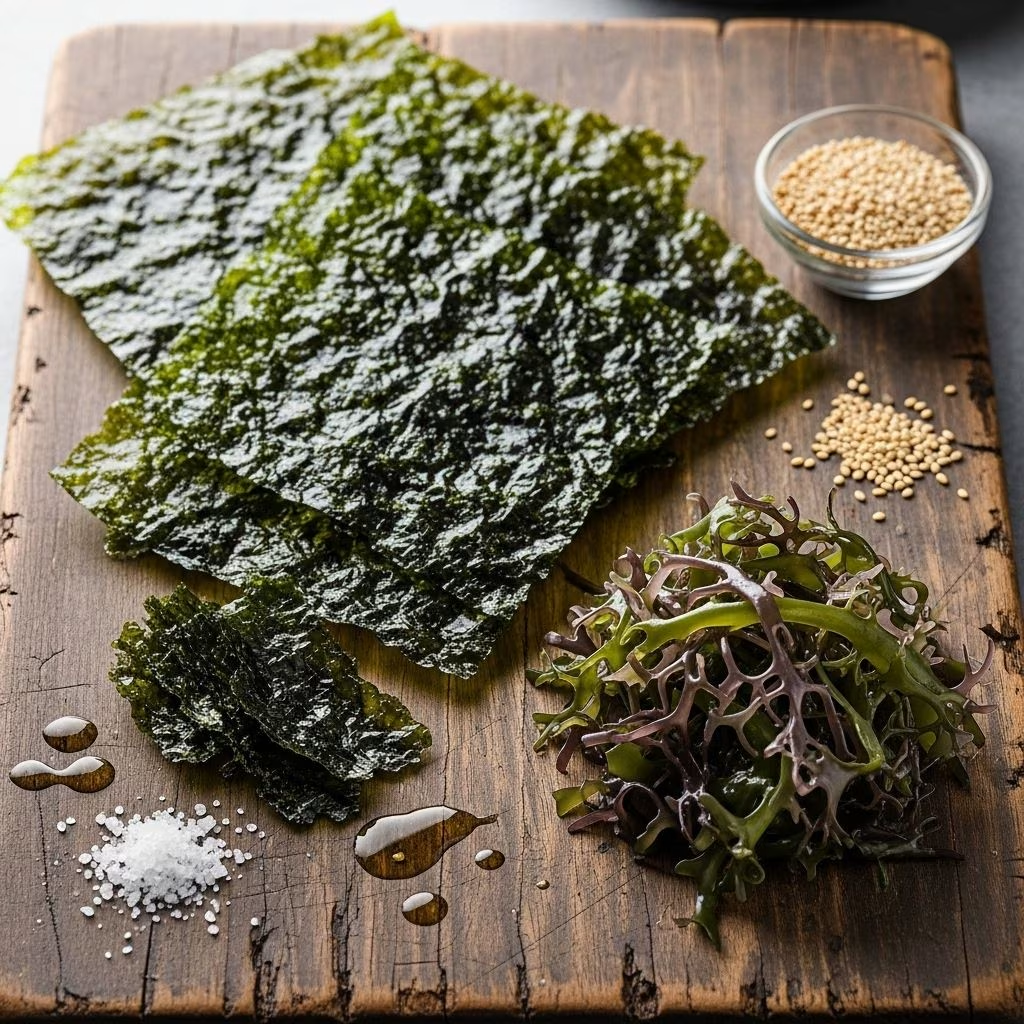
Laver is a type of edible red seaweed with centuries-old culinary and cultural significance, especially in Wales, Ireland, and East Asia. Renowned for its unique flavor and nutritional richness, laver is a marine superfood that has shaped both local and international dishes. This in-depth guide covers everything about laver seaweed, from its biology and history to its health benefits, traditional and modern uses, and the distinct taste that makes it exceptional.
Introduction to Laver: Botany and Varieties
Laver refers to several species of red seaweed in the genus Porphyra, particularly Porphyra umbilicalis and Porphyra purpurea. These thin, delicate seaweeds are often found in sheet-like forms clinging to rocks in the intertidal zones of temperate coasts worldwide.
- Genus: Porphyra (family Bangiaceae)
- Common Species: Porphyra umbilicalis (tough laver, purple laver), Porphyra purpurea (purple laver), Porphyra dioica (black laver), Porphyra linearis (winter laver)
- Related Names: Known as nori in Japan, sloke in Scotland and parts of Ireland, laverbread in Wales
Physical Characteristics:
- Reddish-brown to purplish-black fronds, often appearing almost black when wet
- Thin, membranous, single-cell-thick blades, up to 20 cm long
- Polythene-like texture; smooth and somewhat slippery to the touch
- Fronds attach to rocks via a small, tough holdfast
Where and How Laver Grows
Laver thrives in nutrient-rich, cold coastal waters, primarily in the intertidal zone just above the low water mark. It is extraordinarily tolerant of desiccation, remaining viable even after exposure to air during low tides. Laver seaweed is found in:
- The British Isles: abundant along Welsh, Scottish, Irish, and Cornish coasts
- Across the North Atlantic: from the Arctic to Spain, and on the East Coast of North America
- East Asia: Cultivated throughout the Korean Peninsula, Japan, and China, where it forms the basis for nori production
- Other regions: Distributed globally, with some confusion in species identification
Laver attaches to hard substrates such as rocks, boulders, and even shells, and can be found both as solitary blades and in larger colonies that form rosettes.
Harvesting and Sustainability
Laver can be foraged or farmed. Traditional harvesting involves careful handpicking at low tide to allow regrowth, crucial for ecological sustainability. In Japan, Korea, and China, laver (nori) is cultivated on nets or ropes suspended in coastal waters, resulting in large-scale and sustainable yields.
- Harvest season: Year-round, with careful rotation to preserve wild populations
- Farming: Rope or net cultivation dominant in East Asia
- Sustainability considerations: Always leave the base and never clear entire patches to ensure regrowth and maintain habitat for marine organisms
Nutritional Profile and Health Benefits
Laver is a nutritional powerhouse and often termed a “superfood.” Its distinctive mineral profile and array of vitamins make it valuable both as a foodstuff and dietary supplement.
| Nutrient | Key Details |
|---|---|
| Iodine | Extremely high levels, vital for thyroid health and metabolism |
| Iron | Rich source, especially important for vegetarians and vegans |
| Protein | Contains all essential amino acids; up to 30% protein when dried |
| Vitamins | Particularly B vitamins (including B12), A, C, and E |
| Antioxidants | Provides polyphenols and flavonoids, supporting cellular health |
| Dietary Fiber | Supports digestive health and satiety |
| Other Minerals | Includes magnesium, calcium, potassium, and zinc |
Key Health Benefits:
- Thyroid Support: High iodine levels aid thyroid hormone production and metabolic function
- Energy and Immunity: B vitamins, iron, and vitamin C support energy metabolism and immune defense
- Heart and Circulatory Health: Minerals and antioxidants help regulate blood pressure and combat oxidative stress
- Digestive Health: Dietary fiber supports microbiome diversity and bowel regularity
- Plausible Vitamin B12 Source: Contains bioavailable B12, though claims are under scientific review, important for plant-based diets
Culinary Uses
Laver has a storied history as a foodstuff. Its culinary uses reflect both tradition and contemporary innovation, spanning cultures from the British Isles to the Far East.
- Laverbread: In Wales and parts of Ireland, boiled laver is pureed to make laverbread, which is then eaten as a savory paste (often fried with bacon or rolled in oatmeal)
- Nori Sheets: In East Asia, especially Japan, pressed and dried laver is used for sushi or consumed as roasted snack sheets
- Soups and Broths: Adds umami, minerals, and color to broths and soups, and is often used in miso soup or regional seafood chowders
- Garnish: Used as a flavorful topping for rice, noodles, salads, and even baked goods
- Toasts & Side Dishes: Grilled or warmed and served on toast (especially in Cornwall and Scotland, known as “sloke”)
Innovative Uses: Laver is increasingly found in contemporary fusion cuisine, incorporated into pastas, breads, and as a natural flavor enhancer in vegan cooking.
Taste and Texture
Laver is famed for its distinctive and nuanced flavor:
- Savory & Umami: Has a deep, satisfying umami reminiscent of oysters or olives, due in part to its high glutamate and mineral content
- Mineral-Rich: Slightly salty and oceanic, reflecting the mineral complexity of its environment
- Texture: When fresh or lightly steamed, laver is delicate, smooth, and gelatinous; dried and roasted forms are crisper
- Subtle Sweetness: Some varieties, especially fresh, impart a mild, sweet aftertaste
This taste profile makes laver a versatile ingredient, harmonious with seafood, meats, grains, and eggs. The unique mouthfeel can range from melting and soft (as in laverbread) to crisp or papery (as in nori sheets).
Regional Dishes Featuring Laver
- Laverbread (Wales): Boiled and pureed laver served on toast, or fried with bacon and cockles as part of a traditional Welsh breakfast
- Nori-Maki (Japan): Sushi rolls wrapped in pressed, toasted laver
- Miyeok Guk (Korea): Seaweed soup featuring laver and other edible seaweeds
- Ogonori Salad (Hawaii and Polynesia): Uses similar species in fresh, tangy sea salad
- Sloke (Scotland/Ireland): Grilled or sautéed laver served on warm bread or toast
Preparation and Cooking Tips
Laver is versatile and easily adapted to various recipes. Here are basic preparation methods:
- Washing: Freshly foraged laver must be washed repeatedly to remove sand and grit
- Boiling: Traditionally simmered for several hours until soft and gelatinous, ready for laverbread or as a side
- Drying: Can be sun- or oven-dried to extend shelf life; nori sheets are made by pressing laver into thin layers before drying
- Pan-frying: Laverbread is commonly mixed with oatmeal and pan-fried for a crispy exterior and soft interior
- Roasting: Sheet forms are lightly roasted to enhance crispness and deepen flavor
Storage Tips: Dried laver can be stored for months in an airtight container. Fresh or rehydrated laver should be eaten within a few days.
Frequently Asked Questions (FAQs)
Q: Is laver the same as nori?
A: Laver is the traditional British and Irish name for edible seaweeds in the Porphyra genus. Nori refers to similar—sometimes the same—species processed into thin sheets and eaten widely in Japan and East Asia.
Q: Can laver be eaten raw?
A: While some cultures consume laver raw in salads, it is most commonly cooked or dried to enhance flavor and reduce potential microbial risks.
Q: Who should avoid laver?
A: Due to its high iodine content, individuals with thyroid disorders or those prescribed to avoid excess iodine should consult healthcare professionals before adding laver to their diet.
Q: Is laver suitable for vegetarians and vegans?
A: Yes, laver is entirely plant-based, making it a valued source of protein, iron, B vitamins (including B12, though the form and bioavailability may vary), and essential minerals in plant-based diets.
Q: How do you describe the taste of laverbread?
A: Laverbread is often described as savory, with subtle oceanic notes and a creamy, slightly gelatinous texture, reminiscent of oysters and olives, though unique in its aroma.
Q: How environmentally friendly is laverculture?
A: Laver harvesting—especially when foraged responsibly or cultivated via rope farming—has a relatively low environmental impact compared to land-based crops, and supports healthy coastal ecosystems.
In summary, laver seaweed stands out as a sustainable, nutrient-rich, and culturally significant food. Its umami depth, valuable health benefits, and culinary versatility continue to inspire cooks and food lovers around the world.
References
- https://www.marlin.ac.uk/species/detail/1463
- https://en.wikipedia.org/wiki/Laverbread
- https://www.britannica.com/science/laver
- https://www.welshwildlife.org/wildlife-explorer/marine/seaweeds-and-seagrass/purple-laver
- https://totallywilduk.co.uk/2022/01/12/laver-seaweed-porphyra-spp-identification/
- https://seaveg.com/pages/what-is-laver
- https://gallowaywildfoods.com/laver-seaweed-edibility-identification-distribution/
- https://pmc.ncbi.nlm.nih.gov/articles/PMC7024182/
- https://nature.ca/en/seaweed-and-algae-what-are-the-differences/


