


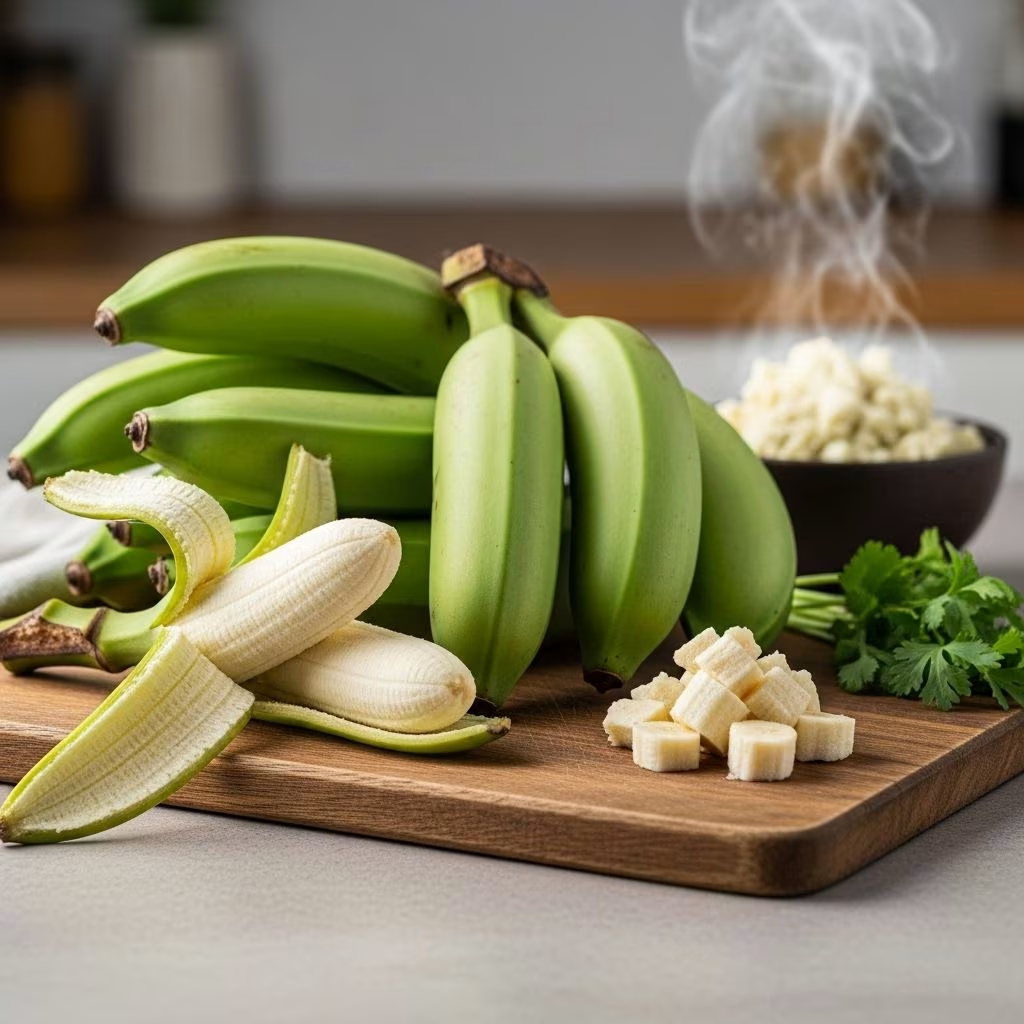
Matoke (Cooking Banana): Nutritional Benefits, Culinary Uses, and Taste Profile
Matoke, also known as the East African Highland banana, stands as a vital culinary and nutritional cornerstone across the African Great Lakes region. Celebrated for its distinctive starchy texture, impressive versatility, and health-promoting properties, matoke is not only a staple food crop but also a symbol of cultural identity among millions of East Africans. This article explores the origins, benefits, uses, and taste of matoke, illuminating its significance both on the plate and in daily life.
What Is Matoke (Cooking Banana)?
Matoke (also spelled matooke, amatooke, ekitooke, ebitooke, and others) refers to a group of starchy triploid banana cultivars belonging to the Mutika/Lujugira subgroup of Musa AAA-EA—the East African Highland bananas.This banana is widely cultivated in Uganda, Kenya, Tanzania, Rwanda, Burundi, and neighboring regions. Matoke is harvested green, peeled, cooked by steaming, boiling, or stewing, and typically served mashed. Unlike sweet dessert bananas, it is used almost exclusively for cooking and forms the heart of many East African meals.
Origins and History of Matoke
The East African Highland banana—known as matoke—was introduced from Southeast Asia between the first and sixth centuries AD, most likely through ancient trade routes. Over time, the plant adapted to local climates and soils, evolving into the diverse cultivars recognized today.Matoke is mostly propagated vegetatively because the bananas do not produce seeds.
- Primary Center of Diversity: Southeast Asia
- Secondary Center of Diversity: African Great Lakes region
- Main Producers: Uganda (2nd largest banana producer globally), Tanzania, Kenya, Rwanda, Burundi
Farmers have cultivated and selected matoke varieties suited to local growing conditions, resulting in hundreds of distinct types throughout the region. This diversity has made matoke indispensable to local diets and cultures for centuries.
Nutritional Benefits of Matoke
Matoke is prized not only for its starchy texture, but also its nutritional value. As a staple crop, it supplies significant energy, vitamins, and minerals, and forms an essential part of diets—especially in Uganda, Rwanda, Burundi, and Tanzania.
- High in dietary fiber: Supports digestion and gut health
- Rich in complex carbohydrates: Provides steady energy
- Source of potassium: Supports cardiovascular health and electrolyte balance
- Contains vitamin C: Promotes immune function and skin health
- Low in fat: Heart-healthy composition
- No cholesterol: Suitable for low-fat diets
- Contains B vitamins: Supports metabolic processes
- Gluten-free: Safe for gluten-sensitive individuals
As matoke is frequently consumed with protein-rich sauces (meat, groundnuts, beans), it can contribute to a balanced diet for adults and children alike.
Culinary Uses: How Matoke Is Prepared
Matoke is typically cooked before eating. Raw matoke is white, hard, and starchy; cooking transforms it into a soft, tender, fragrant, yellow dish. Traditional preparations rely on steaming, boiling, stewing, and mashing, often accompanied by sauces made from meat, legumes, or vegetables.
- Steaming: Peeled matoke is wrapped in banana leaves, set on stalks in a pot, and steamed for hours. This method yields a fluffy, mashed result.
- Boiling: Chopped or whole matoke can be boiled in water with or without spices/vegetables.
- Stewing: Sliced matoke is stewed with tomatoes, onions, peppers, beef/mutton, or beans.
- Mashing: After steaming, matoke may be squeezed and mashed (sometimes in leaves) and then served hot.
In rural and urban households alike, matoke is commonly paired with sauces or relish, including groundnut (peanut) sauce, beef, goat, fish (such as smoked catfish), beans, and vegetables. In Uganda, it is rarely eaten plain, as the staple is meant to carry the flavors of accompanying stews.
Matoke Cooking: Step-by-Step
- Peel matoke using a sharp knife
- Wrap in banana leaves (or sometimes plastic bags)
- Place in a cooking pot (sufuria) atop banana stalks, above hot water
- Steam for several hours, adding water as needed
- Once soft and yellow, mash the matoke (still wrapped)
- Serve on banana leaves, with sauce or stew
Variations of this method exist throughout the region, as families adapt recipes to local tastes and available ingredients.
Taste Profile of Matoke
Matoke’s taste profile distinguishes it from both dessert and plantain bananas.
- Mild flavor: Gentle, earthy, and subtly sweet when cooked
- Delicate aroma: Evocative of fresh bananas, with a starchy undertone
- Texture: Smooth, soft, and mashable—comparable to potatoes or mashed yams
Matoke primarily acts as a canvas for richer flavors from sauces, meats, or vegetables. Its subtlety and softness complement spicy, smoky, or savory accompaniments, making it versatile.When rightly cooked, matoke absorbs flavors, turning into a satisfying, almost creamy side or main dish.
Regional Dishes and Popular Matoke Recipes
Matoke features prominently in the culinary traditions of Uganda, Kenya, Tanzania, Rwanda, and Burundi. It serves not only as the foundation of daily family meals but also as an essential part of festive gatherings and traditional ceremonies.
- Uganda: Steamed and mashed matoke served with groundnut sauce, beef stew, or Katogo (breakfast mash of bananas and sauce)
- Kenya: Matoke stewed with tomatoes, onions, green peppers, and beef
- Tanzania: Ebitooke combined with smoked catfish, beans, and groundnuts; often cooked whole, not mashed
- Rwanda & Burundi: Igitoki, steamed or boiled, featured in banquets and family fare
Sample Recipe: Ugandan Steamed Matoke
- 10-12 green matoke bananas
- Fresh banana leaves for wrapping
- Banana stalks for lining the pot
- Water
- Peel the matoke and wrap tightly in banana leaves.
- Arrange the thick banana stalks at the bottom of a large cooking pot.
- Place the matoke bundle on top; add water beneath the stalks.
- Cover and steam for 2–3 hours, replenishing water as needed.
- Once soft and fragrant, mash matoke while still in the leaves.
- Serve hot with your choice of sauce (groundnut, meat, beans).
Matoke vs Other Bananas: What Makes It Different?
| Feature | Matoke (Cooking Banana) | Dessert Banana | Plantain |
|---|---|---|---|
| Texture (Raw) | Hard, starchy, inedible | Soft, sweet, edible | Firm, starchy, edible only when cooked |
| Culinary Use | Steamed, boiled, mashed, used as staple dish | Eaten fresh, smoothies, desserts | Fried, boiled, baked, chips, side dishes |
| Flavor | Earthy, mild, subtly sweet | Sweet, aromatic | Neutral, slightly bitter (raw), mildly sweet (cooked) |
This comparison highlights matoke’s unique place among the genus Musa. While plantain and matoke share similarities, matoke’s preparation, taste, and cherished status in the Great Lakes region set it apart.
Matoke in Local Culture and Daily Life
Matoke’s impact goes beyond diet—it is woven into the social, economic, and cultural fabric of East Africa.
- Economic Staple: Matoke cultivation supports millions of smallholder farmers and households.
- Symbolic Importance: In Uganda, the word “matoke” often denotes “food” itself.
- Festival & Ceremony: Matoke is central to rituals, weddings, funerals, and community events.
- Culinary Identity: Local variations (names, recipes) signify regional pride and tradition.
Matoke serves not only practical nutritional roles but also as a vessel for heritage, celebration, and social connection.
Frequently Asked Questions (FAQs)
Q: Is matoke the same as plantain?
A: No. Matoke is an East African Highland banana cultivar, whereas plantain refers to several starchy banana types grown worldwide. While both require cooking, matoke is culturally and botanically distinct.
Q: Can matoke be eaten raw?
A: No. Matoke is too hard and starchy to be eaten raw—proper cooking transforms its texture and flavor, making it delicious and digestible.
Q: Is matoke gluten-free?
A: Yes. Matoke contains no gluten and is suitable for gluten-sensitive diets.
Q: What are the health benefits of matoke?
A: Matoke is high in fiber, complex carbohydrates, potassium, and several vitamins, supporting digestion, heart health, and energy levels.
Q: How is matoke served?
A: Matoke is typically served steamed, mashed, or stewed, paired with sauces made from groundnuts, meat, legumes, or vegetables, often presented on fresh banana leaves for traditional flavor and aroma.
Sources and Further Reading
- “Matoke Facts for Kids” – Kiddle Encyclopedia
- “Matoke” – Wikipedia
- Nature Meets Culture Stories: Matooke Mysteries
References
- https://kids.kiddle.co/Matoke
- https://en.wikipedia.org/wiki/Matoke
- https://naturemeetsculturestories.wordpress.com/2016/04/07/matooke-mysteries1/
- https://wemenshouldcook.wordpress.com/2018/08/13/matoke-in-coconut-stew/
- https://pmc.ncbi.nlm.nih.gov/articles/PMC7984378/
- https://en.wikipedia.org/wiki/Cooking_banana


