


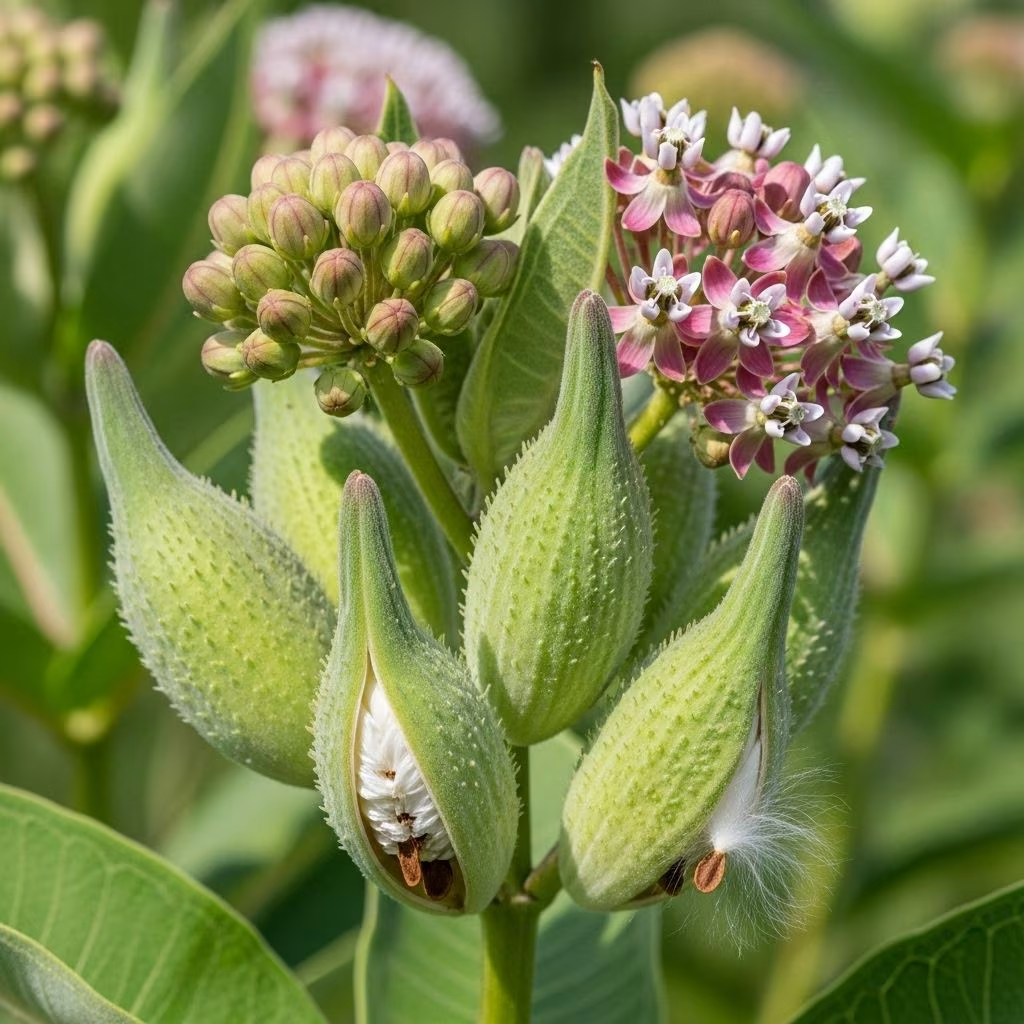
What Is Milkweed (Bud/Pod)? Benefits, Uses, and Taste
Milkweed (Asclepias spp.) is a well-known group of wild plants native to North America, recognizable for their thick stems, broad leaves, and distinctive seed pods. Revered both ecologically and culinarily, milkweed pods and buds have been used for generations—as food, in traditional medicine, and vital to local biodiversity.
Introduction to Milkweed
Milkweed refers to a genus of herbaceous plants distinguished by milky latex sap, vital for monarch butterflies and other pollinators. The plant’s lifecycle includes vigorous spring growth, abundant summer flowering, and the emergence of buds and pods for reproduction. Most notably, the pods host seeds ensconced in silky down, facilitating wind dispersal and colony expansion.
Botanical Overview: Growth, Buds, and Pods
Growth Pattern
Milkweed plants can form dense colonies of hundreds to thousands of shoots, thanks to overwintered buds sprouting from extensive root networks. Stems are upright and robust, often outgrowing the surrounding vegetation by late spring. Leaves are broad and oblong with clear smooth margins and prominent midribs.
- Shoots grow quickly, typically reaching 1–1.5 meters by early summer.
- Early leaves are small but enlarge as the shoot grows, along with visible veins and thick petioles.
Buds and Floral Development
After about seven to nine leaf pairs unfurl, the first flower buds appear clustered near the shoot’s uppermost leaves. These buds develop into fragrant pink or orange flower umbels attracting pollinators and signaling the onset of the reproductive phase.
- Flowering is intense but not all blooms become pods—a shoot may produce 300–500 flowers but only a handful of pods mature (often 1 for every 60–150 flowers).
Milkweed Pods: Shape, Growth, and Seed Release
- Pods begin as small teardrop-shaped capsules and grow to 3–5 inches in length at maturity.
- Pods are usually conical or horn-shaped, appearing upright on the plant.
- Seed development inside the pods occurs over several months; mature pods split open, releasing seeds with silky filaments designed for wind dispersal.
Common Species of Milkweed
There are over 100 milkweed species, but three are especially prevalent and foraged in North America:
- Common Milkweed (Asclepias syriaca): Most frequently foraged for edible buds and pods; grows in dry fields, ditches, and forest edges.
- Swamp Milkweed (Asclepias incarnata): Favors wetlands and moist meadows, with elongated leaves and reddish-pink flowers.
- Butterfly Weed (Asclepias tuberosa): Noted for vibrant orange flowers, but less commonly used culinarily because it lacks the milky sap.
Nutritional Benefits of Milkweed Pods
Milkweed pods, particularly when immature, contain measurable amounts of vitamins, minerals, and dietary fiber. Traditional foragers and native food scholars report the following nutrients:
- Vitamin C: Contributes to immune function and antioxidant activity.
- Vitamin A precursors: Support vision and immune health.
- Calcium, potassium, and iron: Essential minerals for bone, cardiac, and red blood cell health.
- Fiber: Aids in digestion when pods are consumed whole.
While research on quantitative nutrition is limited, traditional use and preliminary studies suggest immature pods are a low-calorie source of several micronutrients.
Culinary Uses: Traditional and Modern Recipes
Edible Parts and Preparation
Young pods (less than one inch, still firm) and young buds are the primary edible stages of milkweed. Proper identification and preparation are crucial, as older pods become tough and unpalatable, and the latex in mature tissues can cause digestive upset if eaten raw.
- Best picked in late summer when pods are firm, green, and young.
- Pods should be boiled, steamed, or sautéed before consumption to neutralize bitter compounds.
Traditional Dishes
- Boiled Milkweed Pods: A classic preparation involves simmering young pods in salted water, often followed by a quick sauté with onion, garlic, or butter.
- Stews and Stir-Fries: Immature pods complement root vegetables, greens, and aromatic spices in hearty stews or stir-fried dishes.
- Milkweed Buds: Sometimes steamed and served with olive oil and lemon as a wild vegetable.
- On Cheese and Breadcrumbs: Baked milkweed pods served with cheese and breadcrumbs as a savory side or appetizer.
- Milkweed Pod Pickles: Pods can be pickled, though they soften after boiling.
Safety Note
Always cook milkweed pods and buds before consuming. While early folklore classified milkweed as toxic, it is only dangerous if harvested at the wrong maturity stage or eaten raw and in large quantity. Cooking removes bitter glycosides and saponins (which can upset digestion).
Sample Recipe: Sautéed Milkweed Pods
- Harvest young, firm pods (under one inch long).
- Rinse thoroughly and boil for 10 minutes.
- Drain and sauté with butter, garlic, and a pinch of salt.
- Serve with bread or incorporate into mixed vegetable dishes.
Taste Profile of Milkweed Pods and Buds
The flavor of milkweed pods is uniquely mild and vegetable-like, sometimes compared to asparagus, green beans, or okra. Taste nuances depend largely on the pod’s age and preparation:
- Young Pods: Tender with a slight sweetness, subtle earthy and grassy undertones.
- Cooked Buds: Softer than pods; mild flavor reminiscent of garden peas or broccoli rabe.
- Older Pods: Tough texture and bitter taste; not recommended for eating.
Proper cooking enhances the vegetable-like notes and removes bitterness and latex-like flavors, resulting in a delicate, pleasant side dish. The silky inner seed fluff is not edible.
Harvesting and Foraging Guidelines
Best Time to Harvest
- Pods are best collected in late summer to early fall (August to September), before they exceed two-thirds of their full size.
- Immature pods (under an inch long, still firm and green) are preferred for eating.
Identification Tips
- Pods that are older tend to have rougher exteriors and more pointed or curved tips.
- Ripeness for seed collection: ripe pods will gently split open; brown seeds indicate maturity.
Foraging Ethics and Safety
- Do not harvest all pods from a single plant colony. Leave plenty to ensure natural reseeding and wildlife food sources.
- Never pick from sprayed, polluted, or protected areas.
- If unsure of identification, consult a local foraging guide or botanist; some milkweed relatives are toxic.
Ecological Role and Cultural Importance
Wildlife Support
- Monarch Habitat: Milkweed is the exclusive food for monarch caterpillar larvae—its leaves and stems provide necessary nourishment and chemical defense.
- Pollinator Magnet: The perfumed flowers and nectar-rich buds attract bees, butterflies, beetles, and more, supporting diverse invertebrate populations during summer.
- Seed Dispersal: Silky seeds are an important food for birds and provide nest material, while helping milkweed colonies expand and restore biodiversity.
Cultural Uses
- Fiber and Fluff: Indigenous peoples and pioneers used milkweed fibers to make cordage and the silky seed comas for stuffing and insulation.
- Medicinal Traditions: Some Native American groups used boiled buds, roots, or sap medicinally, though careful preparation is essential since raw latex can be irritating.
Frequently Asked Questions
Q: Is any part of milkweed poisonous?
A: Mature leaves, stems, roots, and latex contain bitter saponins and glycosides that can be toxic if eaten raw or in large amounts. Only young buds and pods, properly cooked, are recommended for consumption.
Q: Can milkweed pods be eaten raw?
A: No, milkweed pods should always be thoroughly cooked. Cooking neutralizes compounds that cause bitterness and digestive upset.
Q: How do I know if a milkweed pod is ready to eat?
A: The best pods for eating are young, still firm, and less than an inch long. Older pods become tough, fibrous, and bitter.
Q: Are all milkweed species edible?
A: Asclepias syriaca is the best-known edible species in North America. Some others may be edible at certain growth stages, but identification and caution are essential.
Q: Does milkweed have nutritional value?
A: Yes, immature pods provide vitamin C, vitamin A precursors, minerals, and fiber.
Q: What is the best way to prepare milkweed pods?
A: Immature pods are typically boiled and then sautéed, or incorporated into stews and baked dishes. Boiling softens texture and removes bitterness.
Conclusion
Milkweed pods and buds are a unique, ecologically important wild food. Harvested responsibly, they offer nutritional and culinary opportunities, while supporting local ecosystems and pollinator species. Whether foraged in late summer for a savory dish or admired as monarch habitat, milkweed remains a valuable part of North American landscapes and traditional knowledge.
References
- https://www.natureinstitute.org/article/craig-holdrege/the-story-of-an-organism-common-milkweed
- https://ruthreichl.substack.com/p/notes-on-milkweed
- https://savvygardening.com/milkweed-pods/
- https://bygl.osu.edu/node/1709
- https://foragerchef.com/guide-to-milkweed/
- https://noddingoniongardens.blogspot.com/2013/11/identifying-milkweed-by-pod.html
- https://www.foragersharvest.com/newsletter/milkweed-a-truely-remarkable-wild-vegetable


