


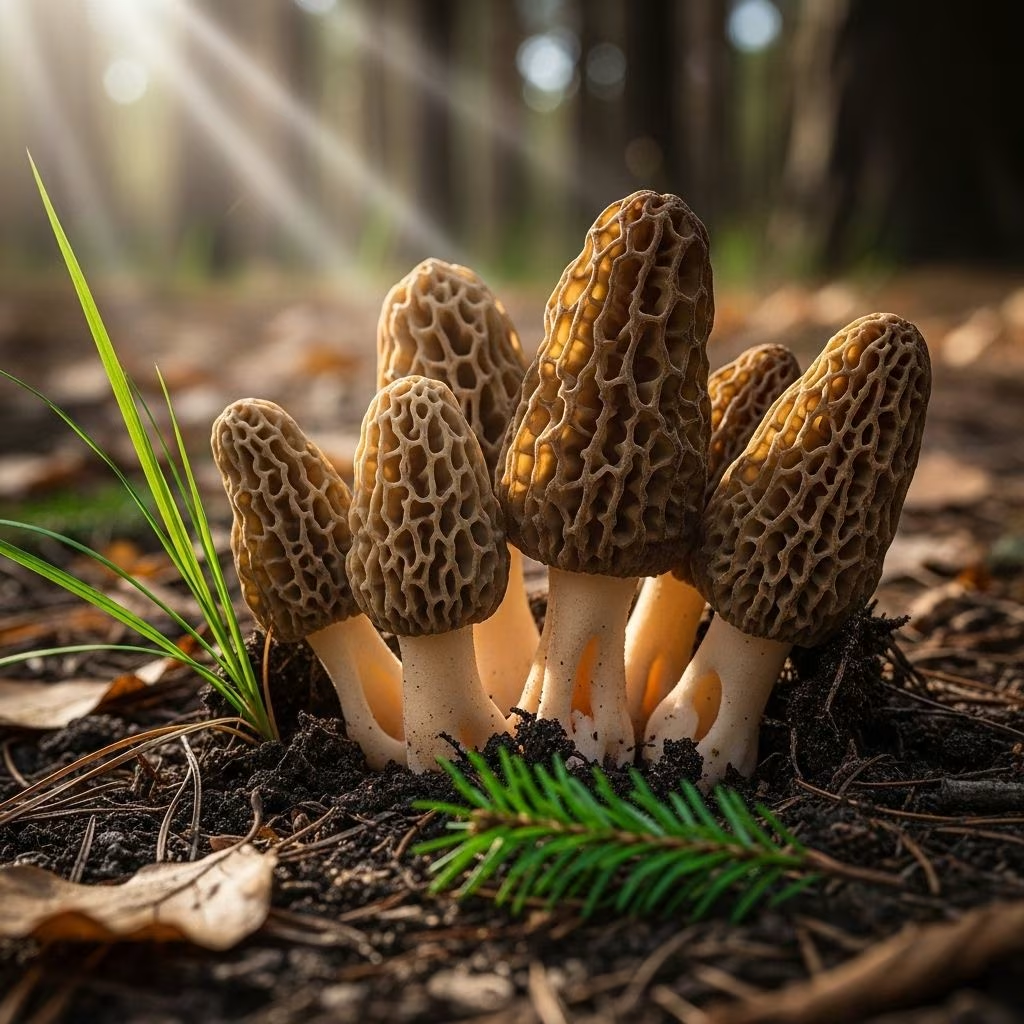
Among the world’s most highly regarded edible fungi, morel mushrooms (genus Morchella) hold a special place in the hearts of chefs, foragers, and culinary explorers. Their distinctive honeycomb appearance, elusive growth habits, and rich, earthy flavor make them both a seasonal treasure and a globally sought-after delicacy.
Introduction to Morel Mushrooms
Morel mushrooms, belonging to the genus Morchella, are among the most recognizable and admired wild mushrooms. Celebrated for their honeycomb-like caps and distinctive flavor, morels are a staple of fine gastronomic tradition in countries like France, Spain, and the United States. The allure of morels goes far beyond their taste—they are also notoriously difficult to cultivate, enhancing their value and mystique among chefs and mycophiles.
The term “morel” typically refers to several species within the genus, all of which share similar physical traits but might vary in color, size, and exact habitat preferences.
The Morel Mushroom Genus and Types
Morchella is a genus of edible sac fungi (“ascomycetes”) in the family Morchellaceae. Morels are closely related to cup fungi but instantly identifiable due to their unique structure.
- Division: Ascomycota
- Class: Pezizomycetes
- Order: Pezizales
- Family: Morchellaceae
- Common species: Morchella esculenta (yellow or common morel), Morchella elata (black morel), Morchella deliciosa, among others
Due to ongoing research and genetic analysis, the number of recognized species in the Morchella genus has increased, with over 70 putative species now identified worldwide. These species often exhibit regional endemism and differing habitats, reflecting their adaptability and diversity.
Key Species of Morels
- Morchella esculenta: The most commonly foraged morel, distinguished by its pale yellow to tan color and round cap.
- Morchella elata (Black morel): Darker in hue, often with a pointed cap and found in coniferous forests.
- Morchella deliciosa: Known for its richer color and prized flavor.
Identifying True Morels
Proper identification is crucial, as several toxic species resemble morels. True morels are best recognized by:
- A honeycomb-like cap with networked ridges and deep pits.
- The cap is attached to the stem at or near its base—never hanging freely.
- Both cap and stem are entirely hollow when sliced lengthwise (a key differentiator).
- Cap colors can range from creamy yellow and white to deep brown or nearly black, depending on age, species, and habitat.
Common regional names include “Sponge Mushroom,” “Merkels,” “Dryland Fish,” “Hickory Chickens,” and even “Miracles.” Despite their versatility in monikers, their structure remains consistent: an upright stem topped with a brainy, textured, or pitted cap.
Table: Key Differences Between True Morels and False Morels
| Feature | True Morel (Morchella spp.) | False Morel (Gyromitra, Verpa spp.) |
|---|---|---|
| Cap Surface | Pitted (honeycomb-like) | Wrinkled, lobed, or brain-like |
| Cap Attachment | Cap attached at or near base to stem | Cap hangs loose or attached only at apex |
| Interior | Completely hollow from tip to base | Chambered (Gyromitra), cottony filler (Verpa) |
| Edibility | Edible when cooked | Toxic, sometimes deadly |
The Life Cycle of Morel Mushrooms
Morels are famous for their mysterious and rapid appearances each spring. Their life cycle involves a hidden, underground stage and aboveground fruiting bodies that emerge only when environmental conditions align. Here’s how a morel’s life unfolds:
- Morel spores germinate to form mycelium, which grows beneath the forest floor, spreading rapidly (as much as 4 inches per day).
- When nutrients dwindle or seasons change, the morel’s mycelium forms a sclerotium: a compact, nutrient-dense survival structure beneath the soil.
- With the right triggers—significant soil disturbance, wildfires, and specific weather patterns—these sclerotia produce fruiting bodies: the iconic morel mushrooms seen above ground.
- This adaptation, relying on fires and other disturbances to signal fruiting, explains why morels appear in abundance in recently burned forests, logged areas, or heavily disrupted soil.
Where and When to Find Morels
Wild morels prefer temperate regions and are especially abundant in North America, but also found in parts of Europe, Asia, and the Himalayas.
- Seasonality: Morels typically fruit in spring (March to May in the Northern Hemisphere), with timing depending on local weather conditions.
- Habitats: Deciduous forests with rich soil; under ash, elm, oak, poplar, and apple trees; areas disturbed by fire or logging; and south-facing slopes with moist, well-drained soil.
- Global hotspots: United States (Midwest, Pacific Northwest), Canada, the Himalayas, Turkey, China, India, Pakistan, and Spain.
Due to their finicky growth requirements and reliance on precise natural triggers, morels are challenging to cultivate commercially, further enhancing their rarity and esteem.
Nutritional Value and Health Benefits
Morels are as nutritious as they are delicious, offering a range of essential nutrients and bioactive compounds.
- High in protein: Morels provide more protein per serving than many other mushrooms, supporting muscle health and satiation.
- Rich in vitamins and minerals: Good sources of vitamin D (especially when sun-exposed), vitamin B6, niacin, riboflavin, copper, iron, manganese, phosphorus, potassium, and zinc.
- Antioxidants: Morels supply protective antioxidants such as ergothioneine, which can help neutralize free radicals and reduce cellular stress.
- Low-calorie, high-fiber food: Ideal for weight management and digestive health.
- Potential immune support: Like many mushrooms, morels contain polysaccharides and other compounds that may have immune-modulating properties.
Possible Therapeutic Benefits
- Anti-inflammatory and antioxidant effects: Antioxidants and phytochemicals found in morels may support overall wellness and help counter inflammation.
- Brain health: B vitamins, such as B6 and niacin, play a vital role in cognitive health and metabolic function.
- Bone health: Morels’ vitamin D2 content can help maintain bone health, particularly for those who get minimal sun exposure.
Note: Scientific research into the specific medicinal effects of morels is ongoing; most health claims refer to general properties found in edible mushrooms.
Culinary Uses and Cooking Tips
Morels are a gourmet favorite, highly esteemed by chefs for their versatility and concentrated flavor. They must always be cooked thoroughly before consumption, as raw morels (and their look-alikes) can cause digestive upset or toxicity.
- Classic cooking techniques: Sauté in butter or olive oil with a touch of garlic, shallots, or fresh herbs; stuff with fillings; serve in creamy sauces over meats or pasta.
- Pairing suggestions: Cream, eggs, wine, asparagus, fresh spring vegetables, wild meats, and poultry all enhance morel’s unique flavor.
- Drying and rehydrating: Morels dry well—simply soak dried morels in warm water to revive them, then use both the mushrooms and the fragrant soaking liquid in soups or sauces.
- Preserving and storing: Use fresh morels within several days. Do not eat them raw; always cook thoroughly.
Popular Morel Recipes
- Morel Cream Sauce (perfect for steak or roasted chicken)
- Stuffed Morels (filled with herbed ricotta or wild rice)
- Morel Risotto
- Morel and Spring Vegetable Tart
The Unique Taste of Morels
What sets morels apart in the culinary world is their extraordinary taste and texture. Morels are celebrated for their:
- Earthy, nutty, umami-rich flavor that is both deeply savory and delicately aromatic.
- Meaty-yet-tender texture—never rubbery or slick, but perfectly yielding.
- Honeycomb cap that soaks in sauces, butter, or cream, amplifying their essence and contributing to luxurious mouthfeel.
Compared to other wild mushrooms, morels deliver an unmatched complexity. Some liken their flavor to smoky, roasted almonds or sun-dried stone fruit, while others simply tout them as “spring on a plate.”
False Morels: Dangers and Safety Tips
The morel’s popularity also makes it a prime target for less experienced foragers, who risk confusing them with “false morels.” These are unrelated fungi that can be toxic or deadly. False morels (often species in the genera Gyromitra and Verpa) differ from true morels in several critical ways:
- False morels frequently have wavy, distorted, or brain-like caps rather than honeycomb pits.
- The interior is chambered or cottony, not hollow throughout.
- Caps are often loosely attached to the stem only at the apex.
- Some false morels contain gyromitrin, a toxin that can cause severe gastrointestinal, neurological symptoms, or liver damage—even after cooking.
For safety: Never consume any wild mushroom unless you are 100% sure of its identity. When in doubt, consult with experienced foragers, local mycological societies, or use specialized field guides for identification.
Frequently Asked Questions (FAQs)
Q: What do morel mushrooms taste like compared to other mushrooms?
A: Morels have a distinctive earthy, nutty, and umami-rich flavor. Their taste is stronger and more complex than common mushrooms like button or portobello, often described as smoky or meaty with hints of forest aromas.
Q: Are morel mushrooms healthy to eat?
A: Yes, morels are rich in protein, fiber, antioxidants, and essential vitamins and minerals, supporting a healthy diet, though they must always be cooked before eating.
Q: How can I safely forage for morels?
A: Learn to correctly identify true morels and distinguish them from false morels. Always slice mushrooms lengthwise to check for hollowness, and never eat any wild mushroom unless you are 100% certain of its identity.
Q: What is the season for morel mushrooms?
A: In most temperate regions, morels fruit in spring, especially between March and May, but exact timing depends on local climate and forest conditions.
Q: Can you eat raw morels?
A: No, morels—like many wild mushrooms—must be cooked. Eating raw or undercooked morels can cause digestive upset and may be toxic.
References
- Morchella – Wikipedia
- Morel Mushrooms 101: Identification, Growth, & Foraging Tips (Fungi.com)
- Morel vs. False Morel Mushrooms: Key Differences (Foraged.com)
References
- https://en.wikipedia.org/wiki/Morchella
- https://fungi.com/blogs/articles/morel-mushrooms-101-identification-growth-foraging-tips
- https://www.merriam-webster.com/dictionary/morel
- https://www.foraged.com/blog/morel-mushrooms-vs-false-morels
- https://www.britannica.com/science/morel
- https://blueridgediscoverycenter.org/blueridgediscoverycenterblog/2015/4/20/morel-mushrooms
- https://www.youtube.com/watch?v=0gmflEDZrmk


