


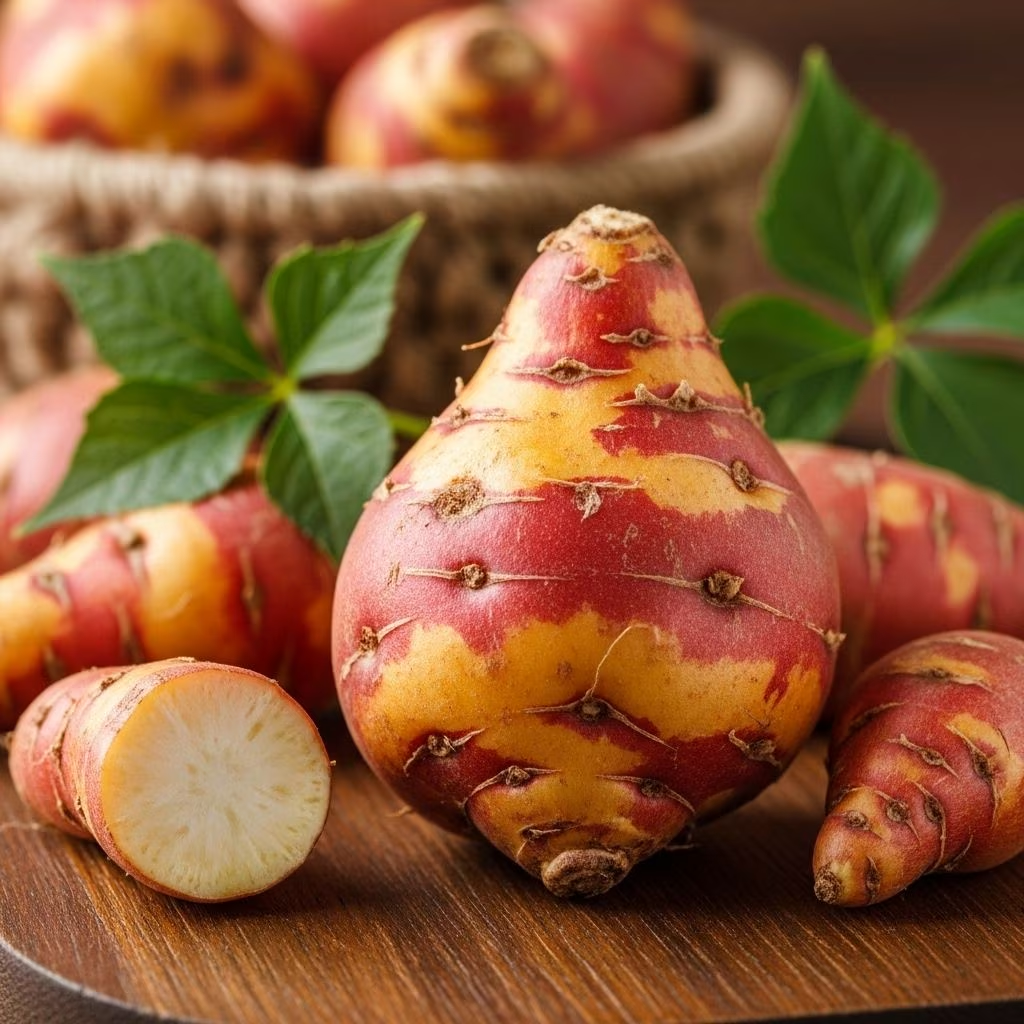
Oca (Oxalis tuberosa) has adorned Andean tables for centuries. Brightly colored, nutritionally rich, and remarkably versatile, this underrated tuber is gaining attention around the globe—wherever adventurous gardeners and food lovers seek something beyond the ordinary.
Introduction to Oca
Oca is a perennial root vegetable grown primarily in the Andes and known globally as the New Zealand Yam or simply as oca. Prized for its colorful tubers and adaptability, oca offers a nutritional and culinary alternative to potatoes, its more famous cousin. Its appeal has expanded from South America to regions as diverse as New Zealand, Australia, and beyond.
Origins and History
Native to the central and southern Andes, oca was first cultivated by indigenous Andean farmers alongside other important root crops like potato, ulluco, and mashua. While the exact progenitor of modern oca remains a mystery—no true wild populations are known—the plant has a long and significant history in the rural Andean diet, where it is second only to the potato in cultivation area. Oca was first introduced to Europe in the 19th century and arrived in New Zealand by the 1860s, where it flourished and became a cherished table vegetable, though it is not a true yam despite being called one there.
Botanical Description and Varieties
Oca is botanically classified as Oxalis tuberosa, within the wood sorrel family (Oxalidaceae). It is a small, herbaceous perennial that overwinters through its underground tubers. Its growth habit and robust nature are partly owed to its kinship with the weed oxalis, although oca itself is not considered invasive outside favorable climates.
- Plant Appearance: Oca grows up to 18 inches (45 cm) tall, often sprawling, and can spread to a width of three feet (90 cm). The leaves are clover-like, and stems are typically thick and succulent.
- Tuber Characteristics:
- Length: Typically 2.5–8 inches (6–20 cm).
- Width: Around 1–1.5 inches (2.5–4 cm).
- Skin/Flesh Color: Tubers come in a riot of colors—reds, oranges, yellows, whites, pinks, and purples, often with contrasting eyes or marbled patterns.
- Cluster: Tubers cluster beneath the plant’s base and may stretch out on short stolons.
- Flower and Leaf: Small, yellow to white flowers sometimes appear late in the season. The leaves are divided into three leaflets, reminiscent of clover or wood sorrel.
Oca’s varietal diversity is remarkable, with local names often referencing size, shape, or color—for example, “ushpa negra” (black ash) or “puka panti” (red Cosmos peucedanifolius). Each community may have its own set of cultivars and names.
Nutritional Benefits of Oca
Oca stands out for its nutritional value. While it can be compared to potatoes, in many respects oca is more nutritious and offers some unique health advantages.
| Nutrient | Approximate Value (per 100g raw tuber) |
|---|---|
| Calories | 60–100 kcal |
| Carbohydrates | 15–25 g |
| Dietary Fiber | 2–3 g |
| Protein | 0.9–1.6 g |
| Fat | < 0.1 g |
| Vitamin C | High |
| Vitamin B6 | Moderate |
| Potassium | Good source |
| Iron | Present in small amounts |
| Calcium | Low to moderate |
| Antioxidants & Phytochemicals | Abundant (especially in colored tubers) |
- Low Glycemic Index: Oca digests slowly and helps support stable blood sugar, making it suitable for diabetic and low-GI diets.
- Dietary Fiber: Valuable for digestive health and gut microbiome support.
- Antioxidants: The vibrant hues of oca signal the presence of beneficial antioxidants, including anthocyanins and carotenoids, especially in red, purple, and yellow varieties.
- Vitamins & Minerals: Oca offers vitamin C, potassium, and small quantities of B vitamins and minerals, supporting immune function and overall wellbeing.
Culinary Uses
Oca’s colorful tubers and unique flavors make it an intriguing ingredient in the kitchen. Its versatility rivals that of potatoes, with the bonus of being edible both raw and cooked.
- Raw:
- Small, fresh tubers can be sliced thin and eaten raw in salads for a crisp, lemony bite.
- The taste ranges from tangy to slightly sweet, depending on the variety and maturity.
- Cooked:
- Oca can be roasted, boiled, steamed, or baked. Cooking softens the flesh and brings out subtle sweetness.
- A favorite cooking method in the Andes is wathiya—a traditional earthen oven bake, producing smoky, creamy tubers.
- In New Zealand and Australia, oca (yam) is often roasted with meats or tossed in stews.
- Sliced and fried, oca can be used to make colorful chips or crisps.
- Fermented/Sundried: In traditional Andean cuisine, oca is sometimes left in the sun to dry and sweeten (the sun breaks down natural oxalates and amplifies its sweetness). Fermented oca is a unique specialty.
- Greens: Leaves and young shoots can be eaten sparingly as a tangy green, though the high oxalate content suggests moderation.
Taste and Texture Profile
Oca’s flavor is often described as a blend between potatoes and carrots with a zesty twist. Its unique, tangy undertone has even been likened to potato with sour cream already added. The taste and texture depend on the color, size, and maturity of the tuber, as well as whether it is eaten raw or cooked.
| Preparation | Taste Notes | Texture |
|---|---|---|
| Raw (small tubers) | Lemony, crisp, refreshing | Crisp and juicy |
| Raw (large tubers) | Mild, slightly starchy, less tangy | Watery, starchy |
| Cooked (roasted/boiled/baked) | Mildly sweet, nutty, faint citrus tang, sometimes acidic | Softer than potato, creamy |
| Sundried | Intensely sweet, almost candied | Chewy or dense |
Oca’s natural acidity can be moderated by sun-curing the harvested tubers for several days, a traditional Andean practice that sweetens the flesh and reduces tartness.
How to Grow Oca
Enthusiastic gardeners and farmers are discovering that oca is robust and productive, thriving where other root crops struggle. Here’s what you need to know to cultivate oca successfully:
- Climate: Oca prefers cool, moist conditions and does best where summer highs stay below 80°F (27°C). It’s particularly suited to Pacific Northwest climates or other regions with long, cool autumns. Brief spells above 90°F (32°C) are tolerated but not ideal.
- Soil: Oca tolerates poor, sandy, or moderately acidic soil but will produce largest yields in fertile, well-drained loam. It is more drought-tolerant than potatoes and less prone to disease in many regions.
- Planting: Oca is propagated by planting small tubers in spring. The plants are grown vegetatively as true seeds are rarely available outside advanced breeding projects. Space plants about 18–24 inches (45–60 cm) apart.
- Season: Tubers are formed only after autumnal equinox when day length shortens. Typically, they are not ready for harvest until mid-November or later.
- Yield: Yields may vary from 1–3 pounds per plant, with up to 2+ pounds achievable under ideal conditions.
- Pests/Disease: Oca is largely pest-resistant and less prone to disease than potatoes, making it an excellent crop for organic or minimal-input gardens.
Oca is also attractive as a decorative edible plant—its lush foliage and brightly colored tubers make it a conversation piece in any vegetable garden.
Storage and Handling
- Harvest Handling: After lifting, oca tubers should be cleaned and, if desired, exposed to sunlight for a few days. This sunlight “curing” process reduces acidity and increases sweetness—an essential step in traditional Andean preparation.
- Storage: Once cured, tubers keep best in a cool, dry, dark place, similar to potato storage conditions.
- Longevity: Properly stored oca can last several months and is relatively easy to handle. Avoid moisture to prevent mold or sprouting.
Oca vs. Other Root Vegetables
| Feature | Oca | Potato | Carrot | True Yam |
|---|---|---|---|---|
| Botanical Family | Oxalidaceae | Solanaceae | Apiaceae | Dioscoreaceae |
| Flavors | Tangy, slightly sweet, nutty | Mild, starchy | Sweet, earthy | Bland to starchy |
| Raw Edibility | Yes | Rarely | Yes | Rarely |
| Color Range | White, yellow, red, orange, pink, purple | White, yellow, red, purple | Orange, purple, white, yellow | White, purple |
| Glycemic Index | Low | Moderate–high | Low–moderate | High |
| Ideal Climate | Cool, moist | Cool, moist | Temperate | Tropical |
Cultural and Agricultural Significance
For Andean cultures, oca has been a staple for centuries. Its role goes beyond nutrition; it is essential in crop rotations (supporting soil health), food security, and cultural traditions. It remains a critical food resource for Quechua and Aymara communities. In New Zealand, oca—marketed as “yam”—has become a springtime favorite and reflects the crop’s global adaptability and continued relevance.
Frequently Asked Questions (FAQ)
Q: Is oca the same as yam?
A: No. Oca is not a botanical yam. In New Zealand and some markets, oca is called “yam,” but it is from the wood sorrel family, not the yam family (Dioscoreaceae).
Q: Is oca safe to eat raw?
A: Yes, oca is safe and tasty to eat raw, especially young, small tubers. Sun-curing after harvest reduces any tangy oxalic acid, making it more palatable when eaten raw.
Q: What is the best way to cook oca?
A: Oca can be roasted, boiled, baked, or fried—just like potatoes. Roasting after sun-curing brings out its natural sweetness and enhances the flavor. Sliced tubers make attractive and flavorful chips or fries.
Q: Can you grow oca in home gardens?
A: Absolutely! With a long, cool season, well-drained soil, and moderate water, oca is a rewarding and ornamental addition to home vegetable plots.
Q: Is oca invasive or weedy?
A: No, oca is not considered invasive. While it is related to the common weed oxalis, oca is much less aggressive and does not spread uncontrollably in most climates.
Q: What do the different colors mean?
A: The many colors of oca tubers are mostly varietal and reflect differences in antioxidant content but not radically in flavor, with all varieties being nutritious and tasty.
References
- https://www.cultivariable.com/instructions/andean-roots-tubers/how-to-grow-oca/
- https://nwedible.com/andean-root-vegetables/
- https://melbournefoodforest.com.au/2021/08/29/what-is-oca-and-why-you-should-be-growing-it/
- https://en.wikipedia.org/wiki/Oxalis_tuberosa
- https://www.gbif.org/species/144106760
- https://www.gardeningknowhow.com/edible/herbs/oca/growing-new-zealand-yams.htm
- https://www.mysavoryspoon.com/2014/05/oca-unusual-vegetable.html
- https://ciaranthegardener.com/2013/01/07/gotcha-oca-oxalis-tuberosa-a-new-root-crop-with-a-future/


