


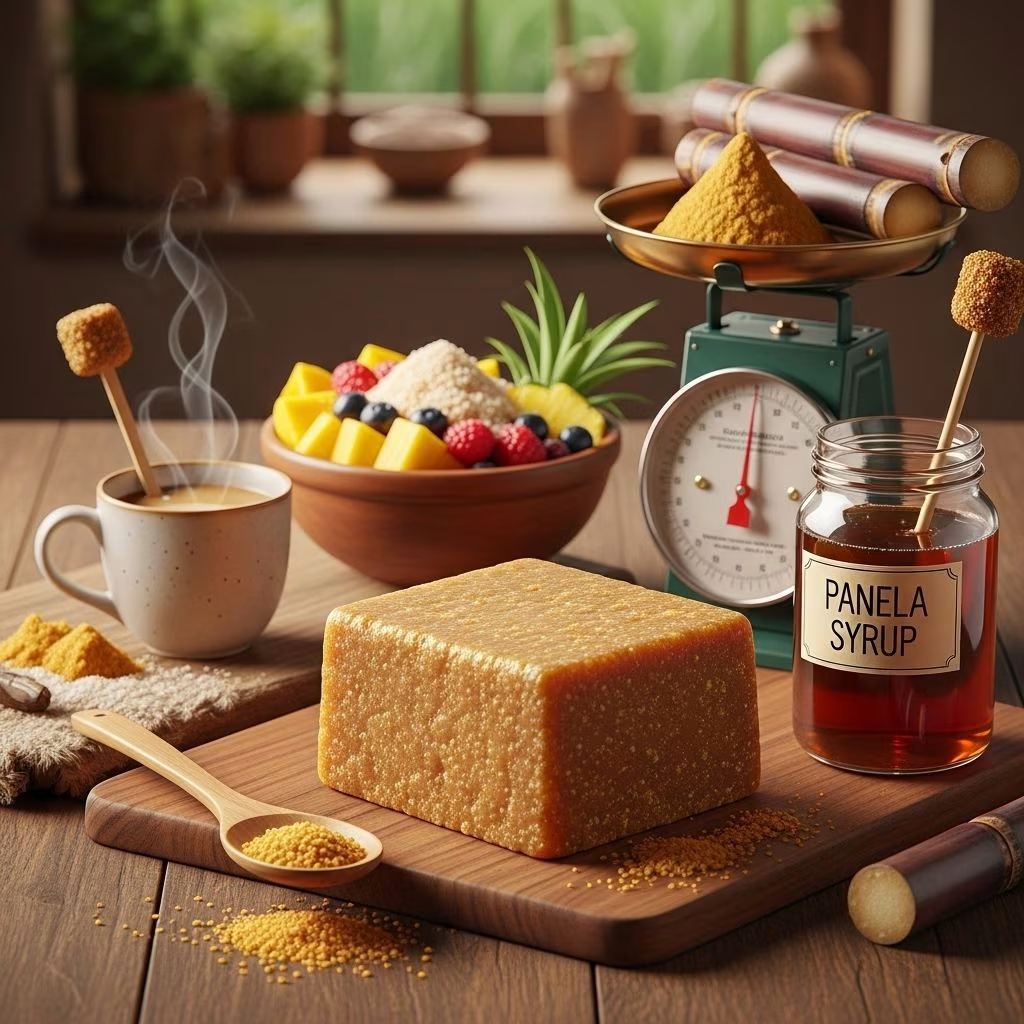
Panela, a traditional, unrefined cane sugar rooted in Latin American culture, has gained worldwide recognition as a natural, flavorful alternative to highly processed white sugar. Known for its complex taste, deep molasses aroma, and potential nutritional advantages, panela is more than just a sweetener—it’s part of a rich culinary and agricultural tradition that spans centuries. This article discusses what panela is, how it’s produced, its health benefits, uses in cuisine, taste profile, nutritional content, and much more.
What Is Panela?
Panela is an unrefined whole cane sugar, made by boiling and evaporating fresh sugarcane juice until it solidifies into a block or granules. Unlike refined white sugar, which is stripped of its natural molasses, panela retains its molasses content, giving it a rich amber color and a complex, caramel-like taste. Panela is a non-centrifugal sugar, meaning it is not spun in centrifuges to separate the sugar crystals from the molasses, and it is free from chemical additives and bleaching agents.
Known by different names across Latin America—rapadura in Brazil, chancaca in Chile and Peru, and piloncillo in Mexico (where ‘panela’ may also refer to a type of cheese)—this unrefined sugar has been a household staple for centuries.
- Main Ingredients: 100% sugarcane juice
- Forms: Solid blocks, cones, disks, granules, or liquid
- Color: Golden to dark brown
- Processing: Hand-cut, kettle-cooked, poured into molds, sometimes pulverized for granulated varieties
History and Cultural Significance
The production and consumption of panela date back to indigenous pre-Columbian communities, later becoming a mainstay in Latin American diets after the introduction of sugarcane by Spanish colonizers. In regions like the Colombian Cauca Valley, panela production is a key agricultural activity—with over 350,000 farmers and thousands of traditional mills involved in its manufacture.
For many communities, panela is more than a sweetener; it’s an economic lifeline, a symbol of cultural identity, and often intertwined with traditional celebrations and culinary practices.
How Panela Is Made
The artisanal process of making panela involves minimal intervention, allowing it to retain the natural qualities of the sugarcane:
- Harvesting Sugarcane: Ripe sugarcane stalks are cut by hand.
- Juice Extraction: The cane is crushed, often using traditional mills, to extract the fresh juice.
- Boiling: The juice is transferred to large kettles or vats and boiled over a wood fire, a process that removes water and concentrates the juice.
- Thickening: Constant stirring ensures the liquid concentrates into a thick syrup.
- Pouring and Molding: The hot syrup is poured into molds—conical, disc, or rectangular—where it cools and solidifies.
- Granulation: In modern versions, the solid panela may be ground into fine granules for easier use in cooking and baking.
This process skips the industrial bleaching, centrifuging, and filtering used in conventional sugar production, resulting in a product rich in natural nutrients and flavor compounds.
Panela De Piura: A Regional Highlight
Panela from the Piura region of Peru is especially prized for its aromatic complexity and mineral content, produced with organic, sustainable farming methods.
Panela vs. Refined Sugar: What Sets It Apart?
| Aspect | Panela | Refined White Sugar |
|---|---|---|
| Processing | Traditional, unrefined, retains molasses | Highly refined, stripped of molasses |
| Color & Texture | Golden-dark brown, blocks or granules | White, fine crystals |
| Flavor | Complex, caramel, molasses notes | Neutral sweetness |
| Nutrition | Retains minerals, vitamins, antioxidants | Mostly pure sucrose, little to no micronutrients |
| Uses | Wide: traditional dishes, drinks, sweetener | Universal in processed foods and drinks |
| Sustainability | Often organic, small-scale, eco-friendly | Industrial farming, higher environmental impact |
Nutritional Benefits of Panela
One of the main selling points for panela is its nutritional profile. Because it is not refined, it keeps many of the micronutrients found naturally in the sugarcane’s molasses.
- Minerals: Iron, calcium, magnesium, potassium
- Vitamins: B-vitamins, particularly B6
- Antioxidants: Contains polyphenols and other antioxidants
- No Additives: Free from artificial preservatives or bleaching chemicals
While panela is still sugar and should be eaten in moderation, it is a more nutrient-dense alternative to conventional white sugar. Its antioxidants and minerals could offer small health benefits, especially in contexts where there is a risk of micronutrient deficiencies.
Potential Health Benefits
- Supports bone health due to calcium content
- Supports metabolism thanks to B vitamins
- Acts as a quick energy source thanks to fast-absorbed carbs
- May help prevent anemia if consumed as part of a diversified diet due to iron content
- Antioxidant content may help combat free radicals
Note: Panela is not a substitute for medical therapy or a primary source of essential nutrients. Its health benefits are modest compared to whole foods like fruits and vegetables.
Uses in Cooking and Traditional Dishes
Panela’s versatility is a key reason for its enduring popularity. It is used across Latin America and beyond in a variety of culinary applications:
- Sweetening beverages: Dissolved in water to make aguapanela, a traditional Colombian drink, or used in coffee and teas.
- Baking: Replaces sugar in cakes, cookies, muffins, and traditional sweets.
- Confectionery: Used in making candies, toffees, and caramel sauces.
- Canning and preservation: Aids in the preservation of fruits and making sauces or compotes.
- Alcoholic beverages: Fermented to make local spirits, beers, or vinegars.
- Savory dishes: Adds depth to marinades, glazes, and stews.
Throughout Latin America, panela is integral to certain holidays, festivals, and regional foods, representing comfort and tradition in every spoonful.
Taste and Flavor Profile
Unlike ordinary table sugar, panela offers a unique taste experience:
- Primary notes: Caramel, molasses, toffee
- Secondary notes: Hints of dried fruit, honey
- Aftertaste: Warm, mildly earthy undertones, slightly floral
The texture can range from hard and crystalline if sold in blocks, to soft, moist, or powdery as a granulated product. Panela melts easily in warm liquids, making it ideal for hot drinks and syrups.
How to Use Panela in Your Kitchen
Panela is easy to substitute for other sweeteners if you know a few simple tips:
- General substitution: Use panela 1:1 for brown sugar, or slightly less (by weight) than white sugar due to its strong flavor.
- For drinks: Dissolve a chunk or granules in hot water and use as a base for coffees, teas, or lemonades.
- For baking: Grate block panela or use granules in batters for cakes, breads, and muffins.
- For syrups: Simmer panela with water (and spices) to create richly flavored syrups for pancakes or desserts.
- Culinary pairings: Combine with spices like cinnamon, vanilla, clove, or chili in both sweet and savory dishes.
Environmental and Economic Impact
- Sustainable Agriculture: Small-scale production preserves tradition and promotes biodiversity.
- Organic and Fair Trade: Many panela producers use organic methods and participate in fair-trade cooperatives.
- Low Processing: Minimal chemical use, leading to less environmental damage compared to industrial sugar production.
- Community Support: Directly supports rural livelihoods across Latin America.
How to Purchase and Store Panela
- Where to buy: Latin American markets, organic food stores, and increasingly online retailers worldwide.
- Forms available: Solid blocks/cones, granulated, or liquid panela.
- Storage tips: Keep blocks in an airtight container in a cool, dry place. Granulated panela should also be stored dry, out of direct sunlight.
- Shelf-life: Panela can last for many months if kept away from moisture.
Frequently Asked Questions (FAQs)
Q: Is panela healthier than white sugar?
A: Panela retains trace minerals and antioxidants not present in white sugar due to minimal processing. However, it is still essentially sugar and should be consumed in moderation. Its health benefits are modest compared to nutrient-dense whole foods.
Q: Can panela be used by people with diabetes?
A: Panela has a similar glycemic index to other sugars, so people with diabetes should monitor intake and consult their healthcare provider. Like all sweeteners, it can impact blood sugar levels.
Q: What does panela taste like compared to brown sugar?
A: Panela has a deeper, more complex flavor profile than most commercial brown sugars, with pronounced molasses, caramel, and slightly fruity or earthy notes.
Q: Is panela the same as jaggery?
A: Panela and jaggery are similar non-centrifugal cane sugars, but jaggery is commonly made and used in South Asia, while panela is typical of Latin America. Both are made via traditional, minimally processed methods and share similar characteristics.
Q: How is panela used in traditional Latin American drinks?
A: In Colombia, panela is dissolved in hot water to make aguapanela. It is also used to sweeten coffee, teas, and make festive holiday drinks with spices and citrus.
Q: What is the environmental impact of panela production?
A: Traditional panela relies on sustainable, small-scale farming methods. When produced organically and with fair trade practices, it is considered environmentally friendly.
Conclusion
Panela stands out as a flavorful, aromatic, and culturally significant alternative to refined sugar, embraced for its nutritional profile, traditional production, and versatility in the kitchen. Whether you’re seeking to embrace Latin American culinary traditions, support sustainable agriculture, or simply try a richer, more complex natural sweetener, panela offers a taste of authenticity and a link to centuries of food heritage.
References
- https://www.justpanela.com/blog/2019/7/19/what-is-panela
- https://en.wikipedia.org/wiki/Panela
- https://www.drinkguya.com/en/blogs/zubereitung-rezepte/what-is-panela-healthy-sugar-origin-use-recipe-idea
- https://marasgourmet.com/blog/superfoods/panela-de-piura-the-natural-sweetener-you-need-to-try/
- https://foodwatch.com.au/blog/carbs-sugars-and-fibres/item/what-exactly-is-panela.html
- https://library.sweetmarias.com/glossary/panela/
- https://www.justpanela.com/blog/2024/11/8/health-benefits-of-unrefined-unprocessed-non-centrifugal-sugar


