


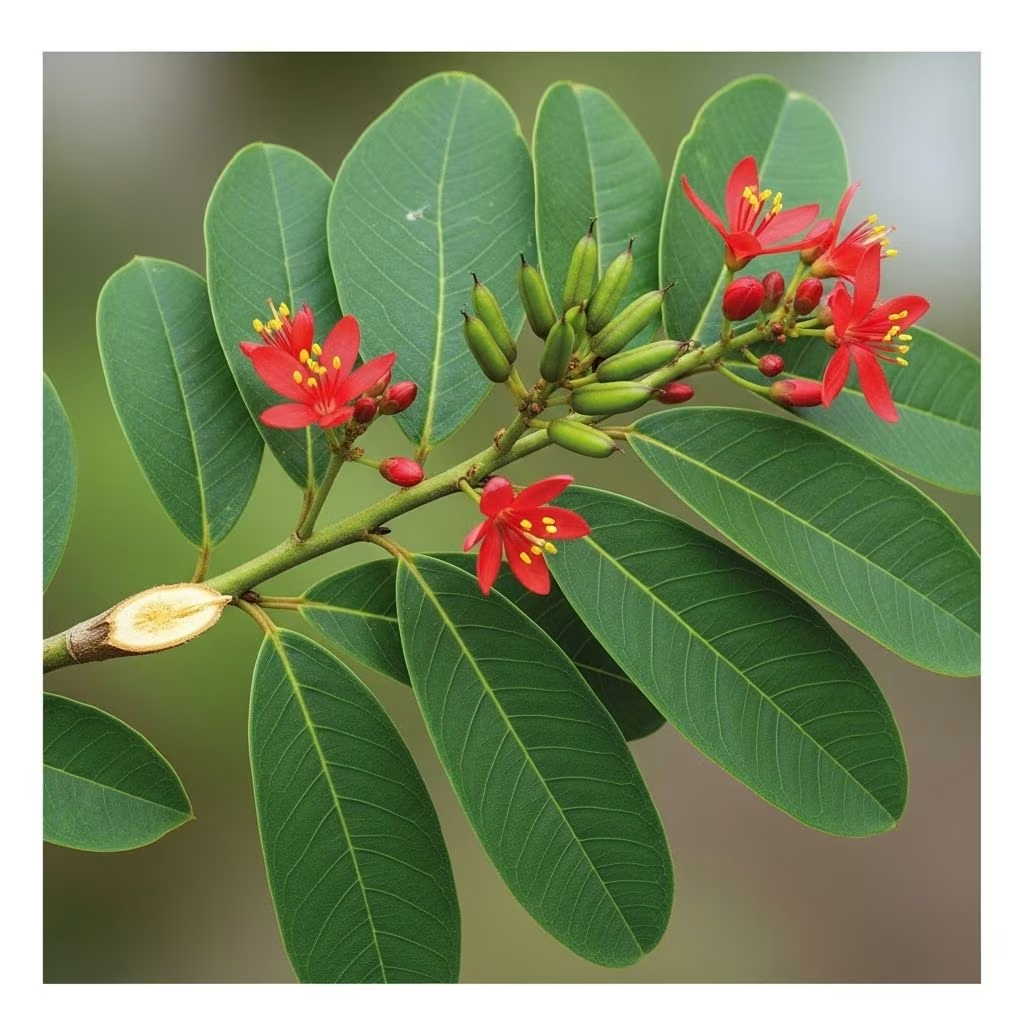
Quassia has gained recognition in both traditional and modern medicine for its intense bitterness and a broad range of applications, from natural health remedies to beverage flavorings. This guide explores what Quassia is, delves into its health benefits, culinary roles, and why it has such a distinctive, unforgettable taste.
Introduction to Quassia
Quassia, also known as amargo, bitterwood, and bitter-ash, refers both to Quassia amara and related species used for their striking bitterness and therapeutic benefits. Renowned for centuries in herbal medicine, Quassia continues to be a staple in both folk and clinical preparations, as well as a unique flavor enhancer in gastronomy and beverages.
Botanical Overview
Quassia amara is a small shrub or, more rarely, a small tree belonging to the Simaroubaceae family. The plant features:
- Height: Typically 3–6 meters, occasionally reaching 8 meters in rare instances.
- Leaves: Compound, alternate, deep green leaflets (3–5 per stem), typically 15–25 cm long; distinctive for broad, winged leaf axes.
- Flowers: Bright red, narrow, tubular flowers arranged in panicles of 10–30 cm; petals remain mostly closed, creating a striking red appearance outside and white inside.
- Fruit: Small, elliptic, fleshy drupes (purple-black or red when ripe; about 0.8–1.5 cm long); each fruit contains a single seed.
- Wood: White when cut, turning yellow upon exposure to air; bark is the most economically significant component.
This plant is native to northern South America and the Caribbean, including regions like Brazil, Venezuela, Peru, Costa Rica, and Guyana. It thrives in tropical forests and is occasionally cultivated commercially for its bark and medicinal value.
Origin, History, and Etymology
The name Quassia honors Graman Quassi, an 18th-century Surinamese healer and botanist who introduced its medicinal virtues to Europe. The species name amara is Latin for ‘bitter’, perfectly encapsulating the plant’s primary feature.
Historically, Quassia was adopted in both West African and indigenous South American medicine for digestive ailments, fever, and as a vermifuge (worm expeller). Its notoriety spread throughout Europe as a key ingredient for both flavoring and health-promoting preparations.
Key Compounds in Quassia
The potency of Quassia’s bitterness, and much of its biological activity, is due to specific natural chemicals called quassinoids. These compounds belong to the class of triterpenoids (more specifically, seco-triterpene lactones). The main bioactive substances include:
- Quassin: Renowned as the most bitter naturally occurring compound, being 50 times more bitter than quinine. Responsible for both taste and many medicinal effects.
- Neoquassin, 18-hydroxyquassin, simalikalactone D, and quassimarin: Other quassinoids present in the bark.
- Beta-carboline alkaloids and coumarins (like scopoletin): Additional compounds contributing to the plant’s medicinal qualities.
Quassia bark contains about 0.25% quassinoids by weight. These substances exhibit a wide spectrum of biological activities including anti-malarial, anti-inflammatory, antiviral, and insecticidal effects.
Health Benefits of Quassia
Quassia is celebrated for its medicinal applications which have been observed across different cultures for centuries. Some of the principal health benefits include:
- Digestive Stimulation: Enhances secretion of bile, stomach acids, and digestive enzymes. This makes it effective as a remedy for indigestion, poor appetite, and sluggish digestion, and a popular treatment for anorexia.
- Antiparasitic Activity: Traditionally used as an anthelminthic, particularly for the expulsion of intestinal worms and parasites. Both decoctions and enemas made from Quassia have been employed for this purpose.
- Antimalarial Properties: Employed for reducing fevers associated with malaria and other febrile illnesses. Some studies support Quassia’s anti-plasmodial activity.
- Anti-inflammatory, Antiviral, and Antitumor Activity: Research points to a broader array of therapeutic effects due to the quassinoid content.
- Appetite Restoration: Utilized as a traditional remedy to restore loss of appetite following illness or during recovery.
- Liver Support: Occasionally incorporated into formulas aimed at promoting liver function and treating related ailments such as liver cirrhosis.
- Adjunct for Other Diseases: Sometimes used in managing diabetes, measles, diarrhea, dysentery, ulcers, urinary tract disease, alcoholism, and albuminuria; however, clinical evidence for many of these uses remains limited.
It’s crucial to note that while traditional uses are well-established, not all claims have been validated by rigorous clinical studies.
Traditional and Modern Uses
Quassia’s versatility is showcased in both ancient healing and contemporary applications:
- Herbal Bitters: Used in traditional ‘bitters’ remedies, tinctures, and tonics for digestive complaints.
- Naturally Derived Insecticide: The intensely bitter extract is an effective, natural pesticide. Sprays and infusions made from Quassia bark are used to control pests like aphids and caterpillars, especially in organic farming.
- Flavoring Substitute for Hops or Quinine: Especially significant in the production of certain beers or soft drinks where it serves as a hop substitute or imparts bitterness typically associated with quinine.
- Angostura Bitters and Liqueur Production: A crucial ingredient in Angostura bitters and selected liqueurs, giving these products their trademark sharp flavor.
- Parasite and Lice Control: Bathing or topical preparations traditionally used for eradicating lice and other skin parasites.
- Ornamental Planting: Also valued as an attractive ornamental shrub for its exotic flowers and distinctive foliage.
Culinary and Beverage Applications
Despite its fierce bitterness, Quassia has a unique, valued place in gastronomy and drink manufacturing:
- Beverage Bitters: Quassia bark is a vital component in making aromatic and digestive bitters, widely used in cocktails, especially gin-based drinks and classic formulations like Angostura Bitters.
- Soft Drinks: Occasionally used in soft drink flavorings for its distinct bitter undercurrent.
- Beer Manufacturing: May serve as a cost-effective or non-alcoholic substitute for hops, providing bitterness without the floral notes of actual hops.
- Herbal Infusions and Teas: Bark chips or powder used to make strong herbal teas or decoctions, either alone or blended with other botanicals.
Because of its remarkable bitterness, quantities used in food or drink are meticulously controlled. Only small amounts are needed to impart flavor or provide a tonic effect.
The Taste Profile of Quassia
Bitter is the defining characteristic of Quassia. The plant contains quassin, which is documented as the most bitter substance found in nature—over 50 times more intense than quinine (the agent that gives tonic water its sharpness).
The bitterness of Quassia can be described as:
- Extremely Sharp: Even tiny amounts create an intensely bitter sensation.
- Clean and Lingering: Leaves a persistent aftertaste, sometimes paired with astringency.
- Devoid of Sweetness: Unlike gentian or other bitters, Quassia’s flavor is pure and uncompromising bitterness.
- Functional in Bitters: In low concentrations, it functions as an appetite stimulant and digestive aid. Excess consumption generally makes concoctions unpalatable except to those accustomed to extreme bitters.
| Substance | Bitter Intensity (relative) | Primary Use |
|---|---|---|
| Quassin (from Quassia) | 50x quinine | Bitters, medicine, insecticide |
| Quinine | 1x (reference) | Tonic water, malaria treatment |
| Gentianine (from Gentian root) | 0.33x quinine | Bitters, digestive tonic |
Safety, Side Effects, and Dosage
Self-medication with Quassia should be approached thoughtfully. Key points include:
- Dosage: Traditionally, only minute quantities are recommended—often no more than a few grams of bark steeped in water or alcohol for a daily dose. Bitters and teas contain much less.
- Potential Side Effects: Excessive consumption may cause nausea, vomiting, gastric irritation, or compromise digestive enzymes. In rare instances, overuse is associated with hypotension (low blood pressure) and decreased fertility in animal studies. Direct contact can cause skin irritation.
- Special Populations: Children, pregnant, or breastfeeding women should avoid Quassia unless supervised by a qualified healthcare provider.
- Drug Interactions: There is limited evidence on interactions with medications, though the bitter principle could, in theory, interact with some gastrointestinal drugs or digestive aids.
If considering regular medicinal or supplemental use, consult an expert in herbal medicine.
Frequently Asked Questions (FAQs)
Q: What is the primary active ingredient in Quassia?
A: Quassin is the main bitter compound and the most potent naturally occurring bitter substance identified.
Q: Is Quassia safe for daily consumption?
A: When used in very small amounts (as in bitters or teas), it is generally considered safe for adults. Prolonged large doses or undiluted extracts are not recommended without medical supervision.
Q: How is Quassia used to treat digestive issues?
A: It stimulates the secretion of digestive juices, bile, and enzymes, enhancing appetite and facilitating smoother digestion.
Q: Can Quassia kill parasites or lice?
A: Traditionally, Quassia has been used for its antiparasitic effects—both as a remedy for intestinal worms and as a topical solution for eradicating lice.
Q: What drinks typically contain Quassia?
A: Classic bitters (like Angostura), selected soft drinks, certain cocktails, and sometimes beers where it serves as a hop substitute.
Conclusion
Quassia stands out as a unique botanical, defined by its extraordinary bitterness and wealth of traditional and modern uses. Whether as a digestive tonic, a natural insecticide, an ingredient in gourmet bitters, or a subject of ongoing scientific inquiry, Quassia continues to intrigue and benefit people worldwide. Its flavor may be challenging, but its place in herbal history and culinary innovation is secure.
References
- https://en.wikipedia.org/wiki/Quassia_amara
- https://www.herbco.com/c-317-quassia.aspx
- https://chefin.com/dictionary/quassia/
- https://ransomnaturals.com/plant-of-the-month-august-2014-quassia/
- https://pfaf.org/user/Plant.aspx?LatinName=quassia
- https://en.wikipedia.org/wiki/Quassia
- https://www.rxlist.com/supplements/quassia.htm
- https://www.picturethisai.com/wiki/Quassia_amara.html
- https://plants.usda.gov/plant-profile/QUAM


