


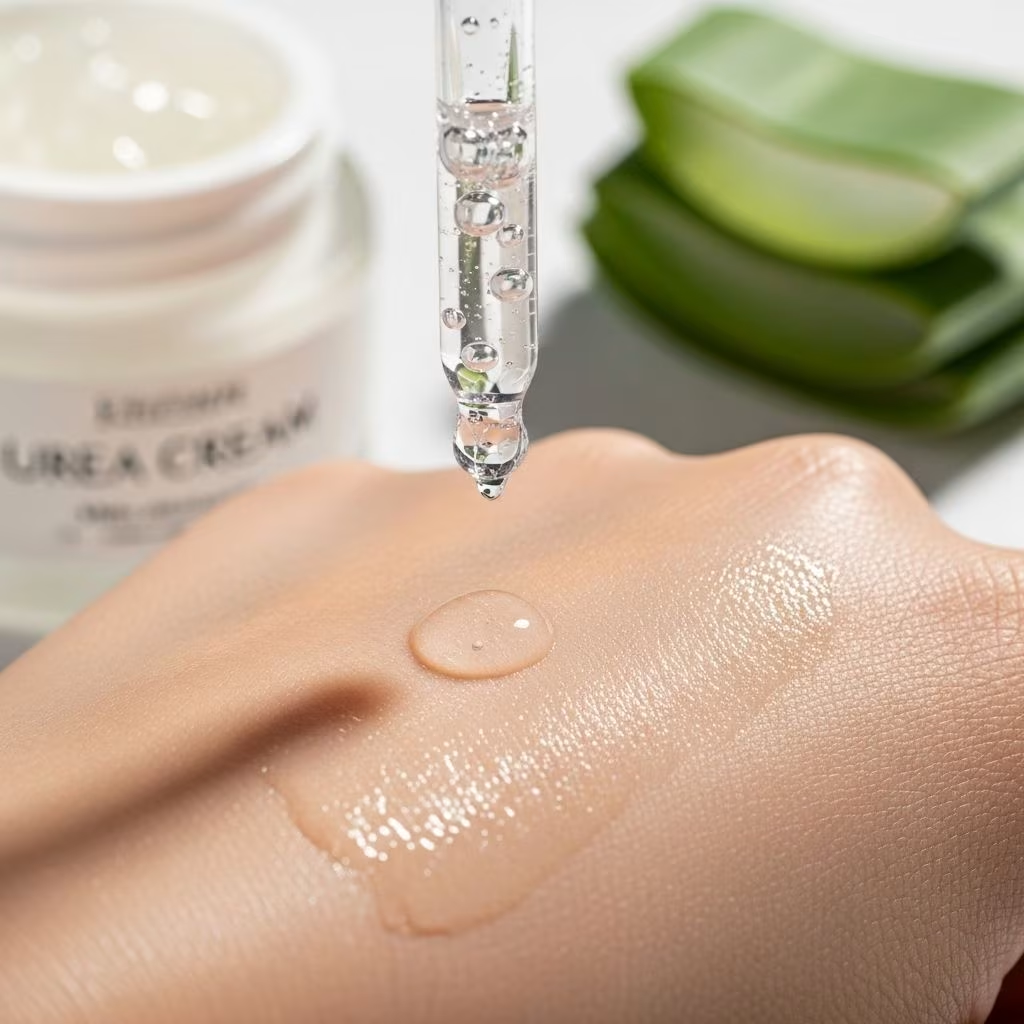
Urea, also known as carbamide, is a powerful dermatological ingredient increasingly found in moisturizers and treatments for dry, rough, or problematic skin. While naturally produced in the body, its synthetic form has revolutionized the cosmetic and medical skin care industries. This comprehensive guide explores how urea works, the conditions it treats, benefits, best practices, potential side effects, and answers to common questions.
What is Urea (Carbamide)?
Urea is an organic compound and waste product created in the liver during the breakdown of proteins. While a key constituent of urine, it’s also naturally present in healthy skin as part of the natural moisturizing factors (NMFs) responsible for skin’s hydration, flexibility, and barrier function.
For topical and cosmetic applications, synthetic urea is produced in laboratories and incorporated into a variety of creams, gels, and lotions. You may also see it labeled as “carbamide.”
How Urea Works in Skin Care
Urea’s beneficial effects arise from its unique capability to impact both moisture retention and the skin’s surface texture. Here’s how it works:
- Humectant: Attracts and binds water molecules from the air and deeper skin layers, effectively increasing hydration in the outermost layer, called the stratum corneum.
- Emollient: Fills microscopic gaps between dead skin cells, smoothing and softening the skin surface.
- Keratolytic: At concentrations above 10%, urea gently breaks down keratin protein bonds, leading to the exfoliation of dead skin cells and promoting cell turnover.
- Barrier Enhancer: Improves the function of the skin’s natural barrier by replenishing and preserving critical moisture and preventing the entry of potential irritants.
- Penetration Booster: Increases the permeability of skin for other active ingredients, enhancing their effectiveness—particularly for medications like corticosteroids or antifungals.
- Antimicrobial Actions: Stimulates peptides (cathelicidin, β-defensin-2) that hinder harmful microbes’ growth, contributing to healthier skin.
Key Skin Benefits of Urea
Urea provides a wide array of skin benefits, particularly for individuals with very dry, flaky, or scaly skin. The main benefits include:
- Intense Hydration: As a robust humectant, urea attracts and locks water into the skin, alleviating dryness and improving its suppleness.
- Gentle Exfoliation: Especially in higher concentrations, urea promotes the shedding of dead skin, reducing rough or thickened patches and brightening the skin.
- Enhanced Barrier Function: By replenishing the skin’s natural moisturizing factors, urea helps maintain a strong, protective barrier that guards against irritants and retains hydration.
- Reduces Itching and Discomfort: Particularly beneficial for conditions like eczema, psoriasis, or ichthyosis, urea calms irritation and relieves itchiness associated with excessive dryness.
- Boosts Effectiveness of Other Treatments: Urea improves the absorption of topical medications, such as corticosteroids or antifungal creams, making therapies for various skin conditions more effective.
- May Exhibit Mild Antimicrobial Properties: Urea can support the skin’s defenses against bacterial or fungal infections by increasing certain antimicrobial peptides.
Urea’s Role by Concentration
| Urea Concentration | Main Effect | Common Uses |
|---|---|---|
| 2–10% | Hydration, barrier maintenance | Typical facial moisturizers, lotions for sensitive or mildly dry skin |
| 10–20% | Hydrating with mild exfoliation | For body creams, xerosis, mild keratosis pilaris |
| 20–30% | Strong exfoliation, breaking down thickened skin | Psoriasis, ichthyosis, more severe dryness, callused areas |
| 40% | Proteolytic (breaks down nail/surface proteins) | Treatment of thickened/dystrophic nails or very stubborn calluses |
Source: Adapted from Medical News Today, NCBI.
Uses and Concentrations in Skin Care Products
Urea is used in an array of dermatological and cosmetic products addressing:
- General dryness and dehydration
- Flaky or scaling skin
- Rough texture and callused areas (elbows, feet, hands)
- Medically diagnosed conditions, including:
- Eczema (Atopic Dermatitis)
- Psoriasis
- Ichthyosis (severely scaly skin)
- Keratoderma and hyperkeratosis
- Keratolysis (softening thickened nails or skin)
- Fungal infections (aiding penetration of antifungals)
Common Forms of Urea-Containing Products
- Facial creams and lotions
- Hand and foot creams
- Body lotions
- Keratosis pilaris treatments
- Ointments for thickened nails or stubborn calluses
- Sometimes in medicated shampoos for scalp conditions
When choosing a product, be mindful of the urea concentration and its intended effect: lower concentrations focus on hydration; higher ones provide exfoliation and softening.
How to Use Urea-Based Products
- Patch Test First: Apply a small amount to a test area, particularly if you have sensitive skin or a history of skin allergies.
- Frequency: Most people can use low- to mid-strength urea creams daily or as directed on the product. High-concentration products for nails or severe calluses are typically used less frequently and for shorter durations.
- Apply to Clean, Damp Skin: For best results, apply after bathing or cleansing, when skin is still slightly moist.
- Follow Product Instructions: Concentration and use instructions may vary, especially for products over 20% urea.
- Avoid Getting into Eyes or Mucous Membranes: Rinse thoroughly with water if accidental contact occurs.
- Layering: Urea can be safely layered with most skin care products, but always consult a dermatologist if combining prescription topicals.
Potential Side Effects & Precautions
For the majority, urea is safe and well-tolerated. Nonetheless, here are some considerations:
- Mild Side Effects: Possible mild burning, stinging, or irritation—especially on sensitive, broken, or inflamed skin.
- Allergic Reactions (Rare): Includes redness, rash, severe itching, or swelling. Discontinue use and consult a doctor if these occur.
- Overuse: Excessive use, especially of high concentrations, can lead to peeling, excessive softness, or irritation.
- Special Precautions: Consult your healthcare provider before use if pregnant, breastfeeding, or using on infants.
- Professional Guidance Highly Recommended: When using products with concentrations above 20%, especially for nail dystrophies or other non-cosmetic treatments, consult a dermatologist.
Types of Urea-Containing Products
- Moisturizers and Lotions: 5–10% urea for maintaining hydration, especially on the face and sensitive body areas.
- Therapeutic Creams: 10–20% for moderate dryness and scaly conditions.
- High-potency Creams and Ointments: 20–40% used on extremely rough skin or thickened nails—only as directed by a healthcare provider.
- Shampoos: Lower concentrations used for scalp dryness.
Check labels for “urea” or “carbamide” as an ingredient. Product texture and formulation may influence absorption and efficacy.
Interactions with Other Skin Ingredients
Urea is generally compatible with most skin care actives and can be a synergistic addition, enhancing the penetration and effects of:
- Corticosteroids (for eczema, psoriasis, etc.)
- Antifungal agents (for athlete’s foot, onychomycosis, etc.)
- Other moisturizers (glycerin, hyaluronic acid, ceramides)
- Chemical exfoliants (alpha hydroxy acids, albeit with caution for sensitive skin)
Tip: Use with caution alongside strong peeling agents or in multi-step routines for sensitive skin, to avoid over-exfoliation.
Frequently Asked Questions (FAQs)
Q: Is urea safe for everyday use?
Yes. Urea at concentrations up to 10% is generally safe and effective for daily use in most moisturizers. For higher concentrations, limit frequency as directed by product instructions or a dermatologist.
Q: Can urea help with eczema, psoriasis, or keratosis pilaris?
Absolutely. Urea both hydrates and gently exfoliates, relieving dryness, itchiness, and thickened patches characteristic of these conditions. It is a common ingredient recommended by dermatologists for such issues.
Q: Are there concerns with using urea around the eyes or on the face?
Lower concentrations (<10%) are generally safe for the face, but avoid eyes and mucous membranes. High concentrations are meant for thicker skin areas (feet, elbows, nails).
Q: Does urea make your skin photosensitive?
No, urea does not cause sun sensitivity, but if using with other exfoliants, daily sunscreen use is always important.
Q: Can urea be combined with retinoids or acids?
Yes, but introduce them gradually to reduce risk of irritation, and monitor skin’s response. Consult a dermatologist for personalized routines involving prescription-strength treatments.
Q: Where does the urea in skin care actually come from?
The urea found in skin care products is entirely synthetic, produced in laboratories to high purity standards. It is not derived from urine.
References
- Skintypesolutions.com. The Science of Urea in Skincare
- Healthline. Urea in Lotion and Cream: Benefits, Side Effects, How to Use It
- Medical News Today. The benefits and use of urea in skin care
- Clinikally. Urea for Skin: Benefits, How to Use, & Side Effects
References
- https://skintypesolutions.com/blogs/skincare/urea
- https://www.healthline.com/health/beauty-skin-care/urea-in-lotion
- https://www.medicalnewstoday.com/articles/urea-in-skincare
- https://www.clinikally.com/blogs/news/urea-for-skin-benefits-how-to-use-side-effects
- https://pmc.ncbi.nlm.nih.gov/articles/PMC8611129/
- https://www.cerave.com/ingredients-in-cerave/urea
- https://synapse.patsnap.com/article/what-is-carbamide-used-for
- https://www.webmd.com/drugs/2/drug-6047-829/urea-topical/urea-keratolytic-topical/details


