


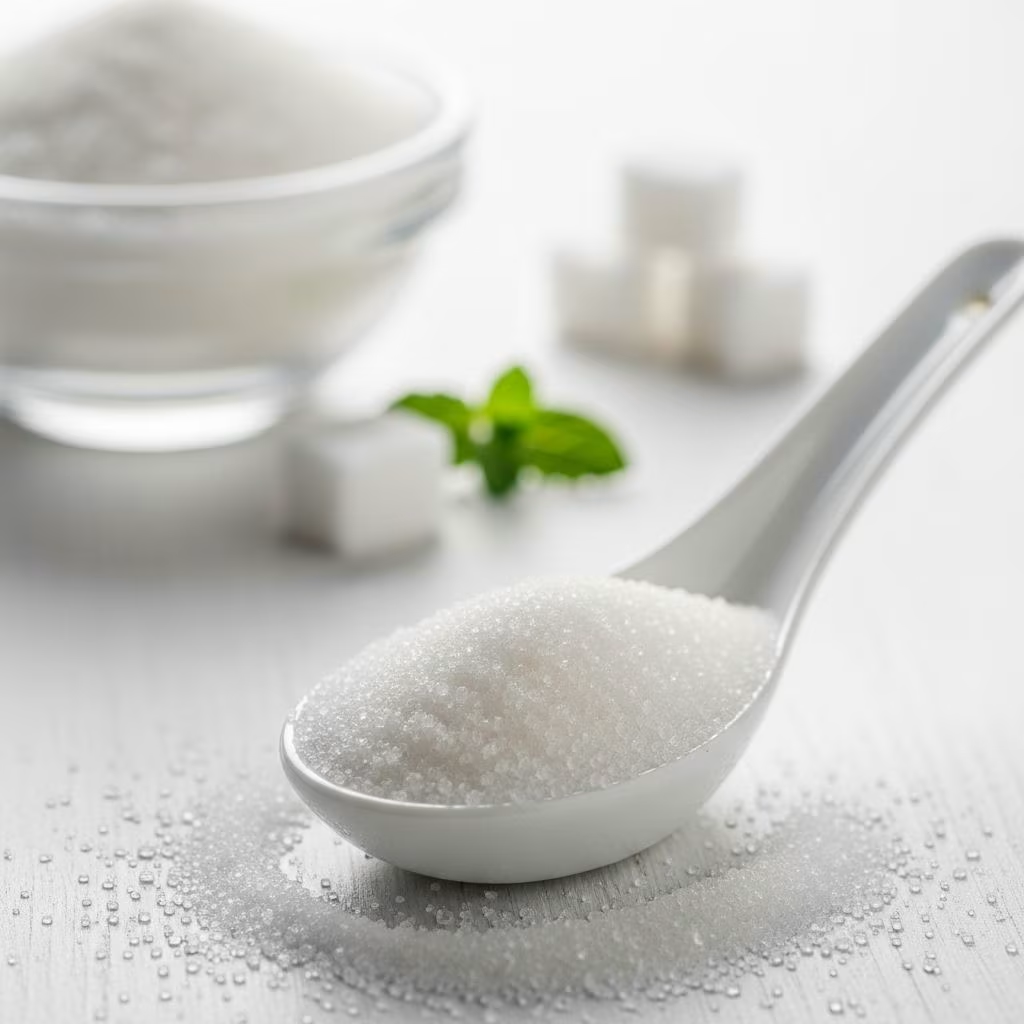
White sugar, also known as table sugar, granulated sugar, or regular sugar, is an indispensable ingredient in kitchens and food production globally. Renowned primarily for its sweet flavor and versatile role in food preparation, its ubiquitous presence raises questions about its characteristics, benefits, applications, flavors, and health ramifications .
What Is White Sugar?
White sugar is virtually pure sucrose, a disaccharide composed of glucose and fructose molecules bonded together . Derived typically from sugarcane or sugar beet, it is highly refined to remove impurities, mainly molasses, resulting in the crystalline white appearance and neutral flavor. Its molecular formula is C12H22O11 .
- Other names: granulated sugar, table sugar, regular sugar.
- Primary source: sugarcane and sugar beet.
- Purity: usually exceeds 99.7% sucrose .
How White Sugar Is Made
The process of making white sugar begins with the extraction of juice from sugarcane or sugar beet.
- Extraction: Plants are milled to release their juice.
- Clarification: The juice is treated to remove solids and impurities.
- Evaporation: The clarified juice is boiled to evaporate water, concentrating the sugar.
- Crystallization: The concentrated syrup crystallizes, forming raw sugar.
- Refining: Raw sugar is further refined and purified, typically through filtration (including carbon or ion-exchange resin) and additional crystallization to produce white sugar .
- Final product: White sugar is dried, graded, and packaged for distribution.
The refining process strips away all molasses content, which is responsible for the dark color and trace minerals found in less-refined or brown sugars .
Chemical Composition of White Sugar
White sugar is nearly pure sucrose. Sucrose comprises two simple sugars (monosaccharides) joined by a glycosidic bond:
- Glucose (C6H12O6)
- Fructose (C6H12O6)
The molecular formula for sucrose is C12H22O11 .
| Component | Amount (per 100g) | Notes |
|---|---|---|
| Sucrose | 99.7g | Primary carbohydrate, main ingredient |
| Moisture | ~0.02g | Very low; contributes to shelf stability |
| Minerals (Ca, K, Mg, Fe) | <0.01g | Negligible compared to other sweeteners |
| Potential chemical traces | Trace | Includes sucralose, saccharin, sulfur dioxide, arsenic, cadmium, among others depending on processing |
While white sugar is free of significant mineral or vitamin content, trace levels of chemicals may result from manufacturing and refinement practices . These include sucralose (in some blends), sulfur dioxide, arsenic, cadmium, and others, although generally at levels considered safe for consumption .
Nutritional Profile
| Nutrient | Amount | Role/Impact |
|---|---|---|
| Energy | ~400 kcal | Quick source of fuel |
| Total Carbohydrates | 100g | All sugar, primarily in sucrose form |
| Protein | 0g | No protein |
| Fat | 0g | Fat-free |
| Fiber | 0g | No dietary fiber |
| Minerals & Vitamins | Negligible | Not a significant source |
White sugar provides rapid, easily absorbed energy but does not contribute micronutrients. Its lack of vitamins or minerals sets it apart from more unrefined sugars.
Benefits of White Sugar
While commonly seen through a lens of caution due to health risks, white sugar does offer practical benefits in culinary, industrial, and nutritional contexts:
- Sweetening: The primary role is to provide a quick, predictable sweetness to foods and drinks .
- Caramelization: White sugar facilitates browning in baked goods, adding attractive color, aroma, and flavor.
- Texture and preservation: Sugar affects the tenderness of cakes and cookies and acts as a preservative in jams, jellies, and syrups .
- Fermentation: Essential for fermentation in baking (for yeast-based breads) and alcohol production.
- Energy boost: Supplies rapid energy, useful in situations of immediate need (e.g., hypoglycemia).
- Long shelf-life: High purity and low moisture content contribute to a long shelf life when stored correctly.
White sugar’s simplicity and purity make it an ideal ingredient for standardizing recipes and food products worldwide.
Uses of White Sugar in Food & Industry
White sugar is incredibly versatile. Its uses span culinary applications, industrial processes, and even pharmaceuticals:
- Baking: Cakes, cookies, muffins, and pastries rely on white sugar for structure, sweetness, and browning.
- Drinks: Teas, coffees, soft drinks, cocktails, and juices commonly use white sugar for sweetening and balancing flavor.
- Cooking: Sauces, dressings, marinades, and glazes feature sugar to round out acidity and add depth.
- Preservation: Jams, jellies, syrups, and preserves use sugar to inhibit microbial growth.
- Candy and confectionery: From hard candies to fondant, white sugar is fundamental in creating texture and sweetness.
- Fermentation support: Both bread-making and alcohol production benefit from sucrose as a food for yeast.
- Pharmaceuticals: Sucrose is used to mask bitterness and improve palatability of medications.
Taste Profile of White Sugar
The taste profile of white sugar is universally recognized:
- Sweetness: Pure, clean, and intense, but not overpowering.
- Neutral flavor: No detectable aromas, bitterness, or complexity, making it an ideal base for sweetening.
- Texture: When dry, it feels fine and grainy; it dissolves easily in both warm and cold liquids.
- Adaptability: Blends seamlessly without changing the overall taste profile of dishes or drinks.
Compared to raw or brown sugars, white sugar does not contain molasses, leading to a less robust or nuanced flavor . Its lack of strong flavor notes makes it ideal for recipes where other flavors should dominate.
Health Impacts and Concerns
White sugar’s health effects are the subject of extensive study and global public health campaigns:
- Obesity: High intake is correlated with overnutrition and increased risk of weight gain .
- Heart disease: Diets high in added sugar may raise the risk of cardiovascular disease .
- Type 2 Diabetes: Overconsumption impairs glucose regulation and can increase diabetes risk .
- Dental caries: Sugar acts as a food source for oral bacteria, increasing cavity risk.
- Other risks: Potential trace chemicals from manufacturing (such as arsenic, cadmium, sulfur dioxide) may theoretically present health risks but are present in minimal levels .
Recommended intake: The Centers for Disease Control and Prevention (CDC) advises limiting daily sugar consumption to less than 200 calories, or about 12 teaspoons (48 grams) on a 2,000 calorie diet .
While occasional consumption is considered safe for most people, chronic excess intake should be avoided to support good health.
Health Comparison: White Sugar vs. Brown Sugar
| Aspect | White Sugar | Brown Sugar |
|---|---|---|
| Composition | Almost pure sucrose | Sucrose with added molasses |
| Color | White | Light to dark brown |
| Trace Minerals | Negligible | Small amounts (calcium, potassium, magnesium, iron) |
| Taste | Clean, sweet, neutral | Sweet, with caramel/molasses notes |
| Common Uses | Standard sweetening, baking, drinks | Baking, sauces, creates deeper flavor |
Frequently Asked Questions (FAQs)
Q: Is white sugar vegan?
A: Beet-derived white sugar is always vegan; some cane sugars may be processed with bone char, but modern processes increasingly use activated carbon and ion-exchange resin, making most white sugars vegan-friendly .
Q: How is white sugar different from other sweeteners?
A: White sugar is virtually pure sucrose, giving it a clean taste and reliable sweetness; alternatives may have different chemical structures, flavors, and sometimes contain trace nutrients or non-sugar ingredients .
Q: Can white sugar cause allergies?
A: True allergies to pure sugar are extremely rare. Sensitivities are more likely to be associated with additive chemicals or cross-contamination during processing.
Q: Is there any nutritional benefit to white sugar?
A: White sugar provides energy but lacks vitamins, minerals, or fiber; it should be part of a balanced diet and not relied on for nutrition.
Q: What is the shelf life of white sugar?
A: Indefinite, if stored in a cool, dry container, as it does not support microbial growth.
Q: Why is white sugar so commonly used?
A: Its predictable flavor, ability to blend seamlessly into recipes, and consistent quality make it a staple for home cooks and commercial manufacturers alike .
Conclusion
White sugar stands as one of the most iconic and widely used food ingredients, distinguished by its clean sweetness, chemistry, and adaptability. While it plays an essential role in culinary traditions worldwide, it should be consumed with mindfulness due to potential health impacts from both dosage and manufacturing residues. Whether sweetening coffee, baking desserts, or preserving fruits, white sugar offers reliability and uniform taste. Responsible consumption—as part of an overall balanced diet—is essential for enjoying its benefits without risking long-term health.
References
- https://en.wikipedia.org/wiki/White_sugar
- https://www.echemi.com/cms/859273.html
- https://en.wikipedia.org/wiki/Sucrose
- https://www.sugarnutritionresource.org/news-articles/what-is-table-sugar
- https://www.masterclass.com/articles/white-sugar-guide
- https://pubchem.ncbi.nlm.nih.gov/compound/Sucrose
- https://www.sugar.org/sugar/what-is-sugar/


