


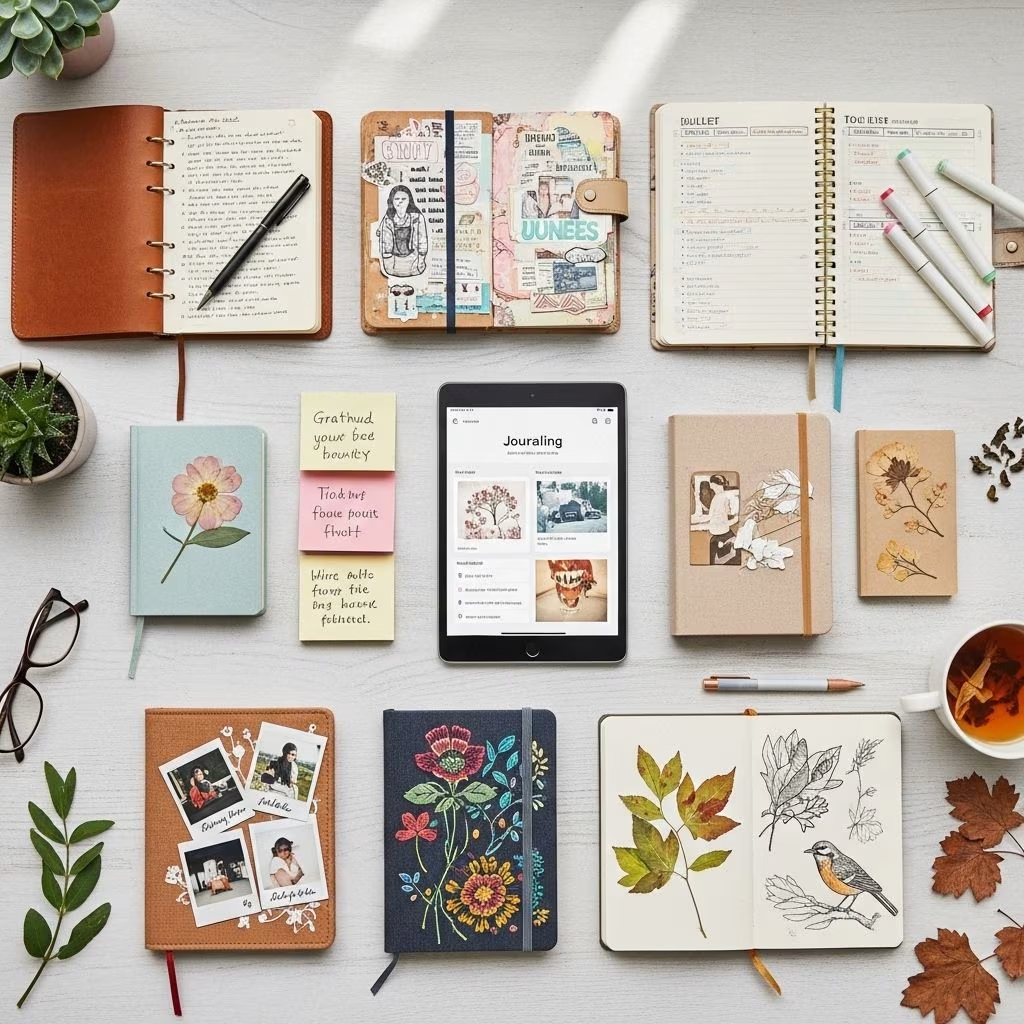
Journaling can be a simple yet profoundly effective strategy to improve mental health, reduce stress, and foster self-understanding. From expressive writing to artistic collage, various journaling styles exist, each tailored to different personalities and emotional needs. This comprehensive guide explores ten types of journaling, their benefits, and how to find the style that best nurtures your well-being.
Key Mental Health Benefits of Journaling
Journaling is much more than simply recording your daily events. Numerous studies and clinical evidence highlight its wide spectrum of mental health benefits:
- Reducing stress: Brief, regular journaling sessions can lower stress and negative emotions, allowing for emotional release and clarity.
- Managing anxiety: Writing down worries and reframing thoughts helps to break cycles of rumination, reduce overwhelm, and build resilience.
- Coping with depression: Expressing emotionally-charged thoughts and practicing gratitude through journaling may ease depressive symptoms and foster hope.
- Processing trauma and grief: Having a private space to work through difficult experiences promotes healing over time.
- Sleep and immunity: Keeping a journal can improve mood, help you sleep better, and even support your immune function.
With so many benefits, the next step is to find the journaling style that fits your personality and needs.
10 Types of Journaling for Mental Health
Below are ten of the most effective and researched journaling types for mental and emotional wellbeing. Each offers a unique approach, so consider which resonates with you and your goals.
1. Gratitude Journaling
Focus: Writing down things you’re thankful for—moments, people, experiences.
Benefits: Shifts focus from negativity to positivity, increases overall happiness, and reduces symptoms of depression. Gratitude journaling re-trains your brain to notice and appreciate life’s positives, counteracting our natural bias toward negative thoughts.
How to try:
- List three things you’re grateful for each day.
- Describe in detail why each item is meaningful to you.
2. Expressive (Emotional Release) Journaling
Focus: Writing freely and honestly about your deepest feelings and stressful experiences, uncensored and unfiltered.
Benefits: Reduces stress, helps process trauma, and provides a sense of emotional release. Especially helpful in dealing with unresolved issues or strong emotions.
How to try:
- Set a timer for 15-20 minutes, write without worrying about grammar or structure.
- Don’t censor painful or uncomfortable feelings—let them flow.
3. Bullet Journaling
Focus: Organizing life with short, structured entries (bullets), lists, and habit trackers.
Benefits: Improves productivity, reduces anxiety, and provides a sense of control. Bullet journals make it easy to track moods, habits, and progress toward goals.
- Use bullets for tasks, notes, and reflections.
- Add habit trackers or mood logs.
4. Reflective Journaling
Focus: Reflecting on past experiences and envisioning future goals.
Benefits: Encourages personal growth, insight, and learning from your journey. Useful for processing events, relationships, or changes in life.
- Ask yourself: What did I learn today? What would I do differently?
- Write about how past challenges shaped your values.
5. Stream-of-Consciousness Journaling
Focus: Writing continuously without lifting your pen or censoring thoughts—let your mind flow freely.
Benefits: Clears mental clutter, lowers anxiety, and helps uncover subconscious worries. Allows you to witness thoughts without judgment.
- Write for a set time without stopping; don’t worry about topic, order, or grammar.
- Use this style when feeling overwhelmed or stuck.
6. What’s Going Well (Positive Focus) Journaling
Focus: Highlighting positive events, achievements, or pleasant moments, no matter how small.
Benefits: Increases optimism and motivation. Shifts your mindset from what’s wrong to what’s working well.
- At each entry, list or describe what went well today or this week.
- Use this style when you need encouragement or confidence.
7. Unsent Letter Journaling
Focus: Writing letters to people in your life (living or deceased) that you don’t intend to send—venting, expressing gratitude, or seeking closure.
Benefits: Provides emotional release, enables closure, and helps with processing complex emotions towards others.
- Start with “Dear [Name],” and write everything you wish you could say.
- Burn, shred, or safely keep these letters—sending is optional and often unnecessary.
8. Intuition or Inner Guidance Journaling
Focus: Asking yourself questions and writing intuitive answers—listening to your “gut” wisdom.
Benefits: Strengthens self-trust, helps with decision-making, and connects you with your inner voice.
- Pose a question (“How do I truly feel about this?”) and write whatever comes to mind.
- Review your answers to identify hidden desires or fears.
9. Visual (Art or Collage) Journaling
Focus: Expressing thoughts and feelings through drawings, sketches, colors, or collages alongside or instead of words.
Benefits: Powerful for those who find it hard to express themselves verbally. Sparks creativity, provides new perspectives, and helps process emotions.
- Include sketches, doodles, painting, or glued images from magazines.
- Mix visuals with brief written reflections if desired.
10. Collage or Scrapbook Journaling
Focus: Creating visual narratives and emotional self-expression using found materials—photos, stickers, ticket stubs, magazine clippings.
Benefits: Engages the senses, stimulates creativity, and can be deeply soothing. Especially helpful for those who relate more to visuals than words.
- Gather and collect materials that represent your feelings, goals, or special memories.
- Arrange these on pages, making mood boards or story collages.
| Type | Best For | Primary Benefit |
|---|---|---|
| Gratitude | Increasing positivity, combating depression | Improved mood |
| Expressive Writing | Processing trauma, stress | Emotional release |
| Bullet Journal | Organizers, task management | Reduced anxiety, better productivity |
| Reflective | Personal growth, self-understanding | Insight, self-reflection |
| Stream-of-Consciousness | Overthinkers, stress reduction | Mental clarity |
| Positive Focus | Low motivation, building optimism | Enhanced positivity |
| Unsent Letter | Those needing closure with others | Emotional processing, release |
| Intuition | Indecisive, seeking clarity | Decision-making, inner wisdom |
| Visual | Creative thinkers, artistically inclined | Alternative self-expression |
| Collage/Scrapbook | Hands-on learners, visual processors | Creative catharsis, memory-keeping |
How to Find Your Journaling Style
Choosing the right journaling method depends on your goals, personality, and emotional needs. Use these guiding questions to decide:
- Do you prefer structured routines? Try bullet journaling or gratitude lists.
- Need to process complex feelings? Expressive writing or unsent letters provide deep emotional outlets.
- Are you a visual thinker? Experiment with visual journaling or collages.
- Seeking positivity? What’s-going-well and gratitude journals help shift focus.
- Want personal insight? Reflective and intuition journaling lead to self-discovery.
Try several methods before settling on one or a blend. Flexibility and authenticity are key—your journaling practice should feel supportive, not like a chore.
Tips for Getting Started
- Set a regular time. Routine can help you develop consistency—mornings or evenings work well for reflection.
- Be honest and nonjudgmental. Let your thoughts and emotions emerge without censoring or criticizing yourself.
- Use prompts. If you’re stuck, prompts like “Today I feel…” or “Something I learned lately…” can inspire writing.
- Experiment with mediums. Explore digital apps, plain notebooks, artistic materials, or online journals.
- Honor privacy. Keep your journal private, password-protected, or hidden if it helps you feel safer expressing yourself.
- Don’t force it. Some days you may not want to write—and that’s perfectly okay.
Frequently Asked Questions (FAQs)
Q: Which journaling type is best for anxiety?
A: Expressive writing, stream-of-consciousness, and what’s going well journaling are particularly useful for anxiety, as they help process worries and redirect focus towards the positive.
Q: Is it okay to switch between types?
A: Absolutely. Many people blend methods—a gratitude entry one day, a stream-of-consciousness the next. The goal is to support your current emotional needs.
Q: How long should I spend journaling?
A: Even short 10–15 minute sessions just two or three times per week have proven benefits for mental health. Let your mood and schedule guide you.
Q: Do I need special tools or fancy journals?
A: Not at all. Any notebook, sheet of paper, or digital device can serve as your journal. The most important aspect is honest self-expression.
Q: What if I don’t like writing?
A: Try visual, collage, or bullet journaling—these involve art, imagery, or short lists, suiting different preferences.
Conclusion
Journaling is a versatile, proven mental health tool that can be tailored to fit any personality or emotional need. Whether you thrive on lists, crave creative outlets, or simply want a private space for your thoughts, there’s a journaling style for you. By exploring these ten approaches, you can unlock deeper self-awareness, boost resilience, and nurture mental well-being—one page at a time.
References
- https://www.rosebud.app/blog/journaling-for-mental-health
- https://www.thepositiveplanners.com/7-types-of-journaling-for-anxiety-and-mental-wellbeing/
- https://www.bluecrossvt.org/health-community/blog/listing/journaling-improve-your-well-being
- https://www.urmc.rochester.edu/encyclopedia/content?ContentTypeID=1&ContentID=4552
- https://www.helpguide.org/mental-health/wellbeing/journaling-for-mental-health-and-wellness
- https://www.psychologytoday.com/us/blog/here-there-and-everywhere/202001/discover-8-journaling-techniques-better-mental-health
- https://pmc.ncbi.nlm.nih.gov/articles/PMC8935176/
- https://positivepsychology.com/benefits-of-journaling/
- https://www.calm.com/blog/types-of-journaling


