


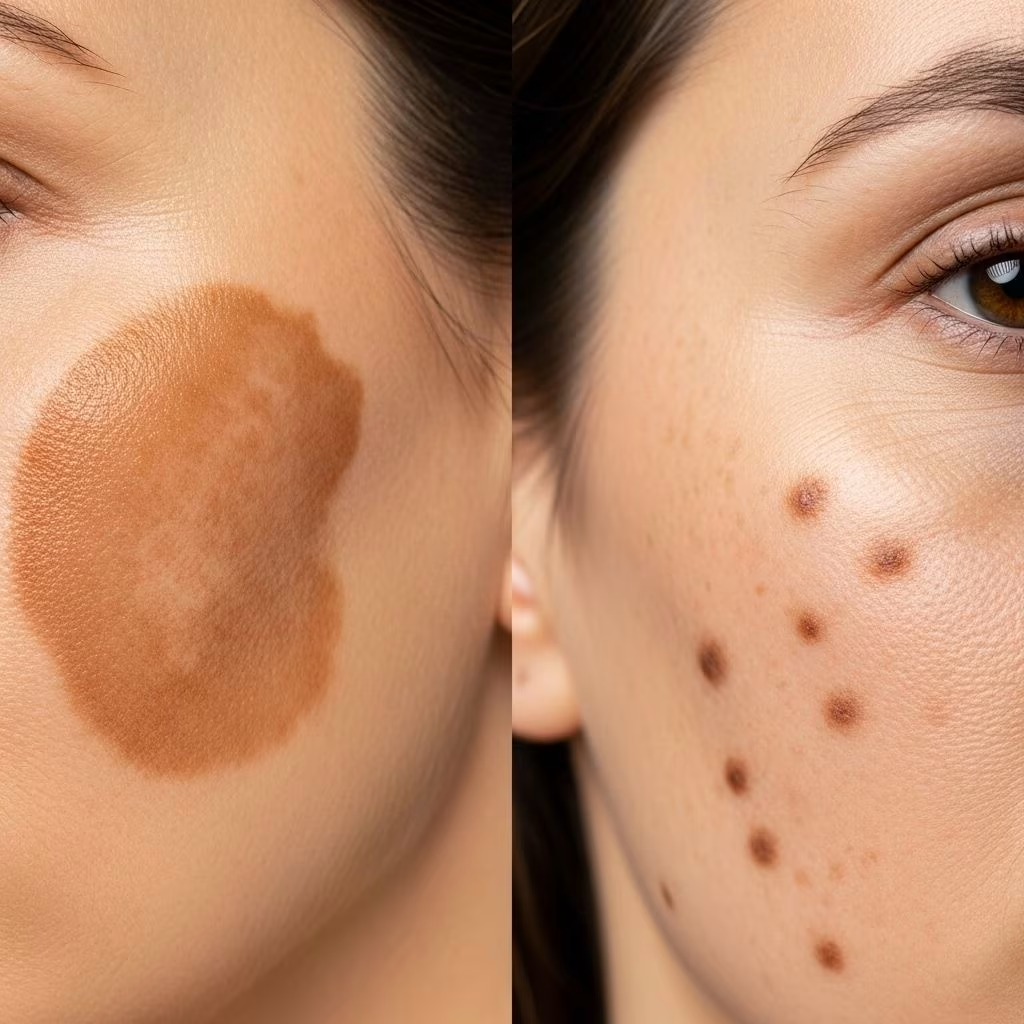
Skin discolorations such as melasma and sunspots (also known as age spots or solar lentigines) are extremely common forms of hyperpigmentation. Despite their similar superficial appearance, these two conditions have distinct causes, visual characteristics, risk factors, and require differing management approaches. Recognizing and differentiating between melasma and sunspots is essential for effective skincare—and even more critical for targeted treatments or prevention strategies.
Introduction
Hyperpigmentation is a broad term for areas of skin that become noticeably darker than the surrounding tissue due to increased melanin production. Within this category, melasma and sunspots are two of the most frequently discussed and confused conditions. Whether you are experiencing discoloration yourself or seeking to help others, it’s crucial to understand the subtle distinctions and underlying mechanisms behind each.
Understanding Hyperpigmentation: The Umbrella Term
Hyperpigmentation refers to any patch of skin that appears darker than its surroundings. Common types include:
- Melasma: Hormonal and genetic triggers plus sun exposure cause patchy discoloration.
- Sunspots: Result strictly from cumulative ultraviolet (UV) exposure.
- Freckles: Small spots, genetic, often fade with age.
- Post-inflammatory hyperpigmentation: Darkening after injury, inflammation, or procedures.
Knowing whether a spot is melasma or a sunspot affects not just diagnosis but long-term care and treatment safety.
What is Melasma?
Melasma is a chronic skin condition characterized by brown or gray-brown patches of skin, most commonly appearing on the cheeks, forehead, nose, chin, and upper lip. It is a form of facial hyperpigmentation resulting from the overactivity of melanocytes (the cells that produce pigment).
Key Features of Melasma
- Patches are usually irregular, larger, and have blurred edges.
- Tends to be symmetrical—often present on both sides of the face.
- Common areas: cheeks, forehead, chin, nose, upper lip.
- May darken in response to sun exposure, heat, or hormonal fluctuations.
- Can affect individuals of all skin types, more frequent in light to medium brown or darker skin tones due to higher density of melanocytes.
- Types: epidermal (top layer), dermal (middle layers), and mixed (combination).
Causes of Melasma
- Hormonal changes: Pregnancy (“mask of pregnancy”), birth control pills, hormone replacement therapy.
- Genetic predisposition: Family history increases risk.
- Thyroid disorders.
- Sunlight/UV exposure: Exacerbates existing melasma but rarely the sole cause.
Triggers
- Ultraviolet (UV) light—including from indoor sources and electronic screens (blue light/HEV).
- Heat and inflammation.
- Hormonal therapies or pregnancy.
What are Sunspots?
Sunspots, also known as solar lentigines, age spots, or liver spots, are smaller, flat, well-defined brown marks on the skin. Their formation is directly linked to accumulated and frequent UV exposure over a lifetime.
Key Features of Sunspots
- Shape: Round or oval, more defined edges than melasma.
- Size: Typically smaller than melasma patches but can enlarge over time.
- Location: Found on sun-exposed areas (face, arms, hands, shoulders).
- Asymmetry: May appear singly or in groups; not symmetrical.
- Color: Tan to dark brown, rarely grayish.
- Does not fade naturally—tends to persist and darken over time.
- More frequently seen in adults over 40, but can affect any skin type with enough sun exposure.
Causes of Sunspots
- UV Exposure: Cumulative and repeated exposure to sunlight is the sole trigger.
- No hormonal connection.
- Greater risk for fair-skinned individuals or those with a history of sunburns.
Visual and Diagnostic Differences
Distinguishing melasma from sunspots based solely on appearance can be challenging. Both are types of hyperpigmentation, both darken with sun exposure, and their colors may overlap. However, trained professionals and advanced tools (such as UV imaging or VISIA camera systems) can aid in correct diagnosis.
Melasma vs Sunspots: Visual Comparison
- Melasma: Larger patches, irregular borders, typically symmetrical placement.
- Sunspots: Small, round or oval, clear edges, random or grouped distribution, asymmetrical.
- Sunspots often resemble freckles but are larger and do not fade with reduced exposure.
Causes and Risk Factors
| Feature | Melasma | Sunspots |
|---|---|---|
| Origin | Hormonal changes, genetics, sun exposure, thyroid disease | Cumulative sun/UV exposure only |
| Risk Population | Women (esp. pregnant, birth control users), darker skin types, family history | Older adults (>40), fair skin, prolonged sun exposure |
| Distribution | Mainly facial, symmetrical | Areas exposed to sun, asymmetrical |
| Progression | Flares with hormonal changes, sun; may fade with therapy or change in triggers | Darkens, expands with continued sun exposure; persistent |
| Treatment Caution | Lasers may worsen; treat with gentle pigment inhibitors | Responsive to lasers, peels, topicals |
How to Tell the Difference: Key Features
- Shape & Borders: Melasma is patchy, irregular, often larger; sunspots are round/oval and well-defined.
- Symmetry: Melasma tends to be bilateral (same on both sides); sunspots are random.
- Color: Melasma can be brown, tan, or gray-brown; sunspots usually tan to dark brown.
- Cause: Melasma is linked to hormones, genetics, and sun; sunspots are solely sun-induced.
- Population: Melasma is more frequent in women, especially during hormonal changes; sunspots more in older or sun-exposed individuals.
Treatment and Management Strategies
Treatment approaches differ due to each condition’s underlying mechanism and risk of worsening:
Melasma Treatment
- Topical Agents: Hydroquinone, tretinoin, azelaic acid, kojic acid, Vitamin C.
- Gentle Peels: Light chemical peels may help but must be carefully selected.
- Avoidance: Lasers and aggressive peels may worsen melasma, driving pigment deeper.
- Sun Protection: Daily broad-spectrum sunscreen—critical for both prevention and control. Physical blockers (zinc oxide, titanium dioxide), high SPF, frequent reapplication advised.
- Hormonal Management: If associated with birth control or pregnancy, condition may improve after discontinuation or childbirth.
- Prescription options: Sometimes oral tranexamic acid if topicals fail (under physician supervision).
Sunspot Treatment
- Lasers & Light Therapy: Intense pulsed light (IPL), targeted pigment lasers (e.g., PicoSure® Pro).
- Chemical Peels: Medium peels (e.g., glycolic or TCA) effective at removing superficial spots.
- Topical Agents: Retinoids, vitamin C, hydroquinone, alpha-hydroxy acids, exfoliating serums.
- Prevention: Restrict UV exposure; use sunscreen liberally.
Prevention Tips
- Apply broad-spectrum sunscreen (SPF 30+) daily, year-round, and reapply every 2-3 hours when outdoors.
- Wear wide-brimmed hats and UV-protective clothing.
- Avoid peak sunlight hours (10am–4pm).
- Use sun-protective barriers even indoors (against blue light).
- For melasma-prone individuals, minimize hormonal fluctuations where possible.
- Consider antioxidants (vitamin C, E) in skincare to reduce oxidative damage.
Comparison Table: Melasma vs Sunspots
| Feature | Melasma | Sunspots |
|---|---|---|
| Causation | Hormones, genetics, UV/sun, thyroid disease | Strictly UV/sun exposure |
| Appearance | Blotchy patches, irregular, symmetrical, variable pigmentation | Small, round/oval, well-defined, tan-to-brown, asymmetrical |
| Location | Face (cheeks, forehead, chin, upper lip, nose) | Face, hands, arms, shoulders (sun-exposed) |
| Onset Age | Adults (often women), can start during pregnancy/hormonal therapy | Most common after age 40, any age with enough sun exposure |
| Treatment | Gentle topicals, avoid lasers/harsh peels; manage triggers | Lasers, peels, exfoliants; persistent, may need intervention |
| Natural Fading | Possible (post-pregnancy, stopping trigger meds) | Rarely fades without active treatment |
Frequently Asked Questions
Q: How can I tell if my dark facial patch is melasma or a sunspot?
Check for shape, size, and pattern: Melasma forms larger, patchy, symmetrical spots with blurred borders, mainly on cheeks and forehead. Sunspots appear as smaller, well-defined, asymmetrical spots and may appear anywhere sun strikes.
Q: Does melasma always require prescription treatment?
No; mild cases may fade after pregnancy or discontinuation of hormone medications, but persistent forms often require specialized topical agents under medical supervision.
Q: Can sunspots and melasma occur together?
Yes, especially in older adults or those with significant sun exposure and hormonal shifts. Both conditions can co-exist on the same areas.
Q: Are melanomas related to melasma or sunspots?
No. Melasma and sunspots are not cancerous. However, any evolving, bleeding, or irregular dark spot warrants prompt specialist evaluation to rule out skin cancer.
Q: Are laser treatments safe for melasma?
Generally no; lasers may deepen the pigment, making melasma harder to treat. Always seek expert consultation.
Q: What daily habits help prevent both conditions?
- Sunscreen application year-round.
- Wearing hats and protective clothing outdoors.
- Avoiding unnecessary sun exposure.
- Gentle skincare—avoid harsh scrubs and unproven treatments.
References & Further Reading
- “What is the Difference Between Melasma and Sun Spots?” – Michele Green, MD
- “Melasma vs. Hyperpigmentation vs. Sun Spots: Differences” – RedBox Rx
- “Melasma Vs. Sun Damage: How To Identify & Treat Them” – Dermatique Laser & Skin
- “Melasma vs. Sun Damage” – YES Cosmetic Surgery
- “Treating Sunspots Vs Melasma: What’s The Difference?” – Eucerin
Key Point: Both melasma and sunspots are forms of hyperpigmentation but differ fundamentally in cause, appearance, and management. Proper diagnosis is essential before starting any treatment regimen, so consult with a skincare expert for individualized advice.
References
- https://www.michelegreenmd.com/what-is-the-difference-between-melasma-and-sun-spots
- https://www.redboxrx.com/blog/melasma-vs-hyperpigmentation-vs-sun-spots-differences
- https://www.dermatiquelaserandskin.com/best-treatments-for-sun-damage/
- https://www.yescosmeticsurgery.com/blog/melasma-vs-sun-damage/
- https://facialaestheticsinc.com/sun-damage-vs-melasma-whats-the-difference/
- https://affderm.com/melasma-vs-freckles-sunspots-and-hyperpigmentation/
- https://laviemd.us/melasma-vs-sun-spots-causes-treatment-differences/
- https://www.eucerin.in/skin-concerns/hyperpigmentation/sunspots-vs-melasma
- https://us.comfortzoneskin.com/blogs/blog/melasma-vs-sun-spots


