


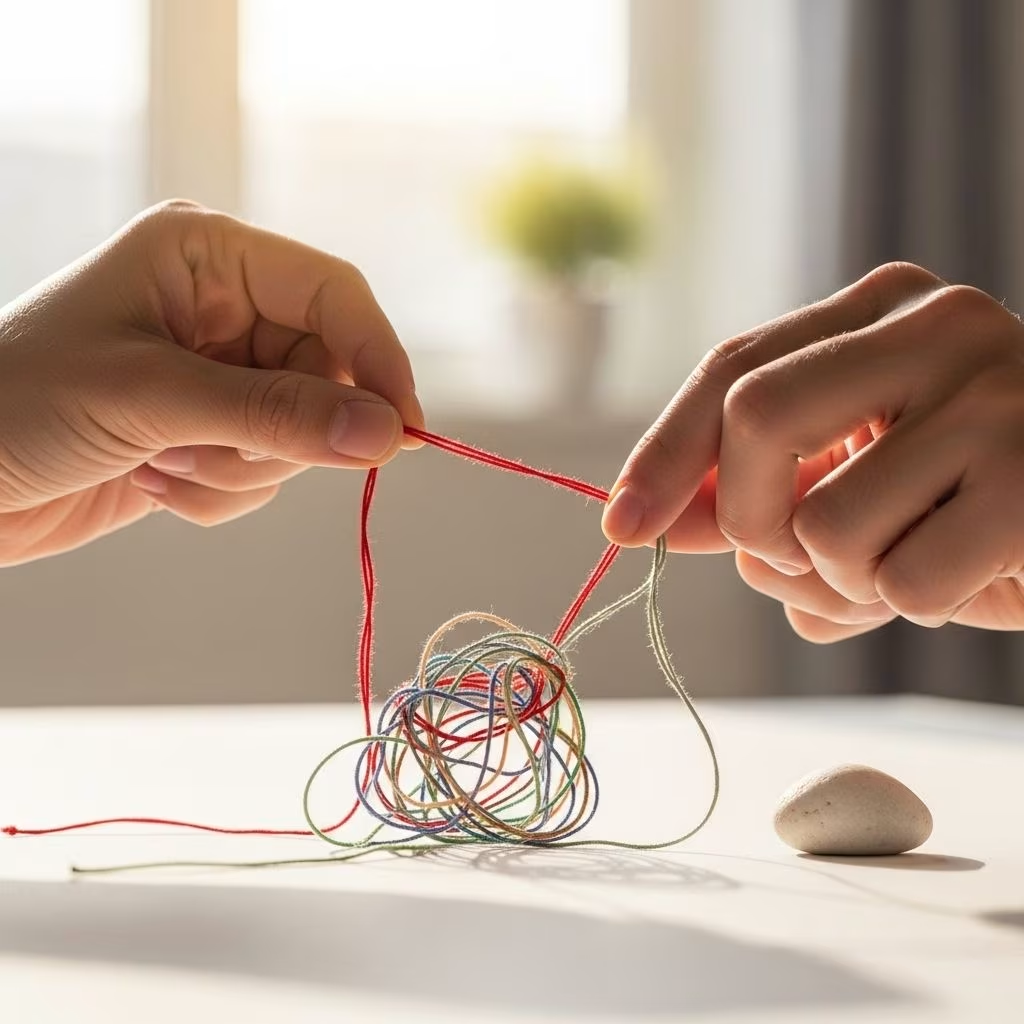
Modern life floods us with constant input—objects, messages, memories, and beliefs—all of which accumulate to shape our homes and minds. Nowhere is this accumulation more potent (or potentially problematic) than within our relationships. Just as physical clutter can fill rooms until there is little space to move, so can outdated, limiting, or unresolved relationship narratives crowd our emotional lives, leading to miscommunication, tension, and unrest. By learning to declutter these narratives, both physically and emotionally, individuals and couples can foster greater understanding, reduce conflict, and create deeper peace in their relationships.
Understanding Decluttering in Relationships
Decluttering, often thought of as the act of tidying a space, extends far beyond the physical environment. When examined through the lens of relationships, decluttering involves examining, questioning, and—where necessary—releasing the habits, stories, and dynamics that no longer serve connection or well-being.
- Physical Decluttering: Addressing the tangible items shared in a household, which influence and reflect relational processes and values.
- Emotional Decluttering: Releasing accumulated hurts, unresolved conflicts, or negative beliefs about oneself or a partner.
- Cognitive Decluttering: Challenging and reshaping habitual narratives or assumptions about relationships, communication, or worthiness.
This multidimensional approach positions decluttering as a fundamental tool for intentional living and relational growth, embedding practices of self-awareness and ongoing dialogue at its core.
The Nature of Relationship Narratives
Every relationship is programmed with a narrative: stories and beliefs repeated consciously or unconsciously. These narratives form the script by which we interpret our partner’s actions, define roles, and ascribe meaning to conflicts or harmony.
- Inherited Narratives: Patterns learned from family, culture, media, or previous relationships (e.g., “men don’t express feelings”).
- Constructed Narratives: Stories created together over time, often solidified by key moments or repeated experiences (e.g., “We always argue about money”).
- Prescriptive Narratives: Expectations set by society (“A successful couple should never fight”).
While some narratives foster connection, others can become outdated, restrictive, or even toxic, limiting the relationship’s potential for growth and peace. Recognizing and then intentionally decluttering these stories is the first step toward genuine harmony.
The Psychological Impact of Decluttering
Decluttering, whether of objects or emotional stories, produces marked psychological and relational benefits.
- Emotional Catharsis: Sorting through relationship “clutter”—be it objects with painful memories or recurring arguments—allows individuals to express and process emotions, sometimes even releasing long-held grief.
- Improved Communication: Decluttering jointly can spark conversations about values, needs, and mutual goals.
- Reduced Tension: Shared spaces free of clutter foster a sense of calm and safety, which can quickly translate into gentler, less conflicted interactions.
- Empowerment and Agency: Letting go of items or stories associated with past trauma or limitation nurtures self-determination, especially following breakups or loss.
- Mindful Consumerism: Intentional decluttering fosters awareness about materialism, countering the belief that more possessions bring greater happiness or security.
Research suggests that not only do decluttered spaces benefit mental health, but the act of decluttering itself mirrors and informs how we negotiate roles, power, and equity in our intimate lives.
Steps and Strategies for Decluttering Relationship Narratives
Successfully decluttering relationship narratives involves deliberate reflection, open communication, and practical action. Below are core strategies for both partners and individuals:
- Reflect on Existing Narratives
- Ask: What stories about our relationship do I repeat? Which ones serve us? Which ones create conflict?
- Notice inherited patterns from family or previous partners.
- Identify Disempowering Clutter
- List objects, beliefs, or routines linked to old hurts or unresolved arguments.
- Assess tangible triggers, such as gifts from ex-partners or symbols of old roles.
- Facilitate Honest Dialogue
- Establish a safe environment for sharing what feels outdated or hurtful.
- Use “I” statements and prioritize listening rather than accusing.
- Release and Replace
- Physically remove or repurpose objects that reinforce the old narrative.
- Collaboratively author new rituals or stories that reflect current values.
- Practice Mindful Minimalism
- Regularly assess which beliefs or possessions add genuine value rather than just familiarity.
- Choose presence over accumulation—of both things and wounds.
Approaching the process as a team builds trust and demonstrates a shared commitment to growth. For some, especially after trauma or complicated loss, involving a counselor can offer additional support and structure.
How Decluttering Enhances Peace in Relationships
- Conflict Resolution: The process makes unspoken expectations visible, making it possible to renegotiate roles and boundaries and find common ground.
- Shared Vision: Creating a purposeful, “decluttered” environment fosters unity and clarity around mutual dreams or goals.
- Emotional Safety: A home and narrative free of clutter reduces sensory and emotional overload, increasing psychological safety and comfort.
- Opportunity for Growth: Letting go of what no longer fits makes space—for new projects, deeper intimacy, or opportunities for individual and shared fulfillment.
- Cultural and Systemic Shifts: Embracing minimalist relational ideals mirrors a wider societal movement away from materialism towards connection and intentional living.
Comparing Narrative Declutter and Physical Declutter
Though interrelated, narrative and physical declutter each play unique roles in relational peace.
| Aspect | Narrative Declutter | Physical Declutter |
|---|---|---|
| Focus | Stories, beliefs, expectations | Objects, spaces, material possessions |
| Impact | Emotional clarity, altered dynamics | Environmental order, practical harmony |
| Process | Dialogue, reflection, reframing | Sorting, donating, organizing |
| Goal | Deeper intimacy, peace, authentic connection | Calm, simplicity, shared functionality |
Practicing both ensures that internal and external lives support each other—leading to more lasting peace and satisfaction.
Navigating Common Challenges in Relational Decluttering
Decluttering narratives is not always easy. Common obstacles include:
- Emotional Attachments: Both partners may have deep-seated ties to certain memories, stories, or possessions.
- Power Dynamics: If one partner dominates decision-making, resentment and conflict can grow.
- Fear of Loss: Letting go of the familiar, even if painful, can provoke anxiety—especially during major transitions (e.g., bereavement, relocation).
- Cultural Conditioning: Some cultural backgrounds equate possessions with status, making decluttering counterintuitive or threatening.
- Unequal Effort: If one person does all the work (physically or emotionally), it can breed imbalance and further misunderstanding.
Addressing these challenges requires compassion, openness to dialogue, and sometimes, professional facilitation.
Case Studies and Real-World Examples
- The Shared Closet Dilemma: A couple repeatedly argued over a cramped shared closet, but when they tackled decluttering the space together, patterns around decision-making and respect became clear. Through mutual compromise, not only did the closet become orderly, but the couple developed a new way of negotiating differences moving forward.
- Letting Go After Loss: A woman struggling to move on after a breakup chose to remove items associated with her ex from her apartment. This deliberate act, while painful, allowed her to process grief and accelerated healing, leading to new, more authentic connections.
- Family Reorganization: Siblings facing the death of a parent had to declutter a childhood home. The process triggered disputes over inheritance and memory, eventually leading to open dialogue about values, reconciliation, and renewed family ties.
Frequently Asked Questions (FAQs)
Q1: Why do old arguments keep surfacing even after physical decluttering?
Physical decluttering can create space and reduce stress, but unless outdated narratives and beliefs are also addressed through honest conversation and reflection, emotional clutter will persist.
Q2: Is it possible to declutter a relationship narrative alone?
While individual reflection is powerful, sustainable change often requires the participation of both partners, especially for shared narratives. Solo work can prepare the way for future dialogue or shift personal boundaries.
Q3: How can decluttering help with grief from relational loss?
Letting go of objects or stories linked to the lost relationship creates a ritual for processing grief, allowing space for healing and new connections. Emotional catharsis is a key benefit reported by many who intentionally declutter after loss.
Q4: Can decluttering actually reduce conflict?
Yes. Jointly decluttering—physical or emotional clutter—promotes communication, negotiation, and empathy, all of which are essential for constructive conflict resolution.
Q5: What if my partner refuses to participate?
It is essential to respect boundaries. Focus on decluttering your own belongings and narratives, and communicate the positive changes you experience. Sometimes, leading by example encourages participation over time.
Q6: Are there risks to emotional decluttering?
Bringing up long-buried feelings can be uncomfortable and disruptive in the short term. Professional guidance (through therapy or counseling) can be helpful, especially when trauma or chronic conflict is involved.
Conclusion
The journey to peace in relationships begins with a willingness to let go: of physical items that carry old meanings, of narratives that no longer fit, and of patterns rooted in fear or scarcity. Decluttering in this holistic sense is not a one-time event but an ongoing process—one with the potential to generate space for joy, growth, and sustained understanding, paving the way to authentic peace and deep connection in every chapter of life.
References
- https://lifestyle.sustainability-directory.com/question/how-does-decluttering-impact-relationships/
- https://www.michaelamurphy.co.uk/journal/the-psychological-impact-of-decluttering
- https://www.harleytherapy.co.uk/counselling/declutter-your-life-tidying.htm
- https://www.miadanielle.com/blog/social-effects-of-clutter
- https://www.psychologytoday.com/us/blog/social-instincts/202406/3-ways-that-minimalism-may-enhance-your-relationships
- https://crappychildhoodfairy.com/2023/09/08/clutter-trauma-symptom/
- https://www.go-simplified.com/blog/relationships-clutter
- https://extension.usu.edu/mentalhealth/articles/the-mental-benefits-of-decluttering
- https://via.library.depaul.edu/cgi/viewcontent.cgi?article=1607&context=csh_etd


