


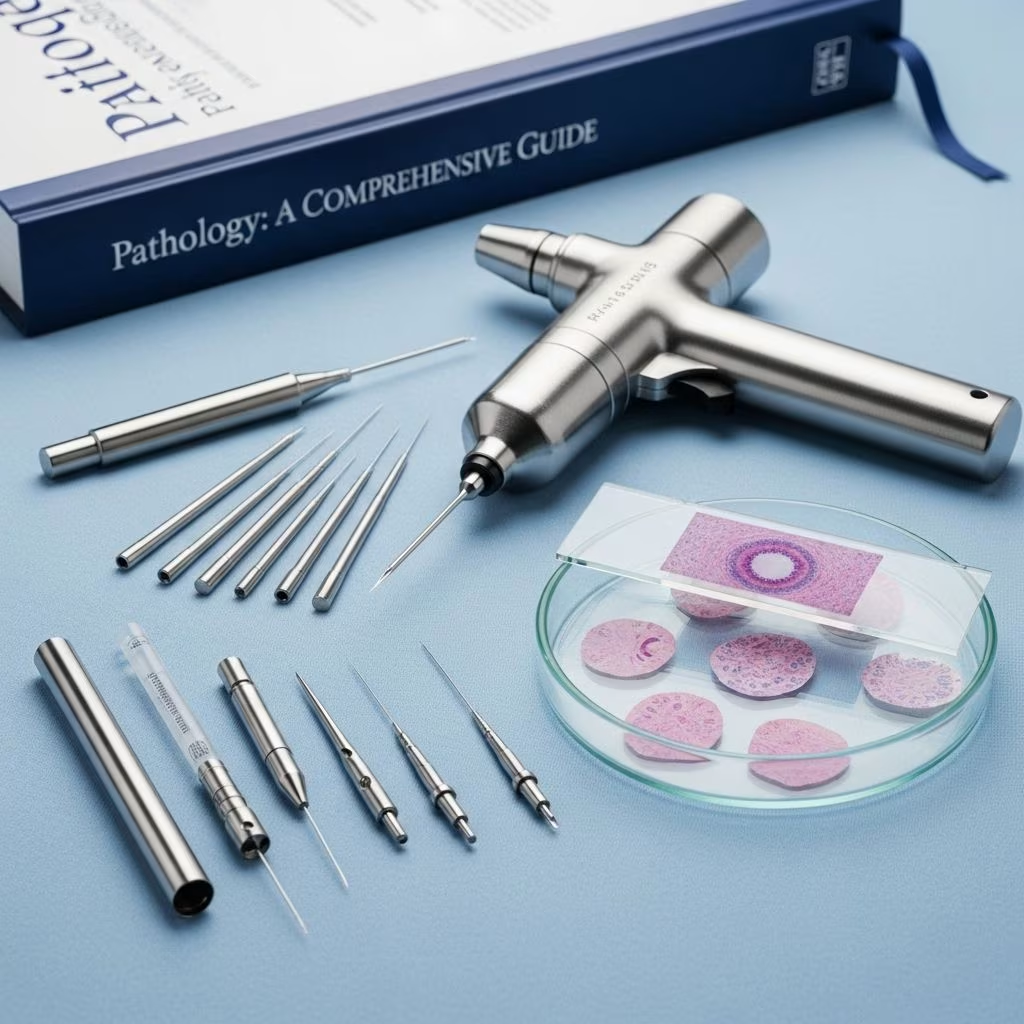
Biopsies are essential medical procedures performed to diagnose a wide range of conditions, most notably cancer, but also other diseases and abnormal tissue growths. By removing a sample of tissue or cells from the body, physicians and pathologists gain crucial information about the presence, stage, and characteristics of disease. This comprehensive guide explores the different types of biopsy procedures, their advantages, applications, patient preparation, and answers to frequently asked questions.
What Is a Biopsy?
A biopsy is a medical procedure in which a doctor removes tissue or cells from the body to examine them closely in a laboratory. The primary aim is to determine whether the tissue is normal or affected by diseases such as cancer, infection, or inflammation.
Why Are Biopsies Done?
Biopsies are essential diagnostic tools for:
- Detecting cancer and determining its type and stage
- Identifying causes of unexplained infections or inflammation
- Investigating abnormal growths, cysts, or persistent symptoms
- Evaluating organ rejection post-transplant
In many cases, a biopsy is the only way to definitively diagnose certain conditions.
Main Types of Biopsy Procedures
Biopsies vary by the part of the body being sampled, the medical suspicion, and the procedure used. The main categories include:
- Needle biopsies
- Endoscopic biopsies
- Skin biopsies
- Surgical biopsies
- Other specialized types (e.g., liquid biopsy, bone marrow biopsy)
Needle Biopsies
Needle biopsies involve inserting a needle into suspicious tissue to extract cells or tissue for analysis. They are minimally invasive and widely used because they cause less discomfort and require minimal recovery time.
Types of Needle Biopsy Techniques
- Fine-Needle Aspiration Biopsy (FNA): Uses a thin, hollow needle to draw fluid and small amounts of cells from lumps or tumors. FNA is often used for thyroid nodules, lymph nodes, and breast lumps.
- Core Needle Biopsy: Uses a slightly larger, hollow needle with a special cutting tip to remove small cylinders (cores) of tissue, providing more information than FNA. Commonly used for breast, prostate, and liver biopsies.
- Vacuum-Assisted Needle Biopsy: Employs a suction device along with a needle to extract more tissue with fewer insertions. Common for breast tissue sampling, especially when guided by imaging.
- Image-Guided Needle Biopsy: Combines imaging modalities like ultrasound, CT, or MRI with needle biopsies to precisely target tissue that cannot be felt through the skin (e.g., liver, lung, prostate).
| Type | Needle Size | Sample Yield | Main Uses | Guidance |
|---|---|---|---|---|
| Fine-Needle Aspiration | Thin (22–25G) | Cells/Fluids | Thyroid, lymph nodes, breast | May be image-guided |
| Core Needle Biopsy | Thicker (14–18G) | Tissue core | Breast, liver, prostate | Often image-guided |
| Vacuum-Assisted | Variable; with suction | Larger tissue sample | Breast, soft tissue masses | Typically image-guided |
Endoscopic Biopsies
An endoscopic biopsy utilizes a thin, flexible tube equipped with a camera and light source (endoscope) to visually inspect and sample tissue from internal organs or cavities that cannot be reached through the skin. The doctor inserts the endoscope through a natural orifice (mouth, nose, rectum, urethra) or a small skin incision.
Common Types of Endoscopic Biopsies
- Bronchoscopy: Samples lung tissue
- Colonoscopy: Samples colon and rectal tissue
- Cystoscopy: Samples bladder tissue
- Gastroscopy (Upper Endoscopy): Samples esophagus, stomach, or upper small intestine tissue
Typically, patients are sedated or anesthetized to minimize discomfort. The sampled tissue is sent for laboratory analysis to detect cancer, polyps, infections, or inflammatory conditions.
Skin Biopsies
Skin biopsies are essential for diagnosing skin cancers, infections, and other dermatological disorders. Several techniques exist, and the method chosen depends on the lesion’s size, location, and suspected diagnosis.
Main Skin Biopsy Methods
- Shave Biopsy: Uses a blade to shave off a thin sample from the skin’s surface.
- Punch Biopsy: Employs a circular cutting tool to remove a small, cylindrical section of full-thickness skin, including deeper layers.
- Incisional Biopsy: Removes a portion of a larger lesion for testing using a scalpel.
- Excisional Biopsy: Removes the entire lesion, sometimes along with a margin of surrounding skin, typically for suspicious moles or melanomas.
After collection, the sample is analyzed microscopically to assess for malignancy, infection, or inflammatory disease.
Surgical Biopsies
Surgical biopsies are performed when less invasive techniques cannot adequately access or diagnose the area of concern, or when a larger sample is required for diagnosis. This is more invasive and usually requires anesthesia.
Types of Surgical Biopsies
- Excisional Biopsy: Removes the entire abnormal area (such as a lump or tumor) and a margin of normal tissue.
- Incisional Biopsy: Removes a portion of the lump or abnormal area, typically when the whole mass cannot be safely removed.
- Open Biopsy: Traditional surgery with an incision in the skin to access the area; may be required for deep-seated growths.
Examples include breast lump removal, lymph node analysis, and investigation of abdominal or chest masses (laparotomy and thoracotomy may be performed when deeper access is needed).
Other Specialized Biopsy Types
Some biopsies target specific tissues or use specialized techniques:
- Bone Marrow Biopsy: Assesses marrow function, often ordered for blood disorders like leukemia, lymphoma, or multiple myeloma. Usually taken from the hipbone using a needle.
- Lymph Node Biopsy: Examines lymph node tissue in cases of infection, immune disorders, or suspicious swelling.
- Sentinel Lymph Node Biopsy: Identifies and samples the first node(s) affected by the spread of cancer, especially in breast cancer and melanoma.
- Endometrial Biopsy: Samples inside the uterus to investigate abnormal bleeding or uterine cancer.
- Liquid Biopsy: A newer, non-invasive technique analyzing circulating tumor DNA or other substances in the blood for cancer diagnosis or monitoring. It is rapidly evolving but not yet a standard replacement for tissue biopsy in most settings.
Preparing for a Biopsy
Preparation depends on the biopsy type, the use of anesthesia or sedation, and the area being sampled:
- For local biopsies (e.g., skin, needle), little preparation is needed; fasting may not be required.
- For biopsies involving sedation or general anesthesia (e.g., endoscopic, surgical), patients may need to refrain from eating or drinking for several hours prior.
- Medications such as blood thinners might need to be paused, but always consult your physician before making any changes.
- Arrange for someone to accompany you home if sedation or anesthesia is used.
Your healthcare provider will supply specific instructions based on your individual procedure and health status.
What to Expect During and After
During the Biopsy:
- Local anesthesia is commonly used to numb the area and minimize pain.
- You may feel pressure, mild discomfort, or – in some cases – a brief sting.
- More invasive or internal biopsies will often use sedation or full anesthesia.
After the Biopsy:
- Mild soreness, bruising, or minor bleeding at the biopsy site is common.
- Keep the area clean and dry, and watch for signs of infection (increasing redness, swelling, pus, fever).
- You will receive instructions about wound care and activity restrictions, if any.
- Results are generally available within several days to a week, depending on the analysis required.
Frequently Asked Questions (FAQs)
Q: Is a biopsy painful?
A: Most biopsies cause minimal discomfort due to effective anesthesia. Some soreness is expected afterwards, but severe pain is uncommon. Always inform your doctor if you have concerns.
Q: How safe is a biopsy?
A: Biopsies are generally safe procedures. Risks include minor bleeding, infection, or bruising at the sample site. More invasive biopsies carry slightly higher risks, but complications are rare when performed by experienced professionals.
Q: When are biopsy results available?
A: Standard biopsies are typically processed within a few days to a week. Specialized tests (such as genetic analysis) may take longer.
Q: Does undergoing a biopsy mean I have cancer?
A: No. Biopsies are used to detect several conditions, including cancer, infection, or benign growths. Your healthcare team will interpret the results in the context of your symptoms and other test findings.
Q: Are non-surgical biopsies as reliable as surgical ones?
A: Needle and endoscopic biopsies are highly accurate for many conditions, especially when combined with imaging for precise targeting. Sometimes, however, a surgical biopsy may be required for deep or difficult-to-access tissues or to obtain a larger specimen.
Conclusion
Biopsies play an essential role in modern diagnostics, guiding treatment decisions and providing clarity in complex cases. With numerous methods available—each tailored for specific organs or clinical questions—biopsy procedures are safer and less invasive than ever before. If you are scheduled for a biopsy, consult with your physician about the type being performed, preparation steps, and what you can expect before, during, and after the procedure.
References
- https://www.sbmf.org/the-5-types-of-biopsy-procedures/
- https://www.cancer.org/cancer/diagnosis-staging/tests/biopsy-and-cytology-tests/biopsy-types.html
- https://stanfordhealthcare.org/medical-tests/b/biopsy/types.html
- https://www.mayoclinic.org/diseases-conditions/cancer/in-depth/biopsy/art-20043922
- https://my.clevelandclinic.org/health/diagnostics/15458-biopsy-overview
- https://www.mainehealth.org/mainehealth-cancer-care/cancer-conditions-services/biopsy
- https://navicenthealth.org/service-center/surgical-oncology/biopsy-procedures
- https://www.oncolink.org/cancer-treatment/procedures-diagnostic-tests/biopsy-procedures


