


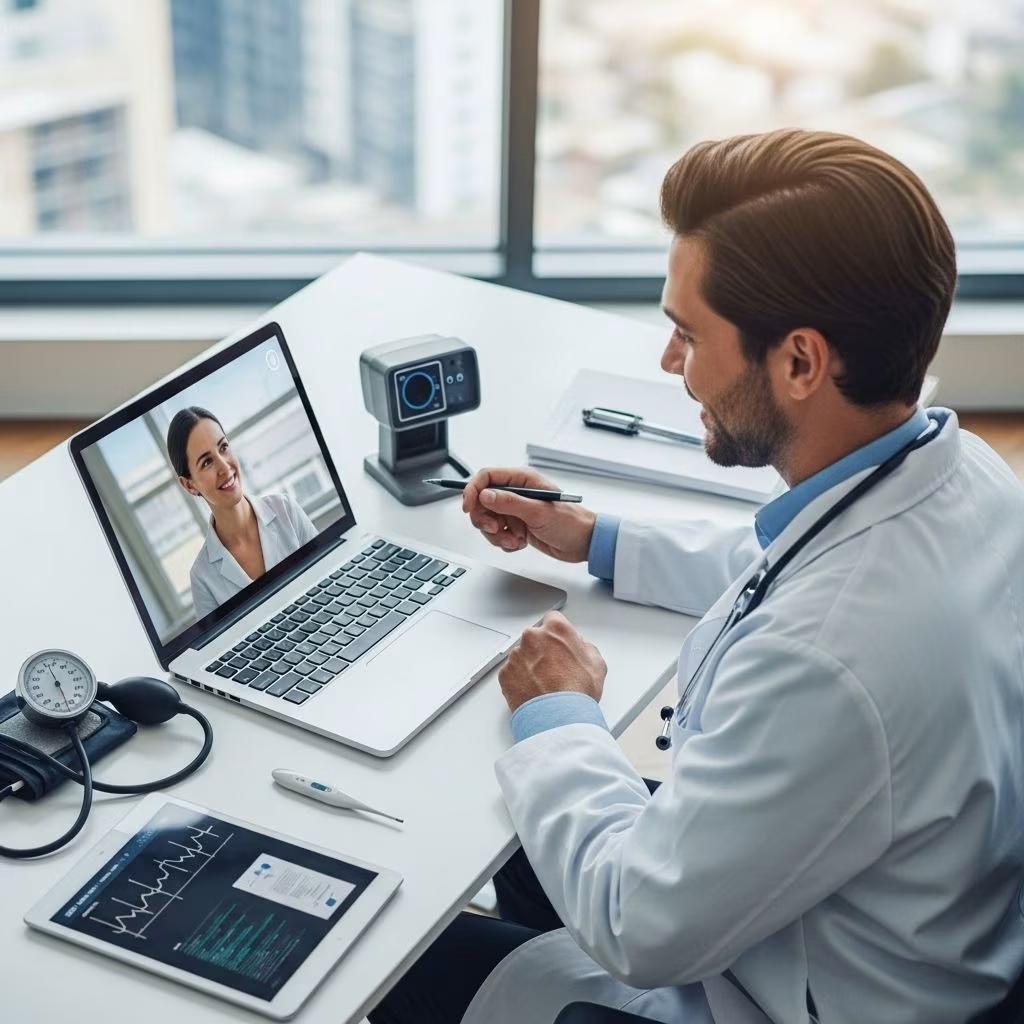
Comprehensive Telemedicine Review for Non-Urgent Symptoms
Telemedicine has rapidly transformed healthcare delivery, enabling clinical consultations, diagnosis, and management of non-urgent symptoms from virtually anywhere. With robust digital connectivity and advancements in telehealth platforms, patients increasingly turn to remote care for mild illness, routine check-ups, and behavioral health needs. This review explores telemedicine’s scope, best practices, benefits, limitations, and future prospects for non-emergency health concerns.
Introduction
Telemedicine refers to the remote delivery of healthcare using telecommunications technologies. Originally designed to extend medical expertise to inaccessible regions, telemedicine now serves mainstream populations for both urgent and non-urgent concerns. For symptoms that do not pose an immediate life threat, virtual visits offer the dual advantages of accessibility and convenience, helping to alleviate burdens on physical clinics and emergency rooms.
What is Telemedicine?
Telemedicine describes the use of electronic communications—video, phone, secure messaging—to connect patients and clinicians. Unlike emergency or urgent in-person care, telemedicine for non-urgent symptoms focuses on mild or new complaints, follow-ups, prescription needs, and health monitoring. Telehealth can take place through dedicated apps, web portals, regular smartphones, or computers equipped with a camera and microphone.
- Types of telemedicine: Video consultations, audio calls, secure chat, remote monitoring.
- Devices used: Mobile phones, tablets, desktop computers, specific medical devices like oximeters or digital stethoscopes.
- Most telemedicine encounters are real-time (synchronous), though asynchronous (store-and-forward) models such as messaging or image upload are also common for dermatology or minor follow-up.
Benefits of Telemedicine for Non-Urgent Symptoms
- Accessibility: Makes care available to rural, remote, or mobility-limited patients.
- Convenience: Reduces travel time, wait intervals, and scheduling delays.
- Cost-effectiveness: Often less expensive than in-person visits or urgent care centers for minor complaints.
- Reduced exposure risk: Limits the spread of infectious diseases by keeping mildly ill patients out of clinics and waiting rooms.
- Improved efficiency: Enables rapid triage and decision-making for conditions that don’t require hands-on examination.
- Prescription management: Allows refills and medication adjustments for stable chronic illnesses without a clinic visit.
Common Non-Urgent Conditions Managed Via Telemedicine
| Symptom/Condition | Telemedicine Suitability | Typical Management |
|---|---|---|
| Cold & flu symptoms | High | Diagnosis, self-care advice, prescriptions |
| Respiratory infections | High | Assessment, possible prescriptions, referral if needed |
| Ear infections | Moderate | Symptom evaluation, possible prescriptions |
| Urinary tract infection (UTI) | High | Symptom check, urine test order, antibiotics |
| Skin rashes, conditions | High | Image review, advice, topical prescriptions |
| Allergies (non-life-threatening) | High | Suggestions for OTC or prescription treatment |
| Headaches | High | History, assessment, treatment options |
| Back or joint pain | High | Recommendations, referrals for physical therapy, imaging if needed |
| Pink eye | High | Visual assessment, eye drops prescription |
| Prescription refills | High | Medication management |
| Non-urgent behavioral health | High | Counseling, medication adjustments, ongoing therapy |
Other common examples include mild abdominal discomfort, nausea or vomiting, sinus pain, sore throat, minor pregnancy concerns, diabetes management, asthma/allergy check-ins, mild skin problems, and monitoring chronic conditions. Telemedicine is generally not appropriate for symptoms suggestive of heart attack, stroke, severe allergic reaction, or major trauma.
Process of a Telemedicine Visit
- Scheduling: Patient books appointment through an app, provider website, or by calling the health system.
- Preparation: Patient completes health history, symptoms checklist, uploads relevant images (e.g., skin rash) or documents.
- Consultation: Real-time video or phone session. Clinician verifies patient identity, reviews symptoms, and asks focused questions. If needed, requests visual examination through camera adjustments.
- Diagnosis: Provider uses history and available examination to make a clinical judgment. If unable to confidently diagnose, may request labs, images, or in-person follow-up.
- Treatment: Discusses treatment options, prescribes medication electronically, and advises on follow-up or escalation signals.
- Follow-up: If warranted, arranges next telemedicine or in-person visit, schedules monitoring, or provides educational resources.
Documentation is entered into the electronic health record (EHR) as with in-person visits, and details on privacy, consent, and care expectations are clearly discussed at the session start.
Effectiveness and Outcomes
Evidence indicates telemedicine delivers comparable safety and quality for a range of non-urgent conditions, especially when detailed history and visual inspection suffice for diagnosis. Advantages include shorter episode lengths for conditions such as anxiety, depression, muscle spasms, and minor gastrointestinal complaints, as fewer visits may be needed compared to in-person care. Studies suggest patients with mild concerns tend to resolve symptoms more quickly via telehealth, aided by the immediacy of appointments and ability to rapidly receive advice or prescriptions.
- For anxiety, depression, nausea/vomiting, muscle spasms, telemedicine results in fewer clinical visits required for resolution versus the in-person cohort, with muscle spasms experiencing up to 55% fewer visits.
- Telemedicine is effective for follow-up management of chronic diseases like diabetes, asthma, allergies, and behavioral health needs.
- Safety is preserved by strict protocols for escalation: any sign of emergency triggers direct referral to the emergency department or 911 guidance.
- Patient satisfaction remains high for most non-urgent use cases, though some express concern about the inability to physically examine or perform rapid, on-site diagnostics.
Ethical Considerations and Practice Guidelines
Telemedicine encounters must comply with federal and state regulations regarding privacy, consent, medical records, and clinician licensure. Ethics guidelines emphasize equal access and support irrespective of a patient’s insurance, race, background, or socioeconomic status. Key best practices include:
- Clear identification of clinician and patient at session start; explanations of privacy standards and secure data handling.
- Contingency planning for connectivity loss or technical failure, including rescheduling or rapid transfer to in-person care if urgent findings emerge.
- Documenting all steps, from diagnosis to treatment recommendations, within the EHR.
- Providing clear escalation protocols: when a diagnosis cannot be confirmed safely, immediate referral or further testing is mandated.
- Educating patients about the limits of telemedicine and warning signs that necessitate in-person assessment.
- Upholding equity: avoiding discrimination and striving to reduce care disparities among vulnerable groups.
Clinicians employ remote peripherals—pulse oximeters, digital stethoscopes, otoscopes, and cameras—if available, enhancing virtual evaluation. They must act with transparency, clarity, and in accordance with established ethical norms.
Limitations and Challenges
- Hands-on diagnostic limitations: Absence of physical exams restricts diagnosis for some complaints (e.g., abdominal pain without palpation, joint swelling).
- Technical barriers: Poor internet access, lack of suitable devices, and tech literacy can impede care.
- Licensure and regulatory complexity: Providers often limited to patients within licensed geographies.
- Complex cases: Patients with unclear or overlapping symptoms often require in-person follow-up.
- Privacy and security: Strong safeguards needed for remote consultations and data transfer.
- Insurance variability: Coverage for telemedicine varies by payer, geography, and service scope.
These challenges demand ongoing investment in remote diagnostic tools, clearer practice standards, improved connectivity, and consistent reimbursement policies.
Future Directions and Innovations
- Integration with wearable devices: Remote monitoring can add objective health data, supporting virtual diagnosis and chronic disease management.
- Artificial intelligence (AI): Algorithms help triage symptoms, suggest likely diagnoses, and optimize workflow efficiency for both clinicians and patients.
- Expanded access: Policy updates aim to allow broader geographic reach and standardize coverage, including Medicaid and Medicare support for telehealth.
- Smoother care continuum: Digital platforms increasingly link telemedicine encounters to physical exams, labs, imaging, and pharmacy services, minimizing fragmentation.
- Enhanced patient education: Interactive apps and portals provide personalized instructions, medication reminders, and follow-up scheduling to improve outcomes.
As telemedicine evolves, it’s expected to broaden its clinical applicability, reduce disparities, and drive a more patient-centric care model.
Frequently Asked Questions (FAQs)
Q: What symptoms can I safely manage with telemedicine?
A: Telemedicine is suitable for symptoms including colds, mild respiratory issues, ear or urinary tract infections, skin problems, mild behavioral complaints, routine prescription needs, and chronic disease follow-up. For severe pain, chest discomfort, difficulty breathing, high fever, or any possible emergency, seek in-person care immediately.
Q: Do I need special equipment for a telemedicine visit?
A: Most visits require a computer or mobile device with video and audio capability. In some cases, using a peripheral device (e.g., thermometer, pulse oximeter) or uploading photos of affected areas (such as rashes) improves accuracy.
Q: Will my insurance cover telemedicine for non-urgent symptoms?
A: Coverage varies. Many insurers now include telemedicine visits as part of their benefits for non-emergent concerns, but check your plan details to confirm eligibility before scheduling a visit.
Q: Is telemedicine confidential?
A: Yes. Consultations use secure, encrypted technologies; clinicians comply with privacy laws including HIPAA. Always verify your provider uses an approved platform.
Q: What if my symptoms worsen?
A: Telemedicine providers outline warning signs that necessitate escalation. If symptoms change rapidly, worsen, or suggest a serious illness, patients should seek urgent or emergency in-person assessment without delay.
Summary
Telemedicine offers a safe, efficient, and accessible alternative for evaluating and treating non-urgent symptoms. Its strengths in convenience and rapid care delivery have revolutionized the healthcare landscape for mild complaints, minor infections, chronic condition management, and behavioral health concerns. Adhering to robust ethical guidelines and best practices ensures quality and safety, though certain diagnostic constraints and technical challenges remain. As technologies advance and policy barriers diminish, telemedicine is poised to play an increasingly central role in outpatient, preventive, and continuity care.
References
- https://health.ucdavis.edu/blog/cultivating-health/telehealth-visits-can-deliver-urgent-care-quickly-and-easily/2025/07
- https://pmc.ncbi.nlm.nih.gov/articles/PMC10394951/
- https://www.acep.org/telehealth/newsroom/telehealth-redirects/practice-guidance-for-emergency-telehealth-and-acute-unscheduled-care-telehealth
- https://news.calpers.ca.gov/telehealth-urgent-care-or-emergency-room/
- https://pmc.ncbi.nlm.nih.gov/articles/PMC9638176/
- https://www.cms.gov/newsroom/fact-sheets/medicare-telemedicine-health-care-provider-fact-sheet
- https://telehealth.hhs.gov/providers/best-practice-guides/telehealth-for-emergency-departments/tele-triage
- https://www.hhs.gov/hipaa/for-professionals/special-topics/emergency-preparedness/notification-enforcement-discretion-telehealth/index.html
- https://www.coveredca.com/marketing-blog/telehealth-doctors-office-urgent-care-or-emergency-room/


