


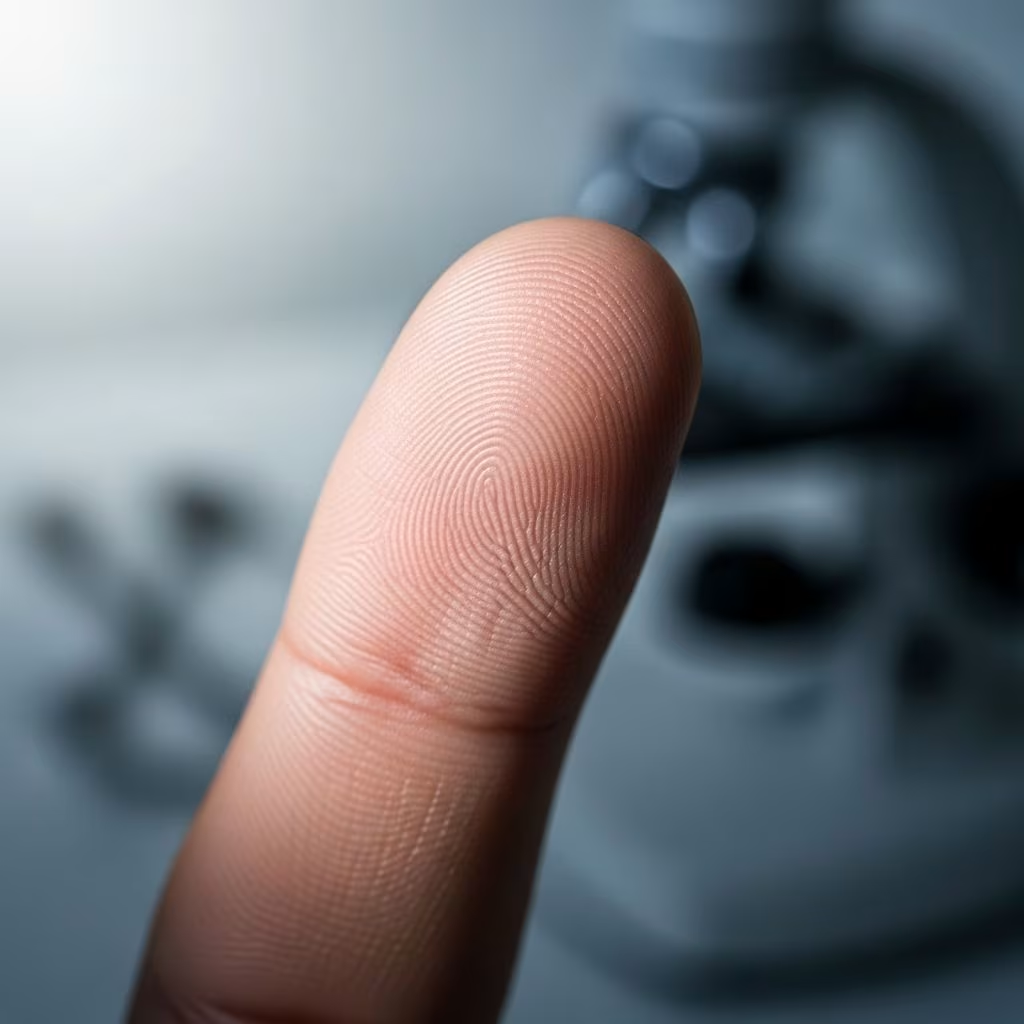
Fingerprints are unique identifiers that most people take for granted until they begin to disappear. The loss of fingerprints, whether from birth or acquired later in life, can create significant challenges in our modern world where biometric identification is increasingly common. This comprehensive guide explores the various causes of fingerprint disappearance, diagnostic approaches, and management strategies for those affected by this condition.
Understanding Fingerprints
Fingerprints are formed by the arrangement of ridges and valleys on the fingertips, developing during fetal growth between the 10th and 24th weeks of pregnancy. These unique patterns consist of loops, whorls, and arches that remain largely unchanged throughout a person’s lifetime under normal circumstances.
The ridges contain pores from sweat glands and are raised areas of skin, while the valleys are the lower areas between ridges. This three-dimensional structure creates the distinctive patterns that make each person’s fingerprints unique, with the probability of two people having identical fingerprints estimated at less than one in 64 billion.
When fingerprints disappear or become unreadable, it can result from various genetic, medical, or environmental factors that affect the skin’s structure and thickness on the fingertips.
Genetic Causes of Fingerprint Loss
Adermatoglyphia: The Immigration Delay Disease
Adermatoglyphia is an extremely rare genetic condition where individuals are born without fingerprints. This condition gained attention in 2007 when a Swiss woman experienced difficulties entering the United States due to her complete lack of fingerprints, leading authorities to coin the term “immigration delay disease.”
Research conducted by dermatologists Peter Itin and Eli Sprecher identified that adermatoglyphia is caused by a mutation in the SMARCAD1 gene. This genetic defect affects RNA splicing, preventing the proper formation of proteins necessary for fingerprint development during fetal growth.
Key characteristics of adermatoglyphia include:
- Completely flat finger pads with no ridges or patterns
- Reduced number of sweat glands on fingertips
- Otherwise normal health and development
- Affects multiple family members due to genetic inheritance
Other Genetic Disorders
Several other genetic conditions can lead to fingerprint abnormalities or loss:
- Naegeli-Franceschetti-Jadassohn Syndrome (NFJS): A rare ectodermal dysplasia that affects fingerprints along with other severe symptoms like brittle hair and teeth
- Dermatopathia Pigmentosa Reticularis: Another genetic disorder that can cause fingerprint absence but involves more serious health complications
- Congenital Insensitivity to Pain: Some forms can affect fingerprint development due to repeated injuries
Acquired Conditions Leading to Fingerprint Loss
Dermatological Conditions
Various skin conditions can gradually erode or obscure fingerprints over time. According to medical research, nonspecific dermatitis leads the list of acquired causes of fingerprint loss.
Common dermatological causes include:
- Nonspecific Dermatitis: Chronic inflammation that can flatten ridge patterns
- Atopic Dermatitis (Eczema): Chronic skin condition causing inflammation and scarring
- Dyshidrotic Eczema: Affects hands and feet with blistering that can damage ridge patterns
- Psoriasis: Autoimmune condition causing thick, scaly patches that can obscure fingerprints
- Irritant Contact Dermatitis: Chemical or environmental irritation leading to skin damage
Scleroderma and Autoimmune Conditions
Scleroderma, also known as systemic sclerosis, is particularly notable for causing fingerprint loss. This autoimmune condition affects skin elasticity, hardness, and thickness, often targeting fingertips and gradually making patients “fingerprintless persons.”
In documented cases, patients with limited cutaneous scleroderma report progressive fingerprint disappearance over years, accompanied by:
- Clawed hands and shortened distal phalanges
- Thick, hard skin on fingertips
- Reduced papillary ridges and grooves
- Difficulty with fingerprint-detecting devices
Hyperhidrosis
Primary hyperhidrosis, a condition characterized by excessive sweating, can contribute to fingerprint degradation. The constant moisture and friction from excessive sweating can gradually wear down ridge patterns, making fingerprints difficult to read or completely undetectable.
Medical Treatments That Affect Fingerprints
Chemotherapy Side Effects
Certain cancer treatments can cause temporary or permanent fingerprint loss. Capecitabine, a chemotherapy drug commonly used for breast and colon cancers, can cause “hand-foot syndrome” as a side effect, sometimes resulting in fingerprint disappearance.
Hand-foot syndrome symptoms include:
- Redness, swelling, and pain in hands and feet
- Peeling and blistering of skin
- Sensitivity to touch and temperature
- Potential permanent fingerprint loss in severe cases
Other Medical Treatments
Additional medical interventions that may affect fingerprints include:
- Radiation Therapy: Can cause skin damage and scarring
- Certain Medications: Some drugs can cause skin changes affecting ridge patterns
- Surgical Procedures: Hand surgeries or trauma treatments may alter fingerprint patterns
Diagnosis Methods and Evaluation
Clinical Examination
Diagnosing fingerprint loss begins with a thorough clinical examination by a dermatologist or medical professional. The evaluation typically includes:
Physical Assessment:
- Visual inspection of all fingertips
- Evaluation of ridge patterns and clarity
- Assessment of skin texture and thickness
- Documentation of any associated symptoms
Medical History Review:
- Family history of similar conditions
- Previous skin conditions or treatments
- Occupational or environmental exposures
- Current medications and medical treatments
Diagnostic Testing
Depending on suspected causes, additional testing may include:
| Test Type | Purpose | When Recommended |
|---|---|---|
| Genetic Testing | Identify SMARCAD1 mutations | Suspected adermatoglyphia or family history |
| Skin Biopsy | Examine tissue structure | Unclear diagnosis or unusual presentation |
| Dermatoscopy | Magnified ridge examination | Partial fingerprint loss assessment |
| Autoimmune Markers | Detect underlying conditions | Suspected scleroderma or autoimmune disease |
Fingerprint Analysis Techniques
Specialized analysis methods can help determine the extent and pattern of fingerprint loss:
- High-resolution imaging: Digital capture of remaining ridge patterns
- Ink-and-paper printing: Traditional method to document current fingerprint status
- 3D scanning: Advanced technology to map finger surface topology
- Comparative analysis: Comparing current prints to previous records if available
Impact on Daily Life
Security and Identification Challenges
The absence or degradation of fingerprints can create significant practical challenges in modern society:
Travel and Immigration:
- Difficulties at border crossings requiring fingerprint verification
- Extended processing times for passport and visa applications
- Need for additional documentation and medical certificates
Technology Access:
- Inability to use fingerprint-locked smartphones and devices
- Problems accessing secure buildings or facilities
- Difficulties with biometric payment systems
Employment Impacts:
- Challenges with background checks requiring fingerprints
- Restrictions in certain professions requiring biometric clearance
- Extended hiring processes due to alternative verification needs
Psychological and Social Effects
Beyond practical challenges, fingerprint loss can have emotional impacts:
- Anxiety about identification in emergency situations
- Stress related to explaining the condition to authorities
- Concerns about being suspected of criminal intent
- Impact on self-identity and uniqueness perception
Treatment and Management Options
Medical Treatment Approaches
Treatment strategies depend on the underlying cause of fingerprint loss:
For Acquired Conditions:
- Dermatitis Management: Topical corticosteroids, moisturizers, and avoiding triggers
- Autoimmune Treatment: Immunosuppressive medications for conditions like scleroderma
- Symptom Relief: Pain management and skin protection measures
For Genetic Conditions:
- Currently no cure available for adermatoglyphia
- Focus on management of associated symptoms
- Genetic counseling for family planning
Alternative Identification Methods
Individuals with fingerprint loss can utilize several alternative identification approaches:
- Enhanced Documentation: Medical certificates explaining the condition
- Alternative Biometrics: Iris scanning, facial recognition, or voice identification
- Smart Cards: RFID or chip-based identification systems
- Written Statements: Legal documentation of the medical condition
Lifestyle Adaptations
Practical strategies for managing daily life without readable fingerprints:
- Carrying medical documentation at all times
- Using alternative security methods for devices
- Planning extra time for travel and security processes
- Joining support groups or connecting with others who have similar conditions
Frequently Asked Questions (FAQs)
Q: Can fingerprints grow back after they disappear?
A: It depends on the cause. Temporary fingerprint loss from injuries or certain medical treatments may recover over time, while genetic conditions like adermatoglyphia and severe scarring typically result in permanent loss.
Q: How rare is being born without fingerprints?
A: Adermatoglyphia is extremely rare, with only a few documented families worldwide. The exact prevalence is unknown, but it’s considered one of the rarest genetic conditions.
Q: What should I do if my fingerprints are disappearing?
A: Consult a dermatologist for proper evaluation and diagnosis. Early intervention may help preserve remaining ridge patterns and identify treatable underlying conditions.
Q: Can I still travel internationally without fingerprints?
A: Yes, but you’ll need medical documentation explaining your condition. Contact relevant embassies or immigration authorities before travel to understand specific requirements.
Q: Are there any experimental treatments for fingerprint restoration?
A: Currently, there are no established methods for fingerprint restoration. Research into tissue engineering and regenerative medicine may offer future possibilities, but no proven treatments exist today.
Q: Will my children inherit my fingerprint condition?
A: If you have a genetic condition like adermatoglyphia, there’s a risk of inheritance. Genetic counseling can help assess the specific risk based on your family history and genetic testing results.
Understanding the various causes of fingerprint disappearance is crucial for proper diagnosis and management. While the condition can create practical challenges, with appropriate medical care and adaptive strategies, individuals can successfully navigate daily life and maintain their identity through alternative means.
References
- https://www.smithsonianmag.com/science-nature/adermatoglyphia-genetic-disorder-people-born-without-fingerprints-180949338/
- https://pmc.ncbi.nlm.nih.gov/articles/PMC5026847/
- https://www.detroitnews.com/story/life/advice/2018/07/17/doc-legitimate-causes-fingerprint-loss/36940003/
- https://www.sunjournal.com/2018/07/18/causes-for-fingerprint-loss/
- https://nfed.org/blog/no-fingerprints-ectodermal-dysplasia/
- https://medlineplus.gov/genetics/condition/adermatoglyphia/
- https://pmc.ncbi.nlm.nih.gov/articles/PMC7851501/


