


Introduction
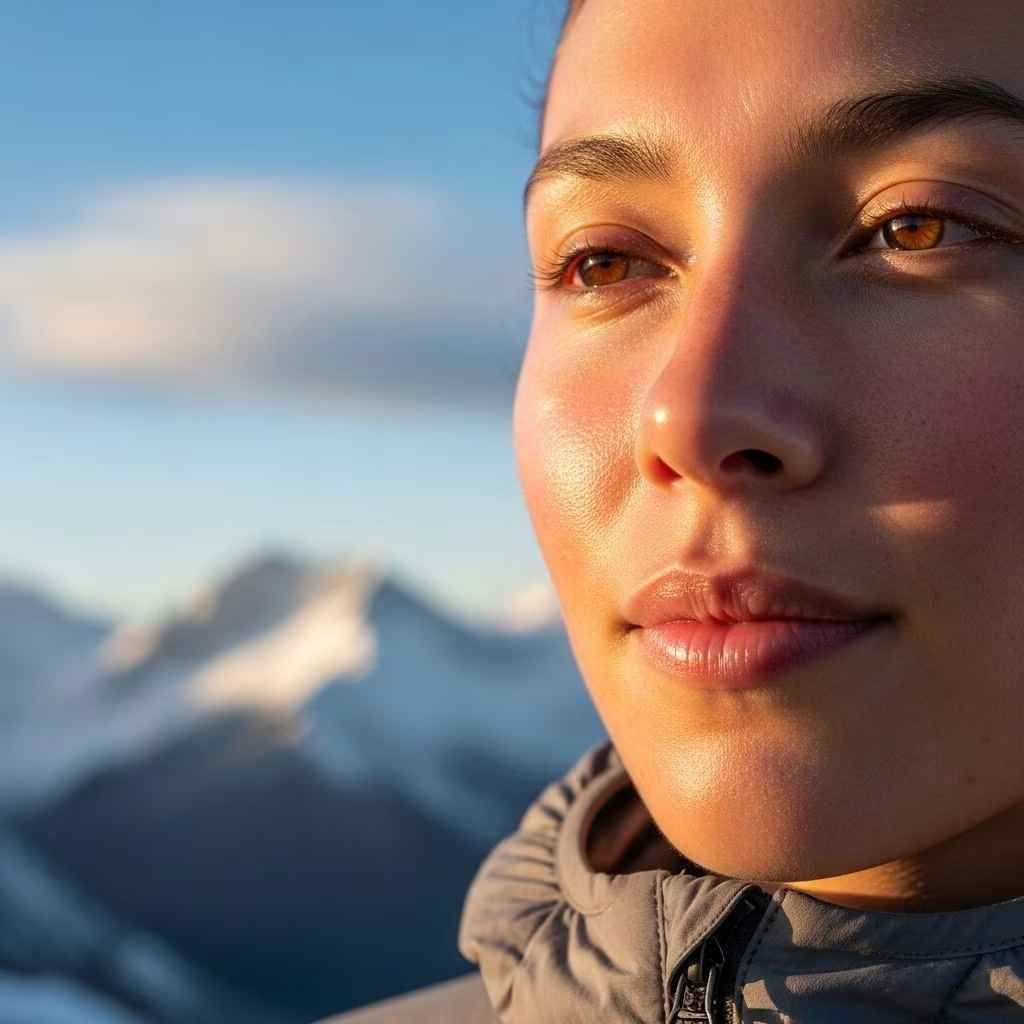
Living at or visiting high altitudes—typically defined as elevations above 2,500 meters (8,200 feet)—presents a unique set of challenges for skin health. Beyond the well-known effects of thinner air and colder temperatures, altitude profoundly affects skin capillaries, circulation, and conditions like rosacea. This article explores the scientific mechanisms behind these effects, offering practical advice for those living in or traveling to high-altitude regions.
Understanding High Altitude Effects on the Skin
The skin is the body’s largest organ and is highly sensitive to environmental stresses. High altitude exposes skin to several unique stressors:
- Increased UV Exposure: UV radiation increases by 10–12% for every 1,000 feet of elevation. For example, at 6,200 feet, you receive over 60% more UV exposure than at sea level. This intensifies oxidative stress, collagen breakdown, and pigmentation changes.
- Dry Air and Low Humidity: Altitude brings low humidity and lower oxygen levels, which can slow skin healing, reduce collagen production, and exacerbate dryness and transepidermal water loss (TEWL).
- Cold Temperatures and Wind: Frequent temperature swings and strong winds further dehydrate and irritate the skin.
These factors contribute to premature aging, increased pigmentation, and a weakened skin barrier, making the skin more vulnerable to environmental damage and chronic conditions like rosacea.
Skin Capillaries and Microcirculation at High Altitude
Capillaries, the smallest blood vessels, are critical for delivering oxygen and nutrients to the skin. High altitude environments present several challenges for capillary function:
- Hypoxia: Lower oxygen levels at altitude (hypoxia) stimulate the body to increase blood flow to compensate for reduced oxygen supply. This leads to dilation of capillaries and increased blood flow in the skin.
- Microvascular Perfusion: Studies show that skin microvascular blood flux (BF) increases at altitude, particularly in populations adapted to high elevation, such as Sherpas. This reflects a physiological adaptation to maximize oxygen delivery.
- Formation of New Blood Vessels: Chronic exposure to hypoxia can trigger the release of vascular endothelial growth factor (VEGF), promoting the formation of new capillaries (angiogenesis). While this helps compensate for hypoxia, it can also cause unwanted effects such as persistent facial redness and telangiectasia (visible fine blood vessels on the face).
| Factor | Effect on Skin Capillaries |
|---|---|
| Hypoxia | Dilation, increased blood flow |
| VEGF Release | Angiogenesis, possible telangiectasia |
| UV Exposure | Capillary damage, inflammation |
Circulation Adaptations and Responses
To survive at high altitude, the body undergoes several circulatory adaptations:
- Increased Red Blood Cell Production: The body produces more red blood cells to carry more oxygen. This adaptation can increase blood viscosity and affect peripheral circulation.
- Enhanced Perfusion: Skin microcirculation becomes more complex and efficient, especially in populations like Sherpas, who have evolved for high-altitude living. This adaptation involves both increased blood flow and more dynamic regulation of vascular tone.
- Risk of Abnormal Vasculature: Chronic high-altitude residence, especially in extreme conditions, can lead to the development of new, often abnormal, blood vessels in the skin, resulting in a persistent ruddy or red complexion.
While these adaptations help meet the body’s oxygen demands, they can also make the skin more susceptible to flushing, chronic redness, and visible capillaries—conditions that overlap with rosacea symptoms.
Rosacea Triggers and Symptoms at High Altitude
Rosacea is a chronic inflammatory skin condition characterized by persistent redness, visible blood vessels, and sometimes papules and pustules. High altitude can exacerbate rosacea through several mechanisms:
- Environmental Triggers: Increased UV exposure, cold, wind, and dry air all provoke rosacea flares. UV radiation is especially damaging, as it induces inflammation and breaks down the skin barrier.
- Vascular Abnormalities: Both hypoxia and UV exposure stimulate VEGF production, leading to angiogenesis and increased vascular permeability, which can worsen rosacea’s redness and visible capillaries.
- Inflammatory Response: Altitude-related oxidative stress and inflammation further irritate sensitive skin, contributing to the onset and persistence of rosacea symptoms.
For individuals predisposed to rosacea, living at or traveling to high altitudes can make symptoms more severe and harder to control.
Additional Skin Concerns at High Altitude
Beyond rosacea, high altitude poses several other skin challenges:
- Accelerated Skin Aging: Higher UV exposure and chronic dryness lead to earlier formation of wrinkles, fine lines, and volume loss, often seen in younger age groups than at sea level.
- Pigmentation Problems: UV-induced inflammation and hypoxia can cause stubborn pigmentation, including melasma and sunspots that are hard to fade.
- Dry, Cracked Skin: Low humidity and strong winds cause transepidermal water loss (TEWL), leaving skin tight, itchy, and prone to cracking, especially on the lips and nose.
These issues are often compounded by a weakened skin barrier, making the skin more reactive to environmental stressors and less responsive to routine skincare products.
Prevention and Treatment Strategies
Protecting skin at high altitude requires a proactive, multi-pronged approach:
- Sun Protection: Use broad-spectrum sunscreen with high SPF, reapplied frequently. Wear wide-brimmed hats and UV-protective clothing to reduce direct sun exposure.
- Moisturize Aggressively: Switch to richer, occlusive moisturizers (creams or balms, not lotions) to combat persistent dryness and TEWL. Products with ceramides, hyaluronic acid, and glycerin are particularly effective.
- Rosacea-Specific Care: For those with rosacea, avoid known triggers (hot baths, spicy foods, alcohol), use gentle, fragrance-free cleansers, and consider prescription topical or oral medications as advised by a dermatologist.
- Anti-Inflammatory Skincare: Incorporate anti-inflammatory ingredients (such as niacinamide, green tea extract, and allantoin) to reduce redness and irritation.
- Lifestyle Modifications: Stay hydrated, use humidifiers indoors, and consider gradual altitude acclimatization to reduce physiological stress.
| Concern | Strategy |
|---|---|
| Sun Damage | Broad-spectrum sunscreen, hats, clothing |
| Dryness | Occlusive moisturizers, humidifiers |
| Rosacea | Avoid triggers, gentle cleansing, medicated topicals |
| Pigmentation | Antioxidants, brightening agents, professional treatments |
Frequently Asked Questions (FAQs)
Q: Why does my skin feel drier at high altitude?
A: The air at high altitude is much drier, and lower oxygen levels mean your skin barrier doesn’t function as well, leading to increased transepidermal water loss and persistent dryness.
Q: How does high altitude affect people with rosacea?
A: High altitude can trigger or worsen rosacea through increased UV exposure, cold, wind, and hypoxia, which provoke inflammation and angiogenesis, making redness and visible capillaries more pronounced.
Q: Can you prevent permanent redness or visible capillaries at high altitude?
A: While genetic and environmental factors play a role, consistent sun protection, gentle skincare, and early intervention for redness can help minimize permanent changes. Avoiding prolonged sun exposure and wearing protective clothing are key.
Q: Are there specific skincare products recommended for high-altitude environments?
A: Yes, heavier moisturizers (creams or balms), broad-spectrum sunscreens, and anti-inflammatory ingredients are recommended. Products used at sea level may not be effective enough.
Q: Does acclimatization help with skin issues at high altitude?
A: Gradual acclimatization can help your body (and skin) adapt to increased UV and dry air, but it does not eliminate the need for ongoing protective measures.
Conclusion
High altitude presents a unique set of challenges for skin health, especially regarding capillaries, circulation, and conditions like rosacea. The increased UV exposure, lower oxygen levels, and dry, cold environment all contribute to premature aging, inflammation, and vascular changes. By understanding these mechanisms and adopting targeted prevention and treatment strategies, it is possible to protect and maintain healthy skin, even in the most extreme environments.
References
- https://theskincompany.com/colorado-altitude-speeds-up-wrinkle-formation/
- https://pmc.ncbi.nlm.nih.gov/articles/PMC4490706/
- https://www.nature.com/articles/s41598-019-50774-0
- https://pmc.ncbi.nlm.nih.gov/articles/PMC8068881/
- https://en.wikipedia.org/wiki/Effects_of_high_altitude_on_humans
- https://physoc.onlinelibrary.wiley.com/doi/10.1113/EP087236
- https://ph.health.mil/topics/discond/ai/Pages/Altitude-Effects-on-the-Human-Body.aspx
- https://www.frontiersin.org/journals/physiology/articles/10.3389/fphys.2021.735557/full


