


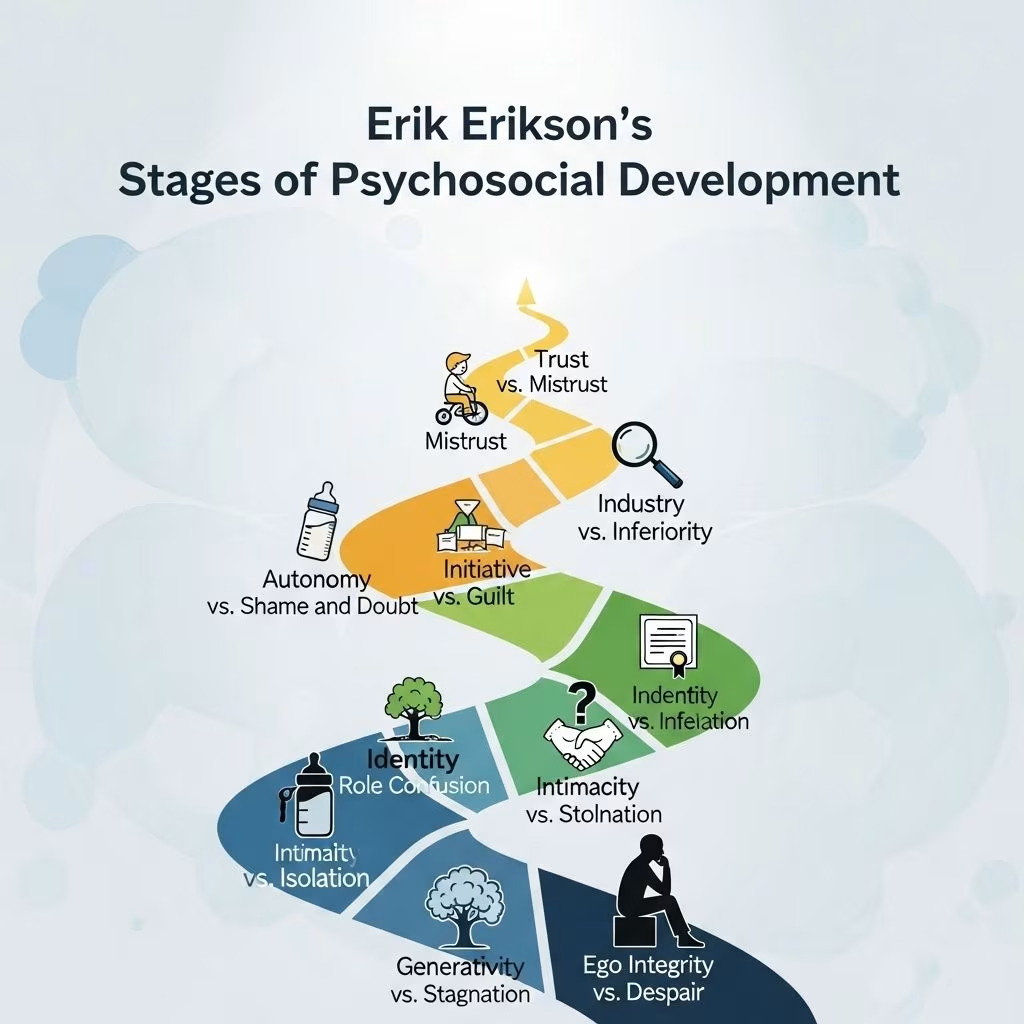
Erik Erikson’s theory of psychosocial development is one of the most influential frameworks for understanding how individuals develop their sense of self, identity, and relationships throughout their life. Spanning from infancy to late adulthood, this eight-stage model describes a unique psychological conflict at each stage, resolution of which leads to psychological strengths known as virtues.
This article examines the history, structure, and implications of Erikson’s model, providing a comprehensive overview for students, educators, caregivers, and anyone interested in human development.
What is Erik Erikson’s Theory of Psychosocial Development?
Erik Erikson, a renowned developmental psychologist and psychoanalyst, extended Freud’s early theories of childhood development, emphasizing the critical role of social experience across the entire lifespan. His theory underscores how psychosocial challenges, rather than merely biological or sexual urges, drive human growth. Each stage of Erikson’s model is characterized by a central psychosocial conflict—a turning point in personality development—to be resolved before advancing to the next phase.
- Lifespan model: Covers development from birth through old age rather than just childhood.
- Stages and conflicts: Each of the eight stages involves a unique psychosocial crisis between two opposing outcomes.
- Virtues: Successful resolution fosters specific psychological strengths called virtues.
- Impact of resolution: Unresolved crises can hinder future development, but individuals may revisit and resolve earlier conflicts later in life.
Overview of the Eight Stages
Erikson’s theory divides the human lifespan into eight stages, each marked by a unique struggle and developmental milestone. The order of these stages is universal, though the exact experiences and outcomes may vary among individuals and cultures.
| Stage | Approximate Age | Core Conflict | Virtue |
|---|---|---|---|
| 1 | 0-1 year | Trust vs. Mistrust | Hope |
| 2 | 1-3 years | Autonomy vs. Shame & Doubt | Will |
| 3 | 3-6 years | Initiative vs. Guilt | Purpose |
| 4 | 7-11 years | Industry vs. Inferiority | Competence |
| 5 | 12-18 years | Identity vs. Role Confusion | Fidelity |
| 6 | 19-40 years | Intimacy vs. Isolation | Love |
| 7 | 40-64 years | Generativity vs. Stagnation | Care |
| 8 | 65+ years | Integrity vs. Despair | Wisdom |
Stage 1: Trust vs. Mistrust (Birth to 1 Year)
Central question: Can I trust the world?
The first and foundational stage occurs during infancy. At this point, an infant relies entirely on caregivers for basic needs. Consistent, nurturing, and reliable care fosters a sense of trust in the world and people.
- Virtue: Hope
- Positive outcome: Secure attachment, confidence in meeting future crises.
- Negative outcome: Anxiety, fear, suspicion, or mistrust of others.
- Key relationship: Primary caregiver(s)—often the mother plays a critical role.
Stage 2: Autonomy vs. Shame and Doubt (1 to 3 Years)
Central question: Is it okay to be me?
During toddlerhood, children begin exploring independence by making simple choices and controlling basic bodily functions. Supportive caregivers who encourage autonomy (self-control, decision-making) enable children to develop a sense of will and self-confidence.
- Virtue: Will
- Positive outcome: Sense of autonomy, self-control, and confidence.
- Negative outcome: Feelings of shame, doubt, inadequacy, or over-dependence.
- Key relationship: Both parents or primary caregivers guiding exploration.
Stage 3: Initiative vs. Guilt (3 to 6 Years)
Central question: Is it okay for me to take initiative?
Preschool-aged children assert control by initiating activities, interacting socially, and taking on new challenges. Success at this stage leads to a sense of purpose; excessive criticism or control can cause guilt or hesitation.
- Virtue: Purpose
- Positive outcome: Willingness to try new things, leadership, enjoyment of activities.
- Negative outcome: Guilt, self-doubt, reluctance to take initiative.
- Key relationship: Family and teachers who encourage play and discovery.
Stage 4: Industry vs. Inferiority (7 to 11 Years)
Central question: Can I make it in the world of people and things?
This stage centers on productivity, mastery, and competence. Through schoolwork or other tasks, children learn to work with others and accomplish goals. Praise and success lead to a sense of industry and competency.
- Virtue: Competence
- Positive outcome: Confidence, pride in achievement, skill development.
- Negative outcome: Feelings of inferiority, incompetence, or withdrawal.
- Key relationship: Teachers, peers, and adults in the child’s community.
Stage 5: Identity vs. Role Confusion (12 to 18 Years)
Central question: Who am I and where am I going?
Adolescence is a pivotal time for developing a personal sense of identity. Teens experiment with roles, values, and goals. Successful resolution results in a strong sense of self; difficulty leads to uncertainty or confusion about future roles.
- Virtue: Fidelity
- Positive outcome: Clear sense of identity, beliefs, and direction.
- Negative outcome: Role confusion, instability, difficulty making decisions.
- Key relationship: Peer groups and role models outside the family.
Stage 6: Intimacy vs. Isolation (19 to 40 Years)
Central question: Can I love and be loved?
As young adults seek deeper relationships and intimacy, successful navigation of this stage means forming loving, long-term bonds. Those unable to form close relationships risk emotional isolation, loneliness, or fear of commitment.
- Virtue: Love
- Positive outcome: Strong, healthy relationships—romantic, friendship, familial.
- Negative outcome: Isolation, loneliness, avoidance of intimacy.
- Key relationship: Close friends and romantic partners.
Stage 7: Generativity vs. Stagnation (40 to 64 Years)
Central question: Can I make my life count?
This midlife stage involves contributing to society and supporting future generations—often through parenting, teaching, or productive work. Success leads to generativity: a sense of purpose through contribution. Stagnation results from self-absorption or lack of productivity.
- Virtue: Care
- Positive outcome: Productive involvement, legacy-building, satisfaction.
- Negative outcome: Stagnation, unproductivity, sense of disconnection.
- Key relationship: Family, coworkers, community, and younger generations.
Stage 8: Integrity vs. Despair (65+ Years)
Central question: Is it okay to have been me?
In late adulthood, individuals reflect on their lives, assessing accomplishments and failures. Integrity comes from acceptance and wisdom gained over a life well-lived; despair emerges from regret or dissatisfaction.
- Virtue: Wisdom
- Positive outcome: Acceptance, sense of fulfillment, readiness to face the end of life.
- Negative outcome: Despair, regret, bitterness, fear of death.
- Key relationship: Society and humanity as a whole.
The Epigenetic Principle and Ongoing Development
Erikson’s theory follows the epigenetic principle, which posits that development occurs in a predetermined sequence, but the outcomes of each crisis are not fixed. Individuals may revisit earlier stages when faced with new challenges or unresolved issues.
- Resolution of conflicts at one stage influences adaptation at later stages—but mastery of all previous crises is not strictly required to progress.
- Later stages may repeat or reinterpret earlier conflicts in new contexts (e.g., trust and intimacy).
- Development is a lifelong, dynamic process, not a rigid, linear path.
Applications of Erikson’s Theory
Erikson’s stages have significant practical applications in fields such as education, mental health, counseling, and caregiving. Understanding the typical developmental conflicts and virtues of each stage helps professionals tailor interventions and support to individuals’ unique needs.
- Education: Teachers can adapt approaches according to students’ psychosocial development.
- Counseling: Therapists use the model to identify life challenges and guide personal growth.
- Healthcare: Providers may use Erikson’s framework for age-appropriate care and support.
- Parenting: Awareness of each stage assists caregivers in fostering healthy development.
Critiques and Contemporary Perspectives
While Erikson’s framework remains highly influential, several critiques and expansions have emerged:
- Cultural relevance: Some argue that the theory reflects Western values and may not fully apply across cultures.
- Over-simplification: Real development often defies neat stage boundaries or sequence.
- Lack of empirical evidence: Although supported anecdotally, some specifics lack rigorous validation.
- Later expansions: Erikson’s wife, Joan Erikson, proposed a ninth stage for advanced old age, reflecting continued developmental challenges.
Key Takeaways
- Erikson’s theory describes psychosocial development across eight stages, each marked by a core conflict impacting personality.
- Success in each stage yields a psychological virtue; unresolved conflicts may reappear and impede future development.
- The theory underpins many educational, counseling, and caregiving practices.
- Despite critiques, Erikson’s stages remain foundational for understanding human social and emotional growth.
Frequently Asked Questions
What are Erikson’s eight stages in order?
The stages, in sequence, are: Trust vs. Mistrust, Autonomy vs. Shame/Doubt, Initiative vs. Guilt, Industry vs. Inferiority, Identity vs. Role Confusion, Intimacy vs. Isolation, Generativity vs. Stagnation, Integrity vs. Despair.
Why are the stages called ‘psychosocial’?
They emphasize the interaction between individual psychological needs and the social environment at each stage of life.
Do people always master one stage before moving to the next?
No. Individuals often move on with unresolved conflicts, which may return or be addressed later with new experiences or support.
How can parents or caregivers support children at different stages?
- Provide consistent care and responsiveness in infancy to foster trust.
- Encourage independence and allow safe exploration in toddlerhood.
- Support initiative with opportunities for choice and creativity in preschoolers.
- Praise effort, not just achievement, and help children learn from failures in school-age years.
- Give adolescents space to explore their identity and respect their journey toward independence.
How is Erikson’s theory used in therapy or education?
Counselors and teachers use the stages to understand an individual’s current challenges, developmental history, and to promote age-appropriate support for social and emotional growth.
Conclusion
Erik Erikson’s eight-stage theory of psychosocial development provides a powerful roadmap for understanding the challenges and achievements that shape personality through every life stage. With continued relevance in modern psychology, the model helps illuminate how we relate to ourselves, to others, and to society as we grow and adapt across the lifespan.
References
- https://www.waldenu.edu/online-masters-programs/ms-in-education/resource/ms-in-education-insight-eriksons-8-stages-of-development
- https://www.youtube.com/watch?v=aYCBdZLCDBQ&vl=en
- https://openbooks.library.baylor.edu/lifespanhumandevelopment/chapter/chapter-19-1-eriksons-theory-of-psychosocial-development/
- https://www.ncbi.nlm.nih.gov/books/NBK556096/
- https://en.wikipedia.org/wiki/Erikson’s_stages_of_psychosocial_development
- https://www.simplypsychology.org/erik-erikson.html
- https://newvisionpsychology.com.au/general-counselling/erikson-stages-of-psychosocial-development/
- https://positivepsychology.com/erikson-stages/


