


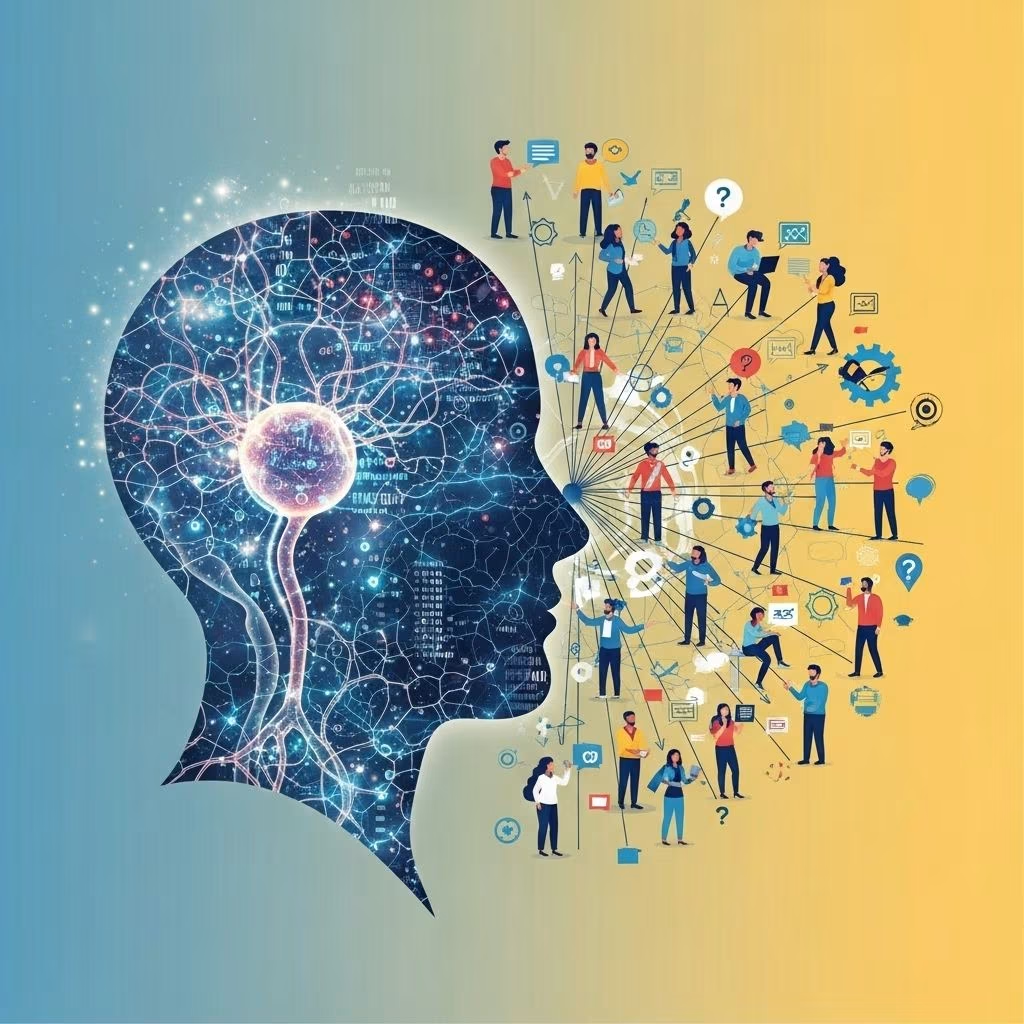
Psychology is the scientific study of the mind and behavior. It seeks to understand the complexities of how people think, feel, and act, touching every aspect of human experience—from brain function to social interaction and from development to mental health. Psychology comprises a diverse range of branches, each contributing unique insights about the human condition.
What Is Psychology?
Psychology can be defined as the science of mind and behavior. Its scope stretches from the basic workings of the brain to the broader social systems that shape individual experience. Psychologists aim to describe, explain, predict, and influence mental processes and behavior using objective, scientific methods.
- Mind: Includes thoughts, feelings, memories, and dreams.
- Behavior: Refers to overt actions and reactions observed in humans and animals.
Through experimentation, observation, and theory, psychology brings clarity to why people do what they do and how they can grow, change, and thrive.
Major Branches of Psychology
Psychology is a broad discipline, and numerous specialties have developed to focus on different facets of behavior and mental processes. Here are some of the main branches:
- Abnormal Psychology
Focuses on abnormal behavior, mental disorders, and psychopathology. Closely linked to psychotherapy and clinical psychology, it explores diagnosis, treatment, and prevention of mental health conditions.
- Biological Psychology (Biopsychology)
Examines how biological processes—such as neurochemistry, brain structure, and genetics—influence behavior and mental states. Relies on tools like MRI and PET scans to connect brain functioning to observable actions and experiences.
- Clinical Psychology
Specializes in assessing, diagnosing, and treating mental disorders. Clinical psychologists use therapy, assessment, and research to help individuals manage and overcome psychiatric symptoms.
- Cognitive Psychology
Studies mental processes including attention, memory, perception, decision-making, language acquisition, and problem-solving. Cognitive psychology helps explain how information is processed and used in thinking.
- Comparative Psychology
Investigates the behavior of animals—often comparing them to humans—to uncover underlying biological and environmental influences.
- Developmental Psychology
Explores psychological growth and change across the entire lifespan, including cognitive, emotional, moral, and social development from infancy through old age.
- Forensic Psychology
Applies psychological principles to legal and criminal justice contexts, contributing to areas like jury selection, criminal profiling, and assessment of defendants.
- Industrial-Organizational (I-O) Psychology
Uses psychological knowledge to address workplace issues, enhance employee performance, and optimize organizational structures.
- Personality Psychology
Examines patterns of thoughts, emotions, and behaviors that make each individual unique, studying traits, temperament, and personality development.
- Social Psychology
Focuses on how individuals’ thoughts, feelings, and actions are influenced by social contexts—studying topics such as group behavior, conformity, prejudice, and aggression.
| Branch | Area of Focus | Typical Applications |
|---|---|---|
| Abnormal | Mental Disorders, Psychopathology | Clinical therapy, diagnosis, research |
| Biopsychology | Brain structure, biology, hormones | Neuroimaging, pharmacology |
| Cognitive | Mental processes: memory, perception | Education, AI modeling, decision-making |
| Developmental | Lifespan development, learning | Child development, aging research |
| Social | Group influence, relationships | Teamwork, diversity training |
| Personality | Individual differences | Personality testing, counseling |
| Industrial-Organizational | Work performance, HR management | Employee selection, organizational design |
| Forensic | Legal/criminal justice | Court testimony, criminal profiling |
| Comparative | Animal behavior | Behavioral studies, ethology |
Uses and Applications of Psychology
The knowledge gained from psychological science is applied in a remarkable range of settings. While many associate psychology with mental health care, its relevance goes far beyond therapy rooms. Here are some major areas where psychology makes an impact:
- Mental Health Treatment: Psychologists help diagnose and treat mental illnesses, from depression and anxiety to severe psychiatric disorders.
- Educational Programs: Insights from learning, memory, and motivation inform teaching methods and curriculum design.
- Ergonomics: Psychological principles optimize the design of tools, technology, and environments to fit human needs and capabilities.
- Public Policy: Research on behavior informs the development of policies concerning public health, education, and justice.
- Performance Enhancement: Applied in sports, business, and creative fields to improve focus, motivation, and achievement.
- Personal Well-Being: Psychological knowledge supports strategies for better self-care, stress management, and healthy relationships.
- Social Programs: Used in designing interventions targeting societal issues such as addiction, poverty, and discrimination.
Careers in Psychology
A background in psychology unlocks diverse career opportunities. While clinical jobs are prominent, psychologists’ expertise is valuable in countless other fields.
- Clinical Psychologist
- Counselor or Therapist
- School Psychologist
- Forensic Psychologist
- Industrial-Organizational Psychologist
- Academic Researcher or Professor
- Human Resources Specialist
- User Experience (UX) Researcher
- Sports Psychologist
- Health Educator
- Market Research Analyst
With over 80 related career paths, psychology is one of the most versatile degrees available.
The Goals of Psychology
Psychology’s primary goals are to:
- Describe behavior and mental processes.
- Explain why these behaviors and processes occur.
- Predict how people are likely to think or act in different situations.
- Influence behavior and mental processes to improve individual and societal well-being.
Whether in research or applied contexts, psychologists pursue these aims using rigorous, empirical methods.
Impact of Psychology
Psychology’s contributions extend far beyond the individual. It improves communities, workplaces, and societies by:
- Explaining why people behave as they do
- Revealing factors that impact health, relationships, and productivity
- Improving learning environments and public safety
- Shaping technology and product design
- Helping people achieve personal and professional goals
Psychological research fuels progress in everything from ergonomics and public health to product innovation and social policy. By designing experiments and collecting data, psychologists continually refine our understanding of the mind, demonstrating the power and necessity of science in everyday life.
Potential Pitfalls and Misconceptions
Despite its scope and scientific rigor, psychology is often misunderstood. Some common misconceptions include:
- Confusing psychology with psychiatry (psychologists typically are not medical doctors and don’t prescribe medication)
- Assuming psychologists only treat mental illness—when in fact, many work in research, technology, business, law, health, and more
- Taking media stereotypes of psychologists as the norm—when most work outside of law enforcement or criminal profiling
- Overlooking the diversity of subfields and roles in psychology
In reality, psychologists are involved in designing safer workplaces, improving educational practices, creating healthier communities, and even optimizing technologies—from smartphones to aircraft cockpits.
Frequently Asked Questions (FAQs)
What are the main branches of psychology?
The main branches include abnormal psychology, biological psychology, clinical psychology, cognitive psychology, comparative psychology, developmental psychology, forensic psychology, industrial-organizational psychology, personality psychology, and social psychology.
How is psychology different from psychiatry?
Psychology focuses on the scientific study of behavior and mental processes, often through therapy and research, while psychiatry is a branch of medicine that primarily treats mental disorders with medication and medical interventions.
Is psychology only about mental health?
No. While mental health treatment is a core application, psychology also plays roles in education, business, public policy, product design, law, and more.
What methods do psychologists use?
Psychologists use empirical methods—experiments, observations, surveys, and case studies—to objectively investigate the mind and behavior.
How does psychology benefit society?
Psychology aids in understanding and improving behavior, enhancing education, productivity, and public health, and providing scientific foundations for policies and practices that affect society as a whole.


