


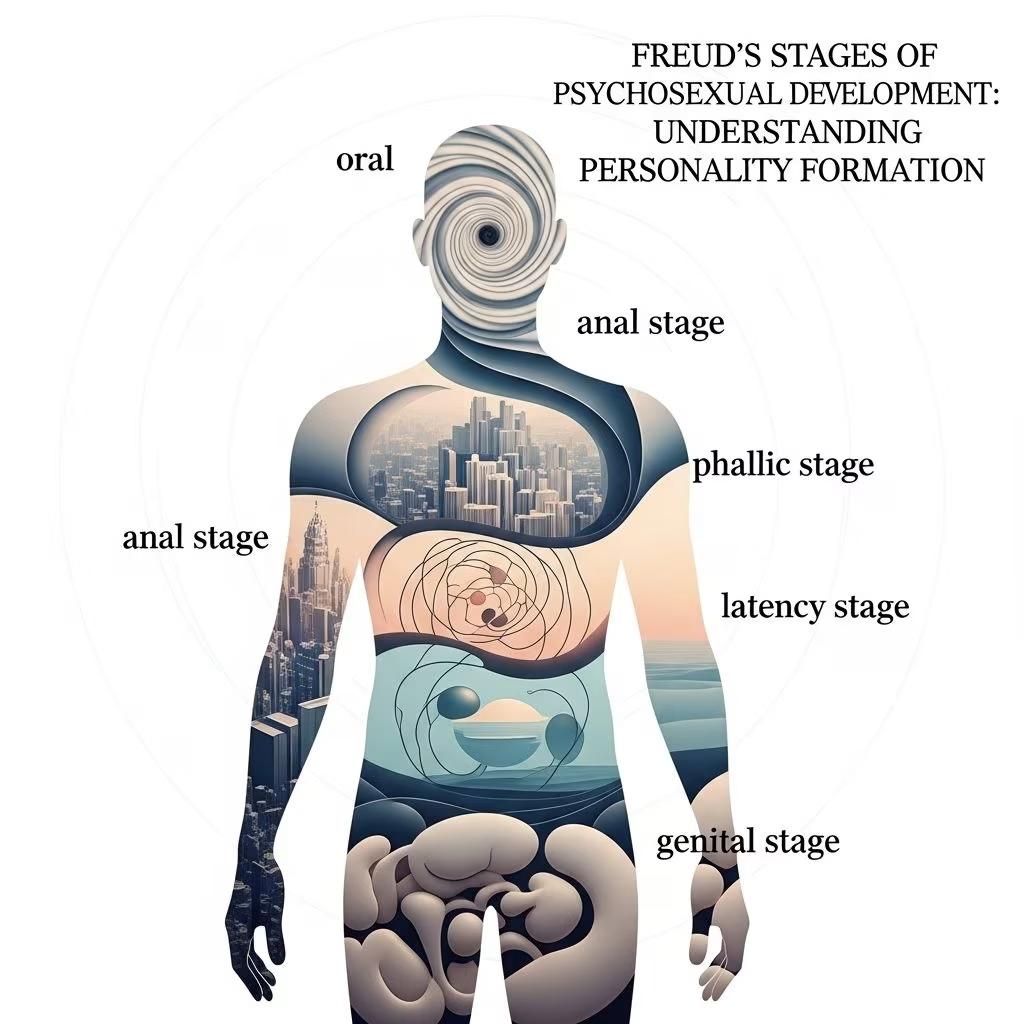
Freud’s Stages of Psychosexual Development: A Comprehensive Overview
Psychologist Sigmund Freud revolutionized our understanding of childhood and personality formation with his theory of psychosexual development. Freud proposed that personality develops through five distinct stages, each centered on a different erogenous zone. Successfully navigating these stages—and resolving the conflicts each one presents—is critical to forming a healthy adult personality. While some of Freud’s ideas remain controversial and widely criticized, his theory has shaped both clinical psychology and popular culture for over a century.
What Are Freud’s Psychosexual Stages of Development?
Freud’s theory of psychosexual development emerged in the early 1900s as a framework for explaining mental illnesses and emotional disturbances in his patients. It is built on the concept that sexual energy (libido) is the driving force behind much of human behavior and experience. Freud used the term ‘sexual’ broadly to encompass all forms of pleasure and tension associated with various areas of the body as a child matures.
According to Freud, the five stages are:
- Oral Stage: Birth to 18 months
- Anal Stage: 18 months to 3 years
- Phallic Stage: 3 to 6 years
- Latency Stage: 6 years to puberty
- Genital Stage: Puberty onward
Each stage focuses on a specific erogenous zone, presenting the child with a conflict that must be resolved for healthy personality development. Failure to resolve these conflicts can lead to fixations that continue to influence adult behavior.
Stages of Psychosexual Development
| Stage | Age Range | Erogenous Zone | Key Developmental Task |
|---|---|---|---|
| Oral | Birth–18 months | Mouth | Weaning, Trust Formation |
| Anal | 18 months–3 years | Bowel & Bladder | Toilet Training, Autonomy |
| Phallic | 3–6 years | Genitals | Oedipus/Electra Complex, Gender Identity |
| Latency | 6 years–Puberty | No specific focus | Social Skills, Peer Relationships |
| Genital | Puberty–Adulthood | Genitals | Mature Intimacy, Sexuality |
Oral Stage (Birth–18 months)
The oral stage marks the beginning of psychosexual development. The primary source of pleasure is the mouth: infants explore the world by sucking, tasting, and chewing.
- Key Conflict: The challenge here is weaning. The child must gradually shift from breastfeeding/bottle-feeding to solid food. How caregivers manage this process impacts the child’s sense of trust and ability to cope with loss.
- Fixation Risks: If conflicts are unresolved (weaning too abrupt or prolonged), oral fixations may develop. Adults with oral fixation may overeat, smoke, chew pens, or be overly dependent.
Anal Stage (18 months–3 years)
During the anal stage, the focus shifts to bowel and bladder control as children begin toilet training. The central issue is autonomy over bodily functions.
- Key Conflict: Children struggle with demands for self-control versus the pleasures of letting go. The toilet training experience shapes how children learn discipline, orderliness, and independence.
- Fixation Risks:
- Anal-retentive personality: Excessively strict training may produce adults who are obsessively neat, punctual, and rigid.
- Anal-expulsive personality: Lenient training may lead to disorganization and rebelliousness.
Phallic Stage (3–6 years)
In the phallic stage, children become aware of their genitals and develop sexual curiosity.
- Key Conflict: The controversial Oedipus and Electra complexes emerge here. Freud suggested boys experience unconscious sexual attraction toward their mother (Oedipus complex), while girls experience similar feelings for their father (Electra complex). The resolution involves identification with the same-sex parent, shaping gender identity and morality.
- Fixation Risks: Unresolved conflicts may result in issues with authority, difficulty developing stable romantic relationships, and challenges in gender identity development.
Latency Stage (6 years–Puberty)
The latency stage is characterized by a period of relative psychological calm. Sexual impulses are repressed as children focus on developing social skills, friendships, and intellectual pursuits.
- Key Tasks:
- Forming relationships with peers
- Strengthening communication
- Building self-confidence
- Outcomes: The ego and superego take a more dominant role during this stage, guiding moral development and learning social norms. No major fixations are believed to occur here.
Genital Stage (Puberty–Adulthood)
The genital stage marks the reawakening of sexual energy, now directed toward others for the purpose of intimacy, reproduction, and mature romantic relationships.
- Key Conflict: The focus shifts to forming healthy adult relationships and integrating sexuality with emotional connection. Adolescents and young adults explore sexual feelings, romantic interests, and the responsibilities of intimacy.
- Fixation Risks: Unresolved conflicts from earlier stages can lead to difficulties with sexual expression, intimacy, or emotional wellness.
Successful navigation through all stages results in the ability to love and work productively.
Resolving Conflicts and Fixations
Freud argued that the resolution of conflicts at each stage is essential for psychological growth:
- Successful Resolution: Individuals are able to move to the next stage, developing healthy habits, relationships, and self-control.
- Fixation: Occurs if a child’s needs are either over-gratified or under-gratified, resulting in persistent behaviors linked to that stage.
Examples of adult fixations:
- Oral: Smoking, overeating, nail-biting
- Anal: Obsessive tidiness, stubbornness, or messiness
- Phallic: Self-absorption, recklessness, or sexual dysfunction
Criticisms and Limitations of Freud’s Theory
- Lack of Empirical Evidence: Modern psychologists criticize Freud’s theory for lacking scientific rigor and empirical validation.
- Overemphasis on Sexuality: Freud’s focus on sexuality as the central driver of personality formation is considered reductionistic by contemporary theorists.
- Cultural Bias: Many aspects of Freud’s model are based on Western, early 20th-century norms, limiting its universal application.
- Controversial Concepts: Notions like the Oedipus complex are now seen as largely outdated and culturally specific.
Despite these limitations, Freud’s theory remains influential for introducing critical ideas about unconscious motivation, early childhood experiences, and the structure of personality.
Modern Perspectives and Alternatives
- Neo-Freudian Theories: Thinkers like Erik Erikson expanded on Freud’s ideas by incorporating psychosocial, not just psychosexual, development, emphasizing identity and relationships over sexuality alone.
- Developmental Psychology: Today, most psychologists use more nuanced models, recognizing complex social, emotional, and cognitive development throughout life, such as Piaget’s stages and attachment theory.
Freud’s legacy persists through these evolutionary frameworks, shaping how we consider the impact of early family dynamics and personal history on adult life.
Frequently Asked Questions (FAQs)
Q: What is the main concept behind Freud’s psychosexual theory?
A: Freud believed personality develops through five stages, each focused on different erogenous zones and associated conflicts. Successfully resolving these determines psychological health.
Q: What happens if a child gets \”stuck\” at one stage?
A: Fixation occurs if the conflicts are not resolved, leading to persistent behaviors or issues in adulthood, such as smoking, rigidity, or difficulty in relationships.
Q: Are Freud’s ideas about psychosexual development still accepted?
A: While influential, many aspects of Freud’s theory are widely debated or rejected by contemporary psychologists due to lack of empirical evidence.
Q: How is Freud’s theory used today?
A: Freud’s theory is foundational in psychoanalysis and has influenced later models, but modern therapy often incorporates more evidence-based approaches and broader life-stage perspectives.
Q: Isn’t “sexual” in Freud’s theory more than just physical sexuality?
A: Yes. Freud defined “sexual” broadly, encompassing all forms of pleasure, tension, and frustration associated with body zones at different ages.
References
- https://www.healthline.com/health/psychosexual-stages
- https://socialworkexams.com/understanding-freuds-psychosexual-development-theory-keys-for-the-aswb-exam/
- https://www.jove.com/science-education/v/18552/psychosexual-theory-of-development
- https://www.simplypsychology.org/psychosexual.html
- https://www.youtube.com/watch?v=mhG-twzaE_g
- https://www.ncbi.nlm.nih.gov/books/NBK557526/
- https://www.medschoolcoach.com/freuds-stages-of-psychosexual-development-mcat-psychology/
- https://www.khanacademy.org/test-prep/mcat/individuals-and-society/self-identity/v/freuds-psychosexual-development


