


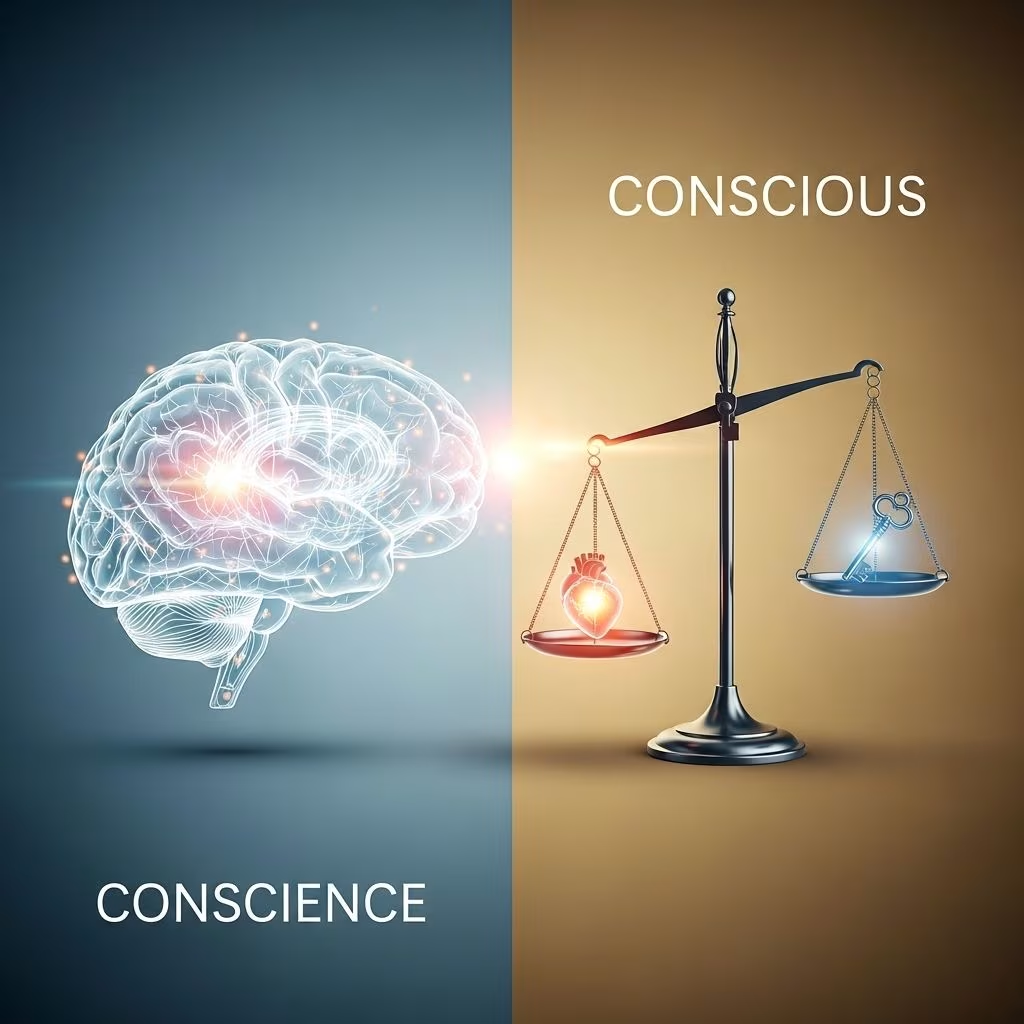
Conscience vs. Conscious: What’s the Difference?
Many people confuse the words conscience and conscious due to their similar pronunciation and spelling. However, these terms represent two fundamentally different aspects of human experience. Understanding their differences not only improves your language skills but also deepens your appreciation of ethics, awareness, and personal growth.
Definitions: Conscience and Conscious
| Term | Definition | Part of Speech | Pronunciation |
|---|---|---|---|
| Conscience | An inner sense of right and wrong guiding behavior and judgments. | Noun | con-shence |
| Conscious | Being awake, alert, and aware of oneself and surroundings. | Adjective | con-shuss |
The core distinction is that conscience deals with morality, while conscious refers to awareness and perception.
Conscious: The State of Awareness
Consciousness describes your state of being mentally alert, able to perceive, process, and respond to environmental stimuli. It’s the foundation of how humans experience the world and themselves.
- Awareness: Sensing and understanding your environment and internal thoughts.
- Wakefulness: The physiological aspect of being awake versus asleep.
- Self-awareness: Recognizing your own feelings, motives, and character.
- External awareness: Observing and interpreting the world through the five senses.
For example, if you’re conscious, you might realize you’re feeling anxious before a big meeting. This awareness helps you prepare and respond.
Key Functions of Consciousness
- Receiving information (through senses)
- Processing data (reason, memory, and emotion)
- Making decisions (based on perception and experience)
The Glasgow Coma Scale is a medical tool that evaluates a person’s level of consciousness, showing its clinical importance.
Variations and Related Terms
- Self-conscious: Excessively aware of one’s actions or appearance.
- Unconscious: Not awake or aware, such as fainting or sleeping.
- Altered states of consciousness: Meditation, hypnosis, and drug-induced states change awareness levels.
Conscience: The Moral Compass
Conscience is your innate ability to distinguish right from wrong. It acts as an internal guide, evaluating the ethics of your actions and intentions.
- Moral awareness: Understanding when an action is fair or unfair, good or bad.
- Guilt and shame: Emotional responses if actions contradict personal ethics.
- Integrity: Following moral values consistently.
For instance, if you’re tempted to lie but feel uneasy, your conscience is telling you that honesty is the right path.
Conscience in Psychology
- Superego: In psychoanalysis, conscience is part of the superego, warning or guiding the ego’s decisions.
- Cultural influences: Society, upbringing, and beliefs shape your sense of right and wrong.
- Clear vs. troubled conscience: Inner peace follows moral actions; stress and anxiety arise from actions against conscience.
| Impact of Conscience | Description |
|---|---|
| Moral Evaluation | Assesses if actions align with values |
| Shame & Guilt | Emotional response to violating principles |
| Balancing Morality and Interest | Prioritizes ethical decisions over selfish gain |
Why Do We Confuse the Two?
The confusion arises mainly due to:
- Similar spelling (both start with ‘consci’)
- Relatedness in meaning (both involve internal awareness)
- Rare and specific usage in everyday speech
Despite similarities, their functions are distinct: conscious is about being aware, conscience is about being ethical.
Conscience vs. Conscious: Medical and Psychological Usage
- Conscious: In clinical settings, indicates the presence of awareness and cognitive function.
- Conscience: In psychological analysis, refers to internal moral judgment, part of the superego (Freudian theory).
Common Errors and Their Correction
- Confusing the definitions when writing or speaking, especially in professional or formal contexts.
- Spelling tips: conscience ends with “-ence”—think “sense,” as in sense of morality; conscious ends with “-ous”—think “us,” as in being alert among others.
Self-Awareness: Bridging Consciousness and Conscience
Self-awareness is where consciousness and conscience meet. Being aware of who you are helps you reflect on your values and whether your behavior aligns with them.
- Mindfulness practices can enhance both conscious awareness and the ability to act ethically.
- Greater self-awareness improves emotional intelligence, guiding moral decisions.
How Conscience Influences Decision-Making
Your conscience plays a crucial role in ethical decision-making. It acts as a filter, steering you toward behavior that aligns with your beliefs and values.
- Pause and reflect: Before making a decision, consult your moral compass (conscience).
- Experience emotions: Feelings like guilt or pride signal if you’ve acted according to or against your values.
- Balance motives: Sometimes what benefits others comes at personal cost, but conscience encourages generosity or fairness.
How to Increase Your Awareness and Strengthen Your Conscience
Developing a greater sense of consciousness and conscience leads to personal growth and improved interactions with others.
- Mindfulness: Practice being present and attentive to internal and external stimuli.
- Reflection: Regularly think about your actions and the reasoning behind them.
- Empathy: Try to understand others’ perspectives, which fosters ethical behavior and deeper relationships.
- Education: Learn about ethics, morality, and the science of human awareness.
Conscience vs. Conscious: Quick Reference Table
| Aspect | Conscience | Conscious |
|---|---|---|
| Definition | Inner sense of right and wrong | Awareness of self and surroundings |
| Function | Judges morality of actions | Processes information; stays alert |
| Example | Feeling guilty after lying | Being aware you are feeling tired |
| Medical Use | Moral judgment (“superego”) | State of wakefulness (“mental faculties”) |
| Cultural Influence | Strong (varies by society) | Less; mainly biological/natural |
Frequently Asked Questions (FAQs)
Q: Can someone be conscious but lack conscience?
A: Yes. A person may be fully aware and alert but not possess a strong sense of morality. This can occur in certain psychological conditions and is why self-awareness does not always translate to ethical behavior.
Q: Does the conscience always guide people to make the right choices?
A: Not necessarily. Conscience is influenced by upbringing, culture, and personal beliefs. What is “right” for one person may differ for another.
Q: How do I know if I’m acting according to my conscience?
A: You may feel inner peace when acting in line with your values and experience guilt or discomfort if you act contrary to them.
Q: What is the role of conscience in health and wellbeing?
A: Acting with a clear conscience can mitigate stress and contribute to emotional wellbeing, while a “troubled conscience” may cause anxiety and health issues.
Q: How can I become more self-conscious or self-aware?
A: Practice mindfulness, be attentive to your feelings and thoughts, and seek feedback from trusted sources. Journaling and meditation are effective tools for building self-awareness.
Summary: Distinguishing Two Vital Aspects of the Mind
Knowing the difference between conscience and conscious can improve your communication, deepen your understanding of psychological concepts, and help you make decisions that benefit both yourself and those around you. Consciousness is about awareness; conscience is about morality. Together, they are foundational in shaping a thoughtful, ethical, and mindful life.
References
- https://nashvillemh.com/blog/conscious-vs-conscience-a-deep-dive-into-awareness-and-ethics/
- https://pmc.ncbi.nlm.nih.gov/articles/PMC3956087/
- https://www.grammarly.com/blog/writing-tips/conscience-vs-conscious/
- https://brocku.ca/MeadProject/Dewey/Dewey_1906.html
- https://www.dictionary.com/e/conscious-vs-conscience/


