


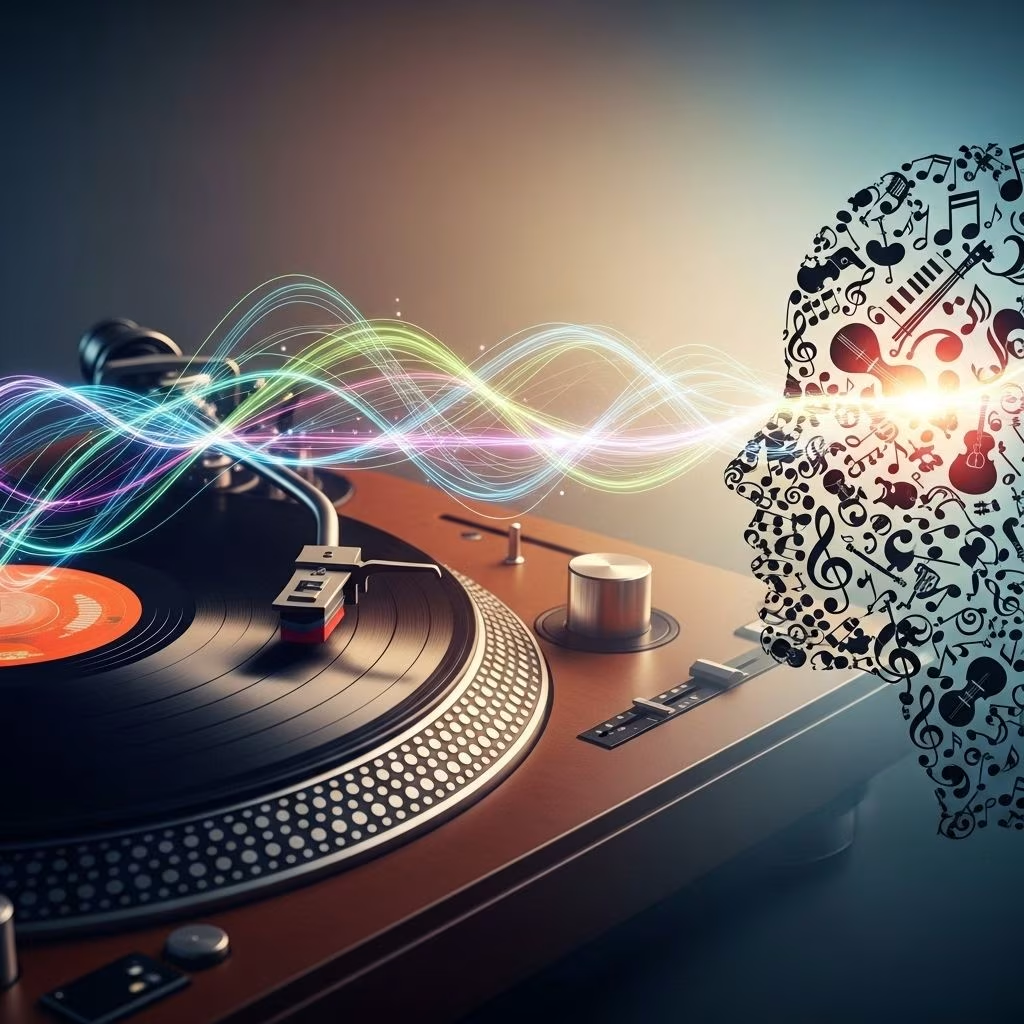
From rock anthems and soothing classical pieces to energetic pop hits and soulful jazz, the music you enjoy may reveal more about your personality than you think. Recent psychological research finds profound connections between musical preferences and personality traits, suggesting that the songs you keep on repeat offer insights into your inner world. But how deep does this connection go, and what can it tell us about identity, well-being, and social connection?
Understanding the Psychology of Music Preferences
Psychologists have long been fascinated by the link between music and personality. Modern research typically uses the Big Five personality traits—openness, conscientiousness, extraversion, agreeableness, and neuroticism—to examine how people’s musical tastes map onto their psychological profiles .
- Openness: Appreciation for new experiences, creativity, and curious thinking
- Conscientiousness: Organization, self-discipline, and reliability
- Extraversion: Outgoingness, sociability, preference for excitement
- Agreeableness: Kindness, empathy, and cooperativeness
- Neuroticism: Emotional variability, anxiety, and sensitivity
Researchers typically ask participants about their music preferences and administer surveys or inventories to gauge these traits .
How Personality Traits Relate to Music Preferences
Not all music fans are the same. Scientific studies consistently show links between broad personality traits and preferences for certain genres and listening habits .
Openness to Experience
- Prefers: Complex, novel, and sophisticated genres such as classical, jazz, blues, and folk
- Traits: Imaginative, intellectually curious, and open-minded individuals tend toward music that challenges them or evokes deep emotions
- Research highlights: Those who score high in openness often seek out musical complexity and emotional richness, and enjoy exploring new genres .
Conscientiousness
- Prefers: Soothing and positive music, including upbeat pop or relaxing acoustic tracks
- Traits: Those who are organized, goal-oriented, and value order may avoid intense or chaotic genres (such as aggressive or rebellious music)
- Research highlights: Some studies show conscientious individuals gravitate toward genre features that reinforce positive mood and regularity, aligning with their self-controlled nature .
Extraversion
- Prefers: Energetic, upbeat, and danceable music, frequently contemporary pop, electronic, and rhythmic genres
- Traits: Outgoing, sociable, and active, extroverts seek stimulation from lively music
- Research highlights: Extraverts worldwide were found to align with energetic music, regardless of culture or geography, suggesting music as a form of common ground .
Agreeableness
- Prefers: Music with positive, warm themes and pleasant melodies, such as easy listening, soft rock, or country
- Traits: Friendly, empathetic, and cooperative people are more likely to enjoy a wide array of genres, with a preference for music evoking harmony and positivity
- Research highlights: Highly agreeable people tend to avoid aggressive or confrontational musical styles, instead seeking music that reflects their warmth and kindness .
Neuroticism
- Prefers: There is a nuanced relationship. Many expect neurotic individuals to be drawn to sad or melancholic music, but research shows a tendency towards intense, edgy genres reflecting inner turmoil
- Traits: Emotional, sensitive, and prone to stress or mood swings
- Research highlights: Neuroticism may manifest as a preference for music that matches or helps process inner feelings, whether through intense or mood-lifting tracks .
What Your Favorite Genre Says About You
While personality shapes the music you prefer, every genre can attract a diverse fan base. Still, studies identify some broad associations between genres and common personality patterns. Here are some examples:
| Genre | Associated Personality Traits |
|---|---|
| Rock / Alternative | Openness, sometimes Neuroticism, lower Conscientiousness |
| Classical | High Openness, sometimes lower Extraversion |
| Pop | Extraversion, Conscientiousness, Agreeableness |
| Jazz / Blues | Openness, Emotional stability |
| Rap / Hip-Hop | Younger age, Urban identity; research is mixed regarding traits |
| Electronic / Dance | Extraversion, Openness |
| Country / Folk | Agreeableness, Conscientiousness |
Is Music Taste a Window to Your Soul?
Could someone decode your personality just from your favorite Spotify playlists? Researchers are getting closer; machine learning models trained on individuals’ music listening habits can predict certain Big Five traits, especially emotional stability and conscientiousness, better than previous techniques such as self-reported preferences or social media likes .
This predictive power is not absolute—musical taste is shaped by more than personality. Age, gender, cultural background, and even mood in the moment all play roles. Yet, the robustness of these links has been validated across large, international samples .
The Role of Music in Mood, Emotion, and Well-Being
Music is more than entertainment—it’s a psychological tool. Many people select music to match or change their mood, with personality influencing these choices. For example:
- Mood regulation: People use music that aligns with or counteracts emotions (e.g., sad songs to process sadness or upbeat music for motivation)
- Immersion: Some listeners, especially those high in emotional intensity, seek to immerse themselves in particular feelings through music
- Therapeutic use: Clinical psychologists increasingly recognize music’s psychosocial benefits, guiding those with anxiety or depression to music that supports well-being and resilience
- Social bonding: Music can serve as a powerful bridge between people, uniting like-minded individuals and fostering group identity
According to systematic reviews, personality characteristics are a key modulator of how music affects well-being. Music provides a means of emotional congruence and immersion, supporting personal growth and mental health when tailored to the listener’s unique personality .
Cross-Cultural Findings: Music and Personality Around the World
Are the links between music and personality consistent worldwide? Recent research suggests that they are. In large studies spanning many countries, the associations between traits like extraversion and upbeat music, or openness and complex styles, were found in diverse cultural contexts .
This reinforces the idea that music is a universal psychological language, reflecting shared aspects of human experience beyond geographical and cultural boundaries. While specific genres may vary in popularity, the personality connections appear remarkably stable.
What Influences Musical Preferences? Beyond Personality
While personality is a significant driver, several other factors shape your musical preferences:
- Age: Certain genres are more popular at different life stages
- Cultural background: Region and tradition strongly influence musical tastes
- Gender: Demographic trends often affect genre preference
- Life experiences: Events and personal history may connect you to certain musical styles
- Social environment: Peer groups, family, and societal trends shape exposure and acceptance
Can Your Personality Change Your Music Taste Over Time?
Yes. Evidence shows that musical preferences evolve as personality fluctuates across the lifespan. Changes in openness, emotional regulation, or life priorities can alter not just genre preferences but also how and why people listen to music. For example, those who become more open may start seeking more diverse or complex musical forms, while major life transitions often prompt shifts in music taste.
Is Music Preference Linked to Intelligence?
Some studies have found that people with higher scores on openness—a trait correlated with intellectual curiosity and creativity—tend to prefer classical, jazz, and other complex genres. However, the relationship between intelligence and musical taste is not straightforward and should not be oversimplified. Musical preference is multi-dimensional and shaped by emotional, social, and experiential factors as much as cognitive ones.
Why Do We Seek Out Certain Music? The Science Behind Music Choices
- Emotional resonance: Music that matches our feelings can help us process or amplify emotions
- Social identity: We often use music to signal who we are and to find common ground with others
- Stimulation and relaxation: Musical energy can match our needs for excitement, focus, or calm
- Escapism: Music can serve as a retreat from stress and a space for internal reflection
Frequently Asked Questions (FAQs)
Q: What is the Big Five model and how does it relate to music preference?
A: The Big Five is a widely accepted model of five personality traits: openness, conscientiousness, extraversion, agreeableness, and neuroticism. Research consistently shows that each trait is associated with tendencies to prefer specific types of music.
Q: Can my favorite music genre predict my personality?
A: While not perfectly predictive, your preferred genres often correlate with patterns in the Big Five traits. For example, a love of jazz or classical may indicate high openness, while a preference for energetic pop can reflect extraversion.
Q: Does listening to certain music impact my mood or mental health?
A: Yes. Music selection can help regulate emotions, decrease stress, and support well-being. Personality shapes how effective this is, with some individuals benefiting more from mood-congruent or uplifting music.
Q: Do these links between personality and music preference apply across cultures?
A: Studies confirm that the key associations (like extraverts enjoying energetic music) are found worldwide, underscoring music’s universal psychological role.
Q: Can musical preferences change over time?
A: Musical preferences can and do shift as people age and as their emotional and social needs evolve. Life experiences and exposure to different genres also shape changes in taste.
Key Takeaways
- Your music preferences reveal meaningful aspects of your personality, particularly in relation to the Big Five traits.
- Personality, along with age, culture, and life experience, shapes the music you prefer and how you use music in your life.
- Music offers more than entertainment—it can be a valuable tool for emotional regulation, social connection, and mental health.
- The connections between music and personality appear remarkably robust across different cultures and backgrounds.
References
- https://www.cam.ac.uk/stories/musical-preferences-unite-personalities-worldwide
- https://research.atspotify.com/just-the-way-you-are-music-listening-and-personality
- https://pmc.ncbi.nlm.nih.gov/articles/PMC11064775/
- https://digitalcommons.lindenwood.edu/psych_journals/vol1/iss22/2/
- https://psychcentral.com/lib/preferred-music-style-is-tied-to-personality
- https://pmc.ncbi.nlm.nih.gov/articles/PMC3138530/
- https://online.ucpress.edu/collabra/article/9/1/75214/196347/Personality-Computing-With-Naturalistic-Music
- https://thesciencesurvey.com/arts-entertainment/2021/06/14/the-psychology-of-taste-the-intertwining-of-music-and-identity/


