


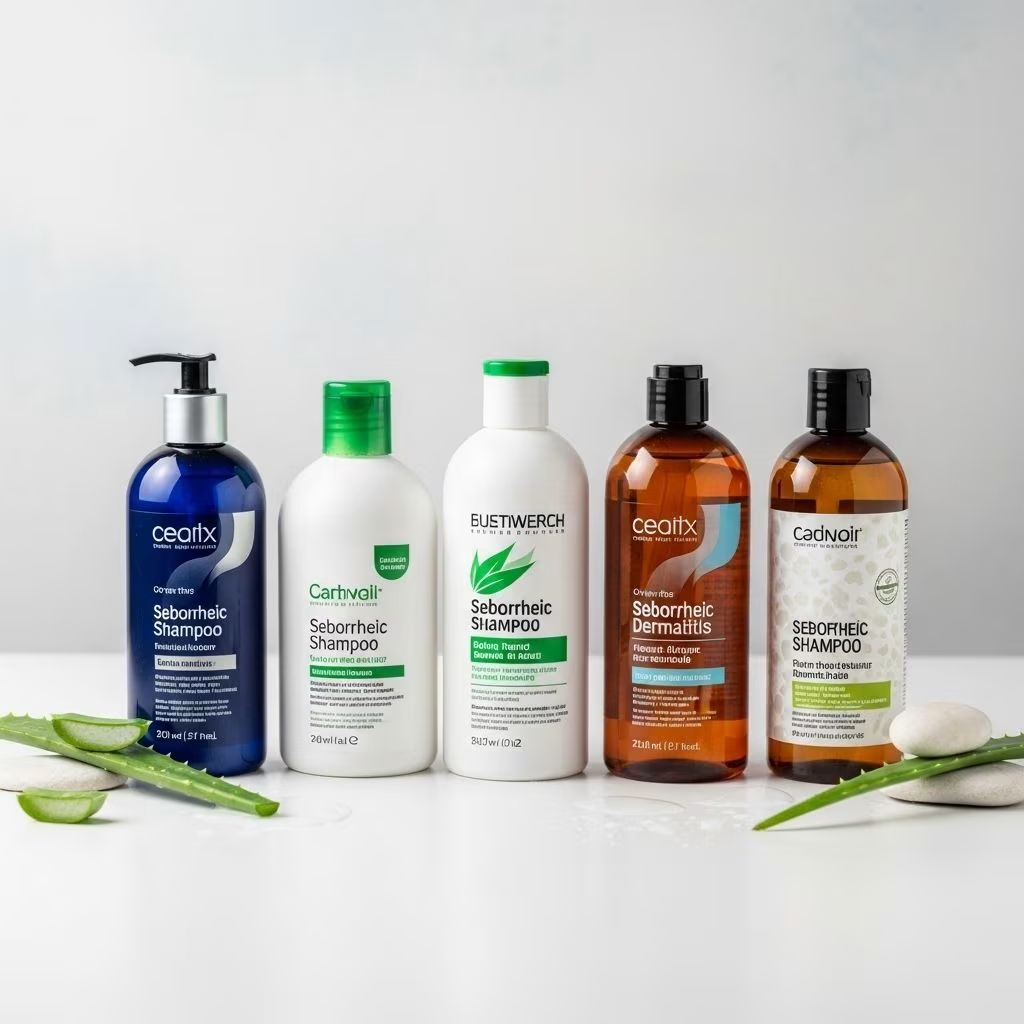
Seborrheic dermatitis is a chronic, relapsing skin condition frequently affecting the scalp, causing redness, persistent itching, flaking, and greasy or scaly patches. Selecting an effective shampoo is essential for managing symptoms, reducing discomfort, and improving quality of life.
Understanding Seborrheic Dermatitis
Seborrheic dermatitis is a common inflammatory skin condition that mainly affects the scalp but can also involve the face, chest, and other oil-rich areas. Hallmarks include:
- Flaky or scaly patches
- Persistent itching and redness
- Greasy or oily scalp texture
- Recurring flare-ups, especially in winter or periods of stress
This condition is primarily associated with altered sebum production and overgrowth of the Malassezia yeast on the skin. While not curable, symptoms are manageable, and medicated shampoos are first-line therapy for scalp involvement.
OTC Shampoos and Their Active Ingredients
Over-the-counter (OTC) shampoos for seborrheic dermatitis commonly feature one or more clinically proven active ingredients:
- Selenium sulfide: An antifungal agent targeting Malassezia yeast, reduces scaling and itching.
- Ketoconazole: Broad-spectrum antifungal with anti-inflammatory properties, inhibits fungal growth.
- Pyrithione zinc: Antimicrobial and antifungal, decreases flaking and soothes the scalp.
- Salicylic acid: A keratolytic that exfoliates scales and helps clear buildup.
- Coal tar: Reduces inflammation and scaling, slows rapid skin cell turnover.
Each ingredient works differently and may be more suitable depending on the individual’s symptoms, scalp sensitivity, and response to treatment.
Top 5 OTC Shampoos for Seborrheic Dermatitis
The following five medicated shampoos are widely recommended by dermatologists and supported by clinical evidence for their efficacy and safety:
| Rank | Product Name | Key Active Ingredient(s) | Main Benefits | Notable Considerations |
|---|---|---|---|---|
| 1 | Nizoral Anti-Dandruff Shampoo | Ketoconazole 1% | Strong antifungal; reduces flaking, redness, and itching. Well-tolerated, low relapse rate. | May cause dryness with frequent use; fragrance present. |
| 2 | Selsun Blue Medicated | Selenium sulfide 1% | Rapid itch relief; reduces visible flakes; highly effective for fungal overgrowth. | Possible scalp irritation or discoloration; use 2–3 times weekly. |
| 3 | Head & Shoulders Clinical Strength | Selenium sulfide 1% or Pyrithione zinc 1–2% | Controls chronic flaking and irritation; anti-inflammatory properties. | Some formulas may cause oiliness or mild odor. |
| 4 | Neutrogena T/Sal Therapeutic Shampoo | Salicylic acid 3% | Helps clear scalp buildup and scaling; best for thick or stubborn flakes. | May cause scalp dryness; often used in rotation. |
| 5 | Neutrogena T/Gel Extra Strength | Coal tar 1% | Reduces inflammation and excessive oil; ideal for moderate-severe cases. | Pungent odor, may stain hair or scalp; avoid sun exposure after use. |
Nizoral Anti-Dandruff Shampoo (Ketoconazole 1%)
Nizoral is extensively studied and recommended for seborrheic dermatitis of the scalp. Ketoconazole is a potent antifungal that targets Malassezia, effectively reducing erythema (redness), flaking, and severe itching. Clinical research demonstrates that it provides sustained symptom relief, even after discontinuation, with a low risk of side effects such as irritation or allergic reaction.
- Best for: Moderate to severe seborrheic dermatitis with persistent redness and itching.
- How to use: Apply twice weekly for 2–4 weeks, then reduce frequency as symptoms improve.
- Notable: Added fragrance may bother some sensitive users.
Selsun Blue Medicated (Selenium Sulfide 1%)
Selenium sulfide helps reduce the population of Pityrosporum ovale (now classified as Malassezia), one of the yeast species implicated in seborrheic dermatitis. Clinical trials report that selenium sulfide reduces flaking, erythema, and itching as effectively as ketoconazole, sometimes with a faster onset of itch relief. It is also frequently well-tolerated and considered cosmetically acceptable.
- Best for: Rapid itch relief and people with a history of yeast-related scalp issues.
- How to use: Two to three times per week, leaving on scalp for recommended duration.
- Notable: May cause temporary discoloration or odor; avoid contact with jewelry.
Head & Shoulders Clinical Strength (Selenium Sulfide or Pyrithione Zinc 1–2%)
Both selenium sulfide and pyrithione zinc act as antimicrobial agents and reduce scalp inflammation, flaking, and itchiness. These shampoos are readily available and often used for milder or long-term maintenance of seborrheic dermatitis. The clinical strength formulas may provide higher concentration and faster relief for moderate symptoms.
- Best for: Milder cases and ongoing maintenance following symptom control.
- How to use: Two to three times per week or as instructed on packaging.
- Notable: Some versions may have a mild medicinal odor.
Neutrogena T/Sal Therapeutic Shampoo (Salicylic Acid 3%)
Salicylic acid is a proven keratolytic ingredient that dissolves flakes and removes thick scalp buildup, enabling antifungal and anti-inflammatory agents to penetrate better. It is particularly useful for cases with prominent scaling or stubborn buildup. Often, T/Sal is paired with antifungal treatments as a rotation partner.
- Best for: Patients with heavy scaling or plaque-like buildup.
- How to use: Leave on scalp for at least 5 minutes before rinsing.
- Notable: Can cause dryness; follow up with gentle conditioner if needed.
Neutrogena T/Gel Extra Strength (Coal Tar 1%)
Coal tar slows rapid cell turnover and suppresses inflammation, which helps with itch and flaking. Best reserved for stubborn or chronic cases, coal tar shampoos have a long track record but come with some drawbacks, such as a strong odor and potential staining.
- Best for: Moderate to severe cases unresponsive to other treatments.
- How to use: Use 1–3 times a week, leaving on hair and scalp as directed.
- Notable: Avoid direct sunlight after use; coal tar may sensitize skin.
How to Choose the Best Shampoo
Consider these factors when selecting an OTC shampoo for seborrheic dermatitis:
- Severity of Symptoms: Intense redness and thick scaling may need stronger antifungals or combination therapy (e.g., ketoconazole plus salicylic acid).
- Scalp Sensitivity: For sensitive skin, pyrithione zinc or low-fragrance formulations are often preferred.
- History of Recurrence: Chronic or relapsing symptoms may require rotation between different active ingredients to minimize resistance and maximize control.
- Cosmetic Considerations: Odor, color, and texture preferences can influence regularity of use and adherence to treatment.
For persistent or severe symptoms not responding to OTC products, consult a dermatologist for potential prescription-strength solutions.
Application and Usage Tips
Maximize the benefit of medicated shampoos by following these application guidelines:
- Wet scalp and hair thoroughly before application.
- Massage shampoo into scalp, not just hair, focusing on affected areas.
- Allow shampoo to remain on the scalp for 3–5 minutes to ensure ingredient efficacy before rinsing.
- Use as often as directed—typically two to three times per week for active outbreaks, then less often for maintenance.
- Alternate medicated shampoo with a gentle, fragrance-free daily shampoo if needed to reduce dryness or irritation.
- Avoid harsh scrubbing, hot water, and high-heat styling tools, as these can worsen irritation.
Common Side Effects and Precautions
- Skin irritation: Mild burning, stinging, or redness may occur, especially with selenium sulfide or coal tar products.
- Odor and discoloration: Selenium sulfide and coal tar can sometimes cause temporary scalp or hair discoloration and pungent odor.
- Dryness or excessive oil: Overuse may lead to dry or oily scalp—adjust frequency accordingly.
- Sun sensitivity: Coal tar can increase risk of sunburn; use sun protection or avoid sunlight on treated areas after use.
Discontinue use and consult a dermatologist if severe irritation, persistent discomfort, or signs of allergic reaction develop.
Frequently Asked Questions (FAQs)
Can seborrheic dermatitis be cured with OTC shampoos?
No, seborrheic dermatitis is a chronic condition. While OTC shampoos can manage and control symptoms, they do not provide a permanent cure. Consistent use helps reduce flare-ups and keeps the scalp healthy.
How often should I use medicated shampoos?
Follow package instructions or your dermatologist’s guidance; for most, 2–3 times weekly is effective during flare-ups, then reduce frequency for maintenance. Overuse may cause irritation.
Can I use two different medicated shampoos?
Yes, alternating between two types—such as antifungal and keratolytic—may improve efficacy and reduce resistance or irritation. Always check for ingredient compatibility and consult your doctor for a personalized regimen.
Is it safe to use OTC shampoos long-term?
Most OTC shampoos are safe for continued or intermittent use as needed to manage symptoms. Monitor your scalp for side effects and notify a healthcare professional if concerns arise.
When should I see a doctor?
Seek medical advice if:
- Symptoms persist or worsen after several weeks of OTC use
- There is significant hair loss, pain, or infection
- Side effects become bothersome or severe
Prescription treatments or investigation for underlying conditions may be necessary in these cases.
Key Takeaways
- OTC medicated shampoos containing ketoconazole, selenium sulfide, pyrithione zinc, salicylic acid, or coal tar are proven to combat the primary symptoms of seborrheic dermatitis.
- Consistency in scalp care, gentle cleansing habits, and proactive rotation of active ingredients can help maintain healthy, flake-free scalp.
- For moderate to severe symptoms, ketoconazole and selenium sulfide offer evidence-based, fast-acting relief with excellent tolerability.
Consult your healthcare provider for individual product recommendations and if OTC solutions do not bring lasting relief.
References
- https://karger.com/sad/article/10/6/497/909236/A-Comparative-Randomized-Clinical-Study-Assessing
- https://www.healthline.com/health/shampoo-seborrheic-dermatitis
- https://pmc.ncbi.nlm.nih.gov/articles/PMC11416180/
- https://www.mayoclinic.org/diseases-conditions/seborrheic-dermatitis/diagnosis-treatment/drc-20352714
- https://www.tandfonline.com/doi/full/10.1080/09546634.2025.2506676
- https://pmc.ncbi.nlm.nih.gov/articles/PMC4852869/
- https://www.aafp.org/pubs/afp/issues/2015/0201/p185.html
- https://www.va.gov/WHOLEHEALTHLIBRARY/tools/seborrheic-dermatitis.asp


