


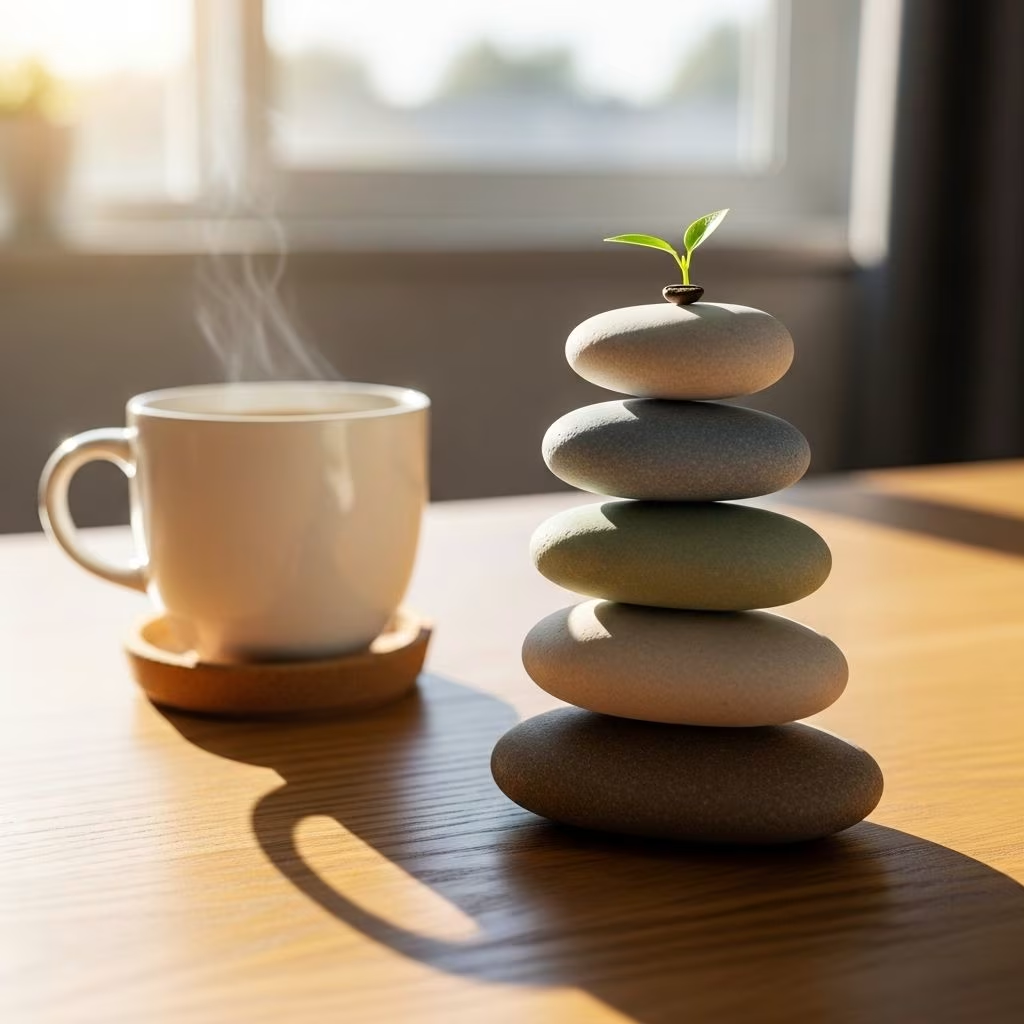
Introduction: Why Morning Routines Matter
A consistent morning routine is a powerful cornerstone for building a successful day, boosting your mental clarity, energy, and motivation from the moment you wake up. Mornings tend to be the most predictable part of our days, making them an ideal window to anchor and automate positive behaviors. When you feel in control each morning, you’re more likely to experience momentum, resilience, and higher productivity throughout the day.
But for many, developing a healthy morning routine can feel daunting. How do you stick with new habits when life gets busy? The answer lies in habit stacking, a science-backed framework for seamlessly integrating new actions into your existing routines.
What is Habit Stacking?
Habit stacking is a behavioral strategy popularized by James Clear in his book “Atomic Habits.” It involves “stacking” a new, desired habit onto an existing which you already perform consistently, using the established behavior as a cue for the new action.
“Habit stacking is about loading a new habit on top of a current one to maximize time and efficiency.” — James Clear
For instance, if you always make coffee after waking up, you might add a new habit—such as stretching for one minute—immediately after starting the coffee maker. The existing habit acts as a trigger, making it easier to remember and repeat the new behavior.
Rather than completely overhauling your routine, you use your current habits as anchor points to help new habits stick.
Key Principles of Habit Stacking
- Anchor Habit: The behavior you already do consistently (e.g., brushing your teeth).
- Stacked Habit: The new action you want to add and automate (e.g., drinking water, journaling).
- Consistency: Repeat the pair daily so the anchor triggers the new habit automatically.
The Science Behind Habit Stacking
Why does habit stacking work so well, especially in the morning? Neuroscientific and behavioral research offers several explanations:
- Behavioral Cues: Our brains respond strongly to environmental and sequential cues. When a new habit is attached to a familiar routine, the established cues help reinforce the new behavior.
- Minimizing Decision Fatigue: By automating positive actions and reducing decision-making, habit stacking helps preserve your willpower for more important daily tasks.
- Reward System Engagement: When habit stacking includes instant rewards (e.g., a brief moment of satisfaction after completing the new habit), motivation and behavior change are reinforced.
| Challenge | Habit Stacking Solution | Outcome |
|---|---|---|
| Forgetting new habits | Attach to existing routine | Improved consistency |
| Lack of motivation | Add instant reward/breakdown task | Sustained engagement |
| Decision fatigue | Automate sequence | Preserved willpower |
Health and Productivity Benefits of Habit Stacking
Implementing habit stacking in the morning delivers a wide range of benefits for both physical and mental well-being:
- Boosts Mental Clarity: Mindful morning actions (e.g., gratitude, hydration, stretching) clear mental fog and help you approach complex tasks with a sharper mind.
- Reduces Stress: Predictable and structured routines eliminate the chaos of “what do I do now?”—helping you start the day calm and focused.
- Enhances Energy & Vitality: Movement, hydration, and sunlight—when stacked effectively—stimulate your body’s wakefulness and keep you energized for longer.
- Fosters Consistency: Layering habits onto routines helps new actions become automatic with less effort, increasing the likelihood you’ll sustain positive changes.
- Improves Sleep Quality: Regular morning routines anchor your circadian rhythm, supporting better sleep at night.
- Optimizes Time Management: Automating key actions in the morning frees up mental space for creative and strategic work.
How to Start Habit Stacking: Step-by-Step Guide
Ready to build a morning routine using habit stacking? Follow this process for reliable, sustainable results:
- Identify Your Anchor Habit
- What do you do every morning without fail? Examples: turning off your alarm, brewing coffee, brushing teeth.
- Choose a Small, Specific New Habit
- Pick an action that can be accomplished in 1–3 minutes (e.g., stretching, drinking a glass of water, setting an intention).
- Pair the Habits
- Use language like: “After I [anchor], I will [new habit].” (Example: “After I brush my teeth, I’ll write one thing I’m grateful for.”)
- Test and Track Consistency
- Monitor for at least 2 weeks; use a habit tracker to visualize progress.
- Layer Additional Habits Gradually
- Only add new stacks after the previous sequence feels automatic.
- Celebrate Small Wins
- Reward yourself—mentally or physically—when you complete your morning stack.
Examples of Habit Stacking in Morning Routines
Here are several ways you can combine and layer simple actions for a more effective, energizing morning:
- Hydrate + Stretch: Upon waking, drink a glass of water and perform two minutes of gentle stretching.
- Mindfulness + Journaling: After making coffee, sit for one minute in quiet reflection and note one goal or gratitude in a journal.
- Digital Detox + Movement: Upon finishing breakfast, leave your phone behind to take a short walk outdoors for sunlight and steps.
- Healthy Breakfast + Learning: While preparing breakfast, listen to a podcast or read non-work materials.
- Social Connection + Transit: Call a friend or family member during your commute to foster strong relationships.
- Creative Reflection + Self-Care: After showering, spend one minute brainstorming solutions for a work challenge while getting dressed.
Habit stacking works best when each habit is tightly linked by time, action, or location. The smoother the transition, the more likely you are to perform the whole sequence without effort.
Sample Habit Stacking Template
| Anchor Habit | Stacked Habit | Trigger Example |
|---|---|---|
| Turn off alarm | Drink water | “After turning off my alarm, I drink a glass of water.” |
| Brush teeth | Plan day | “After brushing, I jot down 3 priorities.” |
| Make coffee | Stretch | “While coffee brews, I do 3 stretches.” |
Common Mistakes and How to Avoid Them
- Stacking Too Many Habits Too Soon: Overloading your morning can lead to overwhelm and inconsistency. Instead, start with one anchor and one new habit; add more only when the first stack feels effortless.
- Choosing Overly Complex Habits: Picking actions that require too much time, energy, or preparation makes them less likely to stick. Simplicity is key.
- Lack of Clear Triggers: Ambiguous cues make it hard to remember. Specify the exact time, location, and anchor.
- Neglecting Rewards: Motivation wanes without positive reinforcement. Build in small celebrations (e.g., enjoy a favorite song after your stack).
- Multitasking: Avoid combining habits that conflict or divide your attention. Instead, seek synergy (e.g., movement + sunlight, not movement + checking email).
Advanced Strategies for Habit Stacking
- Adjust as Needed: Life changes—update habit stacks to fit current circumstances, such as remote work or travel.
- Group Habits by Goal: Stack habits that serve the same objective (e.g., mental clarity: meditate + journal; physical wellness: stretch + hydrate).
- Feedback & Reflection: Periodically review your morning stacks to identify what’s working and adjust as needed for greater effectiveness.
- Diversify Rewards: Use both intrinsic rewards (sense of accomplishment) and extrinsic rewards (small treats, music, outdoor time) to reinforce behaviors.
- Habit Tracking Technology: Use digital or paper trackers to build visual momentum and stay accountable.
Frequently Asked Questions
Q: How long does it take for a habit stack to become automatic?
A: On average, research shows it takes between 21–66 days for habits to become automatic, but stacking habits can accelerate this due to strong triggers and repetition.
Q: Can you use habit stacking for evening routines or other times of day?
A: Absolutely. While mornings offer more predictability, habit stacking is effective any time you have consistent anchor habits (e.g., before bed, during lunch).
Q: What if I miss a day or break the routine?
A: Occasional lapses are normal. Resume the stack the next day and avoid self-criticism; consistency, not perfection, drives results.
Q: How can I make habit stacking more rewarding?
A: Pair new habits with instant rewards (music, fresh air, a favorite drink), track progress visually, and celebrate small wins.
Q: Should habit stacks be the same every day?
A: Consistency is critical, but minor adjustments (e.g., weekends vs. weekdays) are fine as long as the anchor habit remains stable.
Habit stacking transforms morning routines into powerful, rewarding foundations for health, productivity, and lifelong growth. Begin with a simple stack, build gradually, and watch your days—and your life—change for the better.
References
- https://www.swgeneral.com/blog/2025/january/stacking-your-way-to-a-better-you/
- https://www.prsa.org/article/how-habit-stacking-routines-can-boost-productivity-and-health-ST-Oct24
- https://tablehealth.com/the-profound-health-benefits-of-a-routine-and-the-art-of-habit-stacking/
- https://www.calm.com/blog/habit-stacking
- https://www.onepeloton.com/blog/habit-stacking
- https://health.clevelandclinic.org/habit-stacking
- https://ahead-app.com/blog/procrastination/the-science-of-habit-stacking-building-an-energizing-morning-routine-in-just-5-minutes-20250106-204952


