


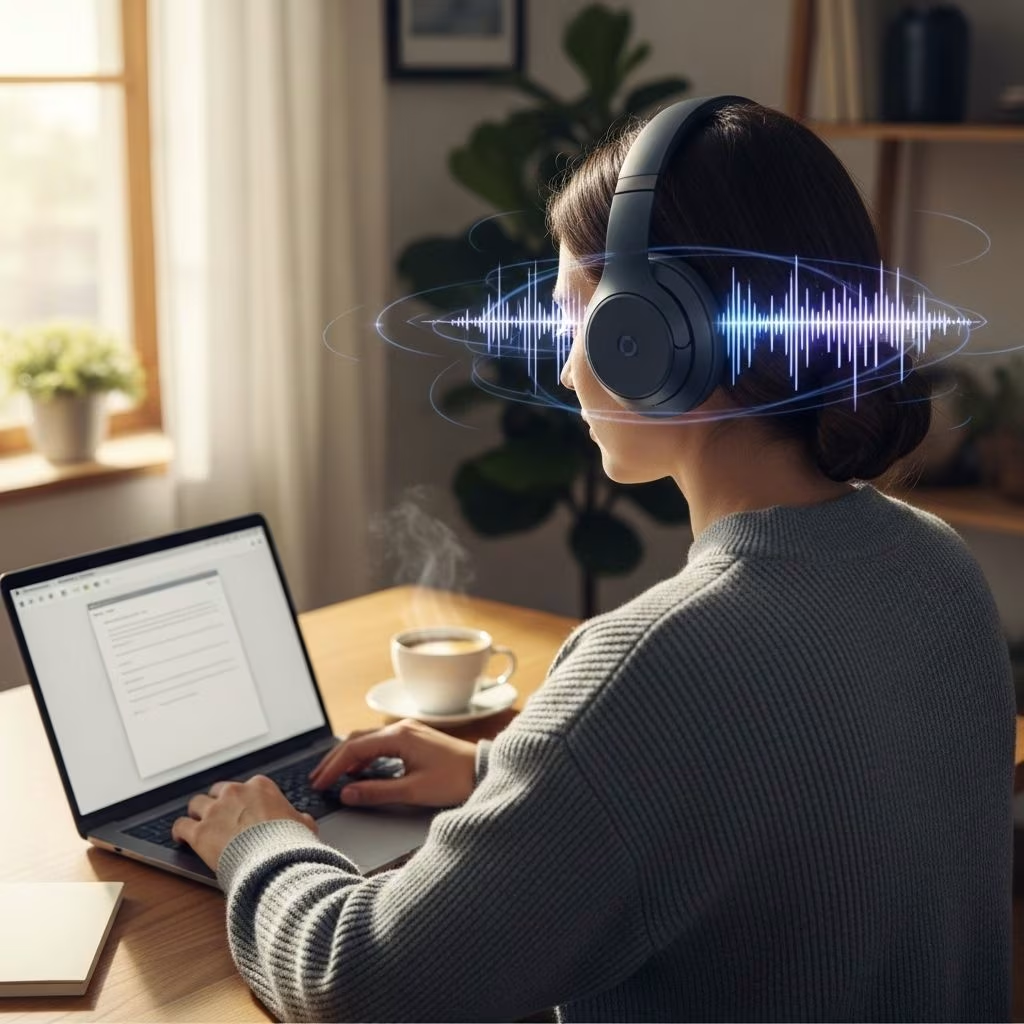
Mornings often set the tone for the rest of your day. Emerging research and practical experience suggest that binaural beats—an innovative auditory technology—can naturally boost focus, mental clarity, and overall productivity, making them an ideal addition to your morning routine. This comprehensive guide explores the science behind binaural beats, their practical benefits for morning routines, and practical strategies for integrating them into your daily life.
Introduction: What Are Binaural Beats?
Binaural beats are an auditory illusion created when two slightly different frequencies are played separately to each ear. For example, if a tone at 300 Hz is played into one ear and 310 Hz into the other, the listener’s brain perceives a subtle pulsing at 10 Hz—the mathematical difference between the two frequencies. This perceived beat is not a physical sound, but a product of the brain’s natural processing, called brainwave entrainment .
Binaural beats are typically experienced through headphones and are categorized by the frequency of the “beat” produced. These frequencies align with different natural brainwave states, such as Delta, Theta, Alpha, Beta, and Gamma, each associated with various mental states .
Brainwave Frequency Table
| Brainwave | Frequency Range (Hz) | Associated Mental State |
|---|---|---|
| Delta | 0.5–4 | Deep sleep, healing |
| Theta | 4–7 | Meditation, creativity, light sleep |
| Alpha | 7–13 | Relaxation, calm alertness |
| Beta | 13–30 | Focused attention, concentration, problem-solving |
| Gamma | 30–50 | Higher-level cognition, flow states, peak focus |
The Science Behind Brainwave Entrainment
When exposed to binaural beats, the brain is thought to synchronize its electrical activity to the corresponding frequency—a phenomenon known as entrainment. For example, listening to 15 Hz binaural beats may help the brain adopt a Beta-wave state, encouraging alertness and enhanced concentration essential for productive mornings .
Key discoveries in the science of binaural beats include:
- Neural entrainment: Binaural beats can produce measurable brainwave changes, confirmed by EEG studies, indicating real-time modulation of mental state .
- Thalamic processing: The signals are integrated in the thalamus, an area of the brain that regulates sleep and arousal cycles. This may explain the benefits for both sleep and wakefulness .
- Gradual transitions: Unlike abrupt alarms, binaural beats can gently shift brainwave activity from sleep-dominant delta to more active beta or gamma states, easing sleep inertia and supporting a smooth transition to wakefulness .
Benefits of Binaural Beats for Morning Focus
Binaural beats offer a range of potential cognitive and psychological benefits, especially when used as part of the morning routine:
- Increased concentration: Beta and gamma frequency binaural beats can help sharpen attention, making it easier to stay present during morning tasks such as journaling or goal-setting .
- Enhanced alertness: These frequencies can stimulate wakefulness and reduce morning grogginess by supporting natural brain arousal systems .
- Boosted productivity: By encouraging a focused mind, binaural beats may increase motivation to tackle demanding tasks early in the day .
- Elevated mood: Engaging with soothing, purposeful frequencies can foster a positive mindset, reducing tendencies toward anxiety or stress in the mornings .
- Support for creativity: If you include creative activities in your morning, the right frequencies may help unlock imaginative thinking and flow states .
Multiple studies and personal accounts corroborate that listening to binaural beats—particularly in the beta (13–30 Hz) and gamma (30–50 Hz) ranges—can facilitate a more attentive and productive morning .
Choosing the Right Frequency: Beta, Gamma, and Beyond
The impact of binaural beats on brain function is closely tied to the frequency used. Selecting the right frequency is essential for maximizing the intended benefit during your morning routine. Here’s a breakdown:
- Beta (13–30 Hz): Ideal for enhancing active thinking, focus, and task-oriented productivity. Best if you need to plan, problem-solve, or concentrate intensely .
- Gamma (30–50 Hz): Linked to higher mental processing, creativity, and “flow” states. Useful for brainstorming, innovation, or demanding mental work .
- Alpha (7–13 Hz): Promotes relaxed alertness, easing stress without making you drowsy. Good for meditation or gentle morning transitions .
- Theta (4–7 Hz) and Delta (0.5–4 Hz): More associated with relaxation and deep sleep than sharpening focus, these are best avoided when immediate alertness is desired in the morning .
Morning Routine Focus Frequency Table
| Frequency | Primary Effect | Suggested Use |
|---|---|---|
| Beta (13–30 Hz) | Focus, active alertness | Reading, planning, analytical tasks |
| Gamma (30–50 Hz) | Cognitive enhancement, creativity | Brainstorming, problem-solving, generating ideas |
| Alpha (7–13 Hz) | Relaxed alertness, light meditation | Gentle wake-up, intention setting |
How to Incorporate Binaural Beats into Your Morning Routine
Integrating binaural beats into your morning is straightforward and can be tailored to your schedule and preferences. Consider these step-by-step strategies:
- Set your intention: Decide what you want to achieve—whether it’s deep focus, creative energy, or calm clarity. This will guide your choice of frequency and style.
- Choose reputable audio tracks: Select binaural beat recordings from trusted sources or specialized streaming services. Look for tracks labeled with the desired frequency (e.g., “Beta waves for focus”).
- Use quality headphones: Since binaural beats work by sending a slightly different frequency to each ear, stereo headphones are required for full effect.
- Time it right: The optimal duration varies; most people benefit from 10–30 minutes. Start while you’re doing your initial morning activities—like journaling, yoga, meditation, or prepping for the day.
- Multitask where appropriate: Binaural beats can run in the background as you read, work out, plan your agenda, or engage in quiet contemplation.
Practical Tips and Best Practices
- Experiment with length: Some enjoy brief 5–10 minute sessions for a quick reset, while others prefer 20–30 minutes for deeper immersion.
- Blend with other morning rituals: Pair with mindfulness, stretching, or hydration for synergistic benefits.
- Volume control: Keep the sound at a comfortable, moderate level (well under 85 decibels) to protect hearing .
- Alternate tracks: If you listen daily, mix frequencies and audio tracks to prevent listener fatigue or boredom .
- Track your experience: Note your mental state before and after using binaural beats to identify which frequencies and durations are most effective for you.
What Does the Research Say?
Scientific research on binaural beats is ongoing, with several studies demonstrating beneficial effects relevant to morning focus:
- A study found that beta-frequency binaural beats (15 Hz) improved response accuracy on visual-spatial tasks, suggesting enhanced working memory and cognitive function .
- Binaural beats in the beta and gamma ranges have been associated with increased alertness, readiness, and productivity—ideal for optimizing your mental state in the morning .
- Daily listening may improve focus, memory, creativity, and even mood, according to both empirical studies and widespread personal accounts .
- Some research highlights that the effect is not solely due to the beat itself, but also the meditative, intentional act of listening, further promoting mindfulness and stress reduction .
While some claims require further validation, the growing consensus is clear: binaural beats can be an effective, simple adjunct for mental clarity, especially when consistently integrated into one’s morning routine.
Potential Side Effects and Limitations
- Minimal side effects: Most users experience little to no negative impact. However, a small subset report irritation or frustration after prolonged listening .
- Avoid high volumes: Listening at volumes higher than 85 dB can damage hearing. Always keep your device at a safe level .
- Not a replacement for medical treatment: Binaural beats should not be used as a substitute for professional care for serious mental health or sleep disorders.
- Individual variation: Some people find no benefit or feel distracted by the sounds. Personal experimentation is advised to determine effectiveness.
- Research is still growing: While many effects are promising, more large-scale studies are necessary to establish causality and optimize usage protocols .
Frequently Asked Questions (FAQs)
Q: How do I listen to binaural beats for focus?
Use stereo headphones and select a track tuned to beta (13–30 Hz) or gamma (30–50 Hz) for maximum alertness. Listen for 10–30 minutes during your usual morning activities or dedicated focus time.
Q: Can I multitask while listening to binaural beats?
Yes, many people use binaural beats as background audio while journaling, planning, stretching, or even performing light work tasks. Avoid using them while operating vehicles or heavy machinery, especially if you’re prone to drowsiness.
Q: Are there any risks to using binaural beats?
Side effects are rare, but prolonged loud listening may cause ear fatigue or discomfort in sensitive individuals. Always use moderate volume levels and take regular breaks.
Q: Are binaural beats scientifically proven?
Binaural beats have been shown in multiple studies to influence brainwave patterns and support improved focus, alertness, and relaxation. However, as with many wellness interventions, individual results vary and additional large-scale studies are needed to confirm long-term effects.
Q: Do binaural beats work if played through speakers instead of headphones?
No, true binaural beats require separate frequencies to each ear. Only stereo headphones or earbuds can produce the correct auditory effect needed for brainwave entrainment.
Conclusion
Incorporating binaural beats into your morning routine may provide a gentle yet powerful way to enhance focus, promote mental clarity, and set a positive tone for the day. With minimal risk and a wide range of affordable audio options, binaural beats represent a promising tool to support your best morning self. Consistency, intention, and personal experimentation will help you unlock the unique potential of this sound-based brainwave technology for your daily routine.
References
- https://choosemuse.com/blogs/news/can-binaural-beats-help-you-sleep-signs-point-to-yes
- https://blog.innertune.com/binaural-beats-and-frequencies/
- https://vibesbiowear.ai/rise-shine-energize-your-mornings-with-restorative-audio
- https://www.healthline.com/health/binaural-beats
- https://jane-jobs.com/harmony-of-body-and-mind-the-benefits-of-binaural-beats/
- https://www.meditationlifeskillspodcast.com/gamma-binaural-Beats/


