


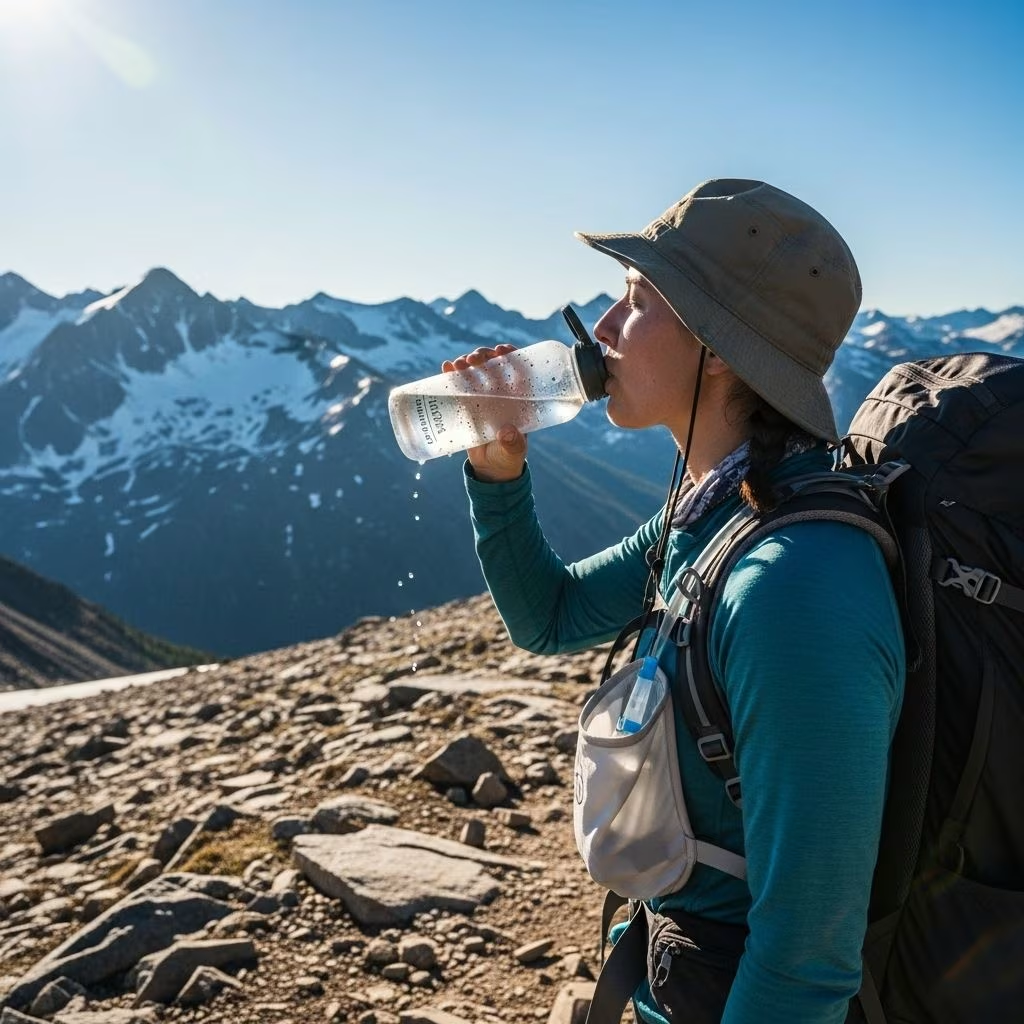
Hydration for Altitude Sickness Prevention: Essential Insights for Safe High-Altitude Travel
With millions of travelers and adventurers ascending to high elevations each year, altitude sickness prevention is a top priority for both health professionals and outdoor enthusiasts. One of the most frequently cited practices for staying healthy in the mountains is maintaining adequate hydration. But how does hydration specifically influence your risk of acute mountain sickness (AMS) and related conditions? What amount of water is ideal — and can overhydration be dangerous? This article synthesizes current research and expert guidance on hydration and altitude sickness, offering practical advice, clear science, and evidence-informed precautions for high-altitude travel.
Understanding Altitude Sickness
Altitude sickness, sometimes called acute mountain sickness (AMS), is a spectrum of symptoms that occur when a non-acclimatized person ascends rapidly to elevations above 2,000 meters (6,500 feet). At its mildest, AMS manifests as headache, nausea, dizziness, fatigue, and sleep disturbance. Severe forms — such as high altitude cerebral edema (HACE) and high altitude pulmonary edema (HAPE) — can be life-threatening and require immediate medical attention.
- AMS usually presents within 6-24 hours after arrival at high altitude.
- HACE: Severe headache, confusion, ataxia, and potential coma.
- HAPE: Shortness of breath, cough (with frothy pink sputum), and low oxygen.
The primary cause is the lower partial pressure of oxygen at increased altitude, which disrupts the body’s acclimatization process. Other contributors include rapid ascent, strenuous activity, and individual susceptibility.
Fluid Balance at High Altitude: The Science
High altitude environments present unique physiological challenges for sustaining fluid balance:
- Increased urination: Cold-induced diuresis and altitude-driven changes in renal handling of bicarbonate lead to more frequent urination.
- Dry air: The lower humidity at higher elevations increases insensible water loss through respiration and skin evaporation.
- Greater exertion: Trekking, climbing, and physical activity at altitude increase fluid requirements.
- Poor appetite and reduced thirst: Both decrease voluntary consumption of fluids and food, leading to possible deficits.
| Factor | Effect on Hydration at Altitude |
|---|---|
| Cold-induced diuresis | Increased urination; fluid loss |
| Dry environmental air | Increased respiratory water loss |
| Physical exertion | Sweat and higher fluid needs |
| Poor thirst/appetite | Risk of dehydration due to underconsumption |
These factors combine to make dehydration a common risk at altitude, especially for trekkers, mountaineers, and military personnel.
Hydration and Altitude Sickness: What the Evidence Says
Multiple studies and field observations have explored the relationship between hydration and risk of AMS:
- Research involving military mountaineers showed that those with greater fluid intake tended to have somewhat reduced urine output and potentially a lower risk of AMS, but the correlation was not statistically significant in small samples.
- Meta-analyses and expert reviews agree that vigorous hydration can decrease the incidence and severity of AMS and other altitude illnesses, but ‘forceful overhydration’ does not add further benefit and increases the risk of hyponatremia (dangerously low blood sodium).
- Mainstream recommendations emphasize maintaining ‘adequate hydration’ rather than overdrinking or using hydration as the sole prevention strategy.
Current evidence points to this consensus: Being well hydrated supports acclimatization, reduces the overlap of dehydration with AMS symptoms, and may indirectly help risk reduction, but hydration alone is not a substitute for slow ascent and proper acclimatization.
Key Findings
- Adequate hydration is important for general well-being and may be somewhat protective against altitude sickness.
- No clear evidence that overhydration alone can prevent or treat AMS.
- Symptoms of dehydration often mimic AMS, making correct diagnosis and management of fluid status critical.
The Risks of Overhydration: Why Balance Matters
Although underscoring hydration’s benefits, experts caution against forced overhydration in an attempt to prevent altitude sickness. Excessive consumption of plain water can cause dilutional hyponatremia — a dangerous drop in blood sodium that can mimic or worsen symptoms of AMS and, in extreme cases, be life-threatening.
- Forced overhydration provides no extra protection against altitude illnesses.
- Hyponatremia risk rises with excessive water intake, especially without electrolyte replacement and when sweating is modest.
- Listen to thirst cues and monitor urine color for clear (but not colorless) output.
Dehydration vs. AMS: Symptoms and Overlaps
Symptoms of both dehydration and acute mountain sickness may overlap:
- Headache
- Nausea and vomiting
- Fatigue or malaise
- Dizziness or lightheadedness
- Difficulty sleeping
This overlap can make it difficult to distinguish between the two in the early stages. Proper hydration reduces the risk of confusing these diagnoses and helps ensure that AMS is not missed or misattributed.
Practical Strategies for Hydration and AMS Prevention
To minimize the risk of altitude sickness and associated dehydration, experts recommend the following:
- Ascend gradually: Slow ascent is the most critical preventative measure. After reaching 2,500 meters (8,200 feet), increase sleeping altitude by no more than 300-500 meters per day if possible.
- Monitor hydration: Drink enough that your urine is light yellow. Don’t wait for overt thirst but don’t force fluids beyond what feels natural.
- Beware of alcohol and caffeine excess: Both may contribute to dehydration or inhibit acclimatization; limit use during initial days at altitude.
- Eat regular meals and snacks: Carbohydrate-rich foods help with acclimatization and energy balance.
- Use medications cautiously: Talk with your physician about acetazolamide or dexamethasone if you have a history of AMS or rapid travel is unavoidable.
- Rest and pace activity: Listen to your body, especially on arrival and during the first 24-48 hours at high altitude.
Role of Electrolytes, Sports Drinks, and Nutrition
Hydrating at altitude is not just about water. Electrolytes — especially sodium and potassium — play a crucial role in maintaining fluid balance and preventing complications associated with overhydration or excessive fluid loss:
- Sports drinks, oral rehydration solutions, or lightly salted broths can help sustain both hydration and electrolyte status, particularly when sweat losses are high or when symptoms like vomiting or diarrhea occur.
- Plain water is suitable for most adults, but variety (including tea, soups, and low-caffeine beverages) helps maintain interest and compliance.
- Carbohydrate-rich meals improve energy supply and fuel acclimatization .
Special Considerations: Children, Older Adults, and At-risk Groups
Certain populations require extra vigilance:
- Children: May not recognize or communicate thirst; careful monitoring and prompting are essential.
- Older adults: Reduced thirst sensation and comorbidities can make both dehydration and overhydration more likely.
- Those on diuretics or with medical issues: Should consult their healthcare provider regarding fluid goals, especially if they have cardiac, renal, or endocrine disorders.
Frequently Asked Questions (FAQs)
Q: How much should I drink per day at high altitude?
There is no single recommendation for everyone, but many sources suggest aiming for at least 3–4 liters (about 100–135 ounces) per day for adults, adjusting higher for strenuous activity. The best gauge is making sure urine remains light yellow, and being mindful not to force fluids.
Q: Are sports drinks necessary, or is water enough?
For most travelers, water is sufficient. However, if you are sweating heavily or experience vomiting/diarrhea, sports drinks or oral rehydration salts can be helpful to replenish electrolytes.
Q: Can I prevent altitude sickness by hydrating more?
Hydration is a component of prevention, but ascending slowly and acclimatizing appropriately are more important measures. Overhydration will not substitute for proper ascent.
Q: What are signs of overhydration I should watch for?
Symptoms include confusion, nausea, vomiting, headache, bloating, and, rarely, seizures. Monitoring your urine color, listening to thirst, and including electrolytes when needed can help prevent this.
Q: Should I avoid caffeine and alcohol entirely?
Alcohol should be minimized on ascent days, as it impairs acclimatization. Moderate caffeine in coffee or tea is acceptable for most as part of hydration, especially if you consume them regularly at sea level.
Summary & Key Takeaways
- Hydration is crucial but not a stand-alone solution for altitude sickness prevention. Pair it with gradual ascent and acclimatization.
- Avoid both dehydration and forced overhydration. Listen to your body’s needs; monitor urine color and output.
- Incorporate electrolyte-rich fluids when exercising hard, sweating, or ill.
- Special populations need customized strategies and precaution.
By following evidence-based practices, you can maximize your enjoyment and safety at high altitude while minimizing the risk of serious illness due to AMS or dehydration. For those with underlying health challenges or a history of altitude illnesses, consult with a travel health expert before your trip.
References
- https://pubmed.ncbi.nlm.nih.gov/17219784/
- https://www.aafp.org/pubs/afp/issues/2020/0415/p505.html
- https://news.cuanschutz.edu/news-stories/altitude-sickness-is-typically-mild-but-can-sometimes-turn-very-serious-a-high-altitude-medicine-physician-explains-how-to-safely-prepare
- https://pmc.ncbi.nlm.nih.gov/articles/PMC3678789/
- https://www.cdc.gov/yellow-book/hcp/environmental-hazards-risks/high-altitude-travel-and-altitude-illness.html
- https://jkes.eu/article/538651/en
- https://journals.sagepub.com/doi/10.1580/1080-6032(2006)17%5B215:AMSIOF%5D2.0.CO;2?icid=int.sj-full-text.similar-articles.9
- https://my.clevelandclinic.org/health/diseases/15111-altitude-sickness


