


Essential Fatty Acids and Skin Water Barrier Maintenance
The skin’s water barrier is its primary defense against environmental threats and moisture loss. Essential fatty acids (EFAs) are integral to keeping this barrier resilient and functional. They are crucial in maintaining proper skin hydration, protecting against environmental stressors, and supporting overall skin health. This article provides an in-depth exploration of how EFAs contribute to skin barrier integrity, the underlying mechanisms, evidence for their benefits, practical guidance on optimizing EFA intake, and answers to common questions.
Introduction to Essential Fatty Acids (EFAs)
Essential fatty acids are polyunsaturated fatty acids that humans cannot synthesize and must therefore obtain from the diet. The primary EFAs relevant to skin health are:
- Linoleic acid (LA) (an omega-6 fatty acid)
- Alpha-linolenic acid (ALA) (an omega-3 fatty acid)
Both LA and ALA serve as building blocks for more complex fatty acids and play indispensable roles in cellular structure and signaling. The skin is uniquely sensitive to EFA status because it relies on their presence for the construction of its barrier lipids, which are key regulators of moisture retention and defense.
Skin Water Barrier Function: Structure and Significance
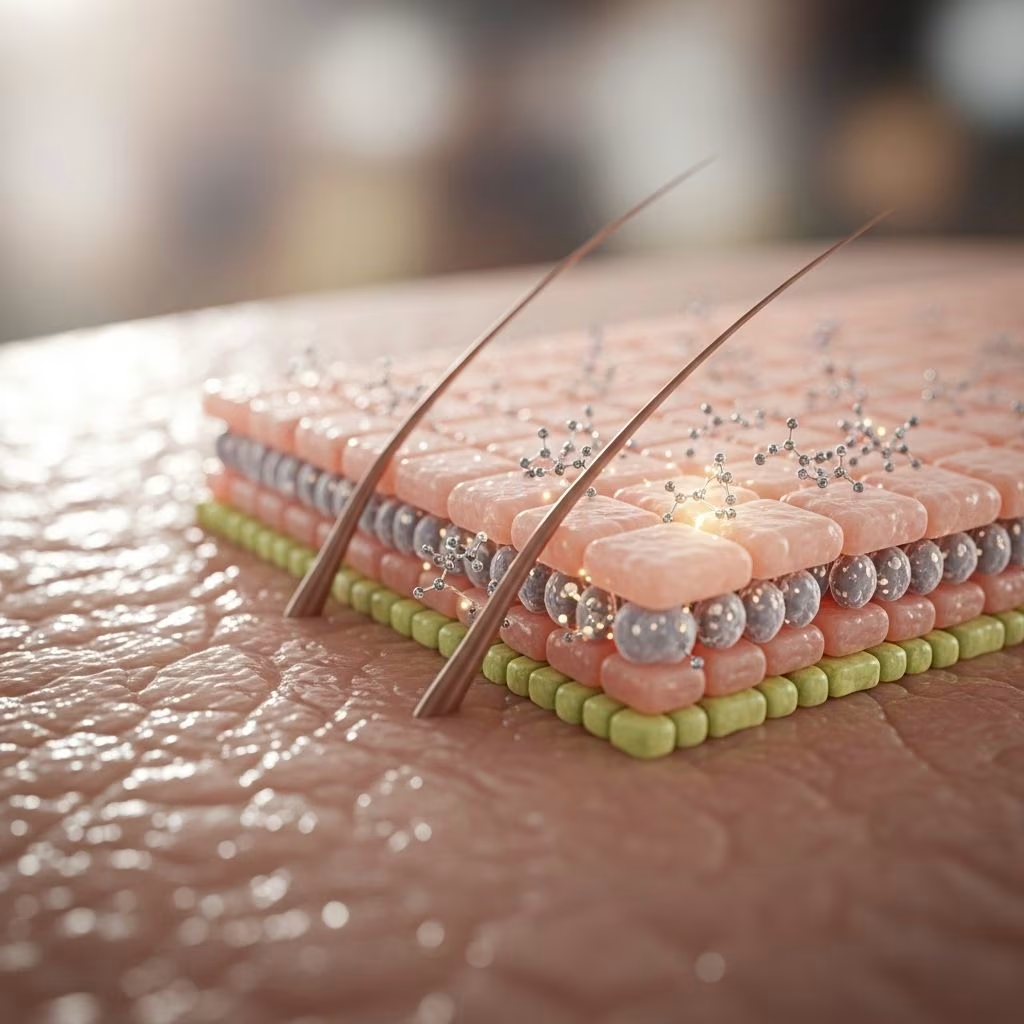
The skin water barrier is formed primarily by the stratum corneum (SC), the outermost layer of the epidermis. The SC consists of corneocytes embedded in a multilamellar lipid matrix, which acts as a semipermeable shield:
- Prevents excessive water loss (trans-epidermal water loss, TEWL)
- Blocks entry of pathogens, allergens, and irritants
- Maintains skin flexibility and integrity
Disruption of this barrier leads to dryness, sensitivity, increased inflammation, and greater susceptibility to disease.
EFAs and Their Role in the Skin Barrier
EFAs are direct constituents of the SC’s lipid matrix, where they participate in forming lamellar structures critical to barrier function. Linoleic acid, in particular, integrates into specialized lipids called O-acylglucosylceramides, which create organized sheets that encircle the corneocytes and establish a robust permeability barrier. Deficiency in EFAs results in reduced content of LA and ALA in these lipids, compromising skin structure and water retention.
How do EFAs work?
- Comprise part of the skin’s free fatty acids (about 2% linoleic acid in the SC)
- Form lamellar layers with ceramides and cholesterol, facilitating barrier repair
- Serve as precursors for bioactive signaling molecules (e.g., prostaglandins, resolvins)
Linoleic acid has unique structural properties allowing it to be incorporated into the lipid matrix, while ALA and other omega-3 fatty acids are less prominent but still have important roles in modulating inflammation and gene expression.
Mechanisms: How EFAs Maintain and Repair the Skin Water Barrier
The influence of EFAs on the skin barrier can be categorized into several mechanisms:
- Lipid Replacement: EFAs replenish depleted skin lipids, promoting normal matrix structure and reducing TEWL.
- Lamellar Organization: LA-linked O-acylglucosylceramides form organized sheets, essential for optimal barrier function.
- Regulation of Differentiation: EFAs affect epidermal cell maturation, maintaining the integrity of the SC.
- Prostaglandin Pathway Independence: Correction of barrier defects by LA occurs even when prostaglandin synthesis is blocked, indicating a direct effect.
- Anti-inflammatory Modulation: Omega-3 derivatives act as immune modulators, reducing inflammation and promoting healing.
Table: Key Roles of EFAs in Skin Barrier
| Fatty Acid | Main Functions in Skin | Barrier Effects |
|---|---|---|
| Linoleic acid (LA) (Omega-6) | Lamellar lipid matrix formation; O-acylglucosylceramides structure; skin cell maturation | Direct barrier repair; reduces TEWL; improves hydration |
| Alpha-linolenic acid (ALA) (Omega-3) | Anti-inflammatory effects; influences gene transcription (filaggrin, keratinocyte differentiation) | Supports barrier; reduces sensitivity and inflammation |
Scientific Evidence and Clinical Studies
Numerous studies demonstrate the importance of EFAs, particularly linoleic acid, in skin barrier restoration. Animal models of EFA deficiency show rapid recovery of barrier function with dietary or topical LA supplementation—even before systemic EFA levels normalize. This direct role distinguishes LA as a critical factor in water barrier maintenance.
Human trials further reinforce these findings:
- Flaxseed oil (high in ALA) improved TEWL, hydration, and skin texture in healthy women after 12 weeks.
- Hempseed oil (rich in both omega-6 and omega-3) improved dryness and reduced medication use among subjects with atopic dermatitis.
- Topical linoleic acid led to restoration of impaired barrier function within days.
Smaller trials of fish oil (high in EPA, DHA) for inflammatory skin disorders also show beneficial trends, though more evidence is needed for confirmation.
Dietary Intake Versus Topical Application
Both dietary and topical EFAs contribute to barrier repair, with some distinctions:
- Topical application of LA corrects barrier defects locally even before systemic levels normalize, offering targeted repair for affected areas.
- Dietary EFA intake ensures an ongoing supply for skin lipid synthesis and general skin health.
- Combined approaches can be especially powerful for individuals with genetically reduced synthesis or absorption.
Sources of EFAs for Skin Health
To maintain optimal barrier function, EFAs must be sourced from both diet and topical products. Key sources include:
- Dietary Sources
- Vegetable oils (sunflower, safflower, flaxseed, hempseed)
- Nuts and seeds (walnuts, chia, pumpkin seed)
- Fatty fish (salmon, mackerel for EPA/DHA)
- Topical Products
- Plant oils high in LA (e.g., grapeseed, evening primrose, borage oil)
- Formulations mimicking physiological lipid ratios (e.g., 3:1:1:1 LA:ceramide:cholesterol:FFA)
- Low oleic acid content preferred for barrier repair efficacy
Quality matters: pure EFA formulations or carefully chosen oils with known fatty acid profiles achieve stronger results.
EFAs in Skin Conditions: Atopic Dermatitis, Psoriasis, and Dry Skin
Impaired skin barrier function is a hallmark of several dermatological conditions:
- Atopic Dermatitis (AD)
- Characterized by increased TEWL and inflammation; improved with LA and omega-3 supplementation
- Hempseed oil has reduced dryness and medication reliance in subjects with AD
- Psoriasis
- Often associated with altered skin lipid ratios and barrier disruption
- Supplementation may normalize serum fatty acid levels
- General Dryness and Sensitivity
- EFAs help replenish lipids, alleviate scaling, and reduce roughness
In these conditions, restoring the barrier—either through topical or dietary EFAs—can alleviate symptoms and reduce flare-ups.
Practical Guidance: Optimizing EFA Use for the Skin Barrier
To maximize the skin barrier benefits of EFAs, consider the following:
- Molar Ratio Formulation: For topical repair, a 3:1:1:1 molar ratio (LA:ceramide:cholesterol:FFA) is optimal.
- Concentration: Use pure EFAs for precise control; avoid oils high in oleic acid (less effective for barrier repair).
- Penetration: Formulations with hydrophilic co-solvents (e.g., propylene glycol) improve EFA delivery and reduce irritancy.
- Dietary Balance: Aim for a balanced intake of omega-6 and omega-3, ideally through varied whole-food sources.
- Consistency: Regular supplementation (topical/dietary) yields cumulative improvements over weeks.
Implications for Skin Care and Dermatology
Understanding the requirements for effective barrier maintenance guides skincare formulation and clinical intervention. Dermatologists and formulators can leverage EFAs to:
- Design products for rapid barrier repair in sensitive or diseased skin
- Advise on dietary adjustments for patients with chronic dry, inflamed, or barrier-impaired skin
- Personalize regimens based on genetic or lifestyle factors affecting fatty acid status
Emerging research suggests that both prevention and treatment of barrier dysfunction can benefit from integrating EFAs into both nutrition and daily skincare.
Frequently Asked Questions (FAQs)
Q: Why is linoleic acid preferred for skin barrier repair?
Linoleic acid (LA) uniquely integrates into lamellar lipids crucial for skin water retention, achieving rapid restoration even when applied topically.
Q: Can omega-3 fatty acids improve skin hydration?
Omega-3s like ALA, EPA, and DHA may enhance skin hydration and barrier function, especially by reducing inflammation and boosting ceramide production, but their effects are indirect compared to LA.
Q: What diet changes support skin barrier integrity?
Increase intake of oils rich in LA (like safflower, sunflower, and hempseed oil) and foods high in ALA (such as flaxseed and walnuts) for a balanced fatty acid profile.
Q: Is it better to apply EFAs topically or consume them?
Topical application provides rapid, localized repair; dietary intake sustains long-term skin resilience. Combined use is ideal for comprehensive support.
Q: Are EFAs safe for sensitive skin types?
When incorporated in physiological ratios and selected from low-oleic acid sources, EFAs are generally safe and well tolerated in sensitive and barrier-compromised skin.
References
- https://regimenlab.com/blogs/skincare-encyclopedia/essential-fatty-acids
- https://pubmed.ncbi.nlm.nih.gov/7373078/
- https://pmc.ncbi.nlm.nih.gov/articles/PMC7875671/
- https://jamanetwork.com/journals/jamadermatology/fullarticle/548723
- https://euphorielbeauty.com/blogs/insights/essential-fatty-acids-rebuilding-damaged-skin-barrier-naturally
- https://pubs.acs.org/doi/10.1021/acsomega.4c11687
- https://academic.oup.com/bjd/article-abstract/97/1/29/6669651


