


Introduction
Hair loss is a common concern, especially among men, with two out of three experiencing some degree of male pattern baldness by age 35. For women, hair thinning and loss are also significant issues, though the patterns and causes can differ. Two of the most prominent FDA-approved treatments for hair loss are minoxidil and finasteride. Both have been clinically proven to slow down hair loss and, in some cases, promote regrowth. However, they work in fundamentally different ways, have distinct side effect profiles, and are suitable for different patients. This article offers an in-depth, evidence-based comparison of minoxidil and finasteride, covering their mechanisms, effectiveness, safety, cost, and practical considerations for anyone considering these treatments.
What is Minoxidil?
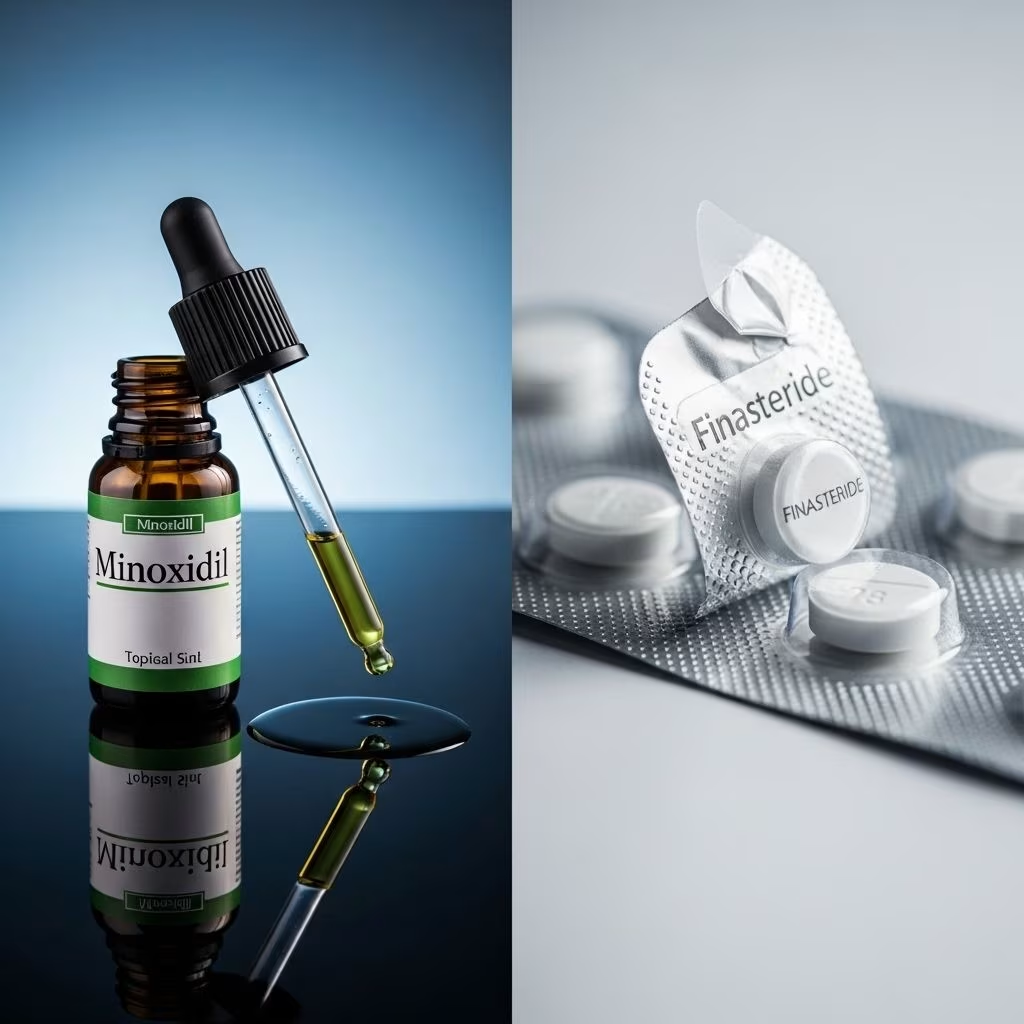
Minoxidil, commonly sold under the brand name Rogaine, is a topical medication originally developed to treat high blood pressure. It was later discovered that minoxidil also stimulated hair growth, leading to its approval as a treatment for androgenetic alopecia (male and female pattern hair loss).
- Form: Available in various topical formulations—solutions, foams, serums, and even shampoos—usually in 2% and 5% strengths. The 5% formulation is generally more effective for men, while 2% is often recommended for women.
- Approval: Approved for both men and women.
- Use: Applied directly to the scalp, usually twice a day, for as long as benefits are desired.
Minoxidil does not address the root hormonal cause of hair loss but instead works locally to improve blood flow and nutrient delivery to hair follicles, which can result in thicker, fuller hair and, in some cases, new growth.
What is Finasteride?
Finasteride, marketed as Propecia for hair loss and Proscar for prostate issues, is an oral prescription medication. It was initially developed to treat benign prostatic hyperplasia (enlarged prostate), but it was also found effective for male pattern baldness.
- Form: Oral tablet, typically taken once daily at a dose of 1 mg for hair loss.
- Approval: Approved only for men. Not officially recommended for women, especially those who are pregnant or may become pregnant, due to risk of birth defects.
- Use: Must be taken daily for ongoing benefit; stopping treatment leads to a return of hair loss.
Finasteride’s primary action is to systemically inhibit the conversion of testosterone to dihydrotestosterone (DHT), the hormone primarily responsible for androgenetic alopecia in genetically susceptible individuals.
How Do They Work?
Minoxidil: Mechanism of Action
Minoxidil is a vasodilator—it dilates blood vessels, increasing blood flow to the scalp and thereby enhancing oxygen and nutrient delivery to hair follicles. Its exact mechanism in hair growth remains incompletely understood, but it is believed to prolong the anagen (growth) phase of the hair cycle and may stimulate the production of vascular endothelial growth factor (VEGF), encouraging new blood vessel formation around follicles.
Minoxidil is applied topically and acts locally to promote hair to grow faster, thicker, and fuller, but it does not stop the underlying process of hair loss. When you stop using minoxidil, the benefits generally reverse within a few months.
Finasteride: Mechanism of Action
Finasteride is a 5-alpha reductase inhibitor. By blocking this enzyme, finasteride reduces the amount of DHT in the body and the scalp, which is directly responsible for shrinking hair follicles in male pattern baldness.
By targeting the hormonal root of male pattern hair loss, finasteride can both slow or halt hair loss progression and promote some degree of regrowth, especially at the crown and mid-scalp. Unlike minoxidil, discontinuation of finasteride leads to a return of the underlying hormonal process, and hair loss resumes.
Key Difference: Minoxidil acts topically to “revive” hair growth, while finasteride acts systemically to prevent further loss by addressing the hormonal root cause.
Effectiveness
Clinical Evidence
Both minoxidil and finasteride are FDA-approved and have strong clinical evidence supporting their use:
- Minoxidil: Clinical trials show that after 16 to 26 weeks of use, both 2% and 5% minoxidil result in about 70% greater improvement in mean hair density compared to placebo, with the 5% concentration being more effective for men. Not everyone responds, and results vary widely.
- Finasteride: Studies comparing finasteride to minoxidil have found finasteride to be more effective. For example, one year-long study found that 80% of men on finasteride experienced increased hair density, compared to 52% on minoxidil. Long-term (5-year) trials show that finasteride can stabilize hair loss and, in some cases, lead to visible regrowth.
Comparative Studies
| Treatment | Mechanism | Form | Approved For | Efficacy (Men) | Efficacy (Women) |
|---|---|---|---|---|---|
| Minoxidil | Topical vasodilator, increases blood flow | Topical (solution, foam, shampoo) | Men and Women | 70% improvement vs placebo, 5% > 2% | Effective, less strong than men |
| Finasteride | Oral 5-alpha reductase inhibitor, reduces DHT | Oral tablet | Men only | 80% improvement vs minoxidil at 1 year | Not approved, risk for women |
Combination therapy using both minoxidil and finasteride is often considered the “gold standard” for treating male pattern hair loss, as they attack the problem from two different angles and can yield better results than either alone.
Safety and Side Effects
Minoxidil
- Local Side Effects: Scalp irritation, dryness, redness, itching, and flaking are common. These can often be managed by adjusting application frequency or switching formulations.
- Systemic Side Effects: Rare, but possible: dizziness, low blood pressure, rapid heart rate, and unwanted hair growth in non-target areas (e.g., face or hands).
- Safety in Women: Minoxidil is FDA-approved for women. The 2% solution is the standard for female use, as higher strengths may increase the risk of unwanted hair growth.
Finasteride
- Sexual Side Effects: The most discussed concern is sexual dysfunction, including decreased libido, erectile dysfunction, and decreased semen volume. These occur in a small percentage of men and may persist even after discontinuation in rare cases.
- Other Side Effects: Rare reports of mood changes, depression, and breast tenderness or enlargement.
- Safety in Women: Finasteride is not approved for women, especially those who are or may become pregnant, due to the risk of birth defects.
Both medications require long-term, consistent use to maintain benefits. Stopping either will result in the return of hair loss.
Who Should Use Which?
The choice between minoxidil and finasteride depends on several factors:
- Men: Both minoxidil (topical) and finasteride (oral) are viable options. Finasteride is generally more effective for male pattern baldness. Men who experience side effects with finasteride can use minoxidil as an alternative. Combination therapy (both together) is often considered optimal for men.
- Women: Minoxidil is the only FDA-approved option. Finasteride is not recommended for women, especially those of childbearing potential, due to risks of birth defects.
- Age and Severity: Early intervention with finasteride may be more effective for men with recent-onset hair loss. Minoxidil can help in cases of mild to moderate loss and is suitable for both sexes.
- Personal Preferences: Some prefer topical treatments (minoxidil), while others prefer oral (finasteride). Cost, convenience, and side effects also play a role.
Combining Minoxidil and Finasteride
Research suggests that using both minoxidil and finasteride together provides superior results compared to either treatment alone. This dual approach addresses both the hormonal cause and improved blood flow to hair follicles, yielding a higher likelihood of maintaining existing hair and promoting regrowth.
- Clinical Evidence: Studies show that combination therapy can halt progression and improve hair density more than monotherapy.
- Practical Considerations: Both medications must be used consistently and indefinitely. Discontinuation of either will result in the return of hair loss.
- Prescribing Practices: Many clinicians now recommend starting both and adjusting based on tolerance and response.
Cost Comparison
- Minoxidil: Generally available over-the-counter, with a monthly cost around $10–$15 for topical formulations.
- Finasteride: Prescription required, with a typical monthly cost of $50–$75.
Long-term cost is an important consideration, as both treatments must be continued indefinitely to maintain results.
Frequently Asked Questions (FAQs)
- Q: Can women use finasteride for hair loss?
A: Finasteride is not FDA-approved for women and is not recommended for women who are pregnant or may become pregnant due to risk of birth defects. Minoxidil is the primary FDA-approved treatment for female pattern hair loss. - Q: Do I need a prescription for minoxidil?
A: Minoxidil is available over-the-counter without a prescription. Finasteride requires a prescription. - Q: How long does it take to see results from minoxidil or finasteride?
A: It typically takes 3–6 months to see noticeable results. Full effects may take 12 months or longer, and continuous use is necessary to maintain benefits. - Q: What happens if I stop using minoxidil or finasteride?
A: Hair loss will resume, and any regrown hair will likely be lost within a few months. These treatments are not cures but rather ongoing therapies. - Q: Can I use minoxidil and finasteride together?
A: Yes, combination therapy is common and often more effective than using either alone. - Q: Are there natural alternatives to minoxidil and finasteride?
A: Some people use saw palmetto, biotin, or pumpkin seed oil, but these have limited and inconsistent evidence compared to FDA-approved medications.
Conclusion
Minoxidil and finasteride are the two most clinically proven treatments for hair loss, especially for androgenetic alopecia. Minoxidil is a topical vasodilator that promotes hair growth by improving local blood flow and can be used by both men and women. Finasteride is an oral systemic medication that blocks the hormone responsible for male pattern hair loss and is only approved for men. Clinical evidence suggests finasteride is more effective than minoxidil for men with male pattern baldness, but each has its own advantages, safety profile, and suitability.
Combining both medications often yields the best results, though this is mainly relevant for men, not women. Long-term, consistent use is required for both treatments, and stopping them will result in the return of hair loss. Deciding between minoxidil and finasteride—or using both—should be based on individual circumstances, preferences, and medical advice. For women, minoxidil remains the gold standard, while men have more options and may benefit from combination therapy.
Ultimately, managing expectations, understanding the commitment to ongoing treatment, and seeking guidance from a healthcare provider are essential steps in the journey to addressing hair loss with these medications.
References
- https://xyonhealth.com/blogs/library/finasteride-vs-minoxidil
- https://www.buzzrx.com/blog/which-is-better-for-hair-loss-minoxidil-or-finasteride
- https://www.keeps.com/learn/finasteride-vs-minoxidil
- https://www.goodrx.com/conditions/hair-loss/finasteride-vs-minoxidil
- https://www.theindependentpharmacy.co.uk/hair-loss/guides/finasteride-vs-minoxidil-whats-the-right-choice-for-me
- https://pubmed.ncbi.nlm.nih.gov/15316165/
- https://www.numan.com/hair-loss/treatment/finasteride-vs-minoxidil-which-is-best
- https://www.redboxrx.com/blog/finasteride-vs-minoxidil-a-complete-guide
- https://pmc.ncbi.nlm.nih.gov/articles/PMC12207719/


