


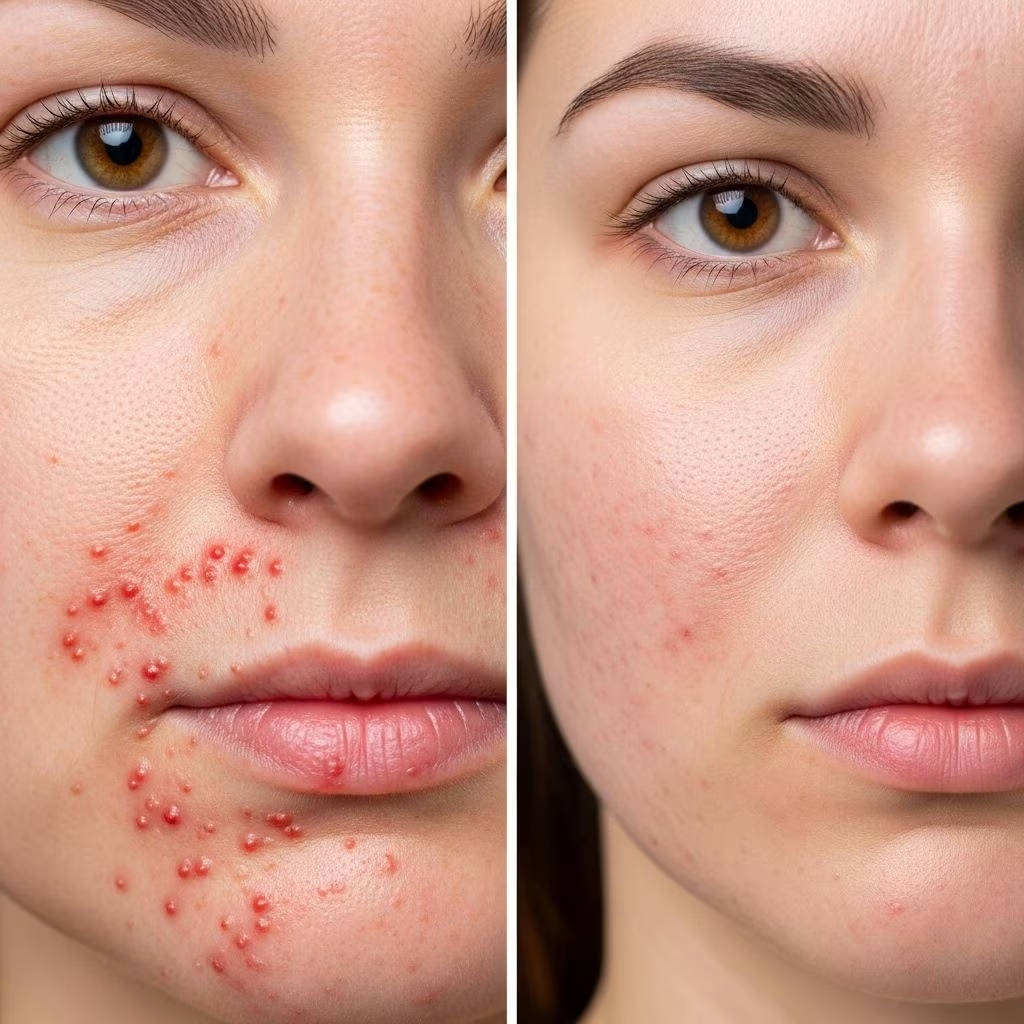
Red, bumpy, and irritated skin on the face can be distressing and confusing, especially when the symptoms overlap between common conditions like perioral dermatitis and acne. While both can present similarly, understanding the distinctions—ranging from typical symptoms and common locations to underlying causes and the right diagnostic strategies—is crucial to avoid misdiagnosis and choose the best treatment plan. This guide offers an evidence-based comparison and practical index for both patients and clinical practitioners.
Overview: What Are Perioral Dermatitis and Acne?
Perioral dermatitis is an inflammatory skin condition that primarily affects the area around the mouth. While it can look very similar to acne—with red bumps and pus-filled pimples—its causes, distribution, and treatment are distinct.
Acne (acne vulgaris) is the most common skin disorder, caused by blocked hair follicles and excess oil (sebum) production, leading to inflamed spots, blackheads, and sometimes cysts. Acne typically affects the face, but can also extend to the chest and back.
- Perioral Dermatitis: Mainly around the mouth, sometimes nose and eyes; bumpy, red, sometimes itchy or burning.
- Acne: Forehead, cheeks, jawline, chest, and back; features blackheads, whiteheads, pustules, cysts—often less itchy, can be painful.
Key Symptoms & Appearance
| Feature | Perioral Dermatitis | Acne |
|---|---|---|
| Main lesion type | Small, red papules; may be pus-filled; often grouped; uniform | Varied: whiteheads, blackheads, papules, pustules, cysts; scattered |
| Texture | Bumpy, rash-like, sometimes scaly or flaky | Lumpy, inflamed, presence of clogged pores |
| Color | Red, sometimes with clear/yellowish center | Red, white, or dark (comedones); sometimes with a central yellow core |
| Sensation | Mild to moderate itch or burning; tender to touch | Painful (especially when inflamed); rarely itchy |
| Onset | May develop suddenly; can flare quickly | Usually gradual; flares over days or weeks |
| Comedones (blackheads/whiteheads) | Absent | Present (hallmark of acne) |
Skin Distribution: Where Do They Occur?
- Perioral Dermatitis: Almost always around the mouth, may include areas adjacent to the nose (perinasal dermatitis), eyes (periocular dermatitis). Rarely elsewhere on the face.
- Acne: Anywhere with sebaceous (oil) glands—face (forehead, cheeks, jawline), chest, back, shoulders, neck. Distribution is much broader than perioral dermatitis.
If rash is isolated to the area circling the mouth—especially with sparing of the vermillion border (the edge of the lips)—perioral dermatitis is most likely.
Causes and Common Triggers
Perioral Dermatitis:
- Topical corticosteroid use (most common trigger)
- Overuse of facial creams, heavy moisturizers, or makeup
- Fluorinated toothpaste
- Hormonal changes (especially in women)
- Use of topical calcineurin inhibitors
- Bacterial or fungal imbalance in skin microbiome
- UV exposure or heat
Acne:
- Increased sebum production (often hormonal)
- Clogging of hair follicles with dead skin cells and oil
- Proliferation of Cutibacterium acnes bacteria
- Genetic predisposition
- Psychological stress, certain medications, oily cosmetics
- Dietetics (e.g., dairy and high glycemic index foods may exacerbate)
Differential Diagnosis: How to Tell Them Apart
Distinguishing between perioral dermatitis and acne is critical because treatments that help one may worsen the other. A few hallmark clinical differences help guide diagnosis:
- Location specificity: Perioral dermatitis appears almost exclusively around the mouth, sometimes nose and eyes. Acne is not location-bound, can appear anywhere with oil glands.
- Lesion type: Acne features a mix of comedones, pustules, nodules, sometimes cysts. Perioral dermatitis shows uniform, red, papules, sometimes pus-filled—but never with comedones.
- Sensation: Perioral dermatitis often itches or burns; acne is more likely to be painful and tender but usually non-pruritic (not itchy).
- Response to steroids: Topical steroids worsen perioral dermatitis but can sometimes initially reduce redness in acne before causing flare-ups if misused.
- Age/gender: Perioral dermatitis more common in women aged 16–45; acne can occur at any age, most frequent in adolescence.
- Timing: Perioral dermatitis can flare quickly (days); acne often builds gradually.
Typical Patient Scenarios
- Patient A: 22-year-old woman with a sudden, persistent rash of red bumps, burning and itching, around the mouth—worse after using a corticosteroid cream. Likely perioral dermatitis.
- Patient B: 17-year-old male with blackheads, pustules, and occasional cysts on forehead, cheeks, and jaw—no burning or itching. Likely acne vulgaris.
Diagnosis: What Does a Dermatologist Look For?
Diagnosis is mostly clinical—based on the appearance, distribution, symptoms, and history. In rare, atypical, or unresponsive cases, further investigation may be needed to rule out other skin disorders:
- A detailed skin exam: Site, lesion type, degree of inflammation, presence/absence of comedones.
- History: Onset, triggers, medication/cream use, recent illnesses, family history, stress.
- Possible skin swab or biopsy: Rare, but useful if unusual features or other possibilities (rosacea, sarcoidosis) are considered.
Other Conditions That Mimic Acne and Dermatitis
Certain other skin conditions can closely resemble acne or perioral dermatitis but differ in cause, presentation, and treatment.
- Rosacea: Central face (nose, cheeks); red bumps and pustules, background flushing; lacks comedones; may be a variant of perioral dermatitis. Responds to similar treatments.
- Eczema (Atopic Dermatitis): Larger, red, flat patches, intensely itchy, more likely on cheeks and extremities, with dry or cracked skin. Differs in texture and burning/flaking.
- Sarcoidosis: Red-brown papules in periorificial areas, often systemic signs.
- Syringoma: Non-inflamed, flesh-colored symmetrical bumps, usually around eyes and cheeks, unlike acne’s inflamed lesions.
Treatment Approaches
Perioral Dermatitis
- Discontinue topical steroids and other offending agents (including certain moisturizers, toothpaste without SLS).
- Topical antibiotics: Metronidazole, erythromycin, or clindamycin.
- Oral antibiotics: Tetracyclines (doxycycline, minocycline) for moderate to severe cases or unresponsive rashes.
- Gentle skincare: Non-irritating, fragrance-free cleansers and moisturizers.
- Topical calcineurin inhibitors in refractory cases.
Acne
- Topical retinoids: First-line for comedonal acne (adapalene, tretinoin).
- Topical benzoyl peroxide: Reduces inflammation, prevents antibiotic resistance.
- Topical/oral antibiotics: For inflammatory lesions or severe cases (clindamycin, doxycycline).
- Oral retinoids (isotretinoin): For severe, nodulocystic acne.
- Hormonal therapy: Combined oral contraceptives or anti-androgens in females.
Avoid topical steroids for acne and perioral dermatitis—they can worsen both conditions long-term.
Frequently Asked Questions (FAQs)
Q: Can perioral dermatitis and acne occur together?
Yes, especially if someone with acne develops perioral dermatitis after using topical corticosteroids or irritating creams around the mouth area.
Q: How long does it take for perioral dermatitis to clear?
With proper treatment, mild cases may resolve in a few weeks; more severe cases can take several months, especially if triggered by steroid withdrawal.
Q: Will acne treatments help perioral dermatitis?
In most cases, no. Retinoids and benzoyl peroxide can irritate perioral dermatitis. See a dermatologist for tailored management.
Q: What is a vermillion border and why does sparing matter?
The vermillion border is the edge of the lips. Perioral dermatitis classically spares this area, helping to distinguish it from herpes simplex and other conditions.
Q: What skincare routine is safe during an active flare?
Use gentle, fragrance-free cleansers; avoid scrubbing or exfoliating the affected area; apply only prescribed topical treatments and gentle moisturizers.
Q: Is perioral dermatitis contagious?
No, neither perioral dermatitis nor acne is contagious.
Key Takeaways
- Perioral dermatitis and acne, while similar in appearance, have distinct distributions, triggers, and lesions. The former is centered around the mouth and never features comedones.
- Topical steroids are the most common trigger for perioral dermatitis and often make it worse.
- Treatment for acne and perioral dermatitis differs—misdiagnosis can delay healing.
- When in doubt, consult a dermatologist for expert guidance and tailored treatment.
References
- https://balmonds.com/blogs/blog/what-is-it-perioral-dermatitis-vs-acne
- https://freshfaceskin.com.au/blogs/news/perioral-dermatitis-acne-or-eczema-how-to-tell-the-difference
- https://www.usdermatologypartners.com/blog/conditions-mimicking-acne/
- https://www.ncbi.nlm.nih.gov/books/NBK525968/
- https://www.youtube.com/watch?v=RgTLK7jkG5A
- https://www.stylist.co.uk/beauty/skincare/perioral-dermatitis-vs-acne-flare-up/751737
- https://www.youtube.com/shorts/kj6UKyU-L7Q


