


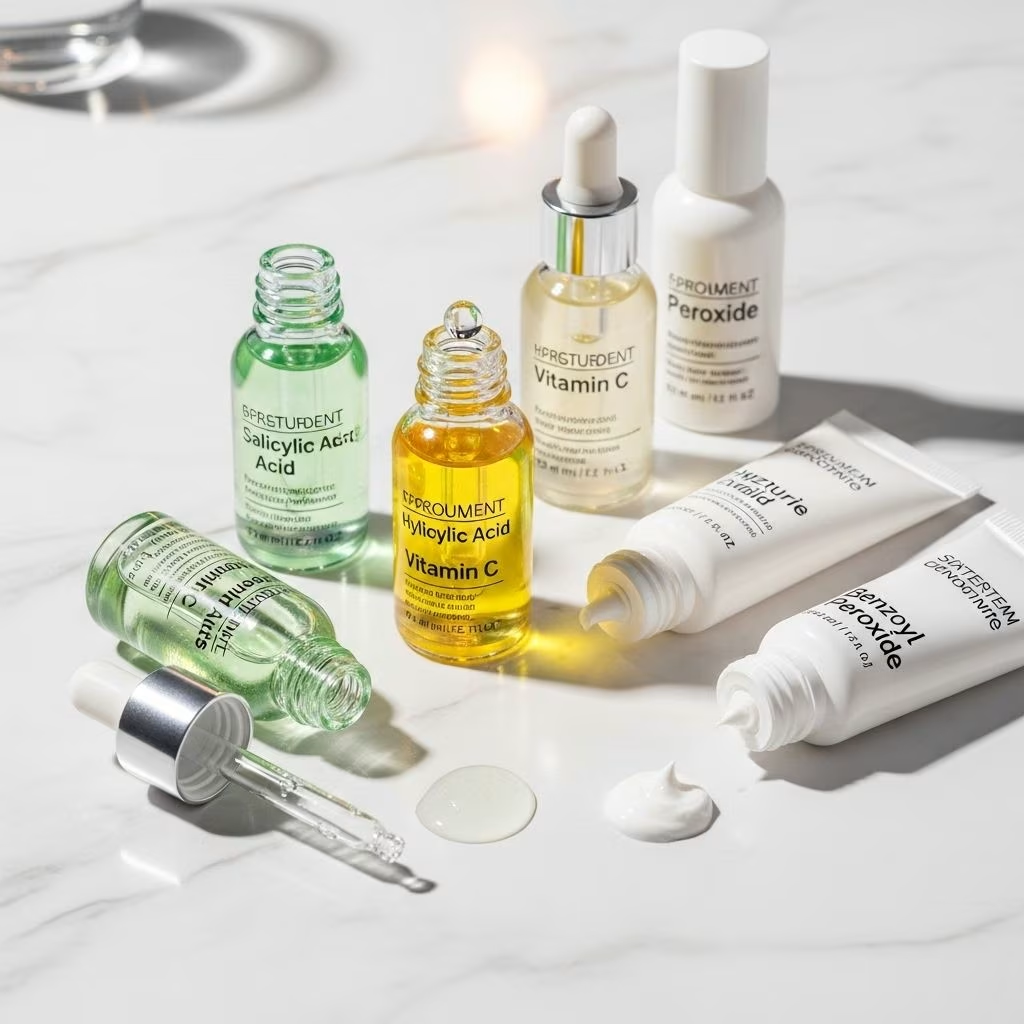
Effective skincare goes beyond choosing the right products. The real transformation happens when you understand how to layer spot treatments and actives strategically, maximizing each product’s benefit while minimizing irritation. This detailed guide walks you through the science, principles, and expert-recommended routines for targeting specific concerns—including acne, pigmentation, and aging—by mastering the art of product layering.
Understanding Actives and Spot Treatments
Actives are ingredients clinically proven to create changes in the skin, such as exfoliating dead skin cells, easing inflammation, fading pigmentation, or boosting collagen. Common examples include:
- Salicylic acid (BHA) – unclogs pores, reduces acne.
- Benzoyl peroxide – targets acne-causing bacteria.
- Retinoids (Retinol, Tretinoin) – accelerates cell turnover, addresses aging and acne.
- Vitamin C – brightens skin, protects from free radicals.
- Niacinamide – soothes inflammation and regulates oil.
- Alpha hydroxy acids (AHAs like glycolic acid and lactic acid) – exfoliate and promote radiance.
Spot treatments are high-potency formulas applied only to affected areas, such as pimples, dark spots, or areas of increased pigmentation.
The Science Behind Layering Skincare
Layering is the strategic application of multiple skincare products in a specific sequence to optimize absorption and efficacy. This practice matters for two crucial reasons:
- Optimized Absorption: Lightweight, water-based products can penetrate better if they are applied before heavier oils or creams.
- Maximized Benefits: Each product delivers better results if it reaches the skin at the right time and isn’t blocked by denser products.
Applying products in the wrong order can render some ingredients less effective or even irritate the skin.
Order of Application: From Cleansing to Treatments
General Rule: Apply products from thinnest to thickest texture or from water-based to oil-based. Here is the widely accepted order:
- 1. Cleanser: Removes impurities and preps the skin.
- 2. Toner or Essence: Balances pH and delivers lightweight hydration.
- 3. Prescription or Acid Treatments (if recommended): Example—topical antibiotics or chemical exfoliants.
- 4. Serum(s): Delivers concentrated active ingredients for overall skin health.
- 5. Spot Treatment: Applies directly to pimples, dark spots, or target zones.
- 6. Eye Cream: Addresses delicate eye area.
- 7. Moisturizer: Locks in hydration and previously applied actives.
- 8. Oil: If used, always after creams to lock in everything.
- 9. Sunscreen (AM only): The last step in the morning to shield from UV rays.
Why this order? Products designed to penetrate (e.g., serums, treatments) need to reach the skin before heavier, barrier-forming products (e.g., creams, oils, sunscreen).
Layering Strategies for Common Actives
| Active | Purpose | Best Layering Practice |
|---|---|---|
| Salicylic Acid | Acne lesions, pores | Use as a serum or spot treatment, before moisturizer |
| Benzoyl Peroxide | Acne | Apply only on active blemishes; wait before next product |
| Retinoids | Acne, aging | Apply to clean, dry skin; moisturizer after to reduce irritation; avoid mixing with other strong actives |
| AHAs/BHAs | Exfoliation | Use after cleansing; avoid combining with retinoids or strong Vitamin C |
| Vitamin C | Brightening, protection | Best in AM after cleansing/toning; follow with moisturizer and sunscreen |
| Niacinamide | Soothing, barrier-care | Can be layered with most actives (except very acidic environments) |
Key Layering Tips for Actives:
- Introduce one new active at a time to monitor for reactions or irritation.
- Allow each layer (especially spot treatments and potent actives) a minute or two to absorb before the next product.
- For highly reactive or dry skin, use a moisturizer as a buffer between harsh treatments and actives.
Combining and Avoiding Actives: What Works, What Doesn’t
Not all actives should be combined in a single routine. Some ingredient pairs can enhance results, while others may irritate or inactivate each other. Below is a table and recommendations:
| Can Combine | Avoid Combining |
|---|---|
| Niacinamide + Hyaluronic Acid | Retinol + AHAs/BHAs |
| Vitamin C (Ascorbic Acid) + Sunscreen (AM) | Vitamin C + Niacinamide* (if highly acidic formulas are used) |
| Salicylic Acid + Niacinamide | Retinol + Benzoyl Peroxide |
| Peptides + Hydrators | Vitamin C + AHAs/BHAs (may cause irritation) |
*Modern dermatology suggests niacinamide and vitamin C are generally safe together in most well-formulated products, but irritation is possible in rare cases.
Spot Treatments Placement and Application Technique
- When to Apply: After water-based treatments/serums, before moisturizer. This ensures maximal contact with skin impurities.
- Where to Apply: Only on affected areas (e.g., an inflamed pimple, post-acne dark mark, dark spot).
- How Much: Use a clean fingertip or cotton swab. Apply a thin, even layer directly onto the concern.
- Avoid Overlap: Do not spread spot treatments over large, unaffected skin. Concentrate specifically.
Tip: Always allow the spot treatment to dry (usually 60–120 seconds) before moving to heavier products like moisturizer or oils.
AM versus PM Layering: Day and Night Considerations
- AM Routine: Focus on protection and hydration. Include antioxidants (Vitamin C, niacinamide), spot treatments (if non-irritating), moisturizer, and sunscreen.
- PM Routine: Emphasize repair and deeper treatment. Use exfoliating acids, retinoids, more potent spot treatments, and barrier-repair moisturizers.
Important: Some actives (e.g., retinoids, benzoyl peroxide, strong acids) increase photosensitivity. Reserve these for nighttime and always use sunscreen in the morning.
Sample Layering Routines for Different Skin Concerns
Acne-Prone Skin
- Cleanser
- Toner (optional, hydrating)
- Serum (Niacinamide or gentle BHA)
- Spot Treatment (Benzoyl peroxide or salicylic acid directly on blemishes)
- Moisturizer (non-comedogenic)
- Sunscreen (AM only)
Hyperpigmentation & Dark Spots
- Cleanser
- Serum (Vitamin C – AM, AHA or Retinoid – PM)
- Spot Treatment (Hydroquinone, azelaic acid, or retinoid on dark spots)
- Moisturizer
- Sunscreen (AM essential)
Aging & Fine Lines
- Cleanser
- Toner/Essence (hydrating)
- Serum (Peptides, niacinamide)
- Spot Treatment (Retinoid on wrinkles, Vitamin C for brightness – alternate AM/PM)
- Moisturizer (with ceramides or peptides)
- Facial Oil (optional, PM)
- Sunscreen (AM)
Pro Tips for Sensitive Skin
Layering actives and spot treatments can be challenging for sensitive skin types. To minimize reactions:
- Patch Test: Always test new actives or spot treatments on a small area before full-face application.
- Moisturizer Buffering: Apply a thin layer of gentle moisturizer before spot treatments or strong actives to decrease irritation.
- Start Slowly: Introduce actives one at a time, 2–3 times per week, building up as tolerated.
- Listen to Your Skin: Signs like stinging, redness, and flaking mean it’s time to reduce frequency or switch products.
- Simplify: Fewer products with well-paired actives are better than many competing layers.
Frequently Asked Questions (FAQs)
Q: Can I layer two spot treatments at the same time?
A: Doubling up on spot treatments, especially those with strong actives (e.g., benzoyl peroxide + salicylic acid), can increase risk of irritation. If targeting multiple concerns, alternate treatments morning vs. evening, or use on separate spots.
Q: Should spot treatments be applied before or after serums?
A: Spot treatments are best applied after general serums and before moisturizer. Serums target overall skin health, while spot treatments focus on precise concerns.
Q: How long should I wait between layers?
A: A general guideline is 30–120 seconds per layer, allowing actives to absorb and reduce risk of pilling when you apply subsequent products.
Q: Is it necessary to use spot treatments both morning and night?
A: Not always. Some actives are best suited for night (retinoids, strong acids). Others with less irritation potential (such as niacinamide) can be used both AM and PM.
Q: Can I apply makeup after spot treatments?
A: Yes, after completing your full skincare routine and allowing spot treatments plus moisturizer to dry thoroughly. Use gentle, non-comedogenic makeup to avoid occluding the skin further.
Mastering layering spot treatments with actives is a journey in understanding your individual skin needs, pairing ingredients wisely, and respecting the role of order, timing, and technique. With this guide, you’re equipped for smarter, safer, and more effective skin transformation—every single day.
References
- https://www.rmsbeauty.com/blogs/news/a-basic-guide-to-layering-skincare
- https://www.biossance.com/blog/skincare-layering-guide/
- https://theordinary.com/en-us/blog/skincare-layering-guide.html
- https://nmaesthetics.com/blogs/news/the-ultimate-guide-to-layering-skincare-products
- https://dermamade.com/derma-blog/what-is-the-correct-order-of-products-for-skin-care/
- https://dridriss.com/blogs/news/am-vs-pm-a-step-by-step-guide-to-skincare-layering-1
- https://www.theonlyfacial.com/this-fall-dont-forget-your-layersfor-your-skincare-routine/
- https://www.youtube.com/watch?v=v-lltVXwfkI


