


(Table of Content)
- Introduction
- Kaolin Clay Spot Treatment
- Bentonite Clay Spot Treatment
- Comparative Analysis of Kaolin and Bentonite Clays
- Frequently Asked Questions (FAQs)
Introduction
For centuries, clays have been used in skincare due to their natural properties, which help in detoxifying, exfoliating, and balancing the skin. Two popular types of clay used in spot treatments are Kaolin and Bentonite. Each has unique benefits and uses, making them suitable for different skin types and conditions. This article delves into the specifics of Kaolin and Bentonite clays, exploring their benefits, applications, and comparisons to help you choose the best option for your skincare needs.
Kaolin Clay Spot Treatment
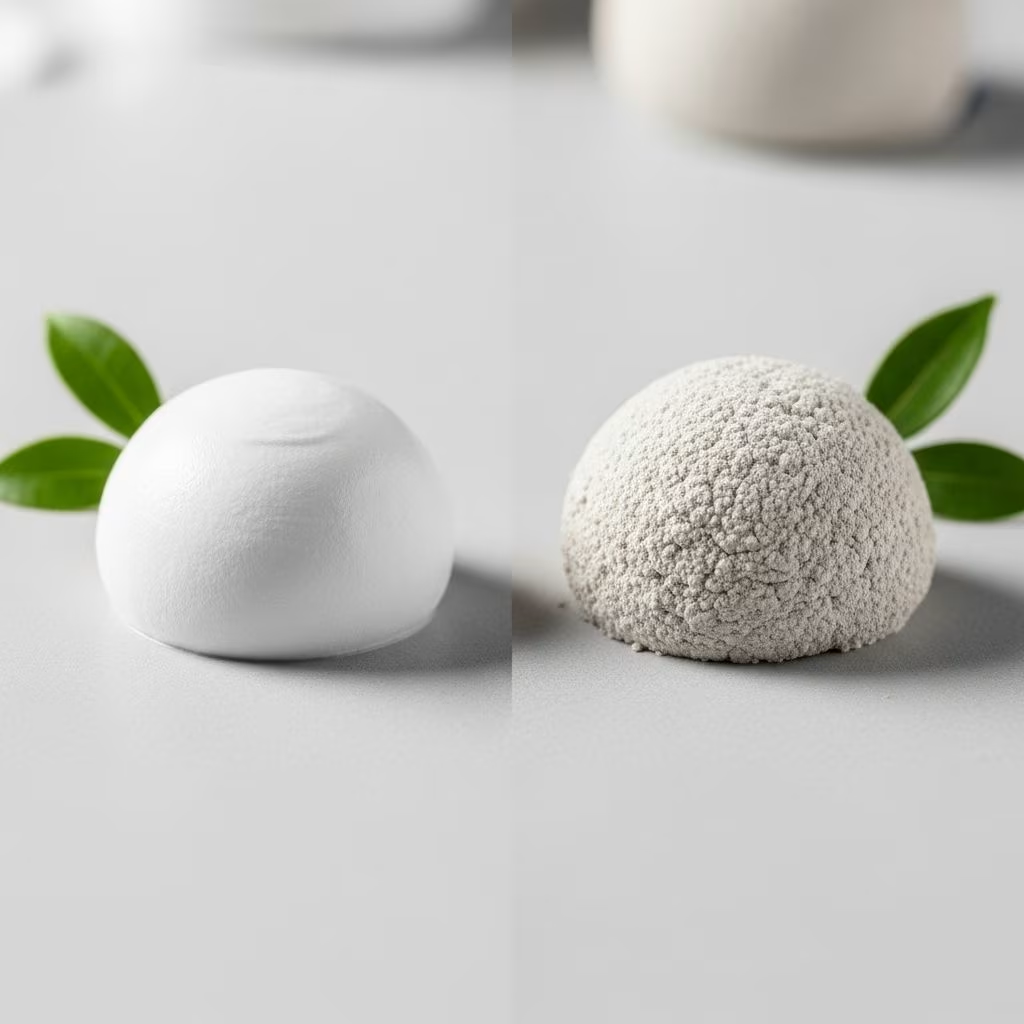
Known for its mild and gentle nature, Kaolin clay is often referred to as “white clay.” It is particularly beneficial for sensitive skin due to its neutral pH, which closely matches the skin’s natural pH. Here are some key benefits of using Kaolin clay for spot treatments:
- Deep Cleansing: Kaolin clay effectively absorbs impurities, such as dirt and grime, without drying out the skin. This makes it an excellent choice for those with dry or combination skin types.
- Gentle Exfoliation: The soft, slightly abrasive texture of Kaolin clay helps in gently removing dead skin cells, promoting a smoother complexion without causing irritation.
- Oil Absorption: It helps balance the skin by absorbing excess oil, reducing shine, and preventing acne formation without stripping the skin of its natural oils.
- Soothing Properties: Kaolin clay is beneficial for soothing irritated skin, providing temporary relief from redness and itching.
Bentonite Clay Spot Treatment
Bentonite clay is another popular choice for skincare, known for its incredible absorbency and ability to draw out impurities from deep within the pores. It is often used for detoxifying and purifying the skin. Here are some key benefits of Bentonite clay:
- Deep Detoxification: Bentonite clay has a strong negative charge, which attracts positively charged toxins and impurities, effectively drawing them out of the skin.
- High Oil Absorption: It is highly effective in absorbing excess oil, making it ideal for oily skin types and acne-prone skin.
- Exfoliating Properties: While Bentonite clay can be slightly more abrasive than Kaolin, it still offers a gentle exfoliating effect, helping to remove dead skin cells and improve skin texture.
- Shrinking Pores: It helps in reducing the appearance of pores, giving the skin a smoother look.
Comparative Analysis of Kaolin and Bentonite Clays
When choosing between Kaolin and Bentonite clays for spot treatments, it’s essential to consider your skin type and specific needs. Here’s a comparative analysis:
| Feature | Kaolin Clay | Bentonite Clay |
|---|---|---|
| Gentleness | Extremely gentle and suitable for sensitive skin. | More absorbent and slightly more abrasive than Kaolin. |
| Oil Absorption | Effective in absorbing excess oil without stripping the skin. | Highly absorbent, ideal for oily skin. |
| Skin Type Suitability | Suitable for all skin types, especially dry or combination skin. | Best for oily skin and acne-prone skin. |
| Detoxifying Properties | Deep cleanses but less intense than Bentonite in detoxification. | Powerful detoxifier, pulling out impurities from deep pores. |
Frequently Asked Questions (FAQs)
Q: Can Kaolin clay be used daily?
A: Yes, Kaolin clay can be used daily as a gentle cleanser or twice a week as a mask. It is suitable for most skin types due to its mild nature.
Q: Is Bentonite clay too harsh for sensitive skin?
A: While Bentonite clay is generally safe for most skin types, it might be too harsh for very sensitive skin. It’s recommended to start with a patch test before regular use.
Q: How do I apply clay spot treatments?
A: Apply a small amount of the clay mixture directly onto the affected area. For Kaolin clay, you can leave it on for about 10 minutes as a mask. For Bentonite clay, it’s best to use it as a spot treatment and leave it overnight before rinsing off in the morning.
References
- https://www.neutrogena.com/the-bar/the-benefits-of-kaolin-clay
- https://www.frownies.com/blogs/frownies-blog/clay-all-day-the-benefits-of-kaolin-clay-masks-for-your-skin
- https://www.cerave.com/skincare/cleansers/clay-to-foam-cleanser
- https://eminenceorganics.com/us/blog/2018/12/05/clay-mask-benefits-why-theyre-must-acne-prone-skin
- https://skinpharm.com/blogs/blog/kaolin-clay-benefits
- https://pmc.ncbi.nlm.nih.gov/articles/PMC10626287/
- https://www.mariobadescu.com/blogs/mb/acne-mask


