


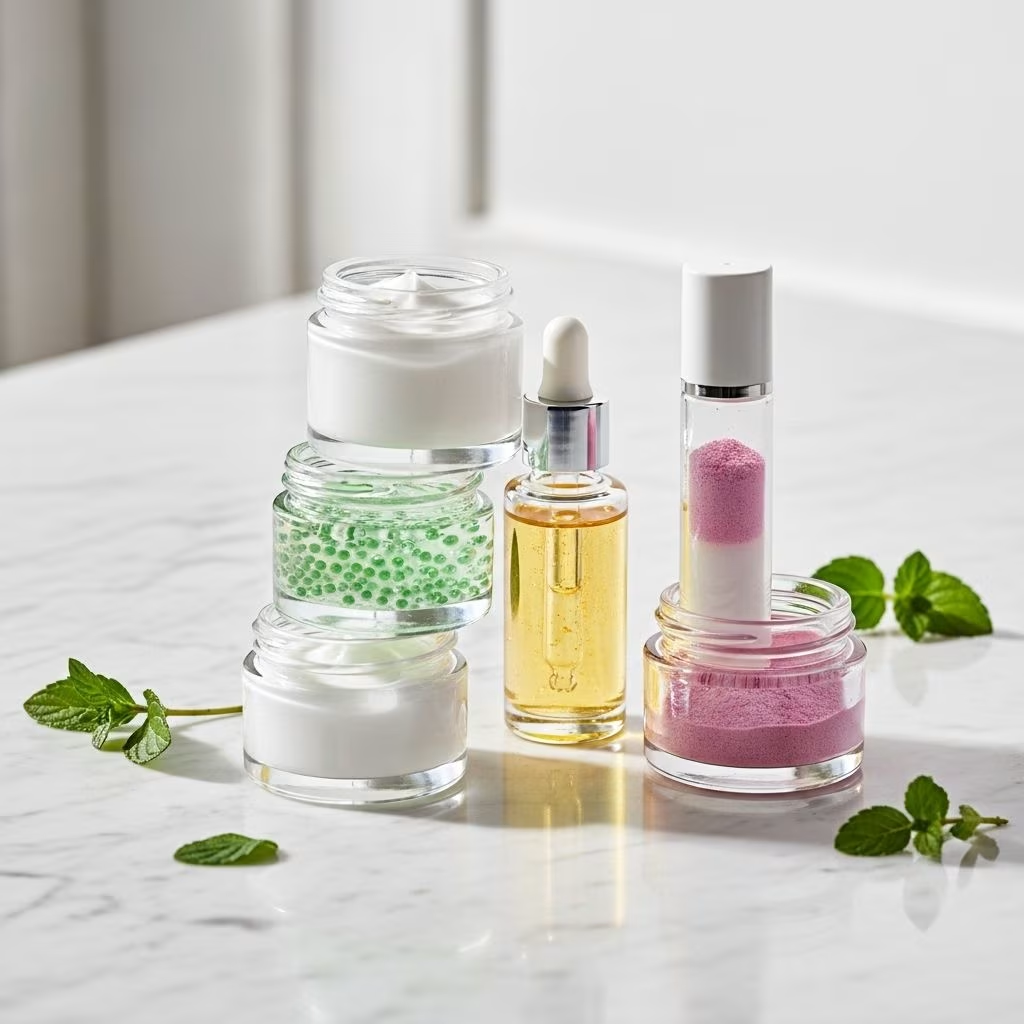
In modern skincare, combining multiple spot treatments is emerging as a highly sought-after strategy for tackling a range of skin concerns—from acne and hyperpigmentation to fine lines and uneven texture. But while this approach can supercharge your routine, it demands expertise, precaution, and customization to avoid pitfalls. This guide presents a deep dive into the science, strategies, risks, and benefits of using multiple spot treatments, helping you make informed decisions for your healthiest skin ever.
Understanding Spot Treatments
Spot treatments are potent, targeted skincare products designed to address small areas of concern, such as individual pimples, dark spots, or patches of hyperpigmentation. These products differ from generalized creams and serums because they are meant for precise application and quick action on specific skin issues (see [10]). Key characteristics of spot treatments include:
- High concentration of active ingredients
- Small amount usage per application
- Intended for short-term, localized use
Types of spot treatments vary widely, ranging from anti-acne gels to creams targeting pigmentation, and even solutions for reducing redness or smoothing texture.
Why Combine Multiple Spot Treatments?
Combining spot treatments is becoming increasingly popular for several reasons:
- Enhanced results: By simultaneously addressing different skin issues, you may see a more marked improvement than with a single treatment (see , , ).
- Reduced downtime: Performing several treatments in one session can minimize overall skin recovery time, allowing for a faster return to your routine (see ).
- Customization: Advanced skincare allows you to tailor combinations to your exact needs—tackling acne, discoloration, and aging all at once (see , ).
- Cost and time efficiency: Interrupting your schedule for single, spaced-out treatments can be more expensive and time-consuming than coordinated approaches (see , ).
The Science Behind Combination Treatments
Multi-therapy strategies in skincare leverage the principle of synergy: the combined effect of two or more treatments is greater than the sum of their individual actions (see ). For example:
- Microneedling creates micro-injuries that prompt skin regeneration, while PRP (Platelet-Rich Plasma) adds growth factors to speed healing and boost results (see , ).
- Chemical peels exfoliate the surface layer, making it easier for other actives (e.g., hydroquinone or retinoids) to penetrate effectively (see ).
- Laser therapy and dermal fillers together address both surface and volume-related aging signs more comprehensively than either alone (see , ).
Dermatologists often recommend this approach for those dealing with overlapping skin concerns. However, improper use or poorly-timed combinations can leave skin irritated and sensitive, which is why professional guidance is critical.
Popular Spot Treatment Actives and How They Work
| Active Ingredient | Main Skin Concern | Mechanism of Action |
|---|---|---|
| Salicylic Acid | Acne | Penetrates pores, exfoliates, reduces inflammation |
| Benzoyl Peroxide | Acne | Kills acne-causing bacteria, reduces oil |
| Hydroquinone | Dark Spots, Melasma | Inhibits melanin production |
| Retinoids (Tretinoin/Adapalene) | Acne, Aging | Promotes cell turnover, smoothes fine lines |
| Azelaic Acid | Redness, Discoloration | Anti-inflammatory, blocks abnormal pigmentation |
| Niacinamide | Redness, Pores | Reduces inflammation, regulates oil |
| Vitamin C | Hyperpigmentation, Brightening | Antioxidant, inhibits melanin, stimulates collagen |
Many spot treatments contain one or more of these ingredients. When used wisely, they can address diverse concerns simultaneously, provided you avoid known antagonistic pairings (see below).
Safe Ways to Combine Spot Treatments
How can you combine spot treatments without overwhelming your skin? Here are the essential principles for creating a safe and effective multi-treatment routine:
- Understand ingredient compatibility: Not all actives play well together. Combining benzoyl peroxide and retinoids, for example, may deactivate the retinoid or increase irritation. Always check compatibility charts or consult your dermatologist (see , ).
- Start slow: Introduce new treatments one at a time and monitor your skin’s response. This helps you identify possible irritants before combining several actives.
- Layer strategically: Apply water-based treatments first, followed by heavier creams or ointments. Spot treatments usually go after serums but before moisturizers (see ).
- Target different areas: If your acne and dark spots aren’t in the same places, consider applying each treatment only to its respective area to lower risk of overexposure.
- Monitor for irritation: Increased redness, burning, or peeling means your skin is overwhelmed. Take a break or scale down your actives as needed (see ).
- Listen to professional advice: Board-certified dermatologists or trained estheticians can help create a safer, more effective plan (see , , ).
Layering vs. Mixing: Key Differences
Layering involves applying one product after another, allowing time for each to absorb. Mixing means literally blending products together in your hand before application. Experts overwhelmingly recommend layering over mixing, as it:
- Preserves the integrity and potency of each formula
- Lowers the risk of unexpected chemical interactions
- Makes it easier to identify and manage sources of irritation
Apply spot treatments after cleansing and, if applicable, using a toner. Let each layer dry before applying the next.
Customizing Your Skincare Approach
No two complexions are identical, which means optimal results depend on personalization. Steps to tailor your multi-spot treatment routine include:
- Assess your skin type and needs: Oily, dry, sensitive, and combination skins respond differently to actives. Your treatment plan should suit your baseline sensitivity and main concerns.
- Choose actives with complementary benefits: For example, pair a pigment-correcting ingredient (like hydroquinone or azelaic acid) with a gentle anti-inflammatory (like niacinamide) for post-acne marks.
- Develop a schedule: Not all treatments need daily application. Some, like retinoids, may be better tolerated at night, while vitamin C boosts are best in the morning (see , ).
- Evaluate progress regularly: Adjust concentrations, frequency, or combinations based on results and side effects.
Example Layering Routine for Acne-Prone Skin
- Morning: Cleanse → Salicylic acid spot treatment → Moisturizer → Sunscreen
- Evening: Cleanse → Retinoid spot cream → Azelaic acid for redness → Moisturizer
Risks and Common Mistakes of Using Multiple Spot Treatments
While the advantages are clear, overusing or misusing multiple spot treatments can backfire:
- Over-exfoliation: Too many active ingredients can compromise the skin barrier, leading to peeling, flaking, and sensitivity (see , ).
- Unexpected reactions: Some ingredients (e.g., retinoids and benzoyl peroxide) can cancel each other out or compound irritation (see ).
- Spot treating too broadly: Spot treatments are intended for limited areas—not full-face application—unless specifically advised.
- Impatience: Results take time. Over-application or increasing frequency won’t speed up healing and may worsen the problem.
- Sun sensitivity: Many actives (especially retinoids and hydroquinone) increase susceptibility to sunburn; daily broad-spectrum sunscreen is non-negotiable (see ).
Case Studies: Successes in Multi-Treatment Therapy
Success stories illustrate the potential of a well-crafted multi-spot treatment plan:
- Combination Acne and Anti-Aging: A patient used a prescription-strength anti-aging cream (targeting wrinkles and skin tone) in the evening and a brightening spot cream twice daily. Under dermatologist supervision, this regimen led to brighter, smoother skin, fewer breakouts, and fading scars without excessive irritation (see ).
- Event-Ready Glow: The PurTRIFECTA approach—combining radio frequency, intense pulsed light (IPL), and erbium laser—delivered tightened, even-toned, luminous skin with minimal downtime, perfect for special occasions (see ).
- Comprehensive Rejuvenation: A client seeking full-face refresh received microneedling, PRP, and laser resurfacing in a single visit; this synergy produced faster healing, plumper texture, and an enviable glow compared to separate sessions (see , ).
Cost-Effectiveness and Time Savings
Although multi-therapy approaches may seem more expensive up front, the total investment is often lower compared to repeating individual treatments:
- Achieve more comprehensive results in fewer sessions
- Minimize missed work or social events by reducing cumulative downtime
- Take advantage of bundled treatment plans and package discounts at clinics
- Prevent new skin issues by addressing root causes holistically
Choosing multi-spot strategies can lead to longer-lasting top-level results (see , ).
Frequently Asked Questions (FAQs)
Q: Can I use two or more spot treatments at the same time?
A: Yes, but it is critical to understand ingredient compatibility and avoid over-layering powerful actives without guidance. Consult a dermatologist before starting any complex combined regimen (see , ).
Q: Which ingredients should NOT be used together when spot treating?
A: Avoid using benzoyl peroxide with retinoids simultaneously, or combining two strong exfoliants (like salicylic acid and glycolic acid), unless directed by a professional. Also, be careful layering hydroquinone with other sensitizers.
Q: How do I prevent irritation when using multiple spots treatments?
A: Space out applications, use lower concentrations, apply to different areas if possible, and always use a protective moisturizer. If peeling or burning occurs, stop and consult with an expert.
Q: Do I need to use special sunscreen when spot treating?
A: Daily use of a high-SPF, broad-spectrum sunscreen is mandatory, as many active ingredients leave the skin vulnerable to UV damage and hyperpigmentation.
Q: Are combination treatments safe for sensitive skin?
A: With careful selection, low-strength products, and gradual introduction, even sensitive skin can benefit from combined spot treatments—provided close monitoring and professional oversight.
Conclusion
Properly combining multiple spot treatments offers the evolution of personalized skincare—providing powerful, targeted results for diverse and complex skin concerns. When integrated thoughtfully and with expert guidance, these routines can dramatically reduce acne, pigmentation, and the visible signs of aging, improving both the efficacy and efficiency of your skincare regimen. Remember: knowledge, patience, and customization are the keys to radiant, healthy skin.
References
- https://plantationmedspa.com/combining-treatments-for-multi-therapy-approaches/
- https://spectrumskinlaser.com/media/getting-multiple-skincare-treatments-at-once-is-smart-heres-why/
- https://www.musely.com/tips/Treatments-That-Pair-Well-Together/30817092
- https://puraestheticsandwellness.com/how-ipl-laser-treatment-can-improve-your-skin-cpcb6/
- https://mytopicals.com/blogs/acne/navigating-acne-care-how-to-layer-your-skincare-for-optimal-results
- https://hiperskin.com/blogs/unlock-high-performance/how-to-layer-multiple-acne-actives-without-irritating-your-skin
- https://slmdskincare.com/blogs/learn/the-right-way-to-layer-your-skincare
- https://rejuvalase.com/blogs/news/combination-treatments-why-two-or-more-is-better-than-one
- https://www.mdacne.com/article/hidden-danger-of-acne-spot-treatments
- https://new-beauty.com/sg-en/blog/acne-removal-treatments/what-is-spot-treatment-used-for/


