


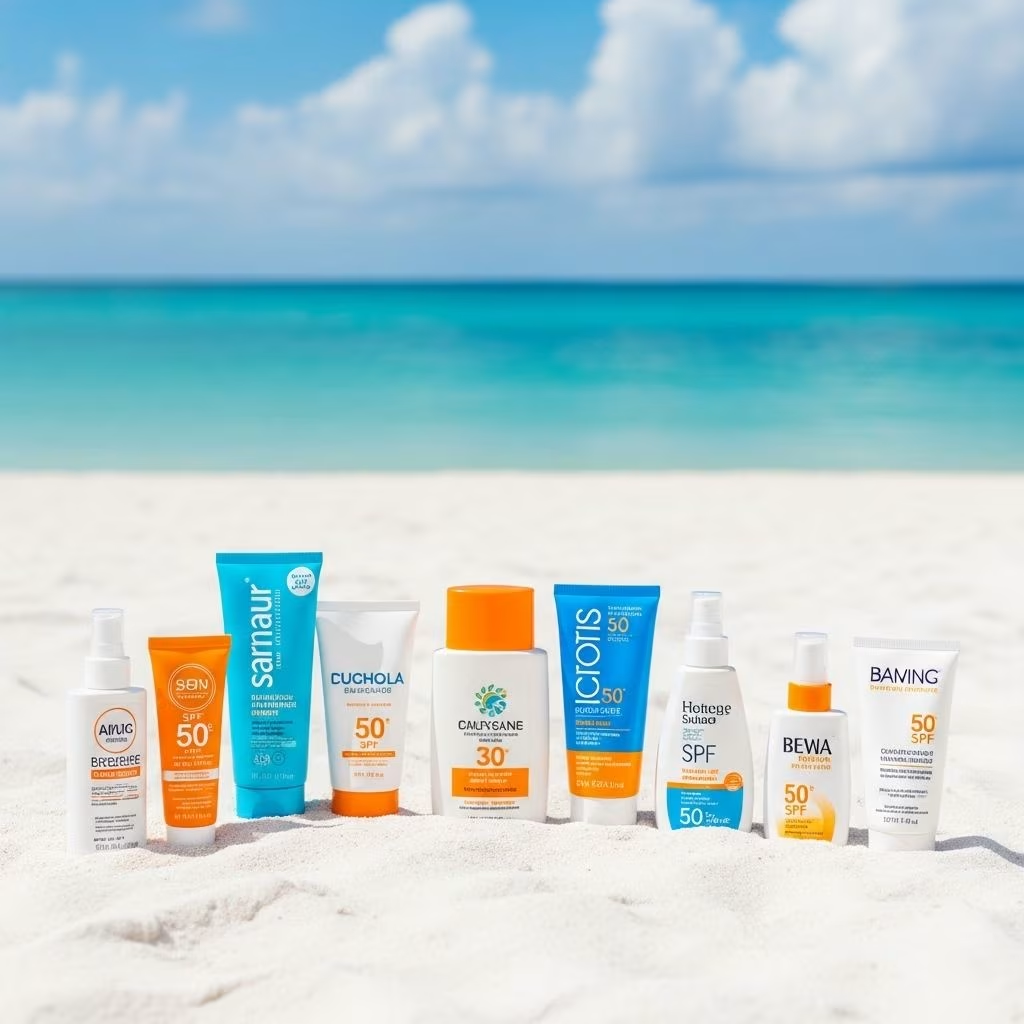
Protecting your skin from sun damage is essential for preventing premature aging, sunburn, and even skin cancer. With a market flooded with SPF products—from mineral to chemical, sprays to sticks, tinted to clear—the process of selecting the best sunscreen can overwhelm even the most diligent consumer. This comprehensive guide unveils how to choose the right sunscreen for your lifestyle and skin, explains SPF in plain language, provides expert-backed application techniques, and reviews the top-rated sunscreens for 2025.
Why SPF Matters: The Science Behind Sun Protection
Ultraviolet (UV) rays from the sun are a major environmental hazard for your skin. Overexposure leads to sunburn, hyperpigmentation, wrinkles, and an increased risk of skin cancers. Sunscreens act as a barrier—either physically reflecting or chemically absorbing harmful UV radiation before it penetrates deeper skin layers and damages cellular DNA.
- UVA rays penetrate deep into the skin and are primarily responsible for premature aging and long-term skin damage.
- UVB rays cause sunburn and play a significant role in the development of skin cancer.
- Effective sunscreen must protect against both types: look for broad-spectrum labels.
What Does SPF Mean?
SPF stands for Sun Protection Factor, which measures how well a sunscreen protects against UVB rays—the type that burns skin. The number is a multiplier of the time it would take you to burn without protection.
| SPF Value | UVB Protection (%) | Example: If You Burn in 10 Minutes… |
|---|---|---|
| 15 | 93% | 150 minutes until burn (10×15) |
| 30 | 97% | 300 minutes |
| 50 | 98% | 500 minutes |
Important: No sunscreen blocks 100% of UVB rays, and real-world conditions (sweat, water, application thickness) lower protection. Reapplication is essential.
How to Choose the Best Sunscreen
Not all sunscreens are created equal. The right formula depends on your skin type, activities, and personal preferences. Here’s how to make a smart choice:
- Look for “broad-spectrum” protection against UVA and UVB.
- Choose SPF 30 or higher for daily use; SPF 50+ for outdoor or water activities.
- Match the texture to your skin type:
- Oily/Acne-Prone: Opt for lightweight gels or oil-free fluids.
- Dry: Prefer creamy, moisturizing formulas with added hydrators.
- Sensitive: Choose fragrance-free, hypoallergenic mineral sunscreens.
- Active Lifestyles: Select water-resistant, sweat-proof formulas marked for sports.
- Consider tint for better blend on deeper skin tones to avoid white residue.
- Be mindful of ingredient sensitivities: For children or sensitive skin, avoid chemical filters like oxybenzone and octinoxate.
- Eco-conscious? Select “reef-safe” formulas (free of oxybenzone and octinoxate) and biodegradable packaging.
Mineral vs. Chemical Sunscreens: Which Should You Choose?
| Mineral (Physical) | Chemical |
|---|---|
| Contains zinc oxide and/or titanium dioxide. Chemically inert; forms a physical barrier. | Contains filters like avobenzone, octinoxate, homosalate, octocrylene. Absorbs UV rays and converts them to heat. |
| Less likely to irritate sensitive skin. Works immediately after application. | Lightweight, often invisible finish. Requires 15–30 minutes before sun exposure. |
| Can leave a white cast. Effective for young children and sensitive skin. | Can cause irritation in some skin types. Not always reef-safe. |
Combination “hybrid” formulas blend both for better cosmetic elegance and broad protection.
Why Broad-Spectrum Protection Is Non-Negotiable
Historically, products focused on UVB (burn) protection, but recent research shows that UVA exposure is heavily responsible for skin aging and increases skin cancer risk. Broad-spectrum sunscreens include ingredients that block or absorb both UVA and UVB. Key UVA blockers include zinc oxide (mineral) and avobenzone (chemical).
Applying Sunscreen: Expert Tips for Maximum Protection
Proper application is as crucial as choosing the right product. Most sun protection failures come from under-application or missed spots.
- Apply sunscreen 15 minutes before sun exposure if using a chemical formula. Mineral types are effective immediately.
- Generous application: Adults need about a shot glass (1 oz) for full body coverage and about a nickel-sized amount for the face.
- Don’t forget these spots: Ears, scalp, neck, lips, tops of feet, backs of hands, and around swimwear lines.
- Reapply every 2 hours, or after swimming, sweating, or towel-drying—even with water-resistant formulas.
- Layering with makeup/moisturizer: Sunscreen should be the last step in your skincare routine. Wait several minutes before applying makeup.
Best Sunscreens of 2025: Top Picks for Every Skin Type and Activity
After reviewing independent lab tests, expert dermatology reviews, and consumer ratings, these sunscreens stand out in 2025:
- Best Overall for Face: Coola Classic Face Sunscreen SPF 50
- Lightweight, fragrance-free, non-greasy, leaves no white cast, suits all skin types.
- Moisturizing plant-based ingredients, doubles as a moisturizer.
- Some users find it expensive and slightly tacky upon touch.
(Chemical SPF: Avobenzone, Homosalate, Octisalate, Octocrylene)
- Best Mineral Sunscreen (For All Tones): Innbeauty Project Mineral Sun Glow SPF 43+
- Glowy finish, three flexible shades to prevent white cast, blends well with all skin tones.
- Gives a soft radiance and some bronzing effect on darker skin.
- Best Everyday Body Sunscreen: Supergoop PLAY Everyday SPF 50
- Hydrating, broad-spectrum, water and sweat-resistant.
- Good for both body and face; suitable for dry or combination skin.
- Best for Sensitive Skin: EltaMD UV Clear SPF 46
- Lightweight, oil-free, fragrance-free, recommended by dermatologists.
- “Hybrid” mineral + chemical formula minimizes irritation.
(Zinc oxide + octinoxate) - Note: Octinoxate has come under scrutiny recently for possible hormone effects, but evidence for harm in humans remains limited.
- Best Hydrating/Plumping: La Roche-Posay UV Hydra SPF 50
- Chemical formula with hydrating peptides and esters, blends seamlessly on all skin tones.
- Best Dewy Finish: Neutrogena Hydro Boost Sunscreen SPF 50
- Lightweight gel, ultra-hydrating, great for normal-to-dry skin, leaves a natural, dewy sheen.
- Best Clear/Invisible Formulas: Supergoop Unseen Sunscreen; Beekman 1802 Solar Milk
- Invisible gel texture, works for all skin tones, ideal under makeup.
- Best for Redness-Prone Skin: Green-tinted mineral formulas (e.g., Eucerin Radiant Tone)
- Helps color-correct redness while providing high UV protection.
- Best Affordable Pick: CeraVe AM Facial Moisturizing Lotion SPF 30
- Budget-friendly, suitable for daily wear, contains niacinamide and ceramides for barrier support.
Quick Look: 2025 Best Sunscreens Comparison Table
| Product | Type | Best For | Key Features |
|---|---|---|---|
| Coola Classic Face | Chemical | All skin types | Lightweight, non-greasy, no white cast |
| Innbeauty Sun Glow SPF43+ | Mineral | All skin tones | Glowy finish, three shades |
| Supergoop PLAY Everyday | Chemical | Face & Body | Hydrating, water-resistant |
| EltaMD UV Clear | Hybrid | Sensitive, acne-prone | Oil-free, lightweight |
| La Roche-Posay UV Hydra | Chemical | Hydration, all tones | Peptides for plumping |
| Neutrogena Hydro Boost | Chemical | Dewy finish fans | Ultra-hydrating gel |
| Beekman 1802 Solar Milk | Chemical | Invisible finish | Clear gel, weightless |
| Eucerin Radiant Tone | Mineral | Redness-prone | Green-tinted, soft correction |
| CeraVe AM Lotion | Chemical | Budget daily use | Moisturizing, barrier support |
Common Sunscreen Myths Debunked
- Myth: “I don’t need sunscreen on cloudy days.”
Fact: Up to 80% of UV rays can penetrate clouds—year-round protection is essential. - Myth: “Dark skin doesn’t need sunscreen.”
Fact: While deeper skin tones have more natural protection, they can still suffer burns, hyperpigmentation, and risk of skin cancer. - Myth: “A base tan prevents sunburn.”
Fact: Tanned skin only provides an SPF of about 3; it’s not protective and signals existing DNA damage. - Myth: “Waterproof sunscreens never come off.”
Fact: All sunscreen washes off eventually; “water-resistant” means the SPF is maintained for 40–80 minutes during water exposure—always reapply. - Myth: “Makeup with SPF is enough.”
Fact: SPF in makeup doesn’t provide as much coverage as a stand-alone sunscreen applied in sufficient quantity.
Frequently Asked Questions (FAQs)
Q: How much sunscreen should I use, and how often should I reapply?
Experts recommend using at least 1 oz (a shot glass) for your whole body and a nickel-sized amount for your face. Reapply every two hours, or after swimming, sweating, or towel-drying.
Q: Should I use different sunscreens for my face and body?
You can, but it’s not mandatory. Face formulas are often lighter and less likely to clog pores. Those with oily or acne-prone skin may prefer oil-free face-specific sunscreens, but a good broad-spectrum body sunscreen can be used for both in a pinch.
Q: Can I use sunscreen on my baby or toddler?
For infants under 6 months, avoid direct sun exposure and dress them in protective clothing/shade. For older babies and toddlers, use mineral-based sunscreens (zinc oxide or titanium dioxide) on exposed skin and avoid chemical filters.
Q: Is higher SPF always better?
SPF above 50 offers only marginally greater protection and may give a false sense of security. It’s more important to apply sunscreen thoroughly and reapply often.
Q: Are spray sunscreens effective?
Sprays are convenient but can be uneven. Always rub the spray in for even coverage and avoid inhaling fumes, especially in children.
Q: What does “reef-safe” sunscreen mean?
Reef-safe labels indicate sunscreens free of oxybenzone and octinoxate, which are linked to coral bleaching. Mineral sunscreens are usually safe for reefs.
Q: What’s the difference between “water-resistant” and “sweat-resistant”?
Both indicate the sunscreen can hold up under water or sweat for a specified period (usually 40 or 80 minutes), after which you must reapply.
Key Takeaways for Optimal Sun Protection
- Use a broad-spectrum, SPF 30 or higher sunscreen every day—even on cloudy days and in winter.
- Apply early, apply generously, and reapply at least every two hours.
- Choose the formula that best suits your activities and skin type for maximum comfort and protection.
- Sun protection doesn’t end with sunscreen—wear hats, sunglasses, and protective clothing when possible.


