


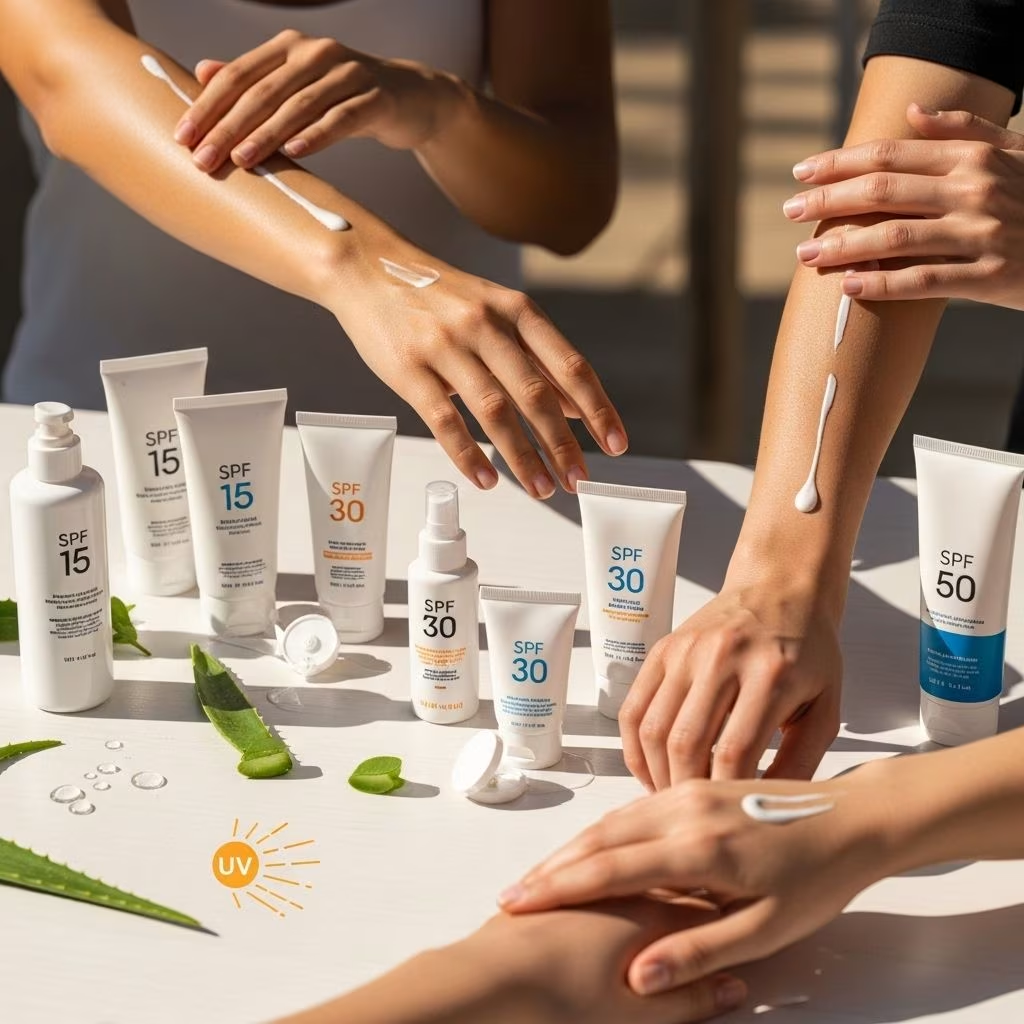
Sun protection is a cornerstone of healthy skin, but deciphering SPF numbers can be confusing. This guide unpacks the meaning behind Sun Protection Factor (SPF) values, explains what percentage of ultraviolet (UV) rays they block, and offers advice for effective sun safety.
What Does SPF Mean?
SPF stands for Sun Protection Factor. This value quantifies how effectively a sunscreen protects your skin from UVB rays—the type primarily responsible for sunburn and a major contributor to skin cancer. If your unprotected skin would begin to redden after 10 minutes in the sun, an SPF 30 should, in theory, allow you to stay out 30 times longer (or 300 minutes) before burning. However, real-world factors influence this duration.
The core principle: SPF is a relative measure—not an absolute one—based on a controlled amount of sunscreen applied in laboratory conditions, not real-life usage, weather, sweating, water exposure, or skin characteristics.
The Science Behind SPF Ratings
SPF is derived from laboratory tests where sunscreen is applied to untanned skin and exposed to controlled UVB light. Scientists measure how much longer it takes for skin to show minimal reddening (erythema) with sunscreen compared to without. The equation is simple:
SPF = (Time to onset of redness with sunscreen) / (Time to onset without sunscreen)For example, if it takes 300 seconds to redden with sunscreen and 10 seconds without, the SPF would be 30 (300/10).
SPF Numbers & Percentage of UV Block
Contrary to popular belief, SPF numbers do not indicate a linear increase in protection. The higher the SPF, the smaller the incremental benefit in UVB blockage. Here’s how common SPF ratings specifically translate into UVB blocking power:
| SPF Value | % of UVB Blocked | % of UVB Still Reaching Skin |
|---|---|---|
| SPF 15 | 93% | 7% |
| SPF 30 | 97% | 3% |
| SPF 50 | 98% | 2% |
| SPF 100 | 99% | 1% |
The difference in UVB protection from SPF 30 (blocks 97%) to SPF 50 (blocks 98%) is just 1%. No sunscreen blocks 100% of UVB rays.
UVA vs. UVB: Why Broad-Spectrum Matters
SPF numbers only measure protection against UVB rays. However, UVA rays penetrate deeper into the skin, leading to premature aging (wrinkles, dark spots) and contributing to skin cancer. UVA rays can even penetrate windows and cloud cover.
For comprehensive protection, dermatologists recommend “broad-spectrum” sunscreen, which shields against both UVA and UVB. Always check that your sunscreen is labeled broad-spectrum.
- UVB: Causes sunburn; main factor measured by SPF.
- UVA: Penetrates more deeply; ages skin and also increases cancer risk.
- Both contribute to long-term skin health issues and skin cancer.
SPF 30 vs. SPF 50: Is There a Difference?
SPF 30 blocks about 97% of UVB, while SPF 50 blocks roughly 98%. Though this seems a small margin, that remaining 1% means SPF 30 lets 50% more UV reach your skin than SPF 50 does. In situations of extended exposure, fair or sensitive skin, or elevated cancer risk, every increment can matter—but for most people, SPF 30 is sufficient for daily use when applied and reapplied properly.
| SPF 30 | SPF 50 |
|---|---|
| Blocks 97% UVB | Blocks 98% UVB |
| Lets through 3% of UVB | Lets through 2% of UVB |
| Considered adequate for daily protection in most scenarios | Recommended for extended, intense sun exposure, high risk individuals |
Key Insights
- The leap in protection above SPF 50 is minimal, often less than a percent
- High SPF may give a false sense of total protection
- No sunscreen is a substitute for reapplication, shade, protective clothing, and common sense
The Trap of High SPF: Myths and Misconceptions
High SPF (50 and above) does not equate to invincibility. Many believe they can stay out longer without reapplying or using additional sun safety measures. This false sense of security can lead to surprisingly high sun damage:
- High SPF products only marginally outperform SPF 30 or 50 in UVB block
- They do not meaningfully increase time in the sun without risk, because their “time multiplier” is theoretical and assumes perfect application
- They may tempt users to skip reapplying, seek less shade, or neglect hats and clothing, increasing overall exposure
- Only regular, liberal reapplication maintains protection, regardless of SPF rating
How to Choose the Right SPF for You
Selecting the best SPF depends on your lifestyle, skin type, and UV exposure risk. Guidelines from dermatologists and health authorities include:
- Daily use (outdoor errands, commuting): SPF 30, broad-spectrum is recommended for most people
- Prolonged outdoor activity, high altitude, fair or sensitive skin, immunosuppression, or personal/family skin cancer history: SPF 50 or higher, broad-spectrum, water-resistant
- Babies under 6 months should not use sunscreen—instead, keep them out of direct sun, and use protective clothing and shade.
Don’t forget: Everyone—regardless of skin tone—needs sun protection. People with darker skin are less likely to burn but are still at risk for sun-induced aging and skin cancers, especially since dangerous lesions may be harder to detect.
Proper Application: Getting Full SPF Protection
Most people use far too little sunscreen, achieving only a fraction of the labeled SPF value. To maximize your sunscreen’s effectiveness:
- Apply one ounce (about a shot glass) to cover the entire body, or two tablespoons for exposed skin on face, arms, and neck.
- Apply 30 minutes before exposure to allow absorption.
- Reapply every 2 hours, or after swimming, excessive sweating, or towel drying—even if the product is labeled water resistant.
- Cover all exposed areas, including often-missed spots (ears, back of neck, tops of feet, scalp part).
Sunscreens are not waterproof. Water-resistant formulas offer protection for either 40 or 80 minutes of swimming or heavy sweating; reapply as directed.
Frequently Asked Questions (FAQs)
Q: Does an SPF 100 sunscreen offer twice the protection of SPF 50?
A: No. SPF 100 blocks 99% of UVB, only 1% more than SPF 50, which blocks 98%. The increase is minimal and does not allow for double the sun exposure time.
Q: Can I skip wearing sunscreen on cloudy days?
A: No. Up to 80% of UV rays penetrate clouds, and UVA can pass through glass. Daily use is advised regardless of weather or season.
Q: How long will SPF 50 protect me?
A: Theoretically, if you burn in 10 minutes without sunscreen, SPF 50 could increase that to 500 minutes. However, reapplication every 2 hours is essential due to sweating, swimming, toweling off, and normal skin movement.
Q: Do I need both sunscreen and protective clothing?
A: Yes. Sunscreen should be only one part of a comprehensive strategy that includes shade-seeking, hats, sunglasses, and UPF-rated clothing.
Q: Is sunscreen safe to use regularly?
A: Yes. Sunscreens are tested for long-term safety. Avoid ingredients only if you have a known allergy or sensitivity, and select a formulation suitable to your skin type (chemical or mineral-based).
Key Takeaways
- SPF 15 filters 93%, SPF 30 about 97%, and SPF 50+ about 98% of UVB rays. Higher SPFs offer diminishing incremental UVB protection.
- SPF only measures UVB protection; choose broad-spectrum for UVA coverage, too.
- No sunscreen blocks 100% of UV rays; strict reapplication, clothing, and shade are necessary for full safety.
- Apply sunscreen generously and repeatedly, not just once per day.
- People of all skin types need sun protection to prevent cancer and premature aging.
References
- Supergoop: SPF Levels, Explained
- CeraVe: Decoding Sunscreens
- Skin Cancer Foundation: High SPF Benefits
- Coppertone: What Is SPF?
- Australian Academy of Science: What Does SPF Mean?
References
- https://supergoop.com/blogs/sun-101/spf-levels
- https://www.cerave.com/skin-smarts/skin-concerns/sun-protection/what-spf-should-i-use
- https://www.skincancer.org/blog/ask-the-expert-does-a-high-spf-protect-my-skin-better/
- https://www.coppertone.com/sun-facts/what-is-spf
- https://www.science.org.au/curious/people-medicine/what-does-spf-rating-really-mean
- https://www.neutrogena.com/the-bar/what-is-spf-and-spf-numbers
- https://www.nivea.co.uk/advice/sun/what-is-spf


