


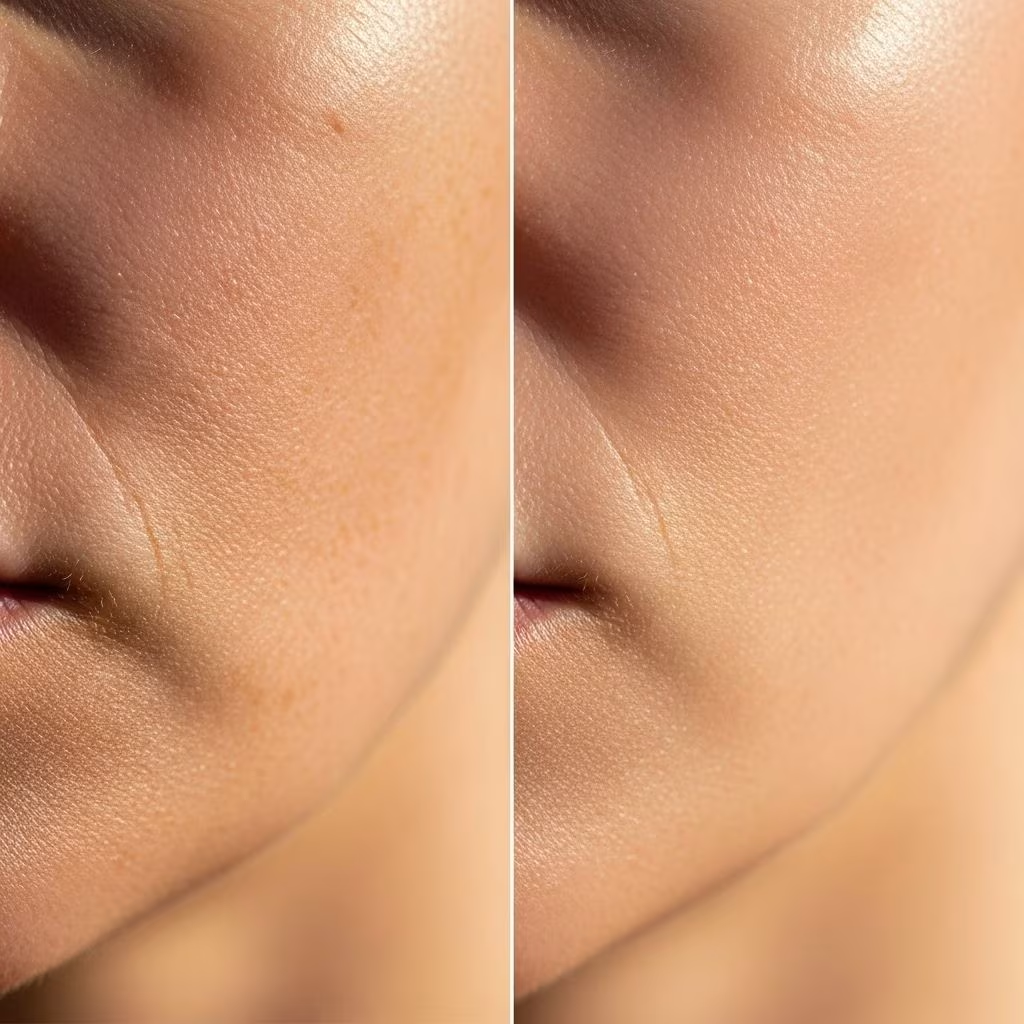
Sun exposure is one of the leading causes of premature skin aging, often referred to as photoaging. While time itself leaves its mark on our skin, ultraviolet (UV) radiation from the sun accelerates visible changes, including wrinkles, pigmentation, and loss of elasticity. Fortunately, much of this damage is preventable—or even reversible—with the right strategies. This guide provides an in-depth look at how sun damage drives premature aging and practical steps you can take to maintain youthful, healthy skin.
Understanding Sun Damage and Photoaging
Photoaging refers to skin aging caused by repeated exposure to sunlight and UV radiation, as opposed to chronological aging that occurs naturally over time. Chronologically aged and photoaged skin are clinically distinct; the former tends to be thin and delicate, while the latter often appears leathery, wrinkled, and mottled with dark spots. However, both types share similarities at the cellular level, such as cumulative collagen damage .
Research reveals that up to 90% of visible changes we associate with aging—like wrinkles and pigmentation—are attributable to photoaging, not just the passage of time .
Chronological Aging vs. Photoaging
| Feature | Chronological Aging | Photoaging |
|---|---|---|
| Cause | Genetics, hormonal change, time | Repeated sun/UV exposure |
| Typical Appearance | Thin, dry, fragile skin | Leathery, wrinkled, blotchy or mottled |
| Location | All over body | Sun-exposed areas (face, neck, arms, hands) |
| Underlying Damage | Gradual collagen and elastin breakdown with age | Accelerated and abnormal collagen/elastin loss and changes |
How UV Light Causes Skin Aging
Sunlight contains both UVA and UVB rays, each impacting the skin differently but both contributing to photoaging. Here’s how:
- UVA rays: Longer wavelengths penetrate deeper into the dermis. They damage collagen and elastin fibers—the proteins giving skin its firmness and resilience. UVA is more responsible for wrinkling, sagging, and loss of elasticity.
- UVB rays: Affect the superficial skin layers and are primarily responsible for sunburn. However, both UVA and UVB can cause DNA mutations driving skin aging and skin cancers.
When skin is exposed to UV, it tries to defend itself by increasing the production of melanin pigment (which creates a tan). But a tan is not protection; it’s a sign of already-present DNA damage .
Over time, UV damage results in:
- Abnormal collagen repair: High levels of abnormal elastin lead to the production of enzymes called metalloproteinases, which break down existing collagen. This repair process becomes faulty, resulting in weak, irregular skin structure and the formation of wrinkles and leathery skin.
- Cellular DNA mutations: These mutations increase the risk of skin cancers like basal cell carcinoma, squamous cell carcinoma, and melanoma .
- Oxidative stress and free radicals: UV exposure increases free radical formation, which damages skin cells, proteins, and membranes, further worsening premature aging .
Key Biological Effects of UV on the Skin
- Collagen fragmentation and faulty regeneration
- Elastin degradation and abnormal accumulation
- Increased pigmentation (sunspots, uneven tone)
- Formation of fine lines and deep wrinkles
- Loss of skin elasticity and plumpness
- Risk of skin cancers and precancerous lesions
Signs and Symptoms of Photoaged Skin
Sun-damaged skin reveals itself in many obvious and subtle ways, often before even the first wrinkle appears. Common signs include:
- Wrinkles and fine lines
- Loss of skin elasticity (loose, sagging skin)
- Rough, leathery texture
- Uneven pigmentation (sunspots, age spots, freckles)
- Redness, broken capillaries
- Actinic keratoses: Precancerous rough patches
- Freckles and hyperpigmentation (especially on the face, chest, arms, and hands)
- Dullness and uneven skin tone
It often takes years for this damage to become visible, since changes begin deep within the dermis. By the time changes appear, significant underlying damage may have already occurred .
Beyond UV: Other Types of Light-Induced Aging
While sun exposure (UV light) is the dominant force behind photoaging, other forms of light can also speed up skin aging:
- HEV (High-Energy Visible) Light: Blue light emitted from the sun, digital screens, and LED lighting can penetrate deeply, contributing to DNA damage and pigmentation.
- Infrared Light: Experienced as heat, can exacerbate the aging process by increasing oxidation and breaking down collagen.
About 10% of skin aging is attributed to sources beyond the sun, including visible and infrared light .
Risk Factors for Photoaging
- Skin type: Fair-skinned individuals (types I and II) are more prone to sun damage, but all skin types can develop photoaged skin.
- Genetics: Family history of skin cancer or premature aging increases risk.
- Geography: Living near the equator, at high altitudes, or in areas with strong sun exposure accelerates photoaging.
- Outdoor lifestyles: Work or recreation extending time in the sun increases risk.
- Tanning beds: Artificial UV exposure causes the same damage as the sun and may be even more concentrated .
Preventing Sun Damage
The best treatment for photoaging is prevention. Here are science-backed steps to protect your skin every day:
Daily Sun Protection Strategies
- Use broad-spectrum sunscreen: Apply a sunscreen with at least SPF 30 that blocks both UVA and UVB rays. Reapply every two hours, or after swimming and sweating.
- Wear protective clothing: Hats with a wide brim, sunglasses, and tightly woven, long-sleeved shirts and pants provide an extra barrier.
- Seek shade: Especially from 10 a.m. to 4 p.m., when the sun’s rays are strongest.
- Avoid tanning beds: These machines emit concentrated UV radiation that can be more damaging than outdoor sunlight.
- Use window protection: UV rays penetrate car and house windows—use clear or tinted window films, or wear sunscreen even indoors if prolonged exposure is likely.
- Don’t forget lips and ears: Use lip balm with SPF, and apply sunscreen to ears and the back of your neck.
Key Sunscreen Tips
- Check expiration dates—expired sunscreen loses effectiveness.
- Use enough—a full ounce (about a shot glass) for the body each application.
- Choose non-comedogenic formulas if acne-prone.
Treating and Reversing Photoaging
While prevention is paramount, several treatments can partially reverse the signs and symptoms of sun damage. Options range from skincare products to clinical dermatological procedures:
Topical Treatments
- Retinoids (Vitamin A derivatives): Prescription tretinoin and over-the-counter retinol stimulate collagen production and cell turnover, improving fine lines and skin texture .
- Antioxidants: Including vitamin C, vitamin E, and niacinamide help neutralize free radicals and support skin repair.
- Hydroquinone and botanical lighteners: Reduce hyperpigmentation and even skin tone.
- Peptide creams: Target collagen repair and firmness.
In-Office Dermatological Treatments
- Chemical peels: Remove the top skin layers to improve texture and diminish dark spots.
- Laser therapy: Fractional and intense pulsed light (IPL) lasers address redness, pigmentation, and stimulate collagen renewal.
- Dermabrasion and microdermabrasion: Physically exfoliate to reveal smoother skin.
- Microneedling: Induces collagen synthesis for improved skin strength and elasticity.
- Injectables: Fillers and botulinum toxin (Botox) reduce the appearance of wrinkles and restore facial volume.
Treatment selection depends on severity, skin type, and personal goals. Consulting a board-certified dermatologist is essential for a customized, safe plan .
Lifestyle and Daily Habits for Youthful Skin
Alongside prevention and treatment, healthy lifestyle habits enhance the skin’s ability to heal and defend itself:
- Eat a diet rich in antioxidants: Berries, green leafy vegetables, nuts, and omega-3-rich fish combat free radical damage.
- Stay hydrated: Drink plenty of water to maintain skin moisture and resilience.
- Quit smoking: Smoking dramatically worsens skin aging by impairing blood flow and depleting vitamin C.
- Limit alcohol: Excess alcohol dehydrates skin and impairs natural repair processes.
- Follow a consistent skincare regimen: Gentle cleansing, moisturizing, and daily SPF lay a strong foundation for healthy aging.
Frequently Asked Questions (FAQs)
Q: Can sun damage be reversed?
While some damage—like DNA mutations and collagen loss—is permanent, many signs such as pigmentation and fine lines can be improved with topical retinoids, antioxidants, and professional treatments. Total reversal isn’t possible, but significant aesthetic improvement is achievable.
Q: Do I need sunscreen when it’s cloudy or indoors?
Yes. Up to 80% of UV rays penetrate clouds and windows. Daily sunscreen use is essential regardless of weather or indoor activities if you’re near windows or artificial UV sources.
Q: How soon should sun protection start?
Sun protection should begin in infancy and continue throughout life. Sun damage is cumulative, so even short exposures in youth matter over decades.
Q: What SPF should I use for daily protection?
Dermatologists recommend a broad-spectrum sunscreen with an SPF of at least 30 for daily use. Higher SPFs offer greater protection for prolonged outdoor activity.
Q: Does a base tan protect my skin?
No. A tan offers minimal protection (SPF 2–4, far below the recommended SPF 30+) and is a visible sign of damage. All tans increase your risk for long-term issues, including skin cancer .
Conclusion
Sun damage is the leading, yet most preventable, cause of premature skin aging. While chronological aging cannot be avoided, the steps you take today—daily sunscreen use, protective clothing, healthy lifestyle, and professional skincare—can dramatically reduce the cumulative toll of UV exposure and keep your skin looking and feeling younger for longer. If you already see signs of sun damage, seek advice from a dermatologist to develop a plan for repair and protection. Your skin’s future is in your hands.
References
- https://pmc.ncbi.nlm.nih.gov/articles/PMC4292080/
- https://www.skincancer.org/blog/photoaging-what-you-need-to-know/
- https://www.yalemedicine.org/conditions/sun-damage
- https://www.fda.gov/radiation-emitting-products/tanning/risks-tanning
- https://my.clevelandclinic.org/health/diseases/5240-sun-damage-protecting-yourself
- https://www.medicalnewstoday.com/articles/sunlight-aging
- https://pmc.ncbi.nlm.nih.gov/articles/PMC8597149/
- https://www.isdin.com/us/blog/skincare/sun-protection/effects-of-the-sun-on-visible-signs-of-aging/
- https://facialesthetics.org/the-impact-of-sun-exposure-on-the-aging-process/


