


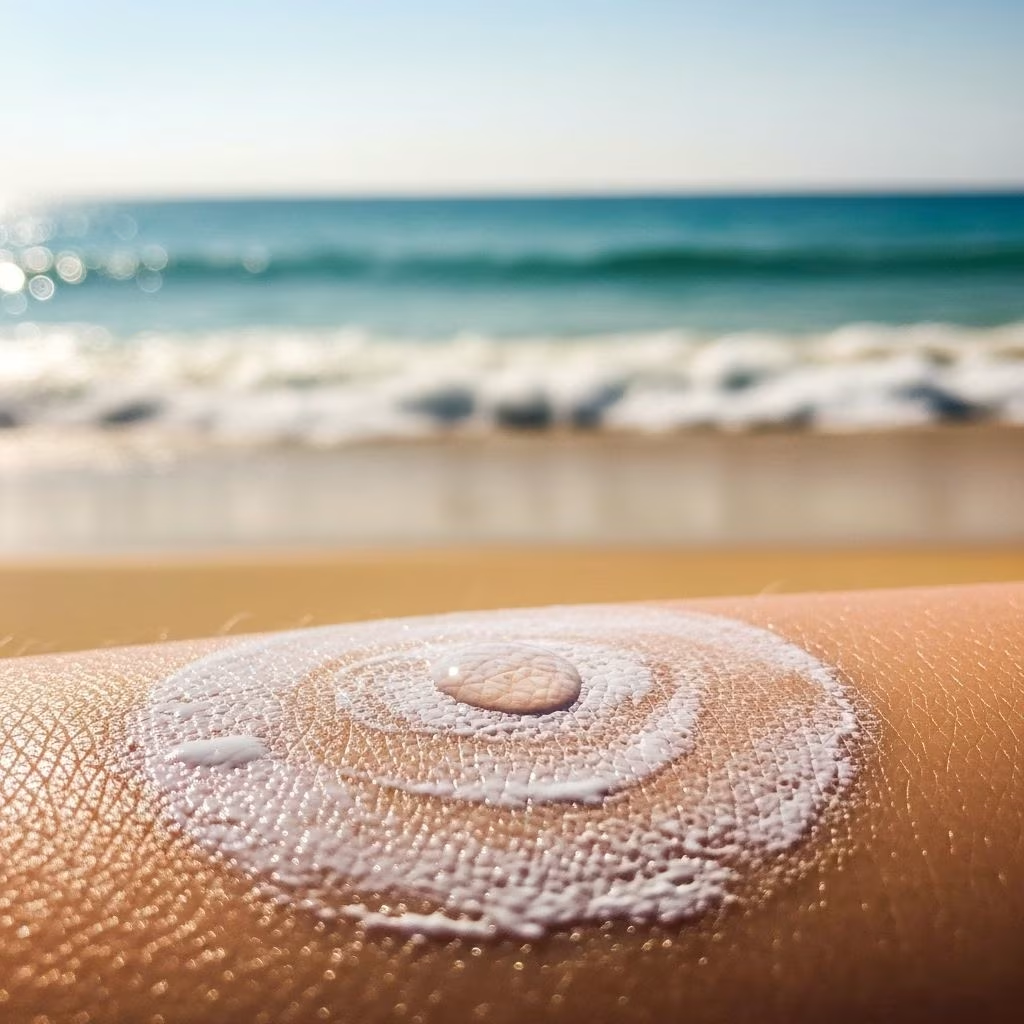
Introduction to Water Resistant Sunscreens
Water-resistant sunscreens are designed to provide protection against UV rays during water activities or when sweating. They are formulated to adhere to the skin longer than non-water-resistant sunscreens, ensuring some level of protection even when wet. However, the terms \”water-resistant\” and \”very water-resistant\” often cause confusion, with each having distinct testing criteria and durations of effectiveness.
Understanding Water Resistant vs Very Water Resistant
Both water-resistant and very water-resistant sunscreens must retain at least 50% of their original SPF after being tested in water. The difference lies in the duration for which they maintain this level of protection.
Differences in Testing Times
- Water-Resistant Sunscreens: These are tested for 40 minutes in a whirlpool bath and are suitable for light swimming or sweating. They require reapplication after 40 minutes of water exposure.
- Very Water-Resistant Sunscreens: Tested for 80 minutes in a whirlpool bath, these sunscreens are ideal for prolonged water activities like swimming or water sports. Reapplication is necessary after 80 minutes.
Testing Methods for Water Resistance
The water resistance of sunscreens is determined through standardized tests. Volunteers apply the sunscreen in the same amount and manner, and then enter a whirlpool bath. The water in the bath constantly swirls to simulate real-world conditions, such as swimming or playing in the sea.
Understanding SPF Retention
To pass the test, a sunscreen must retain at least 50% of its original SPF after immersion. For example, an SPF 30 sunscreen will filter out about 96% of UV rays initially. After testing, it will still filter out at least 93% of UV rays, providing significant protection even after water exposure.
Importance of Water Resistant Sunscreen
Water-resistant sunscreens are crucial for swimmers and individuals engaging in water activities. They prevent UV rays from reaching the skin, reduce the risk of sunburn, and maintain healthy skin by preventing dryness and chlorine-induced discoloration.
Difference Between Water Resistant and Waterproof
While \”water-resistant\” sunscreens offer protection for a specified duration, \”waterproof\” is a term that has been largely phased out due to its misleading nature. No sunscreen is completely waterproof, and all sunscreens eventually lose effectiveness with prolonged water exposure. The FDA prohibits the use of terms like \”waterproof\” or \”sweatproof\” on packaging to avoid giving consumers a false sense of security.
Choosing the Right Sunscreen
When selecting a sunscreen, it’s essential to consider the activity level and the duration of water exposure. For prolonged water activities, very water-resistant sunscreens are preferable. Always follow reapplication guidelines to maintain adequate protection.
Frequently Asked Questions (FAQs)
Q: What is the difference between water-resistant and very water-resistant sunscreens?
A: Water-resistant sunscreens maintain protection for up to 40 minutes in water, while very water-resistant sunscreens last up to 80 minutes.
Q: How do water-resistant sunscreens retain SPF during water activities?
A: They are formulated using ingredients that help UV filters penetrate the skin’s upper layers, where they are more protected from being washed off. Additionally, some use materials that bind tightly to the skin, providing resistance to water and abrasion.
Q: Why are sunscreen products no longer labeled as ‘waterproof’?
A: The term \”waterproof\” is misleading because no sunscreen can completely withstand water or sweat. The FDA prohibits such claims to ensure consumers are not misled about the need for frequent reapplication.
Table of Content
- Understanding Water Resistant vs Very Water Resistant
- Testing Methods for Water Resistance
- Importance of Water Resistant Sunscreen
- Difference Between Water Resistant and Waterproof
- Choosing the Right Sunscreen
- Frequently Asked Questions
References
- https://www.thefactsabout.co.uk/news/diving-into-the-world-of-water-resistant-sunscreens
- https://oceanfreedom.com/blogs/blog/how-to-read-a-sunscreen-label
- https://elemntlife.com/blogs/swim-skincare/what-is-the-importance-of-water-resistant-sunscreen-for-swimmers
- https://dermasport.com/blogs/your-skincare-coach/waterproof-vs-water-resistant-sunscreen-whats-the-difference-and-why-it-matters
- https://www.solrx.com/blogs/articles/sport-sunscreen-vs-regular-sunscreen
- https://www.sallybeauty.com/FAQ_SKIN_SENSE_96.html
- https://news.ceway.eu/across-borders-comparing-water-resistance-tests-for-sunscreens-worldwide/
- https://poolbarlondon.co.uk/waterproof-vs-water-resistant/


