


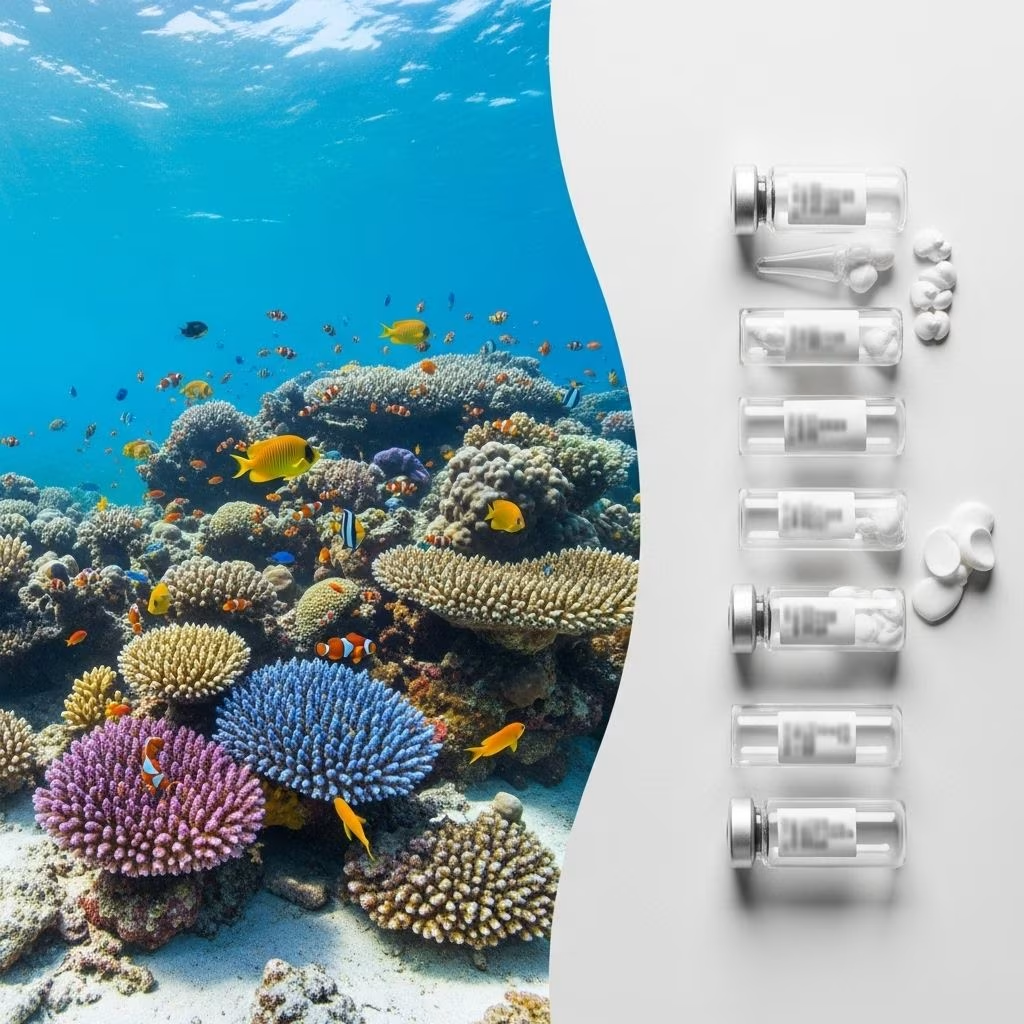
Reef Safe Sunscreens and Banned Ingredients: Protecting Coral Reefs and Your Health
Coral reefs, often termed the rainforests of the sea, are vital to global marine biodiversity. However, these fragile ecosystems face myriad threats, including warming oceans, pollution, and the widespread use of chemical sunscreens. In response, scientists, conservationists, and lawmakers have advocated and established new standards for ‘reef safe’ sunscreens—products specially formulated to avoid ingredients proven to harm coral reefs and marine life. This article offers a comprehensive exploration of reef safe sunscreens, key banned ingredients, regulatory actions, and practical steps for responsible sun protection.
Importance of Coral Reefs and the Need for Protection
Coral reefs sustain an estimated one-quarter of all marine life, serving as nurseries for fish, providing coastal protection, and supporting livelihoods through fishing and tourism. Yet their survival is increasingly threatened by rising ocean temperatures, acidification, destructive fishing practices, and chemical pollution—including runoff from sunscreens used by beachgoers.
- Biodiversity: Reefs host thousands of species of fish, invertebrates, and plants.
- Economic Value: Reef tourism and fisheries collectively generate billions in global revenue each year.
- Coastal Protection: Reefs buffer shorelines from storms and erosion.
What Does ‘Reef Safe’ Mean?
The term “reef safe” typically indicates a sunscreen does not contain specific chemical UV filters such as Oxybenzone and Octinoxate, which have been linked to coral bleaching and genetic damage in marine organisms. Google and scientific definitions focus on excluding these and similar ingredients, but research shows true reef safety is more complex—requiring the careful selection of both active and inactive ingredients and consideration of particle size.
- Active Ingredients: Only mineral-based UV filters—like non-nano zinc oxide and titanium dioxide—are generally considered safe.
- Inactive Ingredients: Preservatives, fragrances, and other additives can also pose risks.
- Particle Size Matters: Non-nano formulations are preferred, as nanoparticles may be toxic to reef organisms at high concentrations.
- Legality vs Safety: “Reef safe” remains unregulated and is often used in marketing without stringent proof.
Expert Insights
Dr. Craig Downs, a prominent scientist in the field, found alarming concentrations of oxybenzone in ocean water samples near popular swim sites, catalyzing bans and policy changes in locations like Hawaii, the US Virgin Islands, Palau, Bonaire, and Thailand.
How Do Chemical Sunscreens Harm Reefs?
Chemical UV filters, utilized in many mainstream sunscreens, impact coral reefs via several biological mechanisms:
- Coral Bleaching: Compounds such as oxybenzone and octinoxate disrupt coral DNA, impair reproduction, and accelerate bleaching even at low concentrations.
- Hormonal Disruption: Some chemicals act as endocrine disruptors, affecting fish and other sea life.
- Toxicity to Larvae: Studies show chemical UV filters can deform, kill, or inhibit growth of coral larvae.
- Bioaccumulation: Sunscreen chemicals can accumulate in marine food chains, impacting higher order predators and, ultimately, humans.
Research Findings
Field studies and laboratory research consistently demonstrate negative outcomes for aquatic ecosystems exposed to sunscreen runoff. Even minute amounts can have severe effects, making ingredient selection critical for reef preservation.
Breakdown of Banned Ingredients in Sunscreens
Global regulations and scientific research have identified several key sunscreen ingredients for prohibition due to their environmental risks, primarily their impact on coral reefs and surrounding marine life.
| Ingredient | Type | Reasons for Ban | Notable Regions |
|---|---|---|---|
| Oxybenzone (Benzophenone-3) | Chemical UV Filter | Coral bleaching, endocrine disruption, genetic damage to marine life | Hawaii, Key West, Palau, US Virgin Islands |
| Octinoxate (Ethylhexyl methoxycinnamate) | Chemical UV Filter | Coral bleaching, endocrine disruption | Hawaii, Bonaire, Palau, US Virgin Islands |
| Octocrylene | Chemical UV Filter | Coral toxicity, bioaccumulation | Bonaire, Palau |
| PABA (Para-aminobenzoic acid) | Chemical UV Filter | Toxic to marine organisms | Various regions |
| Homosalate | Chemical UV Filter | Possible endocrine disruptor | Under review in some regions |
| Nanoparticle zinc oxide & titanium dioxide | Mineral UV Filter | Toxic at high concentrations, may pass cellular barriers | National Parks Service advises against |
Other ingredients, such as certain preservatives, fragrances, and parabens, are under scrutiny for their ecological risks and may be included in future bans.
Mineral vs. Chemical Sunscreens: Key Differences
Understanding the distinction between mineral and chemical sunscreens is vital for making reef safe choices.
- Chemical Sunscreens: Contain ingredients like oxybenzone, octinoxate, avobenzone, homosalate, and octocrylene. These penetrate the skin and absorb UV rays, converting them into heat, but many present risks to reefs and human endocrine systems.
- Mineral Sunscreens: Use either zinc oxide or titanium dioxide as active ingredients. These remain on the skin’s surface, physically blocking and reflecting UV rays away.
- Particle Size: Opt for “non-nano” mineral particles (larger than 100 nanometers) to avoid bioavailability and toxicity issues.
| Characteristic | Chemical Sunscreens | Mineral Sunscreens |
|---|---|---|
| UV Protection Mechanism | Absorbs and converts UV rays | Reflects and scatters UV rays |
| Reef Impact | Potentially harmful | Generally safe when non-nano |
| Main Ingredients | Oxybenzone, Octinoxate, Avobenzone, Homosalate, Octocrylene | Zinc Oxide, Titanium Dioxide |
| Skin Compatibility | Possible irritation, not ideal for sensitive skin | Better for sensitive skin, less irritation |
| Environmental Impact | Coral bleaching, toxicity | Lower environmental impact |
Global Regulations on Sunscreen Ingredients
Driven by mounting scientific evidence, several governments worldwide have legislated bans on sunscreen ingredients hazardous to coral reefs:
- Hawaii: Banned oxybenzone and octinoxate from January 2021 onwards.
- Key West, FL: Similar bans enacted in recent years.
- Palau: Prohibits ten reef-toxic ingredients, including oxybenzone and octocrylene.
- Bonaire and US Virgin Islands: Laws targeting a broader array of chemical UV filters.
- Thailand: Banning harmful sunscreens in marine parks to protect local reefs.
Despite these advances, enforcement and compliance remain inconsistent, partly due to the unregulated nature of ‘reef safe’ and ‘reef friendly’ claims.
How to Choose a Reef Safe Sunscreen
Making informed choices means reading labels, understanding marketing terms, and selecting proven safe products.
- Check the active ingredients are 100% non-nano zinc oxide or non-nano titanium dioxide.
- Confirm absence of banned chemical UV filters: oxybenzone, octinoxate, octocrylene, PABA, and homosalate.
- Avoid products labeled only as “reef friendly”—these are not regulated.
- Choose lotion-based formulas over sprays and mists to reduce inhalation risks, especially with titanium dioxide.
- Favor packaging with high recycled content or biodegradable options to minimize plastic waste.
Brands may advertise ‘reef safe’ but still include questionable ingredients—always check for independent certifications or third-party testing.
Challenges and Controversy Around Labeling
Currently, terms like “reef safe” and “reef friendly” are advertising buzzwords rather than regulated standards. Some manufacturers exploit this ambiguity, leading to widespread misinformation and lawsuits against brands that misrepresent their products’ eco-impact.
- No Regulatory Standard: FTC and FDA do not oversee these marketing claims.
- Risk of False Claims: Products can still contain harmful ingredients despite labeling.
- Industry Response: Calls for stricter labeling laws and mandatory testing.
Best Practices
Rather than rely solely on packaging, consumers should refer to ingredient lists and choose mineral-based, non-nano sunscreens for reef safety.
Additional Considerations
- Human Health: Many banned chemicals (like oxybenzone) accumulate in the body and can disrupt hormones or cause allergic reactions. Mineral sunscreens offer gentler options for sensitive skin.
- SPF Ratings: Opt for SPF 30 or higher to ensure adequate protection; layering with moisturizing and pollution-defense products further supports skin health.
- Ocean Conservation: Direct education of beachgoers, divers, and snorkelers is critical to reduce sunscreen runoff and promote marine stewardship.
Frequently Asked Questions (FAQs)
Q: Is ‘reef safe’ sunscreen always safe for marine environments?
A: No. ‘Reef safe’ is not a regulated term. Products advertised as such may still contain harmful chemicals. Always check ingredient lists and prefer non-nano mineral filters.
Q: Why are ‘non-nano’ minerals preferred?
A: Non-nano zinc oxide and titanium dioxide do not easily penetrate living cells and are less likely to harm marine life compared to nanoparticles.
Q: Are chemical sunscreens unsafe for humans?
A: Some chemical UV filters, like oxybenzone, are linked to endocrine disruption and allergies. Mineral sunscreens are generally safer, especially for sensitive skin.
Q: Can I use spray sunscreen if it’s mineral-based?
A: Lotions are recommended over sprays, especially if they contain titanium dioxide, to avoid inhalation risks.
Q: Are there other ways to protect against sun damage and environmental impact?
A: Yes. Wear protective clothing, seek shade, avoid peak sun hours, and use eco-friendly sunscreen packaging.
Conclusion
By carefully choosing sunscreen formulated without banned and harmful ingredients, individuals can contribute to the protection and restoration of crucial coral reef ecosystems, safeguard their own health, and support marine conservation efforts. Using non-nano mineral sunscreens with eco-friendly packaging represents an impactful, science-driven choice for future beach days and water adventures.
References
- https://suntribesunscreen.com/reef-safe-definition-and-what-it-actually-means/
- https://www.biossance.com/blog/why-you-should-always-protect-your-skin-with-reef-safe-sunscreen/
- https://savethereef.org/about-reef-save-sunscreen.html
- https://stream2sea.com/blogs/dive-deeper/ocean-friendly-reef-safe-ingredients-how-to-be-sure-your-sunscreen-is-truly-ocean-friendly
- https://www.nps.gov/articles/concessions-sun-protection.htm
- https://www.voyantbeauty.com/understanding-reef-safe-sunscreen/
- https://www.surfrider.org/news/surfrider-foundations-2025-reef-friendly-sunscreen-guide
- https://www.thinkdirtyapp.com/is-reef-safe-sunscreen-really-reef-safe-270cad84a2fc/


