


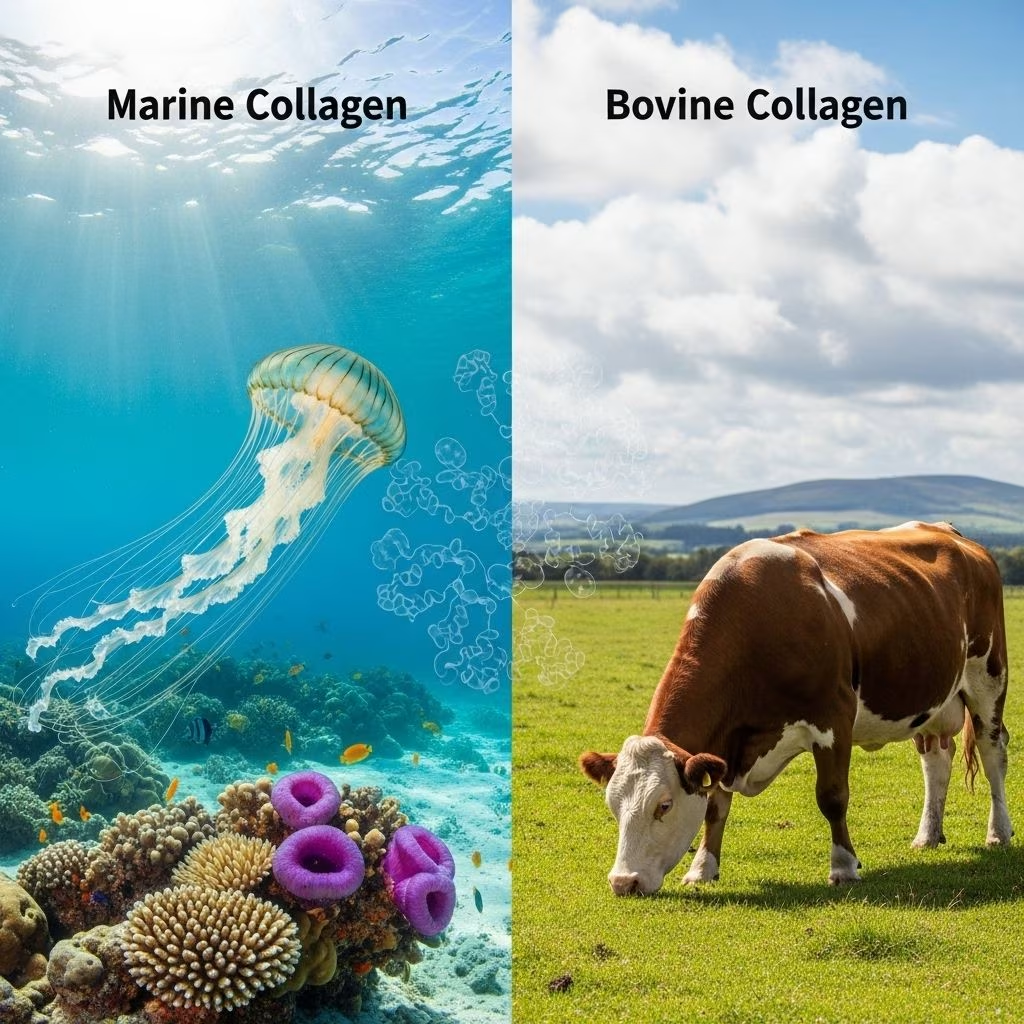
Collagen supplements have become mainstays in the beauty and wellness world—revered for their potential to support skin elasticity, hydration, and youthful appearance. But with a market saturated by both marine collagen and bovine collagen, questions arise: Which type offers better absorption? Which delivers superior effects for skin health? This in-depth guide compares marine and bovine collagen, focusing on their bioavailability and effectiveness for radiant, healthy skin.
Understanding Collagen: The Basics
Collagen is the most abundant protein in the human body, making up about 30% of total protein content. It forms the structural framework in skin, bone, cartilage, and connective tissues. With age, natural collagen production declines, leading to wrinkles, loss of elasticity, and drier skin. Supplementing with collagen may help slow some signs of aging by supporting the skin’s underlying architecture.
Types and Sources of Collagen
Collagen supplements are typically derived from animal sources. The two most common forms are:
- Bovine collagen: Sourced from the hides and connective tissues of cows.
- Marine collagen: Sourced from the skin and scales of fish, usually wild-caught or from aquaculture by-products.
Collagen is categorized by type based on its amino acid composition and role in the body. The primary types found in supplements are:
- Type I collagen: Found in skin, tendons, and bone; crucial for skin health
- Type III collagen: Abundant in skin, blood vessels, and organs; often paired with Type I for skin structure
Bovine collagen contains both Type I and Type III, whereas marine collagen is primarily Type I—identical to the most prevalent type of collagen in human skin.
Bioavailability: What Does It Mean?
Bioavailability describes how efficiently a substance is absorbed, distributed, and utilized within the body. For collagen, this means the proportion of ingested collagen that enters circulation, survives digestion, and is used for building and maintaining connective tissue—especially skin.
Key determinants of collagen bioavailability include:
- Peptide size: Smaller peptides cross the intestinal barrier more readily.
- Hydrolysis: The process of enzymatically breaking collagen down into more digestible peptides and amino acids.
- Source and purity: The animal source and processing quality may influence absorption.
Collagen supplements are usually “hydrolyzed”—broken down into short peptides—because this increases bioavailability compared to large, intact collagen molecules.
Marine Collagen: Bioavailability and Skin Benefits
Marine collagen, especially in its hydrolyzed form, is distinguished by its smaller peptide size, which is often cited as a reason for its higher bioavailability compared to bovine collagen. Studies suggest the particles in marine collagen can be up to 1.5 times more efficiently absorbed than those from bovine sources due to their lower molecular weight.
Why is marine collagen considered superior for skin?
- Type I Collagen Abundance: Matches the structure predominant in human skin, lending itself to restoration of skin elasticity and hydration.
- Rich Hydroxyproline Content: Hydroxyproline is an amino acid critical for collagen’s triple-helix stability and is strongly linked to skin regeneration and elasticity.
- Improved Wrinkle Reduction: Clinical studies indicate that marine collagen supplementation can improve skin moisture, reduce the appearance of wrinkles, and enhance skin structure.
Additionally, marine collagen is valued for its high digestibility and potential to deliver rapid beauty benefits. It is also pescatarian-friendly and generally considered more sustainable when derived from responsibly managed fisheries.
Scientific Evidence for Marine Collagen and Skin
- Clinical studies show improvements in skin hydration, elasticity, and reduction of wrinkles after marine collagen supplementation over 8–12 weeks.
- Some research also suggests beneficial effects on hair and nail strength by prolonging hair growth cycles and supporting keratin production.
Bovine Collagen: Bioavailability and Skin Benefits
Bovine collagen is derived from the hides and connective tissues of cows. Like marine collagen, high-quality bovine collagen undergoes hydrolysis to facilitate absorption. Once hydrolyzed, bovine collagen’s peptide size can be brought down to molecular weights similar to marine collagen, diminishing the difference in absorption rates when quality processing is applied.
Benefits of Bovine Collagen for Skin:
- Type I and III Collagen Content: Support skin’s overall structure, elasticity, and hydration, with added benefit for joints, bones, and gut health.
- Well-established Research: Multiple studies report improved skin hydration, elasticity, and reduced wrinkles, similar to the benefits seen with marine collagen.
While its bioavailability is often described as “slightly lower” compared to marine collagen due to somewhat larger peptide sizes, hydrolysis can largely eliminate this gap—making well-processed bovine and marine collagens comparably effective.
Side-by-Side Comparison: Marine vs. Bovine Collagen
| Feature | Marine Collagen | Bovine Collagen |
|---|---|---|
| Source | Fish skin and scales (wild or farmed) | Hides and connective tissue from cattle |
| Collagen Type | Type I | Type I & III |
| Amino Acid Profile | Rich in glycine, proline, hydroxyproline (promotes skin and hair health) | Higher glycine, proline, hydroxyproline, arginine (benefits joints, muscles, gut) |
| Bioavailability | Very high (smaller peptides, rapid absorption) | High (very comparable after hydrolysis) |
| Main Skin Benefit | Reduces wrinkles, improves elasticity/hydration | Similar improvements, also supports joint/gut health |
| Allergies | Not suitable for fish/shellfish allergies | Unsuitable for those with beef allergies/restrictions |
| Diet Suitability | Pescatarian; often Kosher/Halal | Not suitable for pescatarians |
| Sustainability | Often sustainable via fish by-product use | Can be sustainable from grass-fed herds |
| Cost | Typically more expensive | Generally more affordable |
| Taste | Mild fishy taste (varies by processing) | Usually neutral; blends well |
The Science Behind Collagen Absorption and Peptide Size
Collagen’s journey from supplement to skin-boosting peptide depends on molecular weight—how large or small its particles are. Smaller peptides pass through the gut wall more efficiently, entering the bloodstream to reach target tissues.
- Marine collagen naturally contains peptides with lower molecular weight (around 5000 daltons), which aids rapid absorption.
- Bovine collagen can be processed to achieve similarly low molecular weights via advanced hydrolysis, making bioavailability nearly equivalent for high-quality products.
Hydrolysis: The Game Changer
Regardless of origin, hydrolyzed collagen ensures peptide size is optimized for assimilation. It is the processing—more than the original animal source—that ultimately determines absorption figures. As a result, choosing a reputable, well-hydrolyzed collagen is often more important than agonizing over the source alone.
Additional Factors: Allergies, Sustainability, and Suitability
Allergy and Diet Suitability
- Marine collagen is unsuitable for those with fish or shellfish allergies, but ideal for pescatarians and often Kosher/Halal friendly.
- Bovine collagen is inappropriate for those with beef allergies or following a pescatarian diet but may be appropriate for other dietary needs.
Sustainability
- Marine collagen is often more sustainable, utilizing seafood industry by-products that might otherwise go to waste.
- Bovine collagen sustainability varies: grass-fed or organic sources are best, but industrial cattle farming can carry higher environmental costs.
Cost and Taste
- Marine collagen is usually more expensive due to its source and processing demands.
- Bovine collagen tends to be more budget-friendly, with a neutral taste and easy blending in drinks and foods.
Frequently Asked Questions (FAQs)
Q: Which collagen is absorbed faster—marine or bovine?
A: Marine collagen generally has a smaller peptide size, allowing for faster and slightly more efficient absorption. However, both hydrolyzed marine and bovine collagen can be highly bioavailable if properly processed.
Q: Which is better for skin: marine or bovine collagen?
A: Both offer significant benefits for skin health. Marine collagen is often preferred for beauty applications due to its abundance of Type I collagen and superior absorption, but high-quality hydrolyzed bovine collagen is also effective.
Q: Are there concerns with allergies?
A: Individuals allergic to fish or shellfish should avoid marine collagen. Those with beef allergies or dietary restrictions (such as vegans, vegetarians, or certain religious observances) should opt for marine or alternative collagen sources.
Q: Does taking collagen really improve skin appearance?
A: Studies have shown that collagen supplementation can improve skin hydration, elasticity, and reduce wrinkles—regardless of animal source—especially after regular use for 8-12 weeks.
Q: What should I look for in a collagen supplement?
- Choose “hydrolyzed” or “collagen peptides” for maximum absorption.
- Seek out reputable manufacturers with clear sourcing and responsible harvesting or raising practices.
- Assess dietary compatibility and allergen warnings before purchasing.
Conclusion: Which Collagen is Best for Skin?
Both marine collagen and bovine collagen are effective for supporting skin health, elasticity, and beauty. Marine collagen is often considered the gold standard for skin due to its Type I profile and naturally higher bioavailability, but advances in hydrolysis mean that premium bovine collagen performs similarly for well-rounded support. Your individual goals, dietary preferences, allergy profile, and sustainability values should guide your choice.
Regardless of type, regular supplementation with a high-quality, hydrolyzed collagen product is key to achieving the benefits seen in clinical studies. Prioritize reputable products backed by transparency and science—for your best, healthiest skin at any age.
References
- https://hunterandgatherfoods.com/blogs/real-food-lifestyle/bovine-vs-marine-collagen-whats-the-difference
- https://www.livemomentous.com/blogs/all/marine-collagen-vs-bovine
- https://ancientandbrave.earth/blogs/news/bovine-marine-or-vegan-what-s-the-difference
- https://www.mdhair.co/article/marine-collagen-vs-bovine-collagen-what-s-the-difference
- https://pmc.ncbi.nlm.nih.gov/articles/PMC7230273/
- https://vitaquest.com/marine-collagen-vs-grass-fed-collagen/
- https://ingeniouslife.com/bovine-porcine-or-marine-which-collagen-is-best/
- https://thehealthychef.com/blogs/wellbeing/marine-collagen-vs-bovine-collagen-whats-the-difference
- https://www.yam-nutrition.com/en/blogs/nutrition-et-alimentation/comparaison-detaillee-collagene-marin-vs-collagene-bovin


