


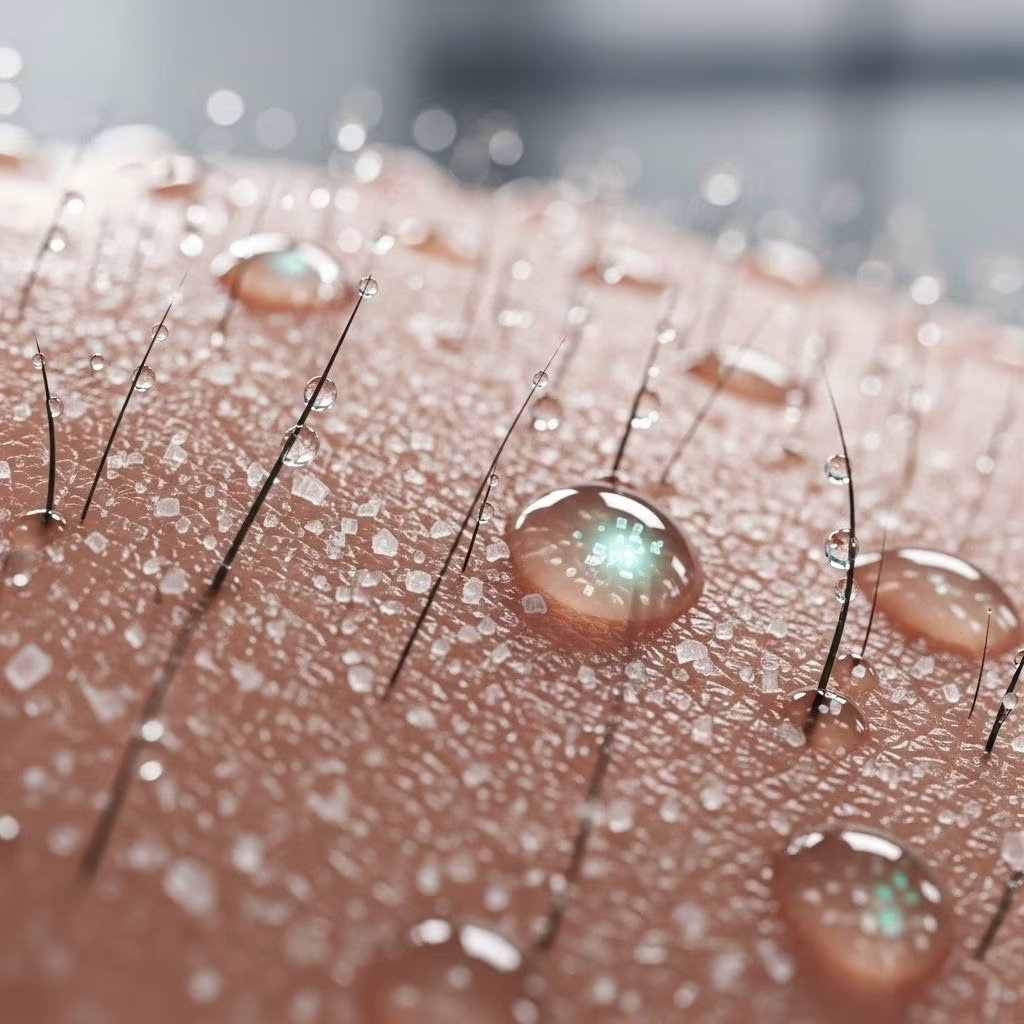
Sweat & Skin Barrier: How pH and Salts Impact Health
Your skin is more than an external covering — it’s a dynamic organ, constantly interacting with its environment. Sweat and the skin barrier play intertwined roles in protecting against pathogens, regulating hydration, and even maintaining whole-body health. The subtle chemistry of skin — specifically, its pH and the content of salts and minerals in sweat — underpins the resilience or vulnerability of this barrier. This article delves deep into the science of sweat, skin pH, and the salts that influence dermatological health, offering a comprehensive overview for both healthcare professionals and curious readers.
Introduction: The Vital Interface
The skin — our largest organ — forms a frontier between the body and the external world. A healthy skin barrier is crucial for retaining water, blocking toxins, preventing infections, and maintaining optimal physiological conditions. Sweat, secreted by specialized glands, is more than a cooling mechanism—it’s a vehicle for excreting salts, acids, and antimicrobial agents, all of which interact with and influence the chemical landscape of the skin.
Skin Barrier Structure and Function
The stratum corneum (SC) is the outermost layer of the epidermis and the first line of defense. Its strength and selectivity arise from:
- Hydrophobic lipid matrix: Composed mainly of ceramides, cholesterol, and free fatty acids
- Tight junctions and desmosomes: Cellular structures that hold corneocytes together
- Lipid organization into lamellar bilayers: Critical for retaining water and excluding pathogens or irritants .
This sophisticated architecture is constantly maintained and regulated by enzymes, many of which are highly sensitive to the skin’s local pH .
Sweat: Composition and Functions
Sweat is produced by eccrine (widely distributed), apocrine (localized), and sebaceous glands. Its composition varies according to multiple factors, but typically includes:
- Water: 98–99%
- Electrolytes: Sodium (Na+), Chloride (Cl−), Potassium (K+), Calcium (Ca2+), Magnesium (Mg2+)
- Bicarbonate, lactate, and trace minerals
- Antimicrobial peptides (e.g., dermicidin)
- Urea, ammonia, nitrate, nitrite
Sweat serves the following key physiological functions:
- Thermoregulation
- Excretion of metabolic waste
- Mainenance of the skin’s acid-base balance via salt and acid composition
- Delivery of antimicrobial agents to the skin’s surface
Sweat and pH Dynamics
Initially, sweat is slightly alkaline (pH ~7.1–7.4) as it forms within sweat glands. As it travels through sweat ducts, bicarbonate is reabsorbed and hydrogen ions are secreted, acidifying the fluid to a pH as low as 4.0–5.0, particularly when sweat rates are low . When sweat rate increases, e.g., during intense exercise, the pH may remain higher (~6.9), while concentrations of certain solutes (lactate, salts) are diluted .
Skin pH and the Acid Mantle
The skin’s surface normally sustains an acidic pH (4.0–6.0) — referred to as the acid mantle. This acidic environment is:
- Vital for the optimal activity of pH-dependent enzymes
- Crucial for the formation of ceramides and other lipids
- Necessary for antimicrobial defense
- Central to regulation of microbial flora — commensal bacteria thrive in this acidity, while pathogens favor neutrality or alkalinity
Disruption of this delicate pH balance compromises barrier integrity, increases protease activity, and impairs antimicrobial protection.
Role in Enzyme Function & Lipid Processing
Enzymes such as β-glucocerebrosidase (optimal at pH 5.6) and acidic sphingomyelinase (optimal at pH 4.5) are critical for ceramide synthesis, underpinning the permeability barrier. At higher (neutral) pH, these enzymes are much less active (up to 10-fold decrease!), resulting in depleted lipid layers and deficient barrier function .
Serine proteases (e.g., kallikrein 5, kallikrein 7) have neutral pH optima and become hyperactive as pH rises, degrading proteins that bind corneocytes together and triggering excessive peeling (desquamation) and increased risk of inflammation .
Antimicrobial Effects
Acidic pH enhances the activity of antimicrobial peptides, including dermicidin — found in sweat — which is most efficient against pathogens at pH 5.5, losing potency as pH rises . Nitrate in sweat is converted to nitrite, which forms reactive nitrogen species in an acidic milieu, advancing non-specific antimicrobial defense .
Role of Salts in Sweat and Skin Health
Sweat contains various salts that serve multiple health functions:
- Sodium and Chloride: Vital for osmotic balance and skin hydration
- Bicarbonate: Alters acid-base balance both in sweat and skin; reabsorption in sweat glands helps maintain extracellular pH
- Lactate: Eccrine glands secrete lactate according to their metabolic rate; this can affect skin metabolism and moisture retention
- Nitrate/Nitrite: Works with skin bacteria to generate antimicrobial compounds, especially in acidic conditions
Imbalances or excessive loss of these salts — via excessive sweating or certain conditions — can shift skin pH, impact hydration, and compromise the skin’s barrier and defense mechanisms.
Interactions: pH, Salts, and Barrier Function
| Factor | Effect on Skin Barrier | Main Consequences |
|---|---|---|
| Low pH (4–5.5) | Optimizes lipid-processing enzymes, strengthens SC cohesion, suppresses harmful proteases | Strong permeability barrier, healthy moisture levels, robust antimicrobial defense |
| High pH (6.5–7.5) | Inhibits lipid-processing, activates proteases | Impaired barrier, dryness, inflammation, susceptibility to pathogens |
| High sweat rate | Higher pH, lower lactate concentration, altered salt balance | Potential for dehydration, dilution of antimicrobial peptides |
| Salts (Na+, Cl−, lactate) | Maintain moisture, drive acid-base balance, support antimicrobial functions | Protects against dryness, supports microflora, enhances skin defense |
Factors That Affect Skin pH and Sweat Composition
Skin pH and sweat composition are shaped by myriad influences:
- Anatomical site: Different body areas show different pH profiles; skin folds (axilla, groin) may range pH 6.1–7.4, favoring unique microbial communities
- Age: Newborns have incompletely acidified skin (higher pH); aging leads to thinner, dryer skin and barrier deterioration
- Ethnicity and skin pigmentation: Darkly pigmented skin often demonstrates lower pH, higher lipid content, and superior barrier function
- Cosmetic products: Alkaline soaps/surfactants raise skin pH, disrupting acid mantle and barrier
- Environmental exposures: Urine, feces, ammonia, and irritants can raise skin pH, promoting inflammation and infections
- Hydration and sweat rate: Increased sweating (exercise, heat) shifts pH higher, changes salt concentrations
- Underlying health conditions: Atopic dermatitis, eczema, and other disorders often feature altered sweat composition and elevated skin pH
Ethnic Variation and Barrier Strength
Research demonstrates that darkly pigmented skin (Fitzpatrick IV–V) generally has a lower surface pH (~4.6) compared to lightly pigmented skin (~5.0), alongside enhanced epidermal lipid content and barrier function . Acidification of lighter skin types improves their barrier structure and antimicrobial defense .
Clinical Implications and Skin Disorders
Disturbances in sweat pH and salt content, or leakage of alkaline fluids onto skin, can trigger a spectrum of dermatologic problems:
- Incontinence-Associated Dermatitis (IAD): exposure to urine and feces increases skin pH, activates proteases, and undermines SC integrity, predisposing to inflammation and infection
- Atopic Dermatitis & Eczema: Altered sweat composition and elevated skin pH drive itch, disrupts lipid synthesis, impairs antimicrobial defense
- Dysbiosis: Elevated pH favors growth of pathogenic bacteria (e.g., S. aureus), while commensals thrive in acidic environments
- Barrier Impairment: High pH triggers serine protease activity, leading to excessive desquamation and compromised water retention
- Dryness and Sensitivity: Loss of barrier lipids reduces skin’s ability to hold moisture, increases reactivity to soaps, allergens
Hydration and Sweat-Related Problems
Excessive sweat loss can deplete salts, raising intracellular osmolarity and drawing water out of corneocytes. On the other hand, inefficient sweat excretion can cause local irritation, pH shifts, and secondary infection.
Practical Tips for Protecting Skin Barrier
Maintaining healthy skin barrier — and by extension mitigating sweat and pH-related issues — involves practical steps:
- Choose gentle, pH-balanced cleansers (pH 4.5–5.5)
- Limit exposure to alkaline soaps and harsh surfactants
- Thoroughly rinse and dry skin after exposure to sweat, urine, or feces
- Moisturize regularly, especially after washing, to replenish lipids
- For those with barrier dysfunction (eczema, atopic dermatitis), consider barrier-repair creams and acidifying agents under medical guidance
- Manage sweat using absorbent powders or targeted deodorants, avoiding aggressive antiperspirants that disrupt skin chemistry
- Monitor hydration and electrolyte intake during intense exercise
Frequently Asked Questions (FAQs)
Q: Why is the skin’s acid mantle important?
A: The acid mantle (pH 4.0–6.0) regulates key enzymes, restricts pathogen growth, supports commensal microbes, and ensures optimal lipid organization for water retention and barrier integrity .
Q: What happens if my skin’s pH becomes too high (alkaline)?
A: Elevated pH deactivates lipid-processing enzymes, triggers excessive protease activity, weakens barrier cohesion, impairs antimicrobial defense, and increases risk of irritation, dryness, and infection .
Q: Does sweating a lot affect my skin barrier?
A: Yes. High sweat rates can increase surface skin pH and dilute antimicrobial substances, potentially increasing susceptibility to infection and modifying barrier hydration. However, excessive loss of electrolytes can also lead to dehydration or imbalances .
Q: How does sweat help fight off skin diseases?
A: Sweat delivers antimicrobial peptides (like dermicidin) that are most effective at acidic pH, helping suppress pathogenic bacteria and maintaining a healthy skin microbiome .
Q: Why are certain deodorants and cleansers bad for the skin?
A: Products that raise skin pH or contain harsh chemicals can strip lipids, disturb acid mantle, and compromise barrier function, making skin dry, sensitive, and more prone to disease .
Conclusion
Sweat and skin barrier function are intricately linked through the delicate interplay of pH, salts, and biochemical processes. Understanding these interactions offers practical avenues for enhancing skin resilience, reducing risk of infection and inflammation, and optimizing dermatological health. By safeguarding the acid mantle, supporting healthy sweat composition, and making skin-wise product choices, one can maintain not just the superficial appearance but the profound defensive and adaptive qualities of the skin for lifelong health.
References
- https://www.medicaljournals.se/acta/content/html/10.2340/00015555-1531
- https://pmc.ncbi.nlm.nih.gov/articles/PMC6773238/
- https://www.ucc-today.com/journals/issue/launch-edition/article/skin-ph-and-barrier-function
- https://pmc.ncbi.nlm.nih.gov/articles/PMC10706187/
- https://www.deverauxspecialties.com/rethinking-sweat-control-the-science-behind-hydroxyapatite-in-deodorants/
- https://onlinelibrary.wiley.com/doi/10.1111/exd.13981
- https://ijdvl.com/acid-mantle-what-we-need-to-know/


