


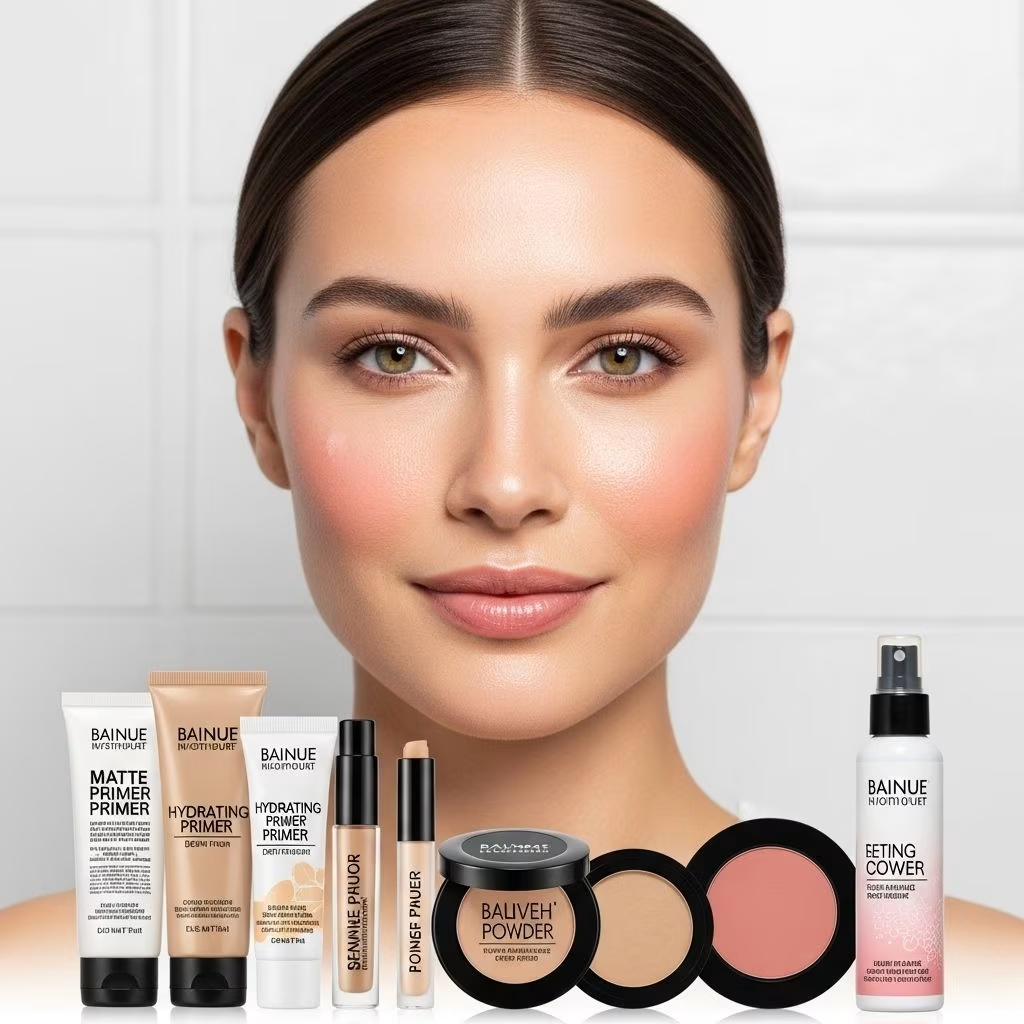
Are you struggling to keep your makeup fresh when your T-zone is oily and your cheeks are dry? This guide dives deep into primers designed for combination skin, unraveling what works, why, and how to get flawless, all-day wear.
Understanding Combination Skin: Oily T-Zone & Dry Cheeks
Combination skin is one of the most common skin types. Typically, the T-zone—which includes the forehead, nose, and chin—produces excess oil, while the cheeks and sometimes the jawline remain dry or even flaky. Managing both concerns simultaneously can be a challenge, particularly when it comes to makeup application and longevity.
- Oily T-zone: Looks shiny, has larger pores, and is prone to breakouts.
- Dry cheeks: May appear rough, feel tight, or display patchiness and redness.
- Makeup issues: Foundation might slide off the T-zone but cling to dry patches on the cheeks.
To overcome these challenges, a specialized approach to priming is essential.
The Role of Primer in Combination Skin
A primer acts as a base for makeup, creating a smooth canvas by addressing concerns like oiliness, dryness, texture, and pore size. Its main functions for combination skin include:
- Oil control in the T-zone to reduce shine and prevent makeup from melting or sliding.
- Hydration on dry cheeks to maintain a plump, flake-free surface.
- Enhanced makeup longevity by gripping foundation and helping it adhere consistently.
- Pore minimizing, especially in oily areas, giving a refined finish.
- Barrier protection to reduce makeup settling into fine lines or rough patches.
Using the right primer formula ensures both zones of your face are prepared for foundation, concealer, and powder.
Types of Primers: What to Use Where?
Because oily and dry areas have different needs, consider targeted primers for each zone or a balanced, hybrid formula.
| Primer Type | Best For | Key Benefits |
|---|---|---|
| Mattifying Primer | Oily T-Zone | Controls shine, reduces oil, blurs pores, prevents makeup slippage. |
| Hydrating Primer | Dry Cheeks | Moisturizes, soothes, plumps skin, prevents flaking and tightness. |
| Pore-Minimizing Primer | Enlarged pores (often nose/forehead) | Smooths texture, blurs imperfections, helps even foundation application. |
| Color-Correcting Primer | Redness, dullness, uneven tone | Neutralizes discoloration or brightens sallow areas. |
| Hybrid/All-in-One Primer | All-over use or mild combination skin | Delivers a balance of oil control and hydration. |
- Many makeup artists recommend applying two different primers: a mattifying primer only on the T-Zone (forehead, nose and chin) and a hydrating primer on the cheeks and other dry areas for best results.
Key Ingredients for Oily and Dry Areas
Understanding ingredient lists will help you select primers that address the unique demands of your skin’s different zones.
- For Oily T-Zone:
- Niacinamide: Regulates oil and tightens pores.
- Salicylic acid: Gently exfoliates, helps manage acne and unclogs pores.
- Clay or silica: Absorbs excess oil for a matte finish.
- Mushroom extract: Supports pore minimization and calms excess sebum.
- Caffeine: Instantly de-puffs and helps reduce shine.
- For Dry Cheeks:
- Hyaluronic acid: Provides deep hydration and plumps the skin’s surface.
- Glycerin: Acts as a humectant, drawing moisture into skin.
- Aloe vera: Soothes, reduces redness, and hydrates without heaviness.
- Vitamin E and antioxidants: Protect and nourish sensitive dry patches.
Avoid heavily fragranced primers or high alcohol content, especially on sensitive or dry areas, as they can trigger irritation or worsen dryness.
How to Apply Primer for Combination Skin
Careful application is crucial for achieving the desired balance between a matte T-zone and hydrated cheeks. Here are the recommended steps:
- Start with a cleansed face: Use a gentle cleanser followed by a lightweight, suitable moisturizer for combination skin.
- Let your skincare absorb: Allow moisturizer or sunscreen to sink in fully (wait a few minutes).
- Targeted application: Take a pea-sized amount of mattifying primer and apply only to oily areas (forehead, nose, chin).
- Hydrating primer for cheeks: Use another pea-sized amount of hydrating primer and gently blend into the cheeks and dry areas.
- Wait before applying foundation: Give the primer 30 seconds to a minute to settle for optimal grip.
- Apply foundation: Use a damp makeup sponge or brush, working from center outward. Build coverage only where needed to avoid caking.
- Set T-zone if needed: Finish with a light dusting of translucent powder only on oily spots.
By customizing your primer routine on different zones, you maximize both oil control and hydration, creating a smooth, even base for makeup.
Top-Rated Primers for Oily T-Zone & Dry Cheeks
These primers are highly recommended by beauty experts and user reviews for combination skin. Always patch-test before using new products.
| Primer Name | Type/Benefit | Notable Ingredients |
|---|---|---|
| NYX Professional Makeup Pore Filler | Mattifying, pore-minimizing for T-zone | Silica, Vitamin E |
| e.l.f. Power Grip Primer + Niacinamide | Hydrating and pore-refining for cheeks and T-zone | Niacinamide, Hyaluronic Acid |
| Glo Skin Beauty Mattifying Primer | Oil control, shine-free finish for oily T-zone | Niacinamide, Tea Tree, Caffeine, Aloe Vera |
| Milani Skin Quench Hydrating Face Primer | Deep hydration for dry cheeks | Hyaluronic Acid, Coconut Water |
| L.A. Girl Pro Prep HD Primer | Pore-minimizing and smoothing (good for T-zone) | Vitamin E |
| Smashbox Photo Finish Primerizer | Hydrating and smoothening (cheeks/all-over) | Niacinamide, Hyaluronic Acid |
- For best results, choose a mattifying or pore-filling option for the T-zone and a hydrating primer for cheeks, or a balanced hybrid formula for a single-step routine if your combination skin isn’t too extreme.
Common Mistakes to Avoid
- Using only one type of primer all over: This may leave either your T-zone shiny or your cheeks tight and flaky.
- Applying too much product: Excess primer can cause pilling or cakiness, especially when layered with foundation.
- Skipping moisturizer: Primer is not a substitute for hydration, especially on dry areas.
- Not letting skincare absorb: Immediate application can cause products to mix and ball up.
- Choosing the wrong formulation: Matte or oil-control primers can dehydrate cheeks, while intensely hydrating primers may break down makeup on the T-zone.
Professional Tips for Long-Lasting Makeup on Combination Skin
- Map your face: Break your face into regions based on your skin’s needs when applying primer and makeup.
- Custom-mix foundations: Blend a dewy formula for the cheeks with a matte formula for the T-zone for perfect balance.
- Blotting sheets or powder touch-ups: Keep a mattifying solution on hand to spot-treat the T-zone during the day.
- Exfoliate gently and regularly: This helps prevent patchiness on dry areas and keeps the T-zone clear of congestion.
- Use tools: Synthetic brushes or damp sponges provide an even, lightweight application that won’t move your primer base.
- Finish with setting spray: Lock in your flawless look with a balancing setting spray suitable for combination skin.
Frequently Asked Questions (FAQs)
1. Can I use face primer if I don’t wear foundation?
Yes, primers can smooth skin texture, reduce shine or diffuse dryness/fine lines even without makeup.
2. Should I always use two different primers?
Not always—if one area of your face is only slightly oilier or drier, a single balanced primer may suffice. For extreme cases, multi-priming is most effective.
3. How much primer should I apply?
A pea-sized amount per region (T-zone, cheeks) is adequate. Over-application can cause caking and disrupt makeup.
4. Are there primers that treat both oily T-zone and dry cheeks at once?
Some hybrid primers combine oil absorption and hydration. However, results may vary, so customize as needed for your skin’s intensity of combination.
5. Will primer clog pores or cause acne?
Choose non-comedogenic, oil-free formulas for the T-zone and fragrance-free options if prone to sensitivity or breakouts. Look for reviews or dermatologist-tested claims.
6. Can I use primer every day?
Daily use is safe—just make sure to thoroughly cleanse your skin at night.
Conclusion
Finding the best primer routine for oily T-zone and dry cheeks is about personalization. With the right product selection and targeted application methods, combination skin can look radiant, balanced, and flawless all day long. Invest in high-quality primers, experiment with application techniques, and enjoy makeup that finally lives up to your expectations.


