


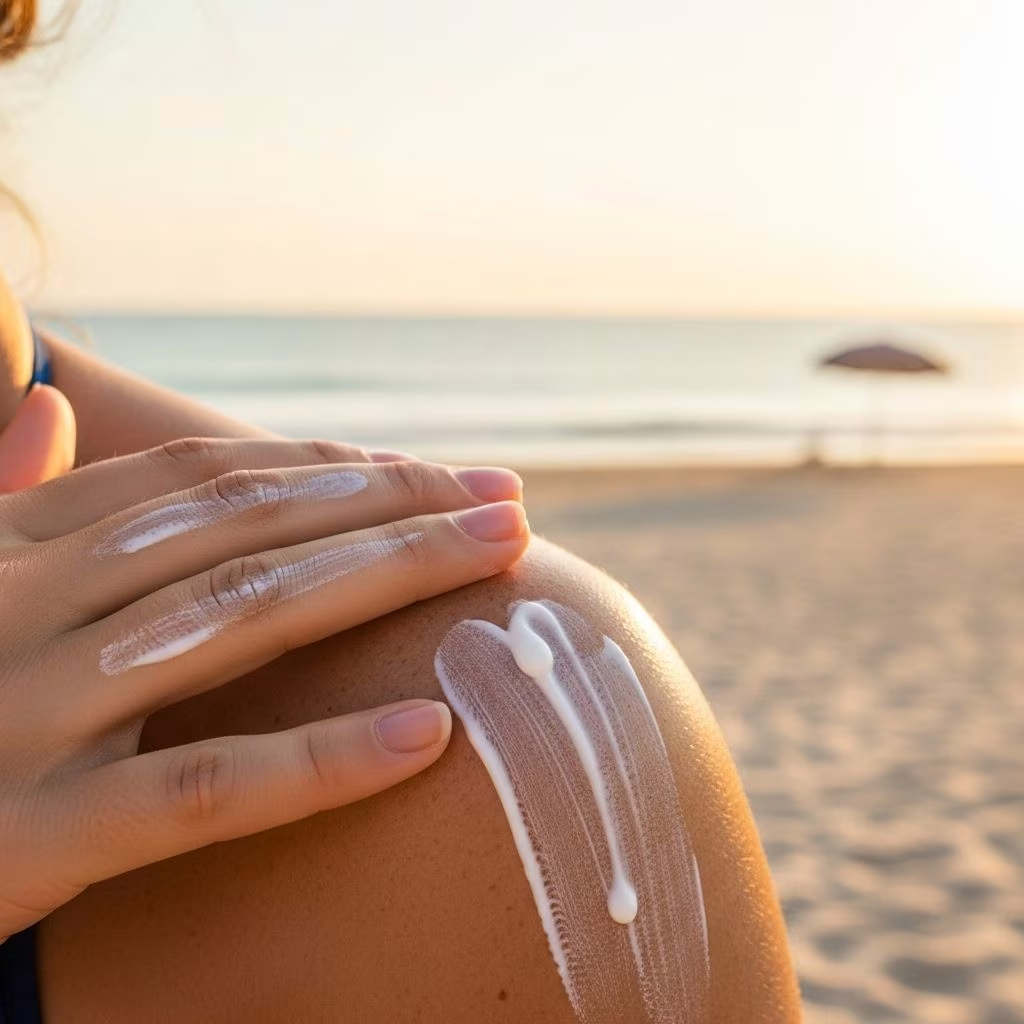
Sunscreen is an essential weapon in the fight against skin damage, premature aging, and skin cancer caused by excessive ultraviolet (UV) radiation exposure. While understanding how to properly apply sunscreen is important, knowing how often to reapply sunscreen can make the difference between genuine protection and a false sense of security. Numerous variables—environmental, personal, and product-related—impact the appropriate reapplication frequency. This comprehensive guide examines all major factors that determine how frequently sunscreen must be reapplied for optimal skin safety.
Why Sunscreen Reapplication Is Necessary
Sunscreen does not last indefinitely. Once applied to the skin, the filter ingredients that block or absorb UV rays gradually break down and dissipate under sun exposure, water, sweat, friction, and environmental influences. Studies confirm that most sunscreens provide effective protection for a period of 80 minutes to 2 hours after their initial application before their efficacy wanes. Failing to reapply can result in unintentional but significant vulnerability to UV rays, raising the risk of sunburn, premature aging, and skin cancer.
- Sun Intensity Breaks Down Filters: Both chemical and physical (mineral) sunscreens degrade with increasing UV exposure, requiring reapplication for consistent defense.
- Physical Removal: Swimming, sweating, rubbing skin with towels, or even basic movement can physically remove sunscreen from the skin’s surface.
- Application Gaps: Most people don’t apply a thick enough layer or miss spots during the initial application. Regular reapplication helps fill these gaps and maintain overall coverage.
General Guidelines for Sunscreen Reapplication
The American Academy of Dermatology and leading dermatologists recommend the following base guidelines for all sunscreen users:
- Reapply sunscreen every 2 hours when outdoors, regardless of activity level, weather, or SPF rating.
- Reapply immediately after swimming, sweating, or towel drying, even if the sunscreen is labeled ‘water-resistant’.
- During peak sun hours (10 a.m.–4 p.m.), be extra vigilant about your reapplication schedule.
- On cloudy days, continue to reapply sunscreen since up to 80% of UV rays can penetrate clouds.
- For indoor exposure near windows, reapplication may still be warranted if you are in direct sunlight.
These guidelines serve as a baseline, but several factors can necessitate more frequent reapplication. The next sections delve into these in detail.
Environmental Factors and Their Impact
Environmental conditions play a substantial role in how quickly sunscreen efficacy is depleted. Understanding and adjusting for these will help you stay protected no matter where you are.
The UV Index
The UV Index is a real-time measure of ultraviolet radiation intensity. When the UV Index is high (often midday, summer, or in equatorial regions), sunscreen degrades more quickly and should be reapplied more often—potentially every hour if exposure is intense.
Altitude
Higher altitudes have thinner atmospheres, offering less natural UV filtration. For every 1,000 meters in elevation, UV radiation increases by roughly 10–12%. Hikers, skiers, and those vacationing in the mountains must reapply sunscreen more frequently—sometimes every hour—due to increased exposure.
Latitude
Areas closer to the Equator receive more direct sunlight and stronger UV year-round. If living or traveling in tropical or subtropical regions, stricter reapplication schedules are advised.
Reflective Surfaces: Water, Sand, and Snow
- Water (oceans, lakes, pools): Reflects up to 10% of UV rays, intensifying exposure.
- Sand: Reflects up to 15% of UV rays.
- Snow/Ice: Can reflect up to 80–90% of UV radiation, posing a high risk of rapid sunburn and rapid breakdown of sunscreen.
Extra sunscreen and more frequent reapplication are essential in these environments.
Weather Conditions
- Wind: Can accelerate evaporation and removal of sunscreen, especially non-water-resistant varieties.
- Humidity: Heavy sweating during hot, humid weather can dissolve sunscreen quickly, with or without physical activity.
- Cloud Cover: As noted, clouds block only a fraction of UV rays, so reapplication on cloudy days remains critical.
Impact of Physical Activity and Water Exposure
Your activities can directly influence the frequency with which you need to reapply sunscreen due to both increased UV exposure and removal of the sunscreen layer:
Physical Exercise and Sweating
Perspiration dilutes and washes away sunscreen, diminishing its effectiveness. Sports like running, cycling, hiking, tennis, or outdoor yoga all accelerate sunscreen breakdown. Even ‘sport’ or ‘sweat-resistant’ formulas need regular reapplication—every 40–80 minutes if sweating heavily.
Water Exposure
- Swimming, surfing, kayaking, and aquatic play will all rinse sunscreen from the skin’s surface, even with ‘water-resistant’ labeling. Reapply sunscreen every time you exit the water and after towel drying.
- Sand and saltwater can abrade the skin, further eroding sunscreen.
Friction
Wearing tightly fitting clothes, backpacks, helmets, or carrying beach towels can rub off sunscreen from high-contact areas such as shoulders, neck, and nose. If your clothing or gear covers or removes certain areas, these spots need to be reapplied more often during activity.
Role of Skin Type in Reapplication Frequency
Not all skin types react the same way to UV exposure. While sunscreen reapplication guidelines are broadly similar for everyone, certain individuals may need even more vigilant reapplication schedules:
- Fair Skin: More prone to burning and sun damage. Reapply frequently, especially when outdoors for more than one hour.
- Darker Skin: While melanin provides some natural protection, UV can still cause pigmentation changes, premature aging, and skin cancer. Regular reapplication is still strongly recommended.
- Photosensitivity or Skin Conditions: Those with skin disorders such as lupus, rosacea, or taking certain medications may need special sunscreen and even stricter reapplication schedules.
- Children and Adolescents: Children’s skin is thinner and more susceptible to damage. Frequent reapplication is essential, particularly when playing outdoors, swimming, or sweating.
Sunscreen Formulation and Product Labeling
The characteristics of your chosen sunscreen also play a critical role:
SPF Values
SPF (Sun Protection Factor) measures protection against UVB rays, not UVA. A higher SPF offers longer initial protection but does not extend the time between reapplications. SPF 30 and above is recommended, but even SPF 100 must still be reapplied every 2 hours.
Water-Resistant vs. Waterproof
- ‘Water-resistant’ means the sunscreen maintains its SPF for 40 or 80 minutes in water. There is no such thing as ‘waterproof’ or ‘sweatproof’ sunscreen; all formulas will wash away to some extent.
- Always reapply after swimming, sweating, or toweling off, regardless of label claims.
Creams, Sprays, Sticks, and Powders
- Sprays and powders are convenient for reapplication but can be applied too lightly. Pay attention to coverage and ensure an even layer.
- Creams and lotions typically provide the most thorough initial coverage and are ideal for face and exposed skin.
Additional Considerations and Common Myths
- Indoors Near Windows: UVA rays can penetrate glass. If working next to large windows or driving, reapplying sunscreen may be necessary, especially during peak hours.
- Makeup Over Sunscreen: Using makeup products with SPF is not a substitute for sunscreen, nor does makeup provide broad-spectrum defense. Powder SPFs and sprays can help with reapplication on top of makeup but should not be your only protection.
- Cloudy, Cool, or Winter Days: UV rays are present year-round and can cause damage even when it’s cold, cloudy, or overcast. Keep up with your reapplication schedule regardless of temperature or visible sunlight.
Summary Table: Reapplication Scenarios
| Situation | Recommended Reapplication Frequency | Notes |
|---|---|---|
| Everyday outdoor use (walking, working) | Every 2 hours | All exposed skin; up to 80% of UV comes through even on cloudy days |
| Peak UV hours (10 a.m. – 4 p.m.) | Every 1–2 hours | Stricter schedule for intense sun |
| Swimming or water sports | Every 40–80 minutes and after exiting water | Reapply after toweling dry |
| Outdoor sports or heavy sweating | Every 1 hour or after intense sweating | Even sport formulas require frequent reapplication |
| Mountain/high altitude | Every 1 hour | UV intensity increases with altitude |
| Near reflective surfaces (water, snow, sand) | Every hour | Reflection increases UV exposure |
| Indoor near windows, driving | Every 2 hours if significant sunlight exposure | UVA rays pass through glass |
Best Practices and Tips for Effective Sunscreen Use
- Apply enough: Use at least one ounce (about a shot glass full) of sunscreen to cover the entire body and about a nickel-sized dollop for just the face and neck.
- Start 15 minutes early: Apply sunscreen at least 15 minutes before sun exposure to allow absorption and film formation.
- Don’t forget the details: Ears, lips, scalp, tops of feet, and the back of your neck are commonly missed areas that need sunscreen too.
- Layer up: Use hats, UV-blocking clothing, and sunglasses in addition to sunscreen for broader protection.
- Be consistent: Make sunscreen reapplication part of your daily sun safety routine, even on overcast or cold days.
- Check expiration dates: Expired sunscreen is less effective and provides unreliable protection.
Frequently Asked Questions (FAQs)
Q: Is higher SPF a substitute for more frequent reapplication?
No. A high SPF does not extend the effective duration of sunscreen. Any sunscreen—regardless of its SPF number or whether it is mineral or chemical—should still be reapplied every two hours or sooner based on environmental and activity-related factors.
Q: Do I need to reapply sunscreen if I am indoors all day?
If you sit near large windows or spend a lot of time driving, UVA exposure is still a risk and reapplication may be warranted every two hours. Those not exposed to direct or indirect sunlight indoors usually do not need frequent reapplication.
Q: Can water-resistant sunscreen eliminate the need for reapplication after swimming?
No. Water-resistant means sunscreen remains effective for a limited period (typically 40–80 minutes) during water exposure. You must still reapply every time you dry off or exit water.
Q: Does makeup with SPF provide reliable protection and extend the time between reapplications?
Makeup with SPF is beneficial but cannot substitute for broad-spectrum sunscreen applied in sufficient quantities. For best protection, apply sunscreen first and use sunscreen sprays or powders for reapplication throughout the day, especially over makeup.
Q: How does sweat affect sunscreen and reapplication needs?
Sweat dissolves and removes sunscreen from the skin. Regardless of sweat-resistance claims, sunscreen should be reapplied after periods of heavy sweating or physical activity.
Q: Are there any new technologies or products that reduce the need for frequent sunscreen reapplication?
While some new formulations offer incremental improvements in water and sweat resistance, all current sunscreens require regular reapplication. Technology continues to advance, but no product is yet proven to last beyond 2 hours under real-world conditions.
By understanding the numerous factors that affect sunscreen’s protective power, you can tailor your routine for maximum defense against UV rays—enhancing skin health and reducing your lifetime risk of sun-related issues. Always refer to trusted medical and dermatological sources for sunscreen best practices and adapt your reapplication schedule as conditions demand.
References
- https://skyandsol.co/blogs/blog/sunscreen-reapplication-environmental-factors-guide
- https://www.sunbum.com/blogs/sun-bum/how-often-to-reapply-sunscreen
- https://mahoneydermatology.com/how-often-should-you-reapply-sunscreen/
- https://www.sonreiskin.com/blogs/skincare-with-a-smile/how-often-should-you-reapply-sunscreen
- https://pubmed.ncbi.nlm.nih.gov/11712033/
- https://www.skincancer.org/blog/ask-the-expert-how-often-do-i-need-to-reapply-sunscreen-if-im-indoors-all-day/
- https://www.aad.org/media/stats-sunscreen
- https://pubmed.ncbi.nlm.nih.gov/30273065/


